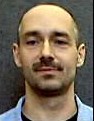
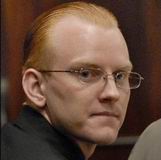
Robert Paul Langley
Homicide Jack Kevorkian
Homicide · USA · 1990
Jack Kevorkian (born May 26, 1928) was a controversial American pathologist. He…
130 victims
Jack Kevorkian
Homicide · USA · 1990
Jack Kevorkian (born May 26, 1928) was a controversial American pathologist. He…
130 victims
 David Koresh
Homicide · USA · 1993
David Koresh (born Vernon Wayne Howell; August 17, 1959 – April 19, 1993) led t…
79 victims
David Koresh
Homicide · USA · 1993
David Koresh (born Vernon Wayne Howell; August 17, 1959 – April 19, 1993) led t…
79 victims
 Todd Hall
Homicide · USA · 1996
Todd Hall was described by neighbors as "mentally slow" and was said to have su…
9 victims
Todd Hall
Homicide · USA · 1996
Todd Hall was described by neighbors as "mentally slow" and was said to have su…
9 victims
 Clinton Bankston
Homicide · USA · 1987
15 August 1987 — Ann Morris (63), her sister Sally Nicholson (59), and Sally’s…
5 victims
Clinton Bankston
Homicide · USA · 1987
15 August 1987 — Ann Morris (63), her sister Sally Nicholson (59), and Sally’s…
5 victims
 Joshua Jenkins
Homicide · USA · 1996
Joshua Jenkins was a 15-year-old American killer who killed five members of his…
5 victims
Joshua Jenkins
Homicide · USA · 1996
Joshua Jenkins was a 15-year-old American killer who killed five members of his…
5 victims
 Walter Lee Caruthers
Murderer · USA · 1980
Walter Lee Caruthers was the defendant. Reginald Watkins was his co-defendant.…
1 victim
Walter Lee Caruthers
Murderer · USA · 1980
Walter Lee Caruthers was the defendant. Reginald Watkins was his co-defendant.…
1 victim
 Kevin Malone
Murderer · USA · 1981
Kelvin Shelby Malone was a White man with the sex listed as male. His alias was…
3 victims
Kevin Malone
Murderer · USA · 1981
Kelvin Shelby Malone was a White man with the sex listed as male. His alias was…
3 victims
 Cyrano Marks
Mass murderer · USA · 1999
Cyrano Marks committed suicide by shooting himself the same day after shooting…
6 victims
Cyrano Marks
Mass murderer · USA · 1999
Cyrano Marks committed suicide by shooting himself the same day after shooting…
6 victims
 Stephen Lawrence Anderson
Mass homicide · New Zealand · 1997
1995 — Stephen Lawrence Anderson was diagnosed with schizophrenic. · 8 February…
6 victims
Stephen Lawrence Anderson
Mass homicide · New Zealand · 1997
1995 — Stephen Lawrence Anderson was diagnosed with schizophrenic. · 8 February…
6 victims
- Gender
- male
- Country
- USA
- Location
- North Salem, Oregon, USA
- Date of birth
- December 22, 1959
- Age at first offence
- 28
- Characteristics
- mentally ill
- Victim profile
- Anne Louise Gray, 39 / Larry Richard Rockenbrant, 24
- Method of murder
- Ligature strangulation - Beating with a baseball bat
- Date(s) of murder
- December 10, 1987 / April 14, 1988
- Years active
- 1987–1988
- Date of arrest
- —
- Status
-
Sentenced to death
Sentenced to death on February 3, 2006; death sentence vacated and case remanded to the circuit court for further proceedings (December 29, 2000)
Case record: Robert Paul Langley
Overview
Robert Paul Langley, Jr. was convicted and sentenced to death for the aggravated murders of Anne Gray and Larry Rockenbrant. Langley was living on the grounds of the Oregon State Hospital and participating in a residential Criminal Treatment Program (CTP) for mentally and emotionally disturbed inmates.
After multiple rounds of review and resentencing, the death sentence was vacated and the case was remanded for further proceedings.
Timeline
- December 1987 — Anne Gray was reported missing; her body was discovered in April 1988.
- December 10, 1987 — Langley asked his girlfriend, Sacha Thayer, to come to Gray’s apartment at 7:30 a.m. to “witness” a contract Langley had drawn up to sell Gray’s belongings.
- April 13, 1988 — Langley met Larry Rockenbrant in the early evening and arranged a drug deal for 1:30 a.m. on the 14th.
- April 14, 1988 — Rockenbrant left in his Pontiac Firebird after receiving a telephone call between 1:00 and 1:30 a.m. and was never seen alive again.
- April 1988 (afternoon of April 14) — Langley sold items to a second-hand store in Newport, including a radar detector matching one removed from the Firebird and a ring similar to one Rockenbrant had worn but not found on his body.
- April 14, 1988 (morning, about 7:00) — When Rockenbrant’s family called to inquire about his whereabouts, Langley told them Rockenbrant was headed for Portland.
- April 14, 1988 (morning) — The hole and “cactus” garden plot were investigated; Rockenbrant’s body was unearthed from the “garden plot.”
- October 29, 1992 — The Oregon Supreme Court reversed Langley’s convictions for aggravated murder in the death of Larry Rockenbrant and remanded for a new trial, based on reversible error in admitting evidence of the Gray homicide to establish identity.
- 1994 — Remand proceedings commenced.
- 2000 — The Oregon Supreme Court again overturned the death sentence conviction in 2000, ruling the judge should have allowed the jury to consider giving Langley life in prison without parole.
- October 13, 1999 — The Oregon Supreme Court case on automatic and direct review was argued and submitted.
- December 29, 2000 — The Oregon Supreme Court filed an opinion on the automatic and direct review of the sentence of death imposed by the Circuit Court of Marion County, vacated the sentence of death, and remanded for further penalty-phase proceedings.
- February 3, 2006 — Langley was sentenced to death.
People involved
- Robert Paul Langley, Jr. — Defendant.
- Anne Gray — Victim.
- Larry Rockenbrant — Victim.
- Sacha Thayer — Langley’s girlfriend at the time of Gray’s murder; she participated in events around both murders and later testified.
- Richard D. Barber — Judge.
- Matthew Kemmy — Prosecutor.
- Langley’s defense counsel — Langley defended himself; additional appointed attorneys are described as being fired by the court in connection with stalling.
- Stephen J. Williams — Deputy Public Defender (argued the cause for appellant).
- Sally L. Avera — Acting Public Defender.
- John P. Daugirda — Deputy Public Defender.
- Janet A. Metcalf — Assistant Attorney General (argued the cause for respondent).
- Dave Frohnmayer — Attorney General.
- Virginia L. Linder — Solicitor General.
- Cynthia A. Forbes — Assistant Attorney General.
- Brenda J. Peterson — Assistant Attorney General.
- C. Gregory West — Judge (in the Marion County Circuit Court for the death sentence review filed December 29, 2000).
- Jesse Wm. Barton — Deputy Public Defender (argued the cause and filed supplemental brief).
- David E. Groom — Public Defender (filed supplemental brief and additional authorities).
- Diane L. Alessi — Chief Deputy Public Defender.
- Robert B. Rocklin — Assistant Attorney General.
- Hardy Myers — Attorney General.
- Michael D. Reynolds — Solicitor General.
- Jennifer S. Lloyd — Assistant Attorney General.
- Ulven — Langley’s second cousin; testified about conversations with Langley during family visits.
The offence
Larry Rockenbrant homicide (April 1988)
Langley asked his girlfriend, Sacha Thayer, to get him sedatives to “knock out” Rockenbrant so that he could “take it all” in one last deal; that did not work out.
Langley later said he was still going to go through with it, taking Thayer’s baseball bat as he went to meet Rockenbrant again. Langley met Rockenbrant in the early evening on April 13, 1988, and arranged a drug deal for 1:30 a.m. on April 14.
Rockenbrant received a telephone call between 1:00 and 1:30 a.m. on April 14 and left in his Pontiac Firebird, saying he was going to meet defendant and others. Rockenbrant was never seen alive again.
At 3:30 a.m., Thayer heard Langley return the Toyota they shared and drop off the keys, and she saw him leaving. Langley returned to the state hospital at 4:15 a.m., showed a counselor the keys to a 1982 Firebird, and explained that a friend who had to return to jail had given him the car provided that he make the payments.
When Rockenbrant’s family called at about 7:00 that morning to inquire about his whereabouts, Langley told them Rockenbrant was headed for Portland.
On the afternoon of April 12, Langley began to dig what was supposed to be a “cactus” garden near a hedge in back of his hospital cottage. The hole was described as six feet, eight inches long; three feet, eight inches wide; and three feet deep. The hole was covered by a plywood board. By 8:30 on the morning of the 14th the hole had been filled in and a note on it stated “Cottage 18 garden plot. Please leave alone. Thank you.”
State hospital employees were investigating the “garden plot” that morning when Langley appeared. Langley fled in the Pontiac after he was asked to stay. Rockenbrant’s body was then unearthed from the “garden plot.”
Rockenbrant had been bludgeoned to death by at least ten blows to the head from a blunt instrument which could have been a baseball bat. His body was clothed. His ankles and wrists were bound by ligatures made from torn cloth. His head was covered with clothes, a backpack, and a cloth. There was a bloody trail leading from the cottage garage to the grave site, and blood and hair consistent with Rockenbrant’s were found in the trunk of the Toyota.
On April 14, Langley sold some items to a second-hand store in Newport, including a radar detector that matched one removed from the Firebird and a ring similar to one Rockenbrant had worn but was not found on his body.
Anne Gray homicide (December 1987)
The murder of Anne Gray occurred four months earlier, in December 1987. Gray was a neighbor of Thayer.
Langley concocted an elaborate story both before and after Gray’s murder to assert that Gray had decided to leave her life in Salem behind, that she had contracted with Langley to sell her belongings, and that she had left for Portland (leaving a note on her door to that effect).
Langley had Thayer come to Gray’s apartment at 7:30 on the morning of December 10, 1987, to “witness” the contract Langley had drawn with Gray to sell the goods that Gray was supposedly leaving behind. When Thayer arrived, Gray was not in the front room. Thayer heard water running in the bathroom, assumed the noise was being made by Gray, signed the contract, and left. No one saw Gray alive thereafter.
Later that evening, Langley carried a heavy bundle wrapped in blankets from Gray’s apartment to Thayer’s station wagon. He placed the load in the back and told Thayer to drive to the house where his aunt and cousin lived. There, he unloaded the bundle, told Thayer to leave and return in 20 minutes, and carried the bundle around the side of the house. When Thayer returned, Langley was muddy and wet, and he said he had fallen. Langley put the muddy blankets in the car.
Langley thereafter set about trying to sell Gray’s property, including her car. He tried selling her furniture to a buyer and sold other items to acquaintances.
When Langley’s cousin heard of the Rockenbrant murder in April 1988, she contacted police about a hole Langley had dug in her backyard near a hedge. Langley had come into his aunt’s home at 11:15 p.m. on a night in early winter of 1987 and told his cousin he had dug a hole for a television antenna. He had placed a board over the hole. Police unearthed Gray’s body from the hole in Langley’s aunt’s backyard.
Gray had died by asphyxiation or ligature strangulation. Her body was found in a grave five feet, five inches long; two feet, six inches wide; and two feet, three inches deep. Her body was clothed. Her body was tied by ligatures of duct tape and Gray’s own climbing rope, bound in the fetal position. White tape covered her mouth, and her head was wrapped with duct tape.
Investigation and evidence
In the Rockenbrant aggravated murder proceeding, the trial court admitted evidence of the Anne Gray homicide for the purpose of using similarities between the two homicides to identify Langley as the killer of Larry Rockenbrant.
The Oregon Supreme Court concluded that admission of that evidence was reversible error and reversed Langley’s convictions for aggravated murder in the death of Larry Rockenbrant.
The court discussed the governing approach to “other crimes” evidence under OEC 404(3), describing a three-part test for admissibility:
- independently relevant for a noncharacter purpose (such as identity by modus operandi),
- sufficient proof that the uncharged misconduct was committed and that defendant committed it,
- probative value not substantially outweighed by dangers under OEC 403.
The Oregon Supreme Court found that the record did not support a conclusion that the Gray and Rockenbrant murders were sufficiently similar and distinctive to warrant admission of Gray homicide evidence to establish identity via modus operandi, noting that neither method of death was particularly distinctive and describing dissimilarities including the precautions and story-making behaviors.
The Oregon Supreme Court also addressed harmless error, concluding that the extensive reliance by the state on the Gray murder in the Rockenbrant trial could have affected the verdict, so reversal was required.
Trial
Rockenbrant trial and conviction (aggravated murder)
The Oregon Supreme Court described this as an automatic and direct appeal from Langley’s convictions and sentence of death imposed by the Circuit Court for Marion County.
The appeal referenced “14 counts of aggravated murder in the death of Larry Rockenbrant,” and the court ultimately reversed the convictions for aggravated murder and remanded for a new trial.
The Supreme Court’s reversal was grounded in error in admitting evidence of the Gray homicide for identity purposes, and the court remanded for a new trial.
Sentencing and appeals
Initial death sentence and subsequent overturning
Langley received death sentences for the murders of Anne Gray and Larry Rockenbrant.
The Oregon Supreme Court later reversed the death sentence based on the jury not being allowed to hear mitigating evidence during the Gray case and on the evidentiary issue described in the Rockenbrant proceeding.
At the first retrial described in the case summary, Langley was given life in prison for the Rockenbrant murder and a death sentence for the Gray murder.
Supreme Court decision vacating the second death sentence
On automatic and direct review filed December 29, 2000, the Oregon Supreme Court vacated the sentence of death and remanded the case for further penalty-phase proceedings.
The decision addressed the “true-life sentencing option” issue. It described procedural history including:
- Gray reported missing in December 1987; her body discovered in April 1988.
- In November 1989, a jury convicted Langley of 16 counts of aggravated murder for Gray’s death.
- The 1989 amendments to ORS 163.150 added true life as a sentencing option and purported to apply retroactively.
- The trial court in the earlier stage instructed the jury on the true-life option.
- On direct review in Langley I, the Oregon Supreme Court affirmed all but one conviction, vacated the death sentence, and remanded for further penalty-phase proceedings because the fourth question failed to allow proper consideration of mitigating evidence.
- On remand beginning in 1994, Langley sought to waive his ex post facto objection to retroactive application of the true-life sentencing option.
- The trial court rejected the waiver and instructed the jury that Langley must be sentenced either to death or to ordinary life; the jury again sentenced Langley to death.
In the 2000 review, the Supreme Court concluded that the trial court erred by refusing to permit Langley to waive any ex post facto objection to retroactive application of the true-life sentencing option and erred by refusing to instruct the jury on that option. The Supreme Court concluded these errors required vacating the death sentence and remanding for further proceedings.
Other issues addressed in the December 29, 2000 opinion
Psychotherapist-patient privilege and privacy
Langley contended that evidence admitted during the remand proceeding violated the psychotherapist-patient privilege in OEC 504(2), specifically challenging five exhibits and the testimony of eight witnesses related to his participation in the CTP at the Oregon State Hospital.
The Supreme Court held that the trial court did not err in admitting certain exhibits, reasoning that Langley waived his privilege under OEC 511 based on prior admission without objection and the significant-part waiver framework described in Langley I.
The Supreme Court also considered Ulven’s testimony and concluded it did not disclose any privileged communication because the record did not demonstrate the statutory prerequisites for “confidential communication” under OEC 504.
Langley also argued that any earlier unauthorized disclosures by CTP staff to investigators and the grand jury should have prevented later use of the information. The Supreme Court concluded that even assuming earlier violations, Langley’s later voluntary waiver terminated the privilege and precluded restoration of it.
The Supreme Court also held that Langley waived any Fourteenth Amendment privacy protection by failing to object during Langley I proceedings.
Accomplice instructions request
Langley contended that the trial court erred in refusing to give five requested jury instructions concerning accomplice testimony tied to Thayer’s testimony in relation to Gray’s murder.
The Supreme Court held that ORS 136.440’s accomplice corroboration requirement applies only during the guilt phase, not the penalty phase, and therefore did not entitle Langley to the accomplice instructions during the remand penalty-phase proceeding. The Supreme Court held the trial court did not err in refusing to give the requested instructions.
Remaining assignments of error
The Supreme Court stated it had considered remaining assignments of error and concluded they involved issues previously decided in the state’s favor, were not likely to arise on remand, or were not developed or lacked merit.
Status after appellate reversals
The case summary described that both convictions were overturned in connection with the Gray case mitigation issue and evidentiary spillover issues, and it described multiple stages of retrials and resentencing.
Langley fired four different attorneys appointed to represent him, and the court fired his attorneys at another instance when they were accused of stalling. Langley refused to participate in the latest trial, stating he was not granted attorneys to his liking.
Other details
- The case narrative described that Langley was acquitted of the count charging him with murder while confined (Count I).
- The December 29, 2000 opinion included discussion that defendant murdered both Gray and Rockenbrant while living on the grounds of the Oregon State Hospital and participating in the residential Criminal Treatment Program (CTP).
- The case narrative described that Langley has fired attorneys appointed to represent him, and courts also removed his attorneys in connection with alleged stalling.
- The case narrative stated that Langley refused to participate in the latest trial because he was not granted attorneys he wanted.
- The case narrative stated that Langley was thought to have tortured and killed eight other people.
Spotted an error, or have more information about this case?