John Watson Laurie
Murderer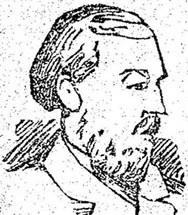 William Henry Bury
Murderer · United Kingdom · 1888
William Henry Bury was executed by hanging in Dundee on April 24, 1889. He was…
2 victims
William Henry Bury
Murderer · United Kingdom · 1888
William Henry Bury was executed by hanging in Dundee on April 24, 1889. He was…
2 victims
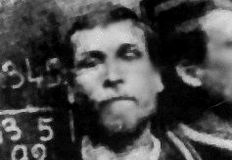 Albert Milsom
Murderer · United Kingdom · 1896
Albert Milsom (33) was executed by hanging at Newgate Prison on June 9, 1896. ·…
1 victim
Albert Milsom
Murderer · United Kingdom · 1896
Albert Milsom (33) was executed by hanging at Newgate Prison on June 9, 1896. ·…
1 victim
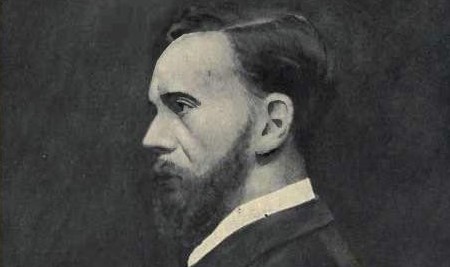 George Lamson
Murderer · United Kingdom · 1881
George Lamson was an English physician who, after the Crimean War, suffered fro…
1 victim
George Lamson
Murderer · United Kingdom · 1881
George Lamson was an English physician who, after the Crimean War, suffered fro…
1 victim
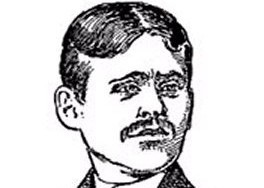 Israel Lipski
Murderer · United Kingdom · 1887
Israel Lipski Israel Lipski (1865 - 1888) was born Israel Lobulsk. He was of Po…
1 victim
Israel Lipski
Murderer · United Kingdom · 1887
Israel Lipski Israel Lipski (1865 - 1888) was born Israel Lobulsk. He was of Po…
1 victim
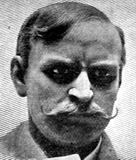 James Canham Read
Murderer · United Kingdom · 1894
James Canham Read was a middle-aged married bookkeeper at the London Docks. He…
1 victim
James Canham Read
Murderer · United Kingdom · 1894
James Canham Read was a middle-aged married bookkeeper at the London Docks. He…
1 victim
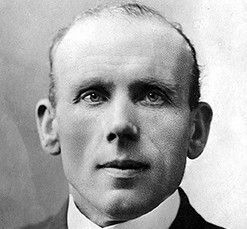 John Henry George Lee
Murderer · United Kingdom · 1884
John Henry George Lee, better known as John “Babbacombe” Lee (1864 – c. 1945),…
1 victim
John Henry George Lee
Murderer · United Kingdom · 1884
John Henry George Lee, better known as John “Babbacombe” Lee (1864 – c. 1945),…
1 victim
 Ivo Colon
Murderer · USA · 1998
Ivo Colon was convicted of capital felony murder and murder in connection with…
1 victim
Ivo Colon
Murderer · USA · 1998
Ivo Colon was convicted of capital felony murder and murder in connection with…
1 victim
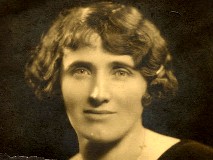 Beatrice Annie Pace
Justice miscarriage · United Kingdom · 1928
Beatrice Annie Pace was tried and acquitted for murdering her husband with arse…
0 victims
Beatrice Annie Pace
Justice miscarriage · United Kingdom · 1928
Beatrice Annie Pace was tried and acquitted for murdering her husband with arse…
0 victims
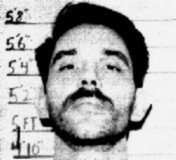 Richard Huffman
Murderer · USA · 1984
Richard Huffman met Golden in the context of Huffman’s longtime friends, Herb U…
1 victim
Richard Huffman
Murderer · USA · 1984
Richard Huffman met Golden in the context of Huffman’s longtime friends, Herb U…
1 victim
 Mark Hutt
Murderer · Canada · 2009
Mark Hutt was convicted of first-degree murder in connection with the death of…
1 victim
Mark Hutt
Murderer · Canada · 2009
Mark Hutt was convicted of first-degree murder in connection with the death of…
1 victim
 Craig Zebroski
Murderer · USA · 1996
Craig Zebroski was a White male born on 09/06/1977. He was sentenced to death o…
1 victim
Craig Zebroski
Murderer · USA · 1996
Craig Zebroski was a White male born on 09/06/1977. He was sentenced to death o…
1 victim
 Lloyd Duest
Murderer · USA · 1982
Lloyd Duest was sentenced to death on April 14, 1983 and later was resentenced…
1 victim
Lloyd Duest
Murderer · USA · 1982
Lloyd Duest was sentenced to death on April 14, 1983 and later was resentenced…
1 victim
- Gender
- male
- Country
- United Kingdom
- Location
- Isle of Arran, Scotland, United Kingdom
- Date of birth
- 1864
- Age at first offence
- 25
- Characteristics
- murder for hire, robbery, alcohol, history of mental illness, fugitive
- Victim profile
- Edwin Robert Rose, 32
- Method of murder
- Battering with a stone
- Date(s) of murder
- July 15, 1889
- Years active
- 1889
- Date of arrest
- September 3, 1889
- Status
-
Died in custody
Sentenced to death; commuted to life imprisonment after he was found to be of unsound mind; transferred to Perth Criminal Asylum in 1893; died in the asylum in 1930
Overview
John Watson Laurie was a pattern-maker from Glasgow. In 1889, Edwin Rose, a clerk from London, travelled on the steamer from Rothesay to the Isle of Arran for a holiday and met Laurie, who travelled under the name of John Annandale. Laurie invited Rose to share his lodgings on the island.
Timeline
- 12 July 1889 — Edwin Rose travelled on the steamer from Rothesay to the Isle of Arran for a holiday and met 25-year-old Laurie, who was travelling under the name of John Annandale; Laurie invited Rose to share his lodgings on the island.
- 14 July 1889 — Two other men left the island at the conclusion of their holiday.
- 15 July 1889 — Rose set out to climb Goatfell with Laurie; Rose was later found hidden under a pile of rocks having been beaten to death and robbed; a shepherd saw Laurie coming down Goatfell alone and exhausted; Laurie was also seen the next morning leaving the island; Rose and Laurie were seen by at least five witnesses on the summit of Goatfell at about 6.20pm.
- 27 July 1889 — Rose’s brother arrived on the island and found that Rose had set out to climb Goatfell on 15 July with Laurie; a search involving 200 islanders found Rose’s body hidden under a pile of rocks.
- 3 September 1889 — Laurie was spotted boarding a train at Fernigair; he was chased by a local constable; when he was trapped in a local wood he tried to cut his throat but the wounds were only superficial; he appeared at Edinburgh charged with murder.
- 4 September 1889 — The Goatfell Tragedy was discussed in The Scotsman.
- 1893 — Laurie was transferred to Perth Criminal Asylum after a short escape from Peterhead Prison.
- 1930 — Laurie died in the asylum.
The offence
Edwin Rose travelled to the Isle of Arran and met Laurie, travelling as John Annandale. The pair made friends with two other young men, and the four of them went boating and walking together. Laurie had proposed that Rose and Laurie climb Goatfell. An associate warned Rose to be wary of Laurie and not to go on the climb with him.
Rose and Laurie left their lodgings without saying where they were going after the other two men left the island. Rose’s body was later found hidden under a pile of rocks. He had been beaten to death and robbed.
A shepherd was found who had seen Laurie coming down Goatfell on 15 July, alone and exhausted. Laurie had also been seen the next morning leaving the island.
Several of Rose’s belongings were found further up the isolated corrie, including a hat and walking cane. Rose’s body was found purposefully concealed in a 42-stone crypt, having died of massive injuries to the head and body. A folded cap and walking stick were found in the vicinity, with the cane openly visible and placed consistent with a fall.
The discovery of Rose’s body, together with Laurie's behaviour, sparked a manhunt.
Investigation
Rose’s decomposed body was found hidden in a howff, or hut built of rock, on a remote mountainside near Arran's main town of Brodick, three weeks after Rose left London for a week’s summer holiday on Scotland’s west-coast islands. The skull was shattered and the spine badly broken.
The case involved controversy over what transpired on the descent from Goatfell. Witnesses claimed to have seen Rose at different times on the fateful day, discrediting Laurie’s version of events.
The Crown’s early claim involved Laurie battering Rose with a stone, causing injuries. This was disputed by the testimony of the Queen’s surgeon, Patrick Watson. No drop of blood was found on Laurie’s clothes, or anything that linked him to the murder, though Laurie had robbed Rose of his possessions.
Laurie claimed Rose had met two others on Goatfell summit and ascended with them. It was suggested that Rose might have died after a fall, with Laurie stealing Rose’s effects and hiding the body. Yet the charge was based on Laurie's conduct and his run from the law.
Several facts about sightings were recorded:
- The pair had been seen by at least five witnesses on the summit of Goatfell at about 6.20pm.
- None of the witnesses had witnessed the descent.
- Laurie was seen at the Corrie Bar in Brodick that evening, ordering drinks just before 10pm.
- The following day Laurie left the island without paying his lodging bill and was seen by several witnesses clutching a striped jacket later revealed to be Rose’s.
Arrest
When news of the killing reached the mainland, Laurie left his job and moved to Liverpool. He wrote to newspapers telling them that “I smile when I read that my arrest is expected hourly.”
On 3 September, Laurie was spotted boarding a train at Fernigair and chased by a local constable. When Laurie was trapped in a local wood, he tried to cut his throat with a cut-throat razor; the wounds were only superficial.
Laurie was apprehended “lurking in the vicinity” of Hamilton after giving up his job and apparently a girlfriend, and after drifting for several months between Glasgow, Aberdeen and Liverpool.
Laurie attempted suicide with a cut-throat razor on apprehension by police in his Lanarkshire hometown of Coatbridge.
Trial
Laurie was charged with murder and appeared at Edinburgh. He admitted robbing Rose but denied killing him, contending that Rose died as the result of a fall.
In a trial at Edinburgh’s High Court held with media activity and massive public interest, Laurie was tried and convicted of murdering the 32-year-old Rose. The conviction proceeded despite disputes and uncertainties over the cause of death.
The jury convicted Laurie and sentenced him to death. The jury convicted by a majority of one after just 45 minutes’ deliberation.
The Crown’s successful case relied on circumstantial evidence surrounding the nature of Rose’s injuries, backed by behavioural reports that convinced the jury of Laurie's murderous intention.
Sentencing
Laurie was sentenced to death.
Appeals
Laurie’s sentence was commuted to life imprisonment after he was found to be of unsound mind.
Outcome
Laurie was transferred to Perth Criminal Asylum in 1893 after a short escape from Peterhead Prison. He died in the asylum in 1930. The case was described as leaving open more questions than it ultimately answered, with a deadly serious controversy still surrounding “murder in the mountains.”
Laurie was also described as the longest serving prisoner in Scotland. He served 40 years and 11 months.
Other details
John Watson Laurie was born in Coatbridge in 1864 and became a pattern-maker for one of Glasgow’s locomotive engineering works. In 1889, Laurie was jilted by his fiancée after a scandal over money stolen from his workplace, but he was never charged because the cash was repaid by his family.
Laurie went in search of his fiancée at the Clyde coast summer holiday resort, Rothesay, on the Island of Bute. Failing to find his fiancée and short of funds, he met up with an English tourist, Edwin Robert Rose, and they decided to take a trip to Arran. While there, they climbed Goat Fell.
Laurie descended alone and was later seen wearing Rose’s distinctive hat. Rose was listed missing by relatives; Rose’s body was eventually found in a gully below Goat Fell. An exhaustive search preceded Laurie's apprehension.
In court, Laurie’s description included that he was “square-shouldered but slightly built, and walks with a rolling gait. His teeth are a conspicuous part of him, and are remarkably white and regular. He is exceedingly fond of dress, and was often seen in knickerbockers.”
The case discussion included a statement about the genesis of the name Goatfell being disputable, with Norse and Gaelic explanations. It also included a description of a stream through the slippery Coire nam Fuaran, about 700ft below the lower of the two cols between North Goatfell and Mullach Buidhe, and exposed drops of 10ft and 32ft.
The case discussion also included a quote attributed to Robin Campbell, archivist of the Scottish Mountaineering Club:
“The obvious idea is that an opportunity came where Laurie could give Rose a push and then rob him and then take his gear, and that somebody who lies a lot is inevitably under suspicion,”
It included further comments attributed to Robin Campbell:
“But why would Laurie kill him? The evidence is circumstantial and weak, and, my guess, it was an accident. Rose died in the accident, Laurie decided to take what he had and stuff him under a boulder. The medical evidence presented by the Crown was also dubious at best.”
It also included:
“Murder in the hills is easy,” Campbell says, adding, “who can prove a push or a fall?”
Laurie died at age 69 in the lunatic division of Perth Prison, as it was then known.


Spotted an error, or have more information about this case?