
Richard Albert Leavitt
Murderer Brian Kevin Rosenfeld
Murderer · USA · 1985
Brian Kevin Rosenfeld Brian Kevin Rosenfeld was sentenced to three concurrent l…
23 victims
Brian Kevin Rosenfeld
Murderer · USA · 1985
Brian Kevin Rosenfeld Brian Kevin Rosenfeld was sentenced to three concurrent l…
23 victims
 Marvin Gray
Murderer · USA · 1975
Marvin Gray was convicted killer who claimed responsibility for 23 slayings and…
23 victims
Marvin Gray
Murderer · USA · 1975
Marvin Gray was convicted killer who claimed responsibility for 23 slayings and…
23 victims
 Yahweh ben Yahweh
Murderer · USA · 1980
Yahweh ben Yahweh was born and legally named Hulon Mitchell Jr. (October 27, 19…
23 victims
Yahweh ben Yahweh
Murderer · USA · 1980
Yahweh ben Yahweh was born and legally named Hulon Mitchell Jr. (October 27, 19…
23 victims
 Russell Ellwood
Murderer · USA · 1991
Russell Ellwood was a former taxi driver. Authorities suspected him of killing…
20 victims
Russell Ellwood
Murderer · USA · 1991
Russell Ellwood was a former taxi driver. Authorities suspected him of killing…
20 victims
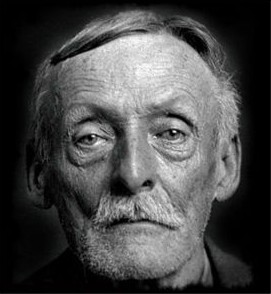 Albert Fish
Serial killer · USA · 1924
Albert Hamilton Fish (May 19, 1870 – January 16, 1936) was an American sado-mas…
10 victims
Albert Fish
Serial killer · USA · 1924
Albert Hamilton Fish (May 19, 1870 – January 16, 1936) was an American sado-mas…
10 victims
 Dominic Culpepper
Homicide · USA · 2001
Dominic Culpepper was 14 years old when he fatally beat 16-year-old Frank Wesle…
1 victim
Dominic Culpepper
Homicide · USA · 2001
Dominic Culpepper was 14 years old when he fatally beat 16-year-old Frank Wesle…
1 victim
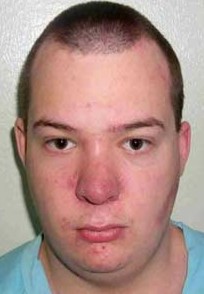 Brandon Hedrick
Murderer · USA · 1997
Brandon Wayne Hedrick (February 23, 1979 – July 20, 2006) was a convicted murde…
1 victim
Brandon Hedrick
Murderer · USA · 1997
Brandon Wayne Hedrick (February 23, 1979 – July 20, 2006) was a convicted murde…
1 victim
 Charles Anthony Boyd
Murderer · USA · 1986
Charles Anthony Boyd was a previously convicted felon who was convicted of capi…
3 victims
Charles Anthony Boyd
Murderer · USA · 1986
Charles Anthony Boyd was a previously convicted felon who was convicted of capi…
3 victims
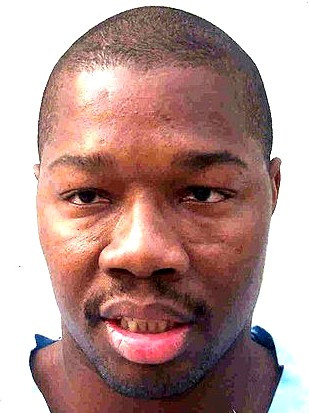 Dexter Lee Vinson
Murderer · USA · 1997
Dexter Lee Vinson was a state prisoner convicted of capital murder and sentence…
1 victim
Dexter Lee Vinson
Murderer · USA · 1997
Dexter Lee Vinson was a state prisoner convicted of capital murder and sentence…
1 victim
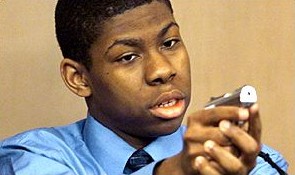 Nathaniel Brazill
Homicide · USA · 2000
Nathaniel Brazill Nathaniel Brazill was an American. He was born September 22,…
1 victim
Nathaniel Brazill
Homicide · USA · 2000
Nathaniel Brazill Nathaniel Brazill was an American. He was born September 22,…
1 victim
- Gender
- male
- Country
- USA
- Location
- Bingham County, Idaho, USA
- Date of birth
- November 12, 1958
- Age at first offence
- 26
- Characteristics
- mutilation, torture, rape
- Victim profile
- Danette Jean Elg, 31
- Method of murder
- St abbing with knife
- Date(s) of murder
- July 18, 1984
- Years active
- 1984
- Date of arrest
- —
- Status
-
Sentenced to death
Executed by lethal injection on June 12, 2012 in Idaho; sentenced to death on December 19, 1985 by 7th District Judge John Schindurling for the 1984 murder of Danette Jean Elg
Case record: Richard Albert Leavitt
Parties
- Defendant: Richard Albert Leavitt, 44, of Blackfoot.
- Victim: Danette Jean Elg, 31, of Blackfoot.
The offence
Richard Albert Leavitt was convicted for the July 18, 1984 death of Danette Jean Elg. Elg was stabbed 15 times and her sexual organs were removed.
The victim was attacked in her bed. She suffered up to fifteen separate slash and stab wounds, including slashing removal of her sexual organs. The body was not discovered until three or four days following the killing.
The victim had reported a prowling incident two nights earlier, in which she advised police that the prowler, thought to be Leavitt, tried to enter her home. During the interim between the murder and discovery, Leavitt contacted friends of the victim and also the police, expressing curiosity as to the victim’s whereabouts.
The killing took place on the victim’s waterbed, which was punctured and torn by the attacker’s knife. The victim’s body decomposition, together with the mixture of body fluids and the waterbed liquid, made impossible any determination of rape as a motive for the killing.
At the scene, serology tests showed two distinct blood types were present: the victim’s blood was type A, and type O blood had been deposited contemporaneously with that type A blood. The blood of sixteen suspects was tested, and the serologist’s opinion was that Leavitt was the only likely source of the type O blood.
Investigation
The defendant and the victim were both residents of Blackfoot and knew each other.
During the interim between the murder and the discovery of the body, the Blackfoot police received two telephone calls stating facts thought to be capable of being only known to the murderer. The caller gave the name “Mike Jenkins,” but no person by that name was ever located.
The prosecution asserted that logically Leavitt was the only person who could have made the calls because of his detailed knowledge. Evidence pointing to Leavitt as the murderer was largely circumstantial.
Leavitt was treated for a serious incise wound to his left index finger at the emergency room of the Bingham Memorial Hospital on the night of July 18, 1984. Blood samples were gathered from the scene of the crime.
Lab tests of Leavitt’s “fan explanation” concluded that the fan lacked any blood residue or any indication it had been recently cleaned, and tests conducted with the fan were unable to duplicate the type of wound on Leavitt’s finger.
Police records described the victim’s background and personal attributes, including that she was “generally a likable, friendly, shy person” who would “help anyone with a problem,” and that she enjoyed skiing, jogging, swimming, camping, hiking, and photography. The same material described her employment at the Idaho National Engineering Laboratory, now known as Idaho National Laboratory, and her education, including graduation from Blackfoot High School in 1971 and Idaho State University in 1983.
Arrest and pretrial matters
On July 21, Leavitt obtained permission from the victim’s parents to enter the home, which had been locked and apparently unattended. With the help of Blackfoot police, entry was made into the house and the body was discovered.
Leavitt initially denied that his blood could be in the victim’s bedroom. He later changed his story to admit he had been in the victim’s bedroom and suffered a nosebleed, contending the incident had happened one week prior to the murder, and asserting that no explanation could be offered as to how his blood became mixed with that of the victim.
The defendant asserted he had cut his finger while in his own home attempting to upright a toppled fan. At trial, that explanation was abandoned when Leavitt admitted he and his wife had perjured themselves and stated the injury in fact had been sustained while he was attempting to prevent his wife from attempting suicide.
While confined in jail, Leavitt wrote a letter to his wife containing specific instructions involving her future testimony. The letter was discovered and confiscated during a routine inspection of the jail. At trial, the court ruled the letter had been properly seized and used it for impeachment purposes during the testimony of Leavitt’s wife and further used it to impeach Leavitt’s testimony as inconsistent statements.
The trial included extensive pretrial publicity. The trial court did not grant a change of venue.
Trial
Leavitt was tried for first degree murder and was found guilty.
- Verdict: Found guilty on Sept. 25, 1985.
- Sentencing judge at trial: H. Reynold George, J.
- Trial court: Seventh Judicial District, Bingham County.
In the trial, two witnesses testified to events offered to show Leavitt’s alleged morbid sexual curiosity and his frequent possession and use of knives.
- The defendant’s former wife testified that Leavitt had been observed excising and then playing with the female sexual organs of a deer.
- The former mistress testified that Leavitt displayed a hunting knife prior to their engaging in sexual intercourse, suggesting he used knives to increase his satisfaction during sexual intercourse.
At trial, the court admitted color photographs of the victim’s corpse in an advanced state of decomposition. The photographs were discussed as gruesome, including close-up views. The appeal also described that these photographs were shown to the jury and compared with photos of the victim in life.
The trial also admitted the former wife’s testimony regarding Leavitt’s hunting and excising sexual organs from game animals, over an argument that it should be excluded due to prejudicial effect.
The trial court admitted the letter confiscated from jail despite a marital privilege objection.
Leavitt filed a motion for a new trial based on newly discovered evidence indicating a possible mental disease or deficiency. The motion was denied on the basis that the asserted newly discovered evidence was not material.
Leavitt also argued he was denied his Sixth Amendment right to effective assistance of counsel. The Supreme Court rejected the claim, describing that the deficiencies alleged involved disagreements with strategic judgments and holding there was no error.
Leavitt asserted prosecutorial misconduct, arguing that the closing argument of the prosecution was improper. The trial court excluded the charge of rape from the charges read to the jury. The Supreme Court held it was not misconduct to argue rape as a motive for murder even though a charge of rape was not before the jury.
The jury instruction issues included arguments that instructions misstated the law and that the presumption of innocence was misstated, though multiple issues were previously reviewed and rejected on appeal and collateral review.
Sentencing
After conviction, Leavitt received a death sentence.
- Original sentencing: H. Reynold George sentenced Leavitt to death on Dec. 19, 1985, and the court stated:
“Atrocious and heinous are not strong enough words to describe the depravity of the crime,” George said at the time.
“... It is the solemn judgment of this court that you, Richard Leavitt, shall be sentenced to death.”
On appeal, the Idaho Supreme Court affirmed the conviction of first degree murder but reversed the death penalty and remanded for further consideration of the imposition of the death penalty.
On remand, on Jan. 25, 1990, Judge George again sentenced Leavitt to death. The Idaho Supreme Court later affirmed that sentence in 1991.
At the original sentencing, the sentencing court found the murder to be “especially heinous, atrocious or cruel, manifesting exceptional depravity” and that Leavitt “exhibited utter disregard for human life.” The sentencing judge also made statements about mitigating circumstances and weighing them against aggravating circumstances, including the phrase that mitigating circumstances were “as feathers on the scale when balanced against the grossly inhumane act of murder that went beyond all human decency.”
The Idaho Supreme Court reversed in part due to inadequate weighing of mitigating circumstances against aggravating factors and remanded for further consideration. On remand for resentencing, additional evidence was presented, and the sentencing court again imposed death.
Appeals
State appeals and remand
- State v. Leavitt, 116 Idaho 285, 775 P.2d 599 (Idaho 1989) — direct appeal. The Supreme Court affirmed the conviction of first degree murder but reversed and remanded for further consideration of the death penalty.
- State v. Leavitt, 121 Idaho 4, 822 P.2d 523 (Idaho 1991) — direct appeal after remand. The Supreme Court affirmed the death sentence.
- State v. Leavitt, 141 Idaho 895, 120 P.3d 283 (Idaho 2001 (PCR)) — post-conviction relief. Appeals dismissed.
Federal habeas
- Leavitt v. Arave, ___ F.3d ___, 2012 WL 2086358 (9th Cir. 2012) — habeas. Relief was denied and the denial was affirmed.
Final meal and last statement
- Final/special meal: Baked chicken, fries and milk.
- Final words: None.
Leavitt declined to make a final statement at the execution.
Execution details
A death warrant was carried out by lethal injection.
- The Idaho Department of Correction carried out a death warrant issued by 7th District Judge John Schindurling.
- Pronouncement: Ada County Coroner Erwin Sonnenberg pronounced Leavitt dead at 10:25 a.m.
- Cause of death: lethal injection.
- Place of death: Idaho Maximum Security Institution south of Boise.
- Family visitation: Leavitt’s family visited with him Monday but did not attend the execution at his request.
- Remains: Leavitt’s body was to be cremated, and the remains were to be turned over to his family.
When asked if he would like to make a final statement, Leavitt made no final statement and shook his head twice. When asked if he’d like his face covered, Leavitt said “no.”
Other named individuals mentioned
- Attorney General Lawrence Wasden was called by phone by the chamber telephone to confirm there was no legal reason to stop the procedure.
- Warden Randy Blades led the execution.
- IDOC Director Brent Reinke made statements to reporters about the execution process and adjustments after a federal court order.
- Rebecca Boone of the Associated Press and John Funk of Idaho Press Tribune were among media witnesses.
- VaLynn Mathie (Elg’s sister) attended and issued a statement after the execution, including:
“We want to express thanks to everyone who has labored faithfully to uphold the laws of Idaho so that justice and retribution may be served. Closure is now possible for those of us who have lived with the horror of Danette's murder constantly overshadowing the joyful memories of her life. As family and friends of Danette we never have to think of Richard Leavitt again. Our memories can now focus on the brief time she was here sharing our lives and the joy of loving her.”
Timeline
- July 16, 1984 — Elg reported a prowling incident and told police the prowler, thought to be Leavitt, tried to enter her home.
- July 18, 1984 — Elg was attacked in her bed; Leavitt suffered an incise wound to his left index finger and was treated for that wound at the emergency room; Leavitt was later convicted for Elg’s death.
- July 21, 1984 — Leavitt obtained permission from the victim’s parents to enter the home; Blackfoot police entered the house and discovered the body.
- Sept. 25, 1985 — Leavitt was found guilty.
- Dec. 19, 1985 — H. Reynold George sentenced Leavitt to death.
- 1989 — Idaho Supreme Court affirmed the conviction but sent the case back for resentencing.
- Jan. 25, 1990 — Judge George again sentenced Leavitt to death.
- Dec. 19, 1985 — death warrant and sentencing outcome: sentenced to death.
- May 14 — U.S. Supreme Court declined to hear an appeal.
- June 12, 2012 — Leavitt was executed by lethal injection; pronounced dead at 10:25 a.m.
Case citations and procedural posture as stated
- **State v.
- **State v.
- State v. Leavitt, 141 Idaho 895, 120 P.3d 283 (Idaho 2001 (PCR)) — PCR appeal.
- **Leavitt v. 2012) — habeas.
Charges and outcomes as stated
- Leavitt was convicted of first degree murder and sentenced to death; the Idaho Supreme Court affirmed the conviction and ultimately affirmed the death sentence.
Spotted an error, or have more information about this case?