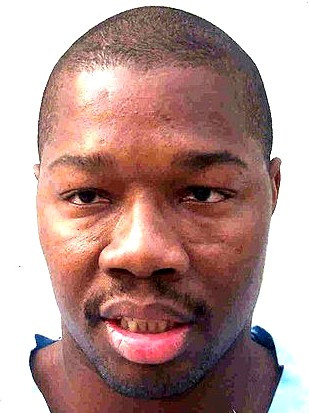
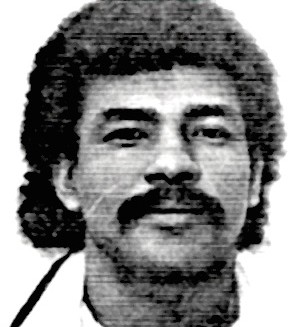
Dexter Lee Vinson
Murderer Russell Ellwood
Murderer · USA · 1991
Russell Ellwood was a former taxi driver. Authorities suspected him of killing…
20 victims
Russell Ellwood
Murderer · USA · 1991
Russell Ellwood was a former taxi driver. Authorities suspected him of killing…
20 victims
 Robert Martines Perez
Murderer · USA · 1994
Name: Robert Martines Perez · Other name used in proceedings: Robert Martinez P…
15 victims
Robert Martines Perez
Murderer · USA · 1994
Name: Robert Martines Perez · Other name used in proceedings: Robert Martinez P…
15 victims
 Billy Frank Vickers
Murderer · USA · 1993
Billy Frank Vickers Vickers was executed by lethal injection in Texas on Januar…
14 victims
Billy Frank Vickers
Murderer · USA · 1993
Billy Frank Vickers Vickers was executed by lethal injection in Texas on Januar…
14 victims
 Gregory Edward Wright
Murderer · USA · 1997
Gregory Edward Wright was the defendant. · Donna Duncan Vick was the victim, de…
1 victim
Gregory Edward Wright
Murderer · USA · 1997
Gregory Edward Wright was the defendant. · Donna Duncan Vick was the victim, de…
1 victim
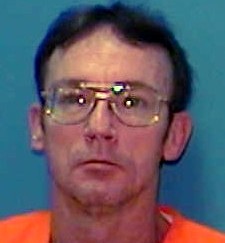 Norman Mearle Grim
Murderer · USA · 1998
Norman Mearle Grim was indicted in First Judicial Circuit, Santa Rosa County, u…
1 victim
Norman Mearle Grim
Murderer · USA · 1998
Norman Mearle Grim was indicted in First Judicial Circuit, Santa Rosa County, u…
1 victim
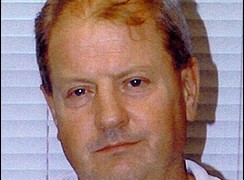 Steven Wright
Serial killer · United Kingdom · 2006
Steven Gerald James Wright was a British serial murderer, also known as the Suf…
5 victims
Steven Wright
Serial killer · United Kingdom · 2006
Steven Gerald James Wright was a British serial murderer, also known as the Suf…
5 victims
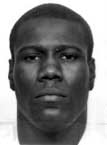 Cedric Ransom
Murderer · USA · 1991
December 7, 1991 — Cedric Lamont Ransom, along with Isaac Johnson, Nathan Clark…
4 victims
Cedric Ransom
Murderer · USA · 1991
December 7, 1991 — Cedric Lamont Ransom, along with Isaac Johnson, Nathan Clark…
4 victims
 Kristina Fetters
Homicide · USA · 1994
Kristina Joy Fetters was a resident of Orchard Place, a residential facility fo…
1 victim
Kristina Fetters
Homicide · USA · 1994
Kristina Joy Fetters was a resident of Orchard Place, a residential facility fo…
1 victim
- Gender
- male
- Country
- USA
- Location
- Portsmouth County, Virginia, USA
- Date of birth
- April 3, 1963
- Age at first offence
- 34
- Characteristics
- kidnapping, sexual mutilation, rape, torture, abuse
- Victim profile
- Angela Felton, 25 (his ex-girlfriend)
- Method of murder
- St abbing with knife
- Date(s) of murder
- May 20, 1997
- Years active
- 1997
- Date of arrest
- —
- Status
-
Executed
Executed by lethal injection in Virginia on April 27, 2006
Case record: Dexter Lee Vinson
Background
Dexter Lee Vinson was a state prisoner convicted of capital murder and sentenced to death. He was also convicted of non-capital offenses including carjacking, object sexual penetration, and abduction with intent to defile, and he received a life sentence for each noncapital conviction.
Angela Felton was the victim. Felton had lived with Vinson for more than a year, but she moved out a few weeks before her death.
Vinson grew up in Suffolk and attended John F. Kennedy High School. During the sentencing phase of the trial, Vinson’s high school band teacher, his mother, his step-father, his former construction work supervisor, and a minister testified on his behalf. Vinson was described as a “mentor” to a blind student, “loved” by the victim’s children, and as one who would “do anything for anybody at work.”
Two mental health experts testified during the penalty phase that Vinson suffered from “intermittent explosive disorder” and that he was unable to conform his conduct to the lawful requirements at the time of the crimes.
During federal habeas proceedings, Vinson’s second chair counsel was identified as Tanya Lomax and his lead counsel was identified as John Underwood. Vinson raised a conflict of interest claim based on the fact that Lomax was suing Underwood for employment discrimination related to Lomax’s employment at the Portsmouth Public Defender’s Office. Underwood and Lomax gave sworn statements that the discrimination suit had no effect on their representation and that the two lawyers had a good working relationship with no friction, problems, or issues during their representation of Vinson.
The offence
On May 19, 1996, Angela Felton was brutally murdered in the City of Portsmouth. The jury found that Vinson committed capital murder in the commission of abduction with intent to defile. The jury also convicted him of object sexual penetration and abduction with intent to defile, as well as carjacking. The jury fixed the punishment at death for the capital offense and fixed punishment at life imprisonment for each of the noncapital convictions.
The offences involved abduction and sexually mutilation of Felton. Witness testimony described Vinson forcing Felton to stop and taking her out of the car. Witness testimony further described choking with a rope, slamming her head into the car door, and dragging something heavy into an abandoned vacant house.
The victim sustained deep and extensive injuries. The autopsy showed she bled to death from deep cuts to both forearms, either of which would have been sufficient to cause death. The medical examiner stated it “probably would have taken her a few minutes, several minutes to die.” The victim also suffered additional knife wounds, scratches and cuts to her body and buttocks, “blunt force trauma” to her head, and significant vaginal injuries inflicted while she was alive. The medical examiner expressed the opinion that the vaginal injuries were not caused by an erect penis and that the inner damage “would have been done by an object being penetrated in Miss Felton.”
Investigation
Detective Jan Westerbeck went to a vacant house and discovered Felton’s nude body inside a bedroom in a recently “busted wall.” The body was nude and partially covered with a brown blanket, and feces were found on and under her neck.
Forensic evidence connected Vinson with the crimes. His fingerprints were found on the abandoned red car, on the kitchen sink of the vacant house, and on a pane of glass from the house’s kitchen window. Felton’s DNA matched a blood stain found on a pair of blue shorts belonging to Vinson. An expert placed the odds of the DNA on Vinson’s shorts being that of someone other than the victim at one in 5.5 billion.
In the broader case narrative, it was stated that fingerprints in the car and the vacant home and a match of Felton’s DNA with bloodstains on Vinson’s shorts linked him to the crime.
Arrest
No arrest-specific facts were stated in the provided material beyond the legal analysis addressing a warrantless arrest.
Trial
In the Circuit Court, City of Portsmouth, Von L. Piersall, Jr., J., Vinson was convicted of capital murder in the commission of abduction with intent to defile, object sexual penetration, abduction with intent to defile, and carjacking. The death sentence was imposed.
An eight-day trial in 1998 resulted in the jury’s convictions “upon not guilty pleas” of:
- Capital murder in the commission of abduction with intent to defile (violation of Code § 18.2-31(1))
- Object sexual penetration (violation of Code § 18.2-67.2(A))
- Abduction with intent to defile (violation of Code § 18.2-48)
- Carjacking (violation of Code § 18.2-58.1)
During the penalty phase, to prove future dangerousness, the prosecution presented evidence that Vinson had assaulted a police officer in 1987, assaulted a correctional officer in 1988, and resisted arrest in 1997 near a Suffolk convenience store so violently that it took eight police officers to subdue him.
The Commonwealth also presented evidence that Vinson had previously been convicted of receiving stolen goods, attempted statutory burglary, and two offenses of hit and run with personal injury.
Vinson did not testify at trial.
Witness testimony and the abduction sequence
The Supreme Court’s recitation of the facts included testimony from Vertley Hunter and Janice Green.
Hunter testified that she noticed from her home a red car “wrecked in the back,” pulled off the street and parked behind a vacant house with boards nailed over the windows. She observed a young “white female” and a young “black man” sitting in the vehicle. Hunter described seeing the man get out, retrieve a piece of rope, and choke the woman with the rope. Hunter testified she heard the woman tell the man to leave her alone and heard her ask the Lord to spare her life because he was going to kill her. Hunter testified the man grabbed her by the hair, pulled her over the seat, removed the rope from around her neck, told her he was going to kill her, and slammed the door on her head twice. Hunter testified she saw the man kick dirt beside the car to cover blood, saw him remove a board covering a window of the house, and climb inside. Hunter stated she saw the man enter the house twice and wipe blood from his person with a towel. She watched until the man drove the red car into the woods behind the house and left around 11:00 a.m. Hunter identified Vinson in open court as the man.
Janice Green testified she lived near the vacant house and observed a man “messing around” with a red car in the yard. She saw him pull “boards off the house” and enter twice. During the second time, the man “was dragging” something heavy into the house, and she “thought it was a rug he was pulling.” Green also identified Vinson in open court.
The trial evidence included testimony described as showing Vinson forcing Felton to stop and forcing her out of the vehicle, and testimony described as showing Felton being choked with a rope and her head being slammed into the car door.
Defense and mitigation testimony
In mitigation, Vinson presented testimony from his 1982 high school band teacher, his mother, his step-father, his supervisor in construction work, and a minister. The descriptions included that Vinson was a “mentor” to a blind student in the band, was “loved” by the victim’s “kids,” and would “do anything for anybody at work.”
In addition, Vinson presented testimony of two mental health experts concluding that he suffered from “intermittent explosive disorder” and was unable to conform his conduct to the requirements of law at the time of the crimes.
In rebuttal, the Commonwealth presented testimony from another mental health expert who agreed Vinson had “the characteristics” of intermittent explosive disorder but stated that “almost all violent criminals” fit that category and expressed an opinion that “there is at least a fifty percent chance” that Vinson would commit another violent offense in the next five years.
Defense challenges reflected in appellate narrative
Vinson argued through his attorneys that although he was present at the scene of the homicide, there were “inconsistencies” in the prosecution’s evidence about whether he was the actual perpetrator. The Supreme Court described these inconsistencies and stated that where there were inconsistencies, it would construe facts in the light most favorable to the Commonwealth.
Vinson’s appellate narrative also included the claim that the trial court erred in refusing to grant him a DNA expert, and that Supreme Court of Virginia affirmed the trial court’s decision, reasoning that Vinson failed to show the required need for DNA expert assistance. It was also stated that Supreme Court of Virginia refused to upset the trial judge’s finding regarding a juror who stated she would “probably” automatically impose the death penalty if Vinson were found guilty.
Sentencing
After a February 1999 post-trial hearing at which the trial court considered a probation officer’s report, the court sentenced Vinson in accord with the jury’s verdicts. The death sentence was imposed for the capital offense and life imprisonment was imposed for each noncapital conviction.
Appeals
Direct appeal: Vinson v. Commonwealth
Vinson’s appeal to the Supreme Court of Virginia resulted in an affirmance. It was stated that the Supreme Court, Compton, J., held among other things that:
- The circuit court was not required to independently search for a DNA expert for a capital murder defendant.
- A warrantless arrest of the defendant was lawful.
- A custodian’s mistake in noting the date placed on an evidence envelope containing a blood sample did not require exclusion of the blood sample due to grounds of improper authentication and defect in chain of custody.
- The convictions were supported by sufficient evidence.
- Prior unadjudicated criminal conduct was admissible at the penalty stage to establish future dangerousness.
- The death sentence was not disproportionate.
The Supreme Court stated that it would consider whether the death sentence was imposed under the influence of passion, prejudice, or any other arbitrary factor and whether the sentence was excessive or disproportionate to the penalty imposed in similar cases. The Court also stated: “Manifestly, however, this sentence is not excessive or disproportionate.”
The Supreme Court affirmed the trial court’s judgment in the capital murder case and in the noncapital cases.
Habeas appeal: Vinson v. True
Vinson filed a federal habeas petition after his convictions were affirmed. The United States District Court for the Eastern District of Virginia denied the petition, and the Fourth Circuit affirmed.
In the habeas proceedings, the Fourth Circuit considered and rejected:
- Vinson’s claim that the district court erred in failing to hold an evidentiary hearing on the conflict of interest issue.
- Vinson’s claim that he was denied effective assistance of counsel.
- Vinson’s Brady claim concerning material exculpatory evidence.
The Fourth Circuit’s opinion stated that Vinson’s conflict of interest claim was procedurally barred under state law because it could have been brought on direct appeal, and that Vinson could not establish cause to overcome the procedural bar. The Fourth Circuit also discussed that the state court rejected the conflict claim on the merits, stating there was “no evidence that an actual conflict of interest existed between lawyer and client.”
For ineffective assistance, the Fourth Circuit applied Strickland and concluded that the Virginia court’s rulings did not constitute an unreasonable factual determination or a contrary to or unreasonable application of Supreme Court precedent.
For Brady, the Fourth Circuit stated that Vinson’s asserted Brady violations were rejected by the Supreme Court of Virginia on the merits and concluded those determinations were not contrary to or unreasonable applications of Brady. The opinion addressed perjury disclosure involving grand jury witness Priscilla Turner, and it discussed alleged Brady issues involving eyewitness Vertley Hunter and statements related to Janice Green.
Outcome
Vinson’s legal avenues were exhausted. Vinson was executed by lethal injection in Virginia on April 27, 2006.
He requested that his last meal not be released to the public. He made no last statement during the execution.
Aftermath
Multiple public protests and vigils were described in the provided material, including protests scheduled in Richmond and at Greensville Correctional Center. Family members of the victim were described as witnessing the execution.
Timeline
- May 19, 1996 — Angela Felton was murdered in the City of Portsmouth.
- May 19, 1997 — Angela Felton was abducted and her death occurred in connection with the events described at the vacant house.
- May 20, 1997 — Felton’s nude body was found in a vacant house in Portsmouth.
- 1998 — A trial convicted Vinson of capital murder and the noncapital offenses.
- February 11, 1999 — The time was referenced as when Vinson was on death row; a post-trial hearing was described as occurring in February 1999.
- March 22, 1999 — The Supreme Court of Virginia certified from the Court of Appeals of Virginia to this Court the record of Vinson’s noncapital appeals (Record No. 990613).
- April 27, 2006 — Vinson was executed by lethal injection in Virginia.
- 9:15 p.m. (April 27, 2006) — Vinson was pronounced dead.
- 8:58 p.m. (April 27, 2006) — Vinson was walked into the death house at Greensville Correctional Center in Jarratt, and injection began at 9:08 p.m. in the provided narrative.
Spotted an error, or have more information about this case?