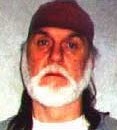
Earnest Knighton
Murderer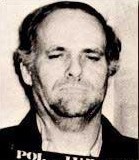 Ervil LeBaron
Murderer · USA · 1972
Ervil Morrell LeBaron (1925 to August 16, 1981) was the leader of a polygamous…
35 victims
Ervil LeBaron
Murderer · USA · 1972
Ervil Morrell LeBaron (1925 to August 16, 1981) was the leader of a polygamous…
35 victims
 Brian Kevin Rosenfeld
Murderer · USA · 1985
Brian Kevin Rosenfeld Brian Kevin Rosenfeld was sentenced to three concurrent l…
23 victims
Brian Kevin Rosenfeld
Murderer · USA · 1985
Brian Kevin Rosenfeld Brian Kevin Rosenfeld was sentenced to three concurrent l…
23 victims
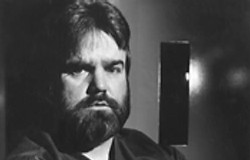 Marvin Gray
Murderer · USA · 1975
Marvin Gray was convicted killer who claimed responsibility for 23 slayings and…
23 victims
Marvin Gray
Murderer · USA · 1975
Marvin Gray was convicted killer who claimed responsibility for 23 slayings and…
23 victims
 Yahweh ben Yahweh
Murderer · USA · 1980
Yahweh ben Yahweh was born and legally named Hulon Mitchell Jr. (October 27, 19…
23 victims
Yahweh ben Yahweh
Murderer · USA · 1980
Yahweh ben Yahweh was born and legally named Hulon Mitchell Jr. (October 27, 19…
23 victims
 Russell Ellwood
Murderer · USA · 1991
Russell Ellwood was a former taxi driver. Authorities suspected him of killing…
20 victims
Russell Ellwood
Murderer · USA · 1991
Russell Ellwood was a former taxi driver. Authorities suspected him of killing…
20 victims
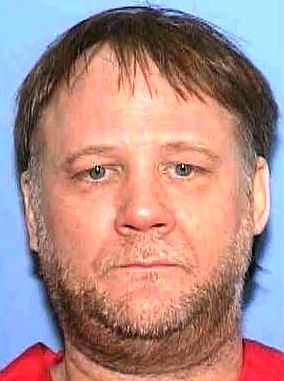 Earl Wesley Berry
Murderer · USA · 1987
Earl Wesley Berry was convicted of capital murder and sentenced to death for th…
1 victim
Earl Wesley Berry
Murderer · USA · 1987
Earl Wesley Berry was convicted of capital murder and sentenced to death for th…
1 victim
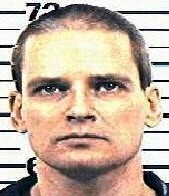 Gregg Francis Braun
Serial killer · USA · 1989
Gregg Francis Braun was executed by lethal injection in Oklahoma on July 20, 20…
5 victims
Gregg Francis Braun
Serial killer · USA · 1989
Gregg Francis Braun was executed by lethal injection in Oklahoma on July 20, 20…
5 victims
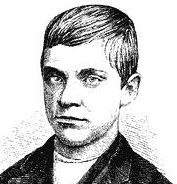 Jesse Pomeroy
Homicide · USA · 1874
Jesse Pomeroy was sentenced to death on two counts in 1876. His sentence was co…
10 victims
Jesse Pomeroy
Homicide · USA · 1874
Jesse Pomeroy was sentenced to death on two counts in 1876. His sentence was co…
10 victims
 Johnson Greybuffalo
Murderer · USA · 1994
Johnson Wade Greybuffalo was born April 21, 1974. He was a full-blooded Ojibwa.…
1 victim
Johnson Greybuffalo
Murderer · USA · 1994
Johnson Wade Greybuffalo was born April 21, 1974. He was a full-blooded Ojibwa.…
1 victim
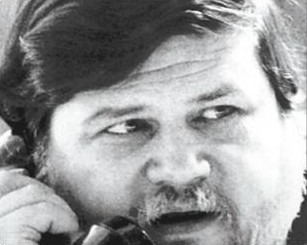 David Mark Pruett
Murderer · USA · 1975
David Mark Pruett · February 12, 1985 — Pruett went to the home of friends Rich…
2 victims
David Mark Pruett
Murderer · USA · 1975
David Mark Pruett · February 12, 1985 — Pruett went to the home of friends Rich…
2 victims
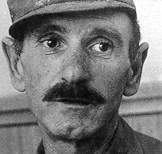 James William Miller
Serial killer · Australia · 1976
James William Miller was convicted of six counts of murder in the Truro murders…
7 victims
James William Miller
Serial killer · Australia · 1976
James William Miller was convicted of six counts of murder in the Truro murders…
7 victims
- Gender
- male
- Country
- USA
- Location
- Bossier Parish, Louisiana, USA
- Date of birth
- 1946
- Age at first offence
- 35
- Characteristics
- robbery, armed robbery
- Victim profile
- Ralph Shell, 52 ( service station proprietor )
- Method of murder
- Shooting
- Date(s) of murder
- March 17, 1981
- Years active
- 1981
- Date of arrest
- —
- Status
-
Executed
Executed by electrocution in Louisiana on October 30, 1984
Case record: Earnest Knighton
Overview
Earnest Knighton, Jr. was executed by electrocution in Louisiana on October 30, 1984. Knighton was convicted of shooting to death Ralph Shell, a Bossier City service station proprietor, during an attempted robbery on March 17, 1981.
Timeline
- March 17, 1981 — Knighton committed a shooting to death Ralph Shell, a Bossier City service station proprietor, during an attempted robbery.
- April 15, 1981 — Knighton was indicted for first degree murder, La.R.S. 14:30, by a grand jury in Bossier Parish, Louisiana.
- June 25, 1981 — The offering of evidence in the guilt phase ended.
- June 26, 1981 — The jury returned a unanimous verdict of guilty of first degree murder; closing arguments occurred in the morning of June 26; after a recess of approximately one hour, the trial resumed for the sentencing hearing.
- June 26, 1981 — During the sentencing phase, the 12 jurors unanimously recommended the death penalty, finding two aggravating circumstances: death of the victim during the course of an armed robbery and the knowing creation of the risk of death or great bodily harm to more than one person.
- June 26, 1981 — The trial judge sentenced Knighton to death by electrocution.
- 1983 — The Supreme Court of Louisiana affirmed the conviction and sentence, finding no merit in more than 35 assignments of error; State v. Knighton, 436 So.2d 1141.
- December 7, 1983 — Knighton's execution was set for December 7, 1983 as mandated by state law, La.R.S. 15:567.
- February 21, 1984 — Knighton’s application for certiorari to the United States Supreme Court was denied.
- April 5, 1984 — The state trial court scheduled the execution for April 5, 1984.
- March 22, 1984 — State habeas applications were denied summarily without evidentiary hearing by the state trial court.
- March 23, 1984 — State habeas applications were denied summarily without evidentiary hearing by the state supreme court.
- March 24, 1984 — Invoking 28 U.S.C. Sec. 2254, Knighton sought a stay of execution and other habeas surcease in a petition filed in the district court.
- March 30, 1984 — The district court stayed the scheduled execution, dismissed with prejudice claims 2, 4, and 5, and docketed an evidentiary hearing on claims 1 and 3.
- August 27, 1984 — Knighton v. Maggio was decided by the United States Court of Appeals for the Fifth Circuit; POLITZ, Circuit Judge.
- August 21, 1984 — Extended oral argument was received on August 21, 1984.
- September 5, 1984 — Knighton's execution was scheduled for the early morning hours of Wednesday, September 5, 1984; the Fifth Circuit denied a stay of execution.
- October 30, 1984 — Knighton was executed by electrocution in Louisiana.
The offence
Background
On April 15, 1981, Knighton was indicted for first degree murder, La.R.S. The trial proceeded as a bifurcated trial with a guilt phase and a sentencing phase.
Investigation and arrest
No investigation or arrest details were provided.
Trial
Guilt phase
After completion of the guilt phase of a bifurcated trial, the 12 jurors returned a unanimous verdict of guilty. Closing arguments were had on the morning of June 26, 1981, and the jury returned a unanimous verdict of guilty of first degree murder.
The trial judge charged and the jury deliberated. The offering of evidence in the guilt phase ended on June 25, 1981. Knighton did not testify. Closing arguments occurred on June 26, 1981. After charge and deliberation, the jury returned a unanimous verdict of guilty of first degree murder.
Phillips “diligently attempted to establish that Knighton lacked the requisite intent to commit the crime.” There was “no question about or challenge to Phillips' performance in the guilt phase.”
Sentencing phase
The proceeding continued with the sentencing phase, La.C.Cr.P. art. 905 et seq., and later that same day the jury unanimously recommended the death penalty. The jury found two aggravating circumstances:
- Death of the victim during the course of an armed robbery.
- The knowing creation of the risk of death or great bodily harm to more than one person.
After a recess of approximately one hour, the trial resumed for the sentencing hearing required by Louisiana law in capital cases, La.C.Cr.P. art. 905.
The trial prosecutor buttressed the evidence offered in the guilt phase by offering evidence of the two California convictions. Phillips offered no evidence but sought to minimize the seriousness of the California convictions.
Phillips testified at the evidentiary hearing that he did not present character-type evidence because he did not wish to give the prosecutor an opportunity to repeatedly emphasize the California convictions or to explore Knighton's difficulties resulting from drug and alcohol abuse.
Phillips made the value judgment that the gain expected from favorable testimony of family and friends would not justify the risk of potential harm from unfavorable testimony expected on cross-examination.
The district court found that Phillips concluded that his best chance for obtaining a favorable sentence verdict lay in a plea for Knighton's life during closing argument, and that he made such a plea.
Key evidence and mitigation efforts mentioned
Knighton consistently maintained his innocence and insisted he had a valid alibi defense. Knighton furnished two witnesses, Robert Williams and Wanda Smith, who purportedly would support that alibi.
Phillips caused subpoenas to issue after being unable to locate Williams and Smith prior to trial. Phillips caused subpoenas to issue with the hope and expectation that the sheriff would have more success in finding these witnesses.
Steven Cowel, an attorney who had previously represented Knighton's mother, assisted Phillips. Cowel had initially been intended to undertake representation of Knighton, but the fee could not be arranged. Cowel assisted Phillips in pretrial investigation and preparation for trial, attempted to locate the alibi witnesses, and communicated with Knighton’s mother and perhaps other members of the family.
Phillips and Cowel discussed the possibility of character witnesses in mitigation, but Phillips decided against calling such witnesses because of Knighton’s prior criminal record and because Knighton had only recently returned to the Shreveport-Bossier City area.
Phillips had copies of Knighton’s prior criminal record furnished by the state, including Knighton’s “rap” sheet and evidence of two convictions in California. Knighton had been convicted of robbery and received a sentence of one year to life. Knighton had also been convicted of grand theft auto and given a concurrent sentence.
Approximately one week before Knighton’s trial, Phillips was appointed to represent a man named Robert Williams who turned out to be Knighton’s missing alibi witness. Williams had been arrested for his involvement in the Knighton armed robbery/murder offense.
Phillips’ continuing efforts to locate Wanda Smith before trial were unsuccessful. Phillips finally met Wanda Smith when the prosecutor brought her to the witness stand as one of the state’s principal witnesses against Knighton. Phillips assessed that Smith “turned out to be the single most damaging witness to Earnest Knighton's case.” Williams also testified for the state. Phillips observed that “the two witnesses most devastating were the two I had subpoenaed.”
Sentencing
The trial judge sentenced Knighton to death by electrocution after the jury unanimously recommended the death penalty. The sentencing phase included findings of aggravating circumstances under Louisiana law as noted above.
Appeals
Supreme Court of Louisiana
The Supreme Court of Louisiana affirmed the conviction and sentence, finding no merit in more than 35 assignments of error, in State v. Knighton, 436 So.2d 1141 (La.1983).
United States Court of Appeals for the Fifth Circuit: Knighton v. Maggio
Knighton, a death-sentenced state prisoner, sought habeas corpus relief under 28 U.S.C. Sec. 2254 from his execution scheduled for the early morning hours of Wednesday, September 5, 1984. The Fifth Circuit treated his notice of appeal as a request for a certificate of probable cause, Fed.R.App.P. 22.
The Fifth Circuit also considered:
- Knighton’s motion to proceed in forma pauperis,
- Knighton’s application for certificate of probable cause,
- Knighton’s application for stay of execution.
Extended oral argument was received on August 21, 1984. The Fifth Circuit granted the motion for pauper status but denied the applications for stay of execution and for certificate of probable cause, concluding there was insufficient basis for issuance of the Great Writ and finding no “substantial showing of the denial of [a] federal right,” applying Barefoot v. Estelle.
The judgment of the district court was affirmed.
Other proceedings (habeas and stays in federal and state court)
State habeas
Knighton sought state habeas relief after April 5, 1984. Those applications were denied summarily without evidentiary hearing by the state trial court on March 22, 1984 and by the state supreme court on March 23, 1984.
Federal district court petition and evidentiary hearing
On March 24, 1984, Knighton filed a petition in the district court invoking 28 U.S.C. Sec. 2254 seeking a stay of execution and other habeas surcease. Knighton alleged trial constitutional infirmities:
- Not receiving the effective assistance of counsel.
- Denial of due process by the court’s refusal to grant a continuance upon the severance of a co-defendant.
- A constitutional deprivation when counsel failed to appeal the court’s limitation on closing argument in the penalty phase.
- Denial of due process by use of a Witherspoon “death qualified” jury.
- Denial of eighth amendment rights in violation of Gregg v. Georgia.
On March 30, 1984, the district court stayed the scheduled execution, dismissed with prejudice the foregoing enumerated claims 2, 4, and 5, and docketed an evidentiary hearing on claims 1 and 3.
Upon conclusion of the hearing, the district court rejected all claims and vacated its stay. The district court denied Knighton’s request for IFP and CPC and declined to extend the stay pending appeal.
Legal analysis and claims raised in federal appeal (as described)
The principal issue addressed in oral argument was the claimed denial of Knighton’s sixth amendment right to the effective assistance of counsel during the penalty phase of his trial, asserted as a failure by court-appointed counsel during the penalty phase.
The Fifth Circuit applied the framework of Strickland v. Washington. The court concluded Knighton received effective assistance of counsel, and therefore did not reach prejudice as a required step because it found performance was not constitutionally inadequate.
Knighton argued that his attorney, S. Patrick Phillips, totally failed to investigate all matters relevant to the sentencing hearing and that the failure was not strategic or tactical due to a lack of investigation.
The Fifth Circuit found Phillips acted as an experienced criminal trial attorney and performed reasonable investigation and preparation. The court noted Phillips conferred with Knighton on six to eight occasions for a total of six hours; Knighton consistently maintained his innocence; and Phillips attempted to locate the named alibi witnesses.
The Fifth Circuit also addressed Knighton’s claim that counsel failed to preserve an objection to a limitation on closing argument. It concluded the contention had no merit and referenced that the Louisiana Supreme Court specifically addressed the issue in assignment of error number 29 in State v. Knighton, 436 So.2d at 1155-56. It also stated that Phillips made the desired statement twice and that the trial court admonished the jury neither times to disregard counsel’s remarks.
For the continuance issue, Knighton’s counsel acknowledged that rulings involving a continuance are addressed to sound discretion and rarely reach constitutional proportions. The Louisiana Supreme Court found no prejudice on direct appeal, and the Fifth Circuit agreed.
Witherspoon v. Illinois claim
Knighton contended that his right to a fair trial by an impartial jury was violated when he was tried by a jury qualified under Witherspoon v. Illinois. Knighton suggested that Witherspoon’s underpinnings had been eroded by Furman v. Georgia and Gregg v. Georgia, and suggested possible changes to jury selection and use of death-qualified jurors.
The Fifth Circuit stated the argument must be directed to other fora, legislative and judicial, and declined to plow that legal furrow in that setting.
Eighth Amendment aggravating factor claim
Knighton argued that his eighth amendment rights were violated because the jury found an aggravating factor that Knighton “knowingly created a risk of death or great bodily harm to more than one person” without evidence supporting that finding.
The Louisiana Supreme Court found it unnecessary to decide that issue, because if the jury found more than one statutory aggravating circumstance and one was clearly supported by the record, the sentence need not be overturned because one additional circumstance was not supported.
The Fifth Circuit applied the principle that a death sentence supported by at least one valid aggravating circumstance need not be set aside simply because another aggravating circumstance was “invalid” in the sense that it was insufficient by itself. It found no constitutional inadequacy.
Proportionality review claim
Knighton argued that his death sentence was constitutionally disproportionate to sentences received for similar crimes in Bossier Parish and throughout Louisiana, and also disproportionate to sentences in more egregious circumstances.
The Fifth Circuit concluded the record did not contain the basis for the reversal sought and declined to accept the argument that only statewide proportionality review could pass constitutional muster. It stated that review based on a smaller geographic area was not constitutionally disallowed.
In forma pauperis status
The Fifth Circuit agreed Knighton was entitled to proceed in forma pauperis and granted pauper status.
Outcome
The Fifth Circuit granted the motion for pauper status but denied the applications for stay of execution and for certificate of probable cause. It affirmed the judgment of the district court.
Last words
Knighton’s last words were:
"I am sorry, more sorry than I can say Mr. Shell is dead and that I'm responsible. I feel sorry for Mrs. Shell and all of Mr. Shell's family and friends. I feel sorry for my mother, my family and everyone else who will grieve for me. I have asked God to forgive me... "I have to say that what you are doing is wrong. If I thought my death would bring back Mr. Shell or would save someone else from a murder I would volunteer, but I know it won't. You don't teach respect for life by killing. I urge you not to kill anyone else. I ask God to forgive you for killing me. I now ask God in the name of Jesus to receive my spirit."
Participants and names mentioned
- Earnest Knighton, Jr. — defendant; death-sentenced state prisoner; executed by electrocution.
- Ralph Shell — victim; Bossier City service station proprietor.
- S. Patrick Phillips — chief counsel for the Indigent Defender Board for the Twenty-sixth Judicial District, Bossier Parish, Louisiana; Knighton’s counsel in the federal habeas proceedings; attorney assigned at trial; argued ineffective assistance claims.
- Steven Cowel — attorney who assisted Phillips; previously represented Knighton’s mother.
- Robert Williams — witness named as supporting Knighton’s alibi; later described as arrested for involvement in the armed robbery/murder offense.
- Wanda Smith — witness named as supporting Knighton’s alibi; served as one of the state’s principal witnesses; described by Phillips as “turned out to be the single most damaging witness to Earnest Knighton's case.”
- Robert Williams (also referenced as a man Phillips was appointed to represent) — appears as the missing alibi witness.
- Wanda Smith — referenced as the alibi witness who testified for the state.
- POLITZ, Circuit Judge — Fifth Circuit judge in Knighton v. Maggio.
- Barefoot v. Estelle — cited case in denial of certificate of probable cause and stay.
- Strickland v. Washington — framework applied to ineffective assistance of counsel claim.
- Witherspoon v. Illinois — cited in relation to jury qualification.
- Furman v. Georgia; Gregg v. Georgia; Zant v. Stephens — cited in relation to eighth amendment and aggravating circumstances.
- Pulley v. Harris; Engle v. Isaac; Michel v. New York; Moore v. Maggio; Keeten v. Garrison; Grigsby v. Mabry — cited cases mentioned in the court’s discussion.
Statutory and court references mentioned
- La.R.S. 14:30 — first degree murder statute referenced in the indictment.
- La.C.Cr.P. art. 905 — sentencing phase in capital cases referenced.
- La.C.Cr.P. art. 905 et seq. — sentencing proceedings referenced.
- La.C.Cr.P. art. 905.4(a), (d) — statutory aggravating circumstances referenced.
- La.C.Cr.P. art. 905.9 — proportionality review referenced.
- La.R.S. 15:567 — state law mandating issuance of death warrant referenced.
- 28 U.S.C. Sec. 2254 — federal habeas statute invoked.
- Fed.R.App.P. 22; Fed.R.Civ.P. 52(a) — procedural and standard of review references.
- Fifth Circuit Local Rule 8 — procedure for expeditious handling of requests for stays referenced.
Aftermath
Knighton was executed by electrocution in Louisiana on October 30, 1984. The Fifth Circuit proceedings had resulted in denial of a stay of execution and denial of a certificate of probable cause, while granting in forma pauperis status.
Spotted an error, or have more information about this case?