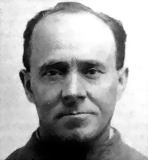
Frederick Guy Browne
Murderer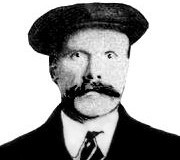 Albert Burrows
Murderer · United Kingdom · 1920
Albert Burrows (also named Albert Edward Burrows): married farm labourer who to…
4 victims
Albert Burrows
Murderer · United Kingdom · 1920
Albert Burrows (also named Albert Edward Burrows): married farm labourer who to…
4 victims
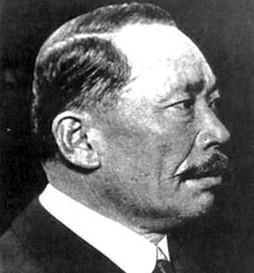 Lock Ah Tam
Murderer · United Kingdom · 1925
Lock Ah Tam was 54 when he killed his wife and two daughters. He had been a suc…
3 victims
Lock Ah Tam
Murderer · United Kingdom · 1925
Lock Ah Tam was 54 when he killed his wife and two daughters. He had been a suc…
3 victims
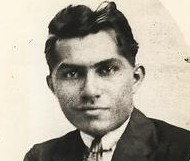 Buck Ruxton
Murderer · United Kingdom · 1935
Buck Ruxton (21 March 1899, Bombay – 12 May 1936, Manchester) was also known as…
2 victims
Buck Ruxton
Murderer · United Kingdom · 1935
Buck Ruxton (21 March 1899, Bombay – 12 May 1936, Manchester) was also known as…
2 victims
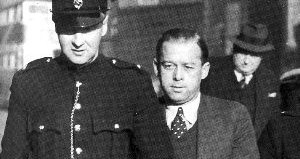 Walter Graham Rowland
Murderer · United Kingdom · 1934
Defendant: Walter Graham Rowland Age: 39 (labourer) Residence/Origin: from Mell…
2 victims
Walter Graham Rowland
Murderer · United Kingdom · 1934
Defendant: Walter Graham Rowland Age: 39 (labourer) Residence/Origin: from Mell…
2 victims
 Thomas Beavers
Murderer · USA · 1990
May 1990 — Thomas Beavers broke into the home of Marguerite E. Lowery, raped he…
1 victim
Thomas Beavers
Murderer · USA · 1990
May 1990 — Thomas Beavers broke into the home of Marguerite E. Lowery, raped he…
1 victim
 Marie Alexandrine Becker
Serial killer · Belgium · 1932
Marie Alexandrine Becker was born in 1877 and was from Liege, Belgium. She spen…
10 victims
Marie Alexandrine Becker
Serial killer · Belgium · 1932
Marie Alexandrine Becker was born in 1877 and was from Liege, Belgium. She spen…
10 victims
 Larry C. Williams
Murderer · USA · 1979
Larry C. Williams and the other men drank beer, smoked pot, and watched TV for…
2 victims
Larry C. Williams
Murderer · USA · 1979
Larry C. Williams and the other men drank beer, smoked pot, and watched TV for…
2 victims
 Edward Castro
Murderer · USA · 1987
Edward Castro was condemned for the choking and stabbing death of 56-year-old A…
3 victims
Edward Castro
Murderer · USA · 1987
Edward Castro was condemned for the choking and stabbing death of 56-year-old A…
3 victims
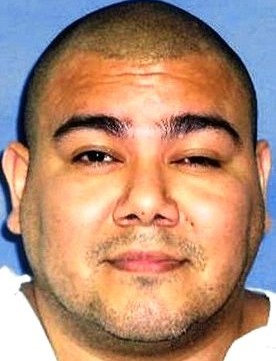 David Martinez
Murderer · USA · 1994
David Martinez was convicted and sentenced to death for the 1994 capital murder…
2 victims
David Martinez
Murderer · USA · 1994
David Martinez was convicted and sentenced to death for the 1994 capital murder…
2 victims
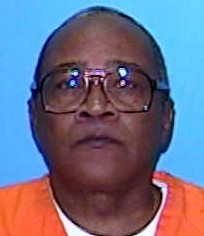 Norman Parker
Murderer · USA · 1966
Name: Norman Parker · Also known as: Nathen Parker; Shawn Vincent · Date of bir…
3 victims
Norman Parker
Murderer · USA · 1966
Name: Norman Parker · Also known as: Nathen Parker; Shawn Vincent · Date of bir…
3 victims
- Gender
- male
- Country
- United Kingdom
- Location
- Howe Green, Essex , England, United Kingdom
- Date of birth
- 1881
- Age at first offence
- 46
- Characteristics
- escape
- Victim profile
- Police Constable George William Gutteridge, 36
- Method of murder
- Shooting (Webley revolver)
- Date(s) of murder
- September 27, 1927
- Years active
- 1927
- Date of arrest
- January 25, 1928
- Status
-
Executed
Executed by hanging at Pentonville prison on May 31, 1928
Case overview
Frederick Guy Browne was executed by hanging at Pentonville prison on May 31, 1928.
The offence
On 27 September 1927 at about 4 am, William Henry Kennedy and Frederick Guy Browne were on the Romford to Ongar road in Essex when they were stopped by PC Gutteridge. They were driving a Morris Cowley car that they had stolen earlier from Billericay. PC Gutteridge had got off his bicycle and was standing to the side of the road. As the car approached, he indicated with his lamp for them to stop, but they ignored this and drove past. PC Gutteridge immediately blew on his police whistle and the car stopped. He approached the drivers window and began to ask questions. When PC Gutteridge took out his notebook and began to write in it, Browne fired two shots at the policeman; both shots hit him in the face. PC George William Gutteridge staggered back and fell down. Both men got out of the car and walked over to where the wounded policeman was lying injured. Browne stooped down and fired a bullet into each of the policemans eyes, killing him.
A later description of the discovery stated that the body of PC 489 George Gutteridge was found in a country lane near to Howe Green, between Romford and Ongar, in Essex. The body was propped up against a bank with the legs sticking out into the road. PC Gutteridge’s helmet lay near-by, as did his pocket book. His police whistle hung loose on its chain and his pencil was held in his right hand. The policeman had been shot four times, twice through the left cheek and once through each eye. Time of death was placed between four and five hours prior to discovery. It was deduced that PC Gutteridge had stopped a car and was about to record details when he had been shot.
Investigation
The car involved had been reported earlier as stolen. It was later found abandoned in London with bloodstains on the bodywork and an empty cartridge case on the floor.
A check of local crimes quickly revealed that a blue Morris-Cowley belonging to Dr Edward Lovell had been stolen from his locked garage in London Road, Billericay, during the previous night. Neighbours remembered the sound of a car being started at about 2.30am and driving off down Mountnessing Road. The car had already been found in Brixton, South London. Its nearside mudguard had been bent, there was blood on the bodywork, and there was an empty cartridge case under the passenger seat.
It was determined that the cartridge had been made at the Woolwich Arsenal and that it had been distinctively marked by a fault in the breech-block of the gun that had fired it. Ballistics expert Robert Churchill determined that the weapon had been a Webley. Two Webleys were found in the mud of the Thames but neither of them proved to be the fatal weapon.
In the early stages, it was thought that PC Gutteridge had stopped a motorist to question him about the car and was shot. There was also later discussion of a reason for the deliberate shooting out of the eyes of PC Gutteridge, attributed to a superstition that the last sight a man saw was photographically imprinted on the retinas of the eyes.
Arrest and custody
Four months after the incident, while interviewing Kennedy’s accomplice, police found a Webley revolver in Browne’s garage. This gun was proved to be the same one that had killed PC Gutteridge.
Knowing that Browne and Kennedy were partners, police arrested Kennedy, who quickly admitted that he had been in the car on the day PC Gutteridge was killed and said that Browne had fired the shot.
On 20th January 1928 police arrested Frederick Guy Browne at his garage near Clapham Junction on a charge of stealing a Vauxhall. The Vauxhall had been sold to a butcher in Sheffield in the previous November by Browne, and police recovered evidence at Browne’s premises. A search of Browne’s person revealed twelve .45 cartridges in his back pocket and a fully loaded Webley revolver inside the driver’s door of the car he had been driving. Police also found sixteen .45 cartridges wrapped in paper in the garage’s office, twenty-three .22 cartridges, a small revolver, and a fully loaded Smith & Wesson at Browne’s lodgings.
A narrative of Browne and Kennedy’s relationship included that Browne had employed habitual drunkard 42-year-old Kennedy as an odd-job man from June until 17th December 1927. Browne then sacked Kennedy because he could not stop him from drinking.
Other people, background, and biographical details
PC George William Gutteridge was identified in one section as Police Constable 489 and described as born in Downham Market, Norfolk in 1891. He joined Essex County Constabulary in April 1910 and served as constable 489. After training at Headquarters, he was posted to Southend, then served at Romford and Grays before resigning in April 1918 to join the army where he served for 10 months in the Machine Gun Corps. On 23rd February 1919 he rejoined Essex County Constabulary, returning initially to Grays and then to Epping Division from 14th March 1922. He was posted to a section station that included four beats at Stapleford, Lambourne End, Stanford Rivers, and Kelvedon Hatch. He was based at Stapleford Abbots. He was married to Rose Annette Emmerline, and they lived at 2 Towneley Cottages, Stapleford Abbots, with their two children, Muriel and Alfred (known as Jack). A village postman, Harry Alexander, lived next door at number 3. One of his sons, John, married PC Gutteridge’s daughter, Muriel, in 1938.
After an evening with his family, George Gutteridge resumed duty at 11pm on 26th September 1927 and left his home to meet his opposite number, Police Constable Sydney Taylor, who was stationed at Lambourne End. The officers met at a conference point at Howe Green on the B175 Romford to Chipping Ongar road before George Gutteridge left for the mile walk home at 3.05am. He never made it.
William Alec Ward (known as Alec Ward), described as a post office worker, was said to have dropped mail at Stapleford Abbots post office and later to have found the body of George Gutteridge.
The narrative also provided additional background on Browne: Browne had convictions for carrying firearms, stealing motorcycles and cars, and for fraudulently claiming insurance on them. Because he was too violent for Parkhurst, he was moved to Dartmoor Prison, and it was suggested that he met Kennedy there. Browne also denied any involvement at trial and maintained his innocence by claiming he was at home in bed that night.
Kennedy was described as coming from Irish parents and had an Irish accent. It stated that Kennedy had deserted or been dismissed from several Army regiments and had convictions for indecent exposure, housebreaking, theft, drunk and disorderly behaviour, and larceny. It also stated that Browne drove Kennedy to Euston station on 17th December and Kennedy went to Liverpool, staying there for three weeks before returning to London and marrying on 18th January. Kennedy had three more days of freedom after arriving in London.
Events after the arrest attempt
It was stated that on the day after Browne’s arrest narrative began with an event involving Kennedy: at 11.40pm on Wednesday 25th January, Kennedy left his home in a hurry. He had no shirt on and his trousers and boots were undone. He was trying to hide his face but was approached by DS Bill Mattinson, who knew Kennedy. Kennedy recognized the detective and pulled a pistol from his pocket. Kennedy shouted, "Stand back, Bill - or I'll shoot you!" and fired at the policeman. There was only a click as the gun failed to fire. Mattinson grabbed Kennedy’s gun arm with his left hand and hit him with the other. Mattinson shouted for assistance and held on to Kennedy until three colleagues came to his aid. It was then found that the safety catch was on.
By the following evening, Kennedy had been returned to London and was in custody at New Scotland Yard. DI Berrett visited him and asked if he knew anything about the murder of PC Gutteridge. Kennedy asked if he could have time to think, did so for several minutes, then asked if he could see his wife. After speaking to his wife, who had travelled down from Liverpool with him, Kennedy made a statement; the statement took three hours to take down and implicated Browne in the murder.
Trial
At their Old Bailey trial that opened in April 1928, Browne maintained his innocence of any involvement in the crime, claiming he was at home in bed that night. The trial involved forensic evidence given by Robert Churchill, including marks on the cartridge case that proved that the gun found in Browne’s car was the murder weapon, and the composition of the propellant in the cartridges. Both men were found guilty and sentenced to death.
Another description stated that both men appeared at the Central Criminal Court, before Mr. Justice Avery, and evidence was heard from some forty prosecution witnesses, including four ballistics experts. It stated that Churchill proved to the court through photographs that the markings on the cartridge case matched those on the revolver. It also recorded that Browne protested his innocence and that Kennedy had admitted his part in the killing.
Sentencing and execution
Both men were sentenced to death. While waiting for sentence to be carried out, Browne tried to commit suicide three times: once by hanging himself and then by cutting his throat. He even tried to go on a hunger strike and had to be force fed. He was not successful and both were hanged at the same time on 31 May 1928. Browne was hanged at Pentonville and Kennedy at Wandsworth.
The execution was also described with the names of the hangmen: Browne at Pentonville by Robert Baxter and Henry Pollard, and Kennedy at Wandsworth by Thomas Pierrepoint and Robert Wilson.
Outcome
Browne was executed by hanging at Pentonville prison on May 31, 1928.
Aftermath and memorial details
It was stated that George Gutteridge’s grave was at Warley Cemetery and that a memorial stone inscription read: "In proud memory of George William Gutteridge, Police Constable, Essex Constabulary, who met his death in the performance of his duty on September 27th 1927" The stone was unveiled by the Essex Chief Constable, Captain A J Unett, in 1928.
It was also stated that the bullets and Webley revolver used to kill George Gutteridge were in the Essex Police Museum, while other exhibits relating to Browne and Kennedy were in the Black Museum at Scotland Yard. A memorial stone was set at Gutteridge Lane, on the Romford to Chipping Ongar road, midway between the Royal Oak and The Rabbits public houses.
A narrative also noted that the bodies were discovered with specific items near the body, including PC Gutteridge’s helmet, pocket book, police whistle, pencil stub, notebook, truncheon, and torch, and that a huge manhunt was started for the killer or killers. It also stated that the alignment of the road had been changed since 1927 and that a short stretch had been renamed Gutteridge Lane.

Spotted an error, or have more information about this case?