Timothy McCorquodale
Murderer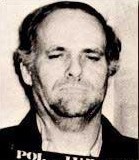 Ervil LeBaron
Murderer · USA · 1972
Ervil Morrell LeBaron (1925 to August 16, 1981) was the leader of a polygamous…
35 victims
Ervil LeBaron
Murderer · USA · 1972
Ervil Morrell LeBaron (1925 to August 16, 1981) was the leader of a polygamous…
35 victims
 Marvin Gray
Murderer · USA · 1975
Marvin Gray was convicted killer who claimed responsibility for 23 slayings and…
23 victims
Marvin Gray
Murderer · USA · 1975
Marvin Gray was convicted killer who claimed responsibility for 23 slayings and…
23 victims
 Yahweh ben Yahweh
Murderer · USA · 1980
Yahweh ben Yahweh was born and legally named Hulon Mitchell Jr. (October 27, 19…
23 victims
Yahweh ben Yahweh
Murderer · USA · 1980
Yahweh ben Yahweh was born and legally named Hulon Mitchell Jr. (October 27, 19…
23 victims
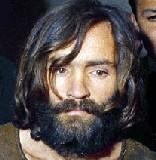 Charles Manson
Murderer · USA · 1969
Charles Milles Manson (born November 12, 1934) was an American criminal and mus…
9 victims
Charles Manson
Murderer · USA · 1969
Charles Milles Manson (born November 12, 1934) was an American criminal and mus…
9 victims
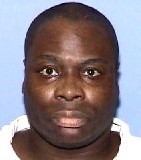 Edward Lee Busby
Murderer · USA · 2004
Name: Edward Lee Busby, Jr. TDCJ Number: 999506 Date of birth: 07/25/1972 Age a…
1 victim
Edward Lee Busby
Murderer · USA · 2004
Name: Edward Lee Busby, Jr. TDCJ Number: 999506 Date of birth: 07/25/1972 Age a…
1 victim
 Debra Milke
Murderer · USA · 1989
Debra Jean Milke (born March 10, 1964 in Berlin-Steglitz) was a German-born Ari…
1 victim
Debra Milke
Murderer · USA · 1989
Debra Jean Milke (born March 10, 1964 in Berlin-Steglitz) was a German-born Ari…
1 victim
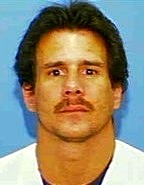 Glenn Benner
Murderer · USA · 1985
Glenn Benner II was convicted of aggravated murder for the murders of Cynthia S…
2 victims
Glenn Benner
Murderer · USA · 1985
Glenn Benner II was convicted of aggravated murder for the murders of Cynthia S…
2 victims
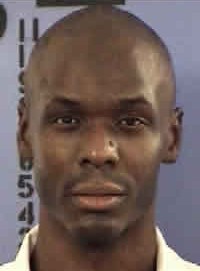 Howard Milton Belcher
Murderer · 2002
Howard Milton Belcher was 26 years old when he was formally charged in the deat…
4 victims
Howard Milton Belcher
Murderer · 2002
Howard Milton Belcher was 26 years old when he was formally charged in the deat…
4 victims
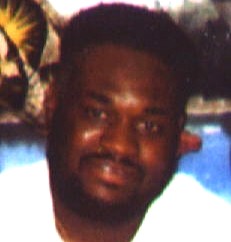 Abdullah Hameen
Homicide - Murderer · USA · 1980
Abdullah Hameen was executed by lethal injection in Delaware on May 25, 2001. H…
2 victims
Abdullah Hameen
Homicide - Murderer · USA · 1980
Abdullah Hameen was executed by lethal injection in Delaware on May 25, 2001. H…
2 victims
- Gender
- male
- Country
- USA
- Location
- Atlanta, Georgia, USA
- Date of birth
- 1952
- Age at first offence
- 22
- Characteristics
- rape, mutilation
- Victim profile
- Donna Marie Dixon (female, 17)
- Method of murder
- Strangulation
- Date(s) of murder
- January 17, 1974
- Years active
- 1974
- Date of arrest
- —
- Status
-
Executed
Executed by electrocution in Georgia on October 21, 1987
Case record: Timothy McCorquodale
Background
Timothy McCorquodale was convicted and sentenced to death for the 1974 torture and murder of a 17-year-old girl, Donna Marie Dixon. He was also described as “the fifth man to be executed in Georgia this year” and “the 93d prisoner to be put to death in the United States since the Supreme Court cleared the way for states to resume capital punishment in 1976.”
Donna Marie Dixon had been a runaway from Newport News, Va. She went to “the Strip,” a “rough section of midtown Atlanta” that had previously “housed the city’s hippie community.” The case involved McCorquodale’s girlfriend, Bonnie Succaw (now Johnson), and the victim’s friend, Pamela. The events occurred in the City of Atlanta around Peachtree and 10th Street.
The offence
On the evening of January 16, 1974, Donna and her friend Pamela were in the area of Peachtree and 10th Street in the City of Atlanta known as “The Strip.” While in a restaurant, they were accosted by a man named Leroy who invited them to a bar for a beer. In the bar, the two girls engaged in a conversation with two black men. Leroy left the bar and the girls later went to another bar on “The Strip.” Leroy met them at this bar, approached their table, and accused Donna and Pamela of stealing $40 or $50 from him and giving the money to a black pimp.
At this point, McCorquodale and his girlfriend, Bonnie Succaw (now Johnson), joined them. At the request of Leroy and McCorquodale, the girls were taken to a bathroom and searched by Bonnie and a friend. No money was found. McCorquodale and Leroy then summoned a cab, and joined by Bonnie, they took Donna with them to Bonnie’s apartment. They arrived shortly after midnight and found Bonnie’s roommate, Linda, and Bonnie’s three-year-old daughter asleep. McCorquodale had lived some eight months prior to this time in the apartment with Bonnie.
Linda joined them in the living room. There was conversation between McCorquodale and Leroy about Donna being a “nigger lover” and that she needed to be taught a lesson. McCorquodale, after telling Donna how pretty she was, raised his fist and hit her across the face. When she stood up, he grabbed her by her blouse, ripping it off. He removed her bra, tied her hands behind her back with a nylon stocking, and removed his belt, which was fastened with a rather large buckle. He repeatedly struck Donna across the back with the buckle end of the belt. He took off all her clothing, and bound her mouth with tape and a washcloth.
Leroy then kicked Donna and she fell to the floor. McCorquodale burned Donna on her breasts, her thigh, and her navel with his cigarette. He bit one of Donna’s nipples and she began to bleed. McCorquodale asked for a razor blade and sliced the other nipple. He then called for a box of salt and poured it into the wounds he had made on her breasts.
At this point, Linda, who was eight months pregnant, became ill and went into the bedroom and closed the door. McCorquodale lit a candle and dripped hot wax over Donna’s body, holding the candle about 1/2 inch from Donna’s vagina and dripping the hot wax into this part of her body. He used a pair of surgical scissors to cut around Donna’s clitoris.
While bleeding from her nose and vagina, Leroy forced Donna to perform oral sex on him while McCorquodale raped her. Then Leroy raped Donna while McCorquodale forced his penis into her mouth. McCorquodale found a hard plastic bottle about 5 inches in height, placed an antiseptic solution within it, forcing the bottle into Donna’s vagina and squirting the solution into her. Donna was then permitted to go to the bathroom to “get cleaned up.”
While she was in the bathroom, McCorquodale secured a piece of nylon rope and told Bonnie and her roommate that he was going “to kill the girl.” He hid in a closet across the hall from the bathroom. When Donna came out of the bathroom, McCorquodale wrapped the nylon cord around her neck. Donna screamed, “My God, you’re killing me.” As McCorquodale tried to strangle her, the cord cut into his hands and Donna fell to the floor. He fell on top of her and began to strangle her with his bare hands. He removed his hands and Donna began to have convulsions. He again strangled her and then pulled her head up and forward to break her neck. He covered her lifeless body with a sheet, departed the apartment to search for a means of transporting her body, and returned later.
By approximately 6:00 a.m. on the morning of January 17, McCorquodale asked Bonnie for her trunk. Leroy and McCorquodale tried to place Donna’s body in the trunk. Finding the body too large for the trunk, McCorquodale proceeded to break Donna’s arms and legs by holding them upright while he stomped on them with his foot. Donna’s body was then placed in the trunk and the trunk was placed in the closet behind the curtains.
McCorquodale and Leroy went to sleep on the couch in the living room for the greater portion of the day and left the apartment sometime during the afternoon. A strong odor emanated from the body, and Linda’s efforts to mask the smell with deodorant spray were unsuccessful. Linda called Bonnie to request that McCorquodale remove the trunk from the apartment. Shortly after 8:00 p.m., McCorquodale arrived at the apartment with a person named Larry. As they attempted to move the trunk from the closet, blood began spilling from the trunk onto the living room floor. McCorquodale placed a towel under the trunk to absorb the blood as they carried the trunk to Larry’s car.
When McCorquodale and Larry returned to the apartment, they told Linda that the body had been dumped out of the trunk into a road and that the trunk was placed under some boxes in a “Dempsey Dumpster.” Donna’s body was found about half a mile off Highway No. 42 in Clayton County.
Investigation
At trial, evidence showed that McCorquodale became enraged when he saw Miss Dixon speaking with a black man in a bar near the Strip. At trial, witnesses stated that McCorquodale and another man took Miss Dixon to the apartment of a girlfriend of McCorquodale’s, where they raped her, tortured her for two hours, and tried to strangle her with a nylon cord. When that failed, evidence showed McCorquodale broke her neck with his hands. Her nude body, stuffed into a box, was dumped in suburban Clayton County.
The case prosecutor, Joe Drolet, said the other man involved in the killing was never found.
In 1976, a state psychiatrist reported that McCorquodale could not remember Miss Dixon’s murder. The psychiatrist’s report included a quotation of McCorquodale: “I cannot believe that I would do them things,” he was quoted as saying. “I just don’t believe I could do it.”
Trial
McCorquodale faced sentence review for the death penalty after conviction for murder, described in the decision as involving torture, depravity of mind, and an aggravated battery to the victim. The aggravating circumstances found by the jury were: “that the offense of murder . . . was outrageously or wantonly vile, horrible or inhuman in that it involved torture, depravity of mind, or an aggravated battery to the victim.” Ga. L. 1973, pp. 159, 163 (Code Ann. 27-2534.1(h7)).
McCorquodale challenged the verdict in his appeal, arguing that the aggravating circumstances found by the jury were not connected with the actual homicide and that the victim did not protest the treatment and that the torture did not lead to the death due to a break between mistreatment and killing. The court characterized the torture and killing as an uninterrupted night of horror and affirmed the jury’s finding. The trial court’s denial of a motion for new trial was upheld.
In the appeals discussion, the court addressed multiple enumerations of error. Among them:
- The court addressed voluntariness of a confession and the court’s decision not to charge the jury on voluntariness in the absence of a specific request, noting that the trial court held a full and complete hearing and determined the confession was voluntary and admissible for the jury’s consideration.
- The appeals discussion addressed refusal to accept McCorquodale’s guilty plea and waiver of jury trial, and it discussed the judge’s discretion under a statute providing that a person indicted for an offense punishable by death “may enter a plea of guilty” and that the judge “may, in his discretion” sentence to life imprisonment or any punishment authorized by law, except that the judge “must find one of the statutory aggravating circumstances” before imposing the death penalty.
- The appeals discussion described seizure of clothing based on a “plain view rule,” referencing Katz v. United States and Coolidge v. New Hampshire.
- The court addressed admission of photographs of the victim.
- The court addressed the constitutionality of Georgia’s death penalty statute and related provisions regarding written portions of the court’s charge.
- The court addressed that jurors who stated they could not under any circumstances consider imposition of the death penalty were properly excused for cause under Witherspoon v. Illinois.
- The court addressed denial of defense motions for mistrial based on remarks of the district attorney during closing argument, finding no reversible error and describing the standard of discretion.
- The court addressed an instruction on voluntary manslaughter, explaining it was not given because evidence did not authorize such instruction and noting evidence that McCorquodale deliberately secured a piece of rope, waited for the victim to return from the bathroom, and stated to those present that he was going to “kill the girl.”
- The court addressed the provision of a list of witnesses to be called by the state prior to arraignment and the opportunity to interview those witnesses.
- The court addressed validity of the arrest based on local tip, sheriff transmission, an eyewitness statement implicating McCorquodale, and “what appeared to be blood spatters on the defendant’s trousers,” leading to an arrest without a warrant justified under Code 27-207.
The appeals discussion included the court’s conclusion at the end of the sentence review portion: “We conclude that the sentence of death imposed in this case was not imposed under the influence of passion, prejudice, or any other arbitrary factor, and the evidence supports the jury’s finding of statutory aggravating circumstances.”
It further concluded that the sentence was not excessive or disproportionate when compared with previous cases and that depravity and torture had not exceeded that established by the evidence and testimony of witnesses. The court affirmed the sentence of death.
Sentencing
McCorquodale received the death sentence for the murder of Donna Marie Dixon. The record described in the United States Supreme Court and Georgia Supreme Court context included that he was sentenced to die for the slaying of Donna Marie Dixon, a runaway from Newport News, Va., who had gone to “the Strip.”
Wayne Snow, described as the parole board chairman, stated that on Friday the panel received a letter from McCorquodale in which “he does show considerable remorse for what he’s done.” The same passage stated that the board viewed the killing as “one of the most heinous crimes committed in the state” and decided against commuting the death sentence for that reason.
Appeals
Georgia Supreme Court and direct review
In McCorquodale v. The State, October 15, 1974, Docket number: 29131, the court addressed enumerations of error and affirmed the sentence of death.
The decision explicitly stated that the trial court did not err in overruling the appellant’s motion for new trial. It also stated that it affirmed the sentence of death and included an appendix listing similar cases considered.
Federal habeas corpus
McCorquodale filed multiple federal habeas petitions. The Eleventh Circuit decisions addressed procedural dismissal grounds and, in one instance, an Eighth Amendment claim under Caldwell v. Mississippi.
- Eleventh Circuit (No. 84-8414, Sept. 8, 1987) reviewed denial of relief on McCorquodale’s second federal habeas corpus petition.
- The court described it as his second federal habeas corpus petition.
- It stated that the petition raised three claims: sentencing phase jury instructions being constitutionally deficient, discriminatory application of the death penalty in Georgia, and ineffective assistance of counsel during voir dire.
- The district court dismissed each claim under Rule 9.
- The Eleventh Circuit said it did not need to decide whether discriminatory application was properly dismissed under Rule 9 grounds in light of rejection in McCleskey v. Kemp and held that the district court did not err in dismissing the jury instruction claim as an abuse of the writ, affirming the judgment denying relief.
- The decision included procedural discussion of Rule 9(b) successive petitions and burden to rebut abuse of the writ when the state alleges it.
- The court discussed that the jury instruction challenge was not a “new law” claim and that, based on Chenault v. Stynchcombe and the timing, the jury instruction claim had been available to habeas counsel earlier.
- The court discussed justifications offered by McCorquodale, including that counsel had not consciously identified claims and the argument related to exhaustion law at the time.
- The Eleventh Circuit concluded that McCorquodale had not met his burden and affirmed.
The Eleventh Circuit’s decision also included a numbered footnote providing procedural history. It stated:
- McCorquodale received the death sentence in Fulton County, Georgia for the murder of Donna Marie Dixon on April 12, 1974.
- The Georgia Supreme Court affirmed, 233 Ga. 369, 211 S.E.2d 577 (1974), and the United States Supreme Court denied certiorari, 428 U.S. 910 (1976).
- It stated that McCorquodale filed his first state habeas petition on October 28, 1978, that it was denied and the Georgia Supreme Court affirmed, 239 Ga. 138, 236 S.E.2d 486 (1974), and that the U.S. Supreme Court denied certiorari, 434 U.S. 975 (1977).
- It stated that he then filed an “extraordinary motion for a new trial” in Fulton County court; that it was denied; and that the Georgia Supreme Court affirmed, 242 Ga. 507, 249 S.E.2d 211 (1978).
- It stated that he filed his first federal habeas corpus petition on January 17, 1979 in N.D. Georgia, that the district court dismissed the petition on October 21, 1981 (525 F.Supp. 408), and that this court reversed in 705 F.2d 1553 (11th Cir. 1983) but that the court en banc affirmed the district court (721 F.2d 1493).
- It stated that the U.S. Supreme Court denied certiorari on April 23, 1984 (466 U.S. 954).
- It stated that in May 1984 a new date was set for McCorquodale’s execution.
- It stated that a successor state habeas petition was filed in Butts County and dismissed.
- It stated that the Georgia Supreme Court denied McCorquodale a certificate of probable cause to appeal.
- It stated that on May 18, 1984 McCorquodale filed his second federal habeas corpus petition in N.D. Georgia, that the district court dismissed it on abuse of the writ grounds, and described motions for a stay and certificate of probable cause.
- It stated that the U.S. Supreme Court granted the requested stay of execution and suspension in the first federal petition before the Eleventh Circuit acted.
- It stated that on September 5, 1984 this court granted a certificate of probable cause in the second petition.
- It stated that in February 1985, the U.S. Supreme Court again denied certiorari in the first federal petition (470 U.S. 1024).
- Eleventh Circuit (No. 87-8724, Sept. 20, 1987) addressed McCorquodale’s third federal habeas petition.
- The court stated McCorquodale had been convicted of murder and sentenced to death and appealed from the district court’s dismissal of his third federal petition.
- The state moved to dismiss on the ground that the third petition raised a ground already raised in his first federal habeas petition and decided adversely on the merits.
- The court described Rule 9(b) and the district court’s conclusions that the petition raised no new ground and that the prior determination had been on the merits.
- It described that in his first federal petition, McCorquodale argued his trial had been rendered fundamentally unfair by remarks in the prosecutor’s closing argument about appellate responsibility.
McCorquodale later challenged the same remark on Eighth Amendment grounds, arguing Caldwell v. Mississippi held that prosecutorial statements about appellate review in capital cases violate the Eighth Amendment because they undermine the jury’s sense of its own responsibility. McCorquodale argued Caldwell represented new law.
The court concluded:
- Caldwell represented new law; thus a Caldwell violation, if proven, would present new grounds for relief.
- The Eleventh Circuit granted the motion for Certificate of Probable Cause.
- It then reviewed whether the curative instructions corrected the impression.
- After the prosecutor told the jury about appellate court “important responsibility,” the trial court delivered curative instructions. Those instructions were quoted verbatim in the decision:
“This portion of the argument made by the District Attorney is highly improper and I quote. And after your decision the Appellate Court will have an important responsibility. End of quote. Now ladies and Gentlemen, I urge this brief instruction, that you eliminate from your minds any consideration whatsoever respecting that particular portion of the District Attorney's argument, ladies and gentlemen. Give it no consideration whatsoever, insofar as you are concerned as jurors. This case is concluded when you return your verdict. As a matter of fact, theoretically, insofar as this Court is concerned, it's concluded, ladies and gentlemen. Give that remark no consideration whatsoever. Eliminate it from your minds as though it was never made and ladies and gentlemen, again, I would request, to be very assured, to disregard what is a highly improper remark.”
The Eleventh Circuit concluded that the curative instruction was sufficient and that McCorquodale failed to show a Caldwell Eighth Amendment violation. It affirmed the district court dismissing the petition for habeas corpus, denied a motion for oral argument, and denied a motion for a stay of execution.
Outcome
McCorquodale was executed by electrocution in Georgia on October 21, 1987. The passage describing the execution stated that:
- “Timothy W. McCorquodale was electrocuted this evening for the 1974 torture and murder of a runaway teen-age girl, a murder he said he could not remember.”
- “Mr. McCorquodale, the fifth man to be executed in Georgia this year,” was pronounced dead at “7:23 P.M., according to a prison system spokesman, John Siler.”
- The passage stated that “A request for clemency from the state Board of Pardons and Paroles was rejected today at mid-afternoon, shortly after the United States Supreme Court, on a 6-to-2 vote, turned down one of the two appeals before it.”
It described that later the same day “the Court rejected Mr. McCorquodale's final appeal, a challenge to the refusal Sunday of the United States Court of Appeals for the 11th Circuit to stay the execution.”
The passage also described his conviction as for “raping, torturing and then breaking the neck” of a 17-year-old girl, and stated that “Both the slayer and the victim were white.”
Aftermath
Wayne Snow was described as stating that a letter from McCorquodale showed “considerable remorse,” but the board viewed the killing as “one of the most heinous crimes committed in the state” and decided against commuting the death sentence.
The executions and appeals described included United States Supreme Court vote counts and the denial of clemency by the state Board of Pardons and Paroles prior to execution. The case also included procedural notes about multiple state and federal habeas petitions and Rule 9 dismissals.
Other details
The decision materials included references to:
- Ga. L. 1973, pp. 159-172; Code Ann. 27-2534.1(h7); Code Ann. 27-2534.1; Code Ann. 27-2528; Code Ann. 38-411; Code Ann. 27-1403; Code 27-207; Code 81-1009; Code Ann. 2-1908; and Code Ann. 27-2537.
- Jackson v. Denno, 378 U.S. 368.
- Schneble v. Florida, 405 U. S. 427.
- Witherspoon v. Illinois, 319 U. S. 510.
- Caldwell v. Mississippi, 472 U.S. 320.
- Donnelly v. DeChristoforo, 416 U.S. 637.
- Don’t remove, and ensure all quoted remarks remained exactly as quoted, including: “nigger lover,” “to teach a lesson,” “to kill the girl,” “My God, you're killing me,” and the curative instruction blockquoted verbatim.
Appendix: Similar cases considered by the court
The sentence review appendix listed similar cases considered by the court: Henderson v. State, 227 Ga. 68 (179 SE2d 76); Pass v. State, 227 Ga. 730 (182 SE2d 779); 229 Ga. 191 (190 SE2d 921); Jackson v. State, 230 Ga. 181 (195 SE2d 921); Watson v. State, 229 Ga. 787 (194 SE2d 407); Callahan v. State, 229 Ga. 737 (194 SE2d 431); Whitlock v. State, 230 Ga. 700 (198 SE2d 865); Kramer v. State, 230 Ga. 855 (199 SE2d 805); Bennett v. State, 231 Ga. 458 (202 SE2d 99); Howard v. State, 231 Ga. 186 (200 SE2d 755); Morgan v. State, 231 Ga. 280 (201 SE2d 468); Creamer v. State, 232 Ga. 136 (205 SE2d 240); House v. State, 232 Ga. 140 (205 SE2d 217); Gregg v. State, 233 Ga. 117 (210 SE2d --); Carter v. State, 227 Ga. 788 (183 SE2d 392); Wheeler v. State, 229 Ga. 617 (193 SE2d 819); Allen v. State, 230 Ga. 876 (199 SE2d 793); Lingerfelt v. State, 231 Ga. 354 (201 SE2d 445); Echols v. State, 231 Ga. 633 (203 SE2d 165); Emmett v. State, 232 Ga. 110 (205 SE2d 231).
Spotted an error, or have more information about this case?