
William Lipham
Murderer Brian Kevin Rosenfeld
Murderer · USA · 1985
Brian Kevin Rosenfeld Brian Kevin Rosenfeld was sentenced to three concurrent l…
23 victims
Brian Kevin Rosenfeld
Murderer · USA · 1985
Brian Kevin Rosenfeld Brian Kevin Rosenfeld was sentenced to three concurrent l…
23 victims
 Marvin Gray
Murderer · USA · 1975
Marvin Gray was convicted killer who claimed responsibility for 23 slayings and…
23 victims
Marvin Gray
Murderer · USA · 1975
Marvin Gray was convicted killer who claimed responsibility for 23 slayings and…
23 victims
 Yahweh ben Yahweh
Murderer · USA · 1980
Yahweh ben Yahweh was born and legally named Hulon Mitchell Jr. (October 27, 19…
23 victims
Yahweh ben Yahweh
Murderer · USA · 1980
Yahweh ben Yahweh was born and legally named Hulon Mitchell Jr. (October 27, 19…
23 victims
 Russell Ellwood
Murderer · USA · 1991
Russell Ellwood was a former taxi driver. Authorities suspected him of killing…
20 victims
Russell Ellwood
Murderer · USA · 1991
Russell Ellwood was a former taxi driver. Authorities suspected him of killing…
20 victims
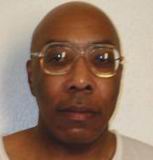 Andrew Sasser
Murderer · USA · 1993
Andrew Sasser was convicted of capital felony murder and sentenced to die by le…
1 victim
Andrew Sasser
Murderer · USA · 1993
Andrew Sasser was convicted of capital felony murder and sentenced to die by le…
1 victim
 Domingo Cantu
Murderer · USA · 1988
Domingo Cantu was identified as the offender in a capital case involving the ra…
1 victim
Domingo Cantu
Murderer · USA · 1988
Domingo Cantu was identified as the offender in a capital case involving the ra…
1 victim
 Gordon Wardell
Murderer · United Kingdom · 1994
Gordon Wardell was the husband of Carol Wardell. Carol Wardell was the manager…
1 victim
Gordon Wardell
Murderer · United Kingdom · 1994
Gordon Wardell was the husband of Carol Wardell. Carol Wardell was the manager…
1 victim
 Karthik Rajaram
Mass murderer · USA · 2008
Karthik Rajaram was found dead in his Porter Ranch home along with his wife, mo…
5 victims
Karthik Rajaram
Mass murderer · USA · 2008
Karthik Rajaram was found dead in his Porter Ranch home along with his wife, mo…
5 victims
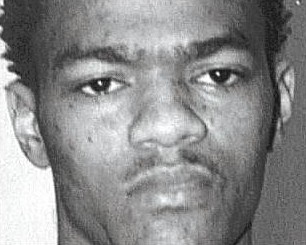 Lance Chandler
Murderer · USA · 1993
February 7, 1993 — Lance Chandler, Geral-dine Fernandez, Dwight Wyatt, and Geor…
1 victim
Lance Chandler
Murderer · USA · 1993
February 7, 1993 — Lance Chandler, Geral-dine Fernandez, Dwight Wyatt, and Geor…
1 victim
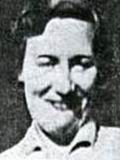 Freda Rumbold
Murderer · United Kingdom · 1956
Freda Phyllis Rumbold was married to timber contractor husband Alfred Frank Rum…
1 victim
Freda Rumbold
Murderer · United Kingdom · 1956
Freda Phyllis Rumbold was married to timber contractor husband Alfred Frank Rum…
1 victim
- Gender
- male
- Country
- USA
- Location
- Coweta County, Georgia, USA
- Date of birth
- 1963
- Age at first offence
- 22
- Characteristics
- rape, robbery, burglary, armed robbery
- Victim profile
- Kate Furlow, 79
- Method of murder
- Shooting (.25 caliber pistol)
- Date(s) of murder
- December 5, 1985
- Years active
- 1985
- Date of arrest
- January 14, 1986
- Status
-
Sentenced to death
Sentenced to death on February 12, 1987; death sentence vacated due to ineffective assistance of counsel in the sentencing phase; remaining claims remanded to the habeas court for a ruling
Case information
Name: William Anthony Lipham Age: 33
STATUS
Lipham was sentenced to death on February 12, 1987.
Timeline
- Dec. 4, 1985 — Lipham was seen in the home of Kate Furlow.
- Dec. 5, 1985 — Kate Furlow’s nude body was found at home with a .25-caliber bullet wound in her head; a neighbor reported a young man had been in her kitchen at 12:30 a.m. and the man responded only by shouting “Ronnie,” then leaving.
- Dec. 4, 1985 (6:00 p.m.) — Kate Furlow was last seen by her daughter-in-law.
- Dec. 6, 1985 — Kate Furlow’s son tried to telephone her but she did not answer; he went to her home and called the police after observing the broken-out front door and disarray in the living room.
- Jan. 14, 1986 — Lipham was arrested in Douglasville, Georgia.
- Feb. 12, 1987 — Lipham was sentenced to death in Coweta County.
- Feb. 20, 1987 — A motion for new trial was filed.
- June 25, 1987 — The motion for new trial was denied.
- July 16, 1987 — A notice of appeal was filed.
- July 22, 1987 — The case was docketed.
- Oct. 13, 1987 — The case was orally argued.
- Feb. 12, 1988 — The Supreme Court of Georgia issued its decision in LIPHAM v. THE STATE (docket number: 44868).
- 1988 — The Supreme Court of Georgia affirmed Lipham’s convictions and death sentence.
- 1988 — The United States Supreme Court denied certiorari in Lipham v. Georgia, 488 U. S. 873 (109 SC 191, 102 LE2d 160).
- 1989 — Lipham filed his original petition for a writ of habeas corpus.
- 1990 — Lipham amended his petition.
- 1992 — Lipham amended his petition.
- Oct. 29, 1993 — The habeas court issued an order.
- Oct. 30, 1993 — The habeas court amended the order.
- Dec. 1993 — An evidentiary hearing was scheduled and held.
- Dec. 1997 — The habeas court issued a final order affirming Lipham’s convictions and vacating his death sentence due to ineffective assistance of counsel in the sentencing phase.
- Nov. 23, 1998 — The Supreme Court of Georgia decided the appeal and cross-appeal, affirming in part and remanding in part.
Background
Lipham was convicted in Coweta County in 1987 of malice murder, rape, armed robbery, and burglary, and was sentenced to death for the murder.
Lipham appealed. The Supreme Court of Georgia affirmed his convictions and death sentence in 1988 in Lipham v. State, 257 Ga. 808 (364 SE2d 840) (1988), and the United States Supreme Court denied certiorari in Lipham v. Georgia, 488 U. S. 873 (109 SC 191, 102 LE2d 160) (1988).
Lipham filed a writ of habeas corpus in 1989. He amended his petition in 1990 and 1992. The habeas court issued an order on October 29, 1993 and amended it the following day. The amended order denied all claims except ineffective assistance of counsel, and reserved a ruling on the ineffective assistance issue pending an evidentiary hearing scheduled for December 1993. Before that evidentiary hearing, Lipham filed another amended habeas petition raising five additional claims. In December 1997, the habeas court affirmed his convictions but vacated his death sentence due to ineffective assistance of counsel in the sentencing phase, and it never addressed the additional claims raised in his last amended petition.
The State appealed the vacation of the death sentence in Case No. S98A0724, and Lipham cross-appealed in Case No. S98X0770. The Supreme Court of Georgia affirmed in part and remanded in part.
The offence
Lipham was convicted of the rape, robbery, burglary and murder of a 79-year-old woman, Kate Furlow.
The victim was last seen by her daughter-in-law at 6:00 p.m. on December 4, 1985. The next day, her son tried to telephone her but she did not answer; he went to her home, observed the broken-out front door and disarray in the living room, and called the police.
Investigators found the victim lying on her bed, nude from the chest down, with a gunshot wound in her head. A .25 caliber bullet was discovered in the mattress underneath her head.
Investigators interviewed the victim’s neighbors. One neighbor stated that a young man had been in her kitchen at 12:30 a.m. on December 5, and when she asked the man why he was there, he responded only by shouting “Ronnie,” and then leaving. The neighbor identified Lipham as the man who had been in her home.
The defense position included that Lipham confessed to entering and ransacking the victim’s home looking for something to steal, but claimed that another person was present and used Lipham’s gun to kill the victim. In a later statement, Lipham said he had sex with the elderly woman after she was dead.
Rape evidence (as addressed on appeal)
Lipham contended that his conviction for rape was not supported by evidence because the evidence did not show that sexual intercourse occurred. The court concluded the evidence was sufficient to support a finding that he had carnal knowledge of the victim.
The appellate discussion included:
- The victim’s body was found nude from the chest down with her legs spread apart.
- The victim had a “pressed-contact” gunshot wound on the left side of her head, with the location suggesting the killer was at least on the bed and possibly lying on top of the victim when he shot her.
- An autopsist testified that he discovered a large amount of fluid in the victim’s vagina that could not be positively identified as seminal but would have been unusual in the absence of sexual intercourse.
- A pubic hair discovered on the victim’s housecoat was consistent with Lipham.
The appellate discussion also addressed the argument about whether rape occurred before or after death. Lipham argued that if he first killed the victim and only then had sexual intercourse, he would not be guilty of rape, citing Gibson v. Jackson, 443 FSupp. 239 (M.D. Ga. 1977), which stated: “For the petitioner to be guilty of rape, the victim must have been a person, a living human being; if dead before the act -- as terrible and disgusting as it may be -- the act is not rape.” The Supreme Court of Georgia rejected this argument and concluded the jury’s finding of rape was supported, distinguishing it from necrophilia under OCGA 16-6-9.
Armed robbery evidence (as addressed on appeal)
Lipham argued the evidence was insufficient to support the conviction for armed robbery, claiming it failed to show that a handgun was used in taking the victim’s property or was even present when the property was taken.
The appellate court stated it was undisputed the victim was killed with a handgun, and it concluded the jury could infer that Lipham, with intent to commit theft, took property from the person or immediate presence of another by use of an offensive weapon, whether the victim was shot before or after the taking.
Murder conviction and counts
The appellate decision stated that the evidence supported Lipham’s convictions on all four counts, including murder, rape, armed robbery and burglary, and that the Supreme Court found no reversible error in the proceedings addressed on appeal.
Investigation and evidence
Police recovered from Lipham’s brother a .25 caliber pistol, shown by ballistics examination to be the murder weapon.
Ronnie Simon testified that he gave Lipham a ride on the night of December 4, and dropped the defendant off near the victim’s home. Simon’s girlfriend testified that the defendant came by Simon’s trailer early the next morning, carrying his gun, and a small bag containing some change and some costume jewelry.
Investigators searched the house, including finding the victim’s nude body with the gunshot wound in her head.
Lipham was arrested in Douglasville, Georgia on January 14, 1986.
Lipham gave a statement to police admitting that he entered and ransacked the victim’s home looking for something to steal, but claimed another person was present and used Lipham’s gun to kill the victim.
Arrest
Trial
Jurors and jury lists
Lipham challenged the arrays on the basis that non-voters were not included on the jury list, citing statistics for the traverse and grand jury lists with respect to eligible populations including women and blacks.
The appellate decision stated that the voter list was the appropriate primary source from which jurors may be selected and must be supplemented only if the resulting list fails to meet constitutional requirements, and that the percentages cited showed only that jury lists were smaller than the total eligible population, without requiring every eligible member to be included.
The appellate court concluded the challenges to the arrays were properly denied.
Pre-trial pro hac vice counsel issue
A pre-trial hearing included Michael Dowd, described as “a member of the Bar of the State of New York,” who requested permission to represent Lipham pro hac vice. Lipham concurred. The trial court ruled Dowd could participate, question witnesses, argue motions, or make closing arguments, but that Steven Fanning would remain lead counsel. Dowd refused limitations and left, refusing to participate further.
The Supreme Court of Georgia addressed whether the trial court’s ruling deprived Lipham of the right to decide who his lead attorney would be, and concluded:
- An indigent defendant had no right to compel the trial court to appoint an attorney of his own choosing.
- The defendant did not have a constitutional right to demand a non-member of the Georgia bar be allowed to represent him as lead counsel, and the matter was governed by trial court discretion.
- The court concluded Dowd failed to submit a proper application for admission to practice in the trial pursuant to Rule 4.4 of the Uniform Rules for the Superior Courts.
Severance
The appellate decision stated it found “no error” in the court’s denial of Lipham’s motion for severance.
Prosecutor’s sentencing-phase closing argument and court instructions
The appellate decision addressed the prosecutor’s sentencing-phase closing argument, including a statement by the prosecutor to the jury: “Forgive him. I'll say to you, that's fine, but you don't have that right. I'll tell you who has the right to forgive. Kate Furlow has the right to forgive him. God has the right to forgive him. You don't.”
The trial court rebuked the prosecutor and instructed the jury:
“THE COURT: Ladies and gentlemen, just a moment ago before and during the course of Mr. Mallory's argument, he made some reference to the fact that the right to forgive the defendant is with God and Ms. Kate Furlow, implying that it was not for you to forgive and it was up to God and Kate Furlow to forgive. Ladies and gentlemen, you have found the defendant guilty of murder and guilty of these offenses. This defendant is not going to be forgiven of anything. That was improper argument by Mr. Mallory and Mr. Mallory, don't do that again, please.
"MR. MALLORY: No, Your Honor.
“THE COURT: The question here is not whether the defendant will be punished for this murder. The question is how much he will be punished. Will he be given the death penalty or will he be given life imprisonment. Neither the death penalty nor life imprisonment is forgiveness and Mr. Mallory was incorrect when he was talking about that. You have the right to be merciful in this case, if you think that's the right thing to do, and if you are merciful in this case you are not forgiving the defendant; and I instruct you not to consider any argument made by the State along those lines. That's an improper argument.”**
The Supreme Court of Georgia concluded that, in light of these instructions, it found no reversible error.
Sentencing
Lipham was sentenced to death for the murder.
Sentence review (aggravating circumstances)
The jury found aggravating circumstances that the offense of murder was committed while the offender was engaged in the commission of offenses of rape, armed robbery and burglary under OCGA 17-10-30 (b) (2).
The jury also found a statutory aggravating circumstance listed as “b (7),” but the jury returned a disjunctive finding of “torture or depravity of mind,” and the finding should have been returned conjunctively. Despite that, the Supreme Court of Georgia stated the death sentence was affirmed on the basis of the remaining findings of statutory aggravating circumstances.
Excessiveness and arbitrariness
The appellate decision stated it did not find that the death sentence was imposed as the result of passion, prejudice or other arbitrary factor, and it did not find the sentence to be excessive or disproportionate to sentences in similar cases.
Appeals
Direct appeal
In LIPHAM v. THE STATE 5282#257 Ga. 808, 5282#364 SE2d 840, Supreme Court of Georgia issued its decision on February 12, 1988. The docket number was 44868.
The Supreme Court of Georgia affirmed Lipham’s convictions and the death sentence.
The United States Supreme Court denied certiorari in **Lipham v. Georgia, 488 U. S.
Habeas corpus and related proceedings
Lipham filed habeas corpus in 1989 and amended in 1990 and 1992, with additional amendments raising five additional claims before a December 1993 evidentiary hearing.
The habeas court issued an amended order denying all claims except ineffective assistance of counsel, reserved the ineffective assistance ruling pending an evidentiary hearing, and later in December 1997 issued a final order:
- Affirmed Lipham’s convictions
- Vacated his death sentence due to ineffective assistance of counsel in the sentencing phase
- Did not address the additional claims raised in Lipham’s last amended petition
On appeal from the habeas decision:
- The Supreme Court of Georgia held that certain habeas claims were procedurally defaulted because they could have been raised on direct appeal and Lipham did not show sufficient cause to overcome procedural default.
- The Supreme Court found the ineffective assistance of counsel claim was not barred nor defaulted and analyzed both the guilt/innocence phase and the penalty phase.
Procedural default of claims raised for the first time on habeas
The Supreme Court listed claims raised for the first time on habeas that it found procedurally defaulted, including:
- constitutionality of the Unified Appeal Procedure
- constitutionality of OCGA 17-10-30
- double jeopardy arising from malice murder and armed robbery convictions
- trial court allowing the jury to see a copy of the indictment that included a list of the grand jurors
- improper voir dire
- erroneous jury instructions
- prosecutorial misconduct during the trial
- sentencing without the benefit of a presentence report
- arbitrary discretion by the prosecutor in seeking the death penalty
- mental problems precluding execution on Eighth Amendment grounds
- failure to reveal mitigating information
- introduction of an invalid prior felony conviction for impeachment
- voluntariness of Lipham’s inculpatory statement
The Supreme Court stated these claims could have been raised on direct appeal and Lipham did not show sufficient cause to overcome procedural default.
Ineffective assistance of counsel analysis (habeas)
The Supreme Court held the ineffective assistance claim was viable and applied the Strickland framework requiring both deficient performance and actual prejudice.
The habeas court’s conclusion about sentencing-phase deficient performance was that trial counsel had a “total failure” to read, review, interpret, or otherwise utilize voluminous social and psychological records concerning Lipham. The habeas court determined that trial counsel had approximately 2,500 pages of DFACS and Anneewakee records, used two record custodians to introduce the records, but presented virtually no testimony to explain or distill the records, and presented only one mitigation witness besides the records custodian(s): Lipham’s wife, who briefly pleaded for mercy. The habeas court concluded the cavalier fashion with which counsel used evidence could be defective and that proper utilization of the records would have created a high probability of a sentence less than death, and therefore vacated the death sentence.
The Supreme Court of Georgia affirmed:
- the habeas court’s ruling upholding convictions because Lipham did not show actual prejudice even if representation was defective
- the habeas court’s vacation of the death sentence due to inadequate investigation and presentation of mitigation evidence
Guilt/innocence phase prejudice
The Supreme Court concluded the habeas court did not err by ruling Lipham did not show actual prejudice regarding his convictions, describing trial evidence as including testimony that Lipham entered the home, raped and killed the victim, and took jewelry; neighbor identification; recovery of the murder weapon pistol determined by ballistics to be the murder weapon; witness accounts of Lipham with the pistol before and after the murder; witness testimony about a small bag of jewelry and Lipham’s statement “Not bad for a night's work”; a pubic hair consistent with Lipham; and Lipham’s confession and alternative claim about another person using his gun.
Penalty phase investigation and mitigation presentation
The Supreme Court stated that trial counsel chose their penalty phase strategy and found deficient performance because counsel relied on giving 2,500 pages of raw institutional documents to the jury and asking them without guidance to read through the stack for mitigation evidence.
The Supreme Court also addressed mitigation investigation failures, including that counsel did not hire a psychologist to examine the records and instead had a family counselor, Leslie Van Toole, review the records, with testimony that Van Toole was not a psychologist and had no medical degree or doctorate and was not state licensed. The Supreme Court stated counsel knew Lipham had been institutionalized in mental hospitals, children’s homes, and treatment centers for nine years and that the available records showed chronic poverty, physical abuse, alcoholic parents, severe neglect, isolation from family, severe behavioral problems, conduct disorders, anxiety disorders, a possible learning disability, head injuries, and a wide disparity between performance IQ and verbal IQ, yet counsel did not hire a mental health expert to investigate and explain the records.
The Supreme Court affirmed vacation of the death sentence on deficient investigation and presentation of mitigation evidence.
Additional habeas claims not ruled on by the habeas court
The Supreme Court stated that Lipham raised five claims in his last amended petition that were never ruled on by the habeas court:
- improper contact between the sheriff and the jurors
- suppression of exculpatory information regarding a potential suspect
- denial of a fair trial due to lack of adequate mental health examination
- ineffective assistance of counsel on appeal
- cumulative error
The Supreme Court remanded these issues to the habeas court for a ruling because until a decision there, the issues were not ripe for appeal.
Outcome
Lipham’s convictions were affirmed in the habeas proceedings. His death sentence was vacated due to ineffective assistance of counsel in the sentencing phase. The remaining claims raised in his last amended habeas petition were remanded to the habeas court for a ruling.
Other details
Counsel names referenced
- Steven E. Fanning — for appellant (direct appeal record)
- William G. Hamrick, Jr. — District Attorney (direct appeal)
- Michael J. Bowers — Attorney General (direct appeal)
- J. Michael Davis — Assistant Attorney General (direct appeal)
- Michael Dowd — requested permission to represent Lipham pro hac vice (trial proceedings)
- Ike Hudson and Steve Fanning — appointed to represent Lipham and represented him through trial and direct appeal (habeas discussion)
- Leslie Van Toole — family counselor who reviewed records for counsel (habeas discussion)
- Dr. Schiffman — psychiatrist brought by Dowd; examined Lipham for competency and insanity (habeas discussion)
- Gary A. Alexion and John Youngblood — for appellee (habeas appeal materials)
- Thurbert E. Baker and Paula K. Smith — for appellant (habeas appeal materials)
Mitigation investigation background facts discussed in the habeas opinion
The habeas decision recounted mitigation and institutional history, including:
- Lipham was one of fourteen children born to Hugh and Aline Lipham.
- The parents had limited education, and Aline married Hugh when she was eleven years old.
- DFACS social records described Lipham’s parents as violent alcoholics who physically abused the children and each other, with severe poverty and neglect.
- A DFACS caseworker reported the children were malnourished and dirty and that housekeeping standards were at the “lowest level.”
- DFACS records described Aline not bathing or clothing the children and not disciplining them or spending much time with them when older.
- There was a suggestion that Aline worked as a prostitute when her husband (a truck driver) was out of town.
- Lipham was reported not to be encouraged to do well in school, with older siblings largely not graduating high school and being in youth detention.
- In 1972, when Lipham was nine years old, state authorities removed all eight minor children from the Lipham household; younger children were placed for adoption and older children, including Lipham, were placed in foster homes and institutions until adulthood.
- The habeas decision described that Lipham never saw some siblings again and rarely saw others, and that his parents abandoned him to the state.
- Lipham and his brother Gene were sent to the Anne Elizabeth Shepard Home in Columbus; by then Lipham had severe behavioral problems, including violent behavior toward staff and children and bullying younger children.
- The habeas decision described an incident where older children convened a “kangaroo court” and beat him with belts as punishment.
- An attempt to place Lipham with a foster family failed when he beat the foster couple’s son.
- The habeas decision described sexual aggression to other children and even animals, and a report that Lipham prostituted himself to an adult male.
- The decision described Lipham being struck in the head by a baseball bat (apparently by his brother Gene) and injured, while at the Shepard Home.
- The decision described admissions to mental hospitals: Central State Hospital in March 1975, and West Georgia Regional Hospital in June 1975.
- The decision described a diagnosis and treatment history including admission in 1976 at age 13 to the Anneewakee Treatment Center, including diagnoses such as anxiety neurosis and overanxious reaction to adolescence, with overall IQ described as in the high 80s and a wide disparity between performance IQ and verbal IQ, with performance IQ over 100 and verbal IQ about 25 points lower.
- The decision described further diagnoses including conduct disorder and attention deficit disorder, and a suggestion of a learning disability.
- The decision described a record of another head injury occurring in 1978.
- The decision stated Lipham remained at Anneewakee until age 18, with improving behavior and remission of admitting symptoms upon discharge, while noting future success depended on a structured environment.
- The decision stated in 1981, Dottie Henson noted she was afraid to be alone with Lipham when he was a young child but felt comfortable and safe when alone with him as an adult.
- The decision stated Lipham left Anneewakee at 18 because state funding ended, and that later problems included arguing with staff and impulse control issues.
Wife’s testimony and references in penalty phase
The habeas opinion described that in the penalty phase the last mitigation witness was Janie Lipham, Lipham’s wife, who testified Lipham had a young son and pleaded for mercy by saying their son needed his father.
In closing argument, Hudson characterized the institutional records as “large records” and “a lot of paper work,” and asked the jury:
- “Take these records, ladies and gentlemen. Please read through them, understand them, if you can. They are the reports of psychologists and psychiatrists. Sometimes they appear to be gobbly-gook, but I think they show that throughout the course of his life there was one brief glimmer and they recognized that.”
Hudson ended his argument with a plea of mercy for his client.

Spotted an error, or have more information about this case?