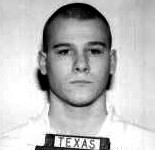
Leo Gordon Little
Homicide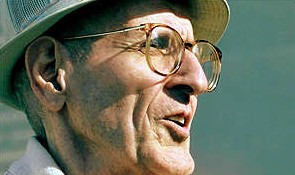 Jack Kevorkian
Homicide · USA · 1990
Jack Kevorkian (born May 26, 1928) was a controversial American pathologist. He…
130 victims
Jack Kevorkian
Homicide · USA · 1990
Jack Kevorkian (born May 26, 1928) was a controversial American pathologist. He…
130 victims
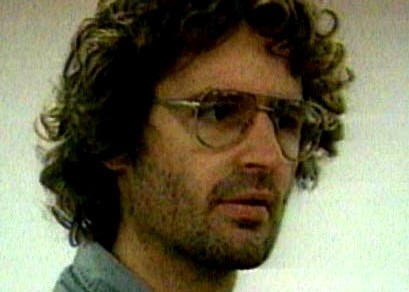 David Koresh
Homicide · USA · 1993
David Koresh (born Vernon Wayne Howell; August 17, 1959 – April 19, 1993) led t…
79 victims
David Koresh
Homicide · USA · 1993
David Koresh (born Vernon Wayne Howell; August 17, 1959 – April 19, 1993) led t…
79 victims
 Todd Hall
Homicide · USA · 1996
Todd Hall was described by neighbors as "mentally slow" and was said to have su…
9 victims
Todd Hall
Homicide · USA · 1996
Todd Hall was described by neighbors as "mentally slow" and was said to have su…
9 victims
 Joshua Jenkins
Homicide · USA · 1996
Joshua Jenkins was a 15-year-old American killer who killed five members of his…
5 victims
Joshua Jenkins
Homicide · USA · 1996
Joshua Jenkins was a 15-year-old American killer who killed five members of his…
5 victims
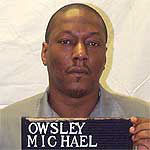 Michael Owsley
Murderer · USA · 1993
Michael Owsley was convicted of first-degree murder and was sentenced to death.…
1 victim
Michael Owsley
Murderer · USA · 1993
Michael Owsley was convicted of first-degree murder and was sentenced to death.…
1 victim
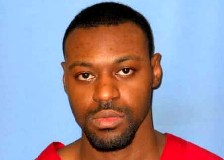 Caleb Carrothers
Murderer · USA · 2009
July 11, 2009 — Caleb Carrothers shot and killed Frank Clark and his son, Taylo…
2 victims
Caleb Carrothers
Murderer · USA · 2009
July 11, 2009 — Caleb Carrothers shot and killed Frank Clark and his son, Taylo…
2 victims
 Byron Ashley Parker
Murderer · USA · 1984
Byron Ashley Parker was convicted of murder and rape and was sentenced to death…
1 victim
Byron Ashley Parker
Murderer · USA · 1984
Byron Ashley Parker was convicted of murder and rape and was sentenced to death…
1 victim
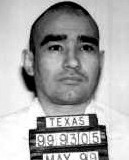 Joel Escobedo
Murderer · USA · 1998
Joel Escobedo (TDCJ Number 999305) · Date of Birth: 02/06/1962 · Race: Hispanic…
1 victim
Joel Escobedo
Murderer · USA · 1998
Joel Escobedo (TDCJ Number 999305) · Date of Birth: 02/06/1962 · Race: Hispanic…
1 victim
 Wilbur Dobbs
Murderer · USA · 1973
December 14, 1973 — Wilbur Wiley Dobbs, with Walter Lee Harris and Charles Burk…
1 victim
Wilbur Dobbs
Murderer · USA · 1973
December 14, 1973 — Wilbur Wiley Dobbs, with Walter Lee Harris and Charles Burk…
1 victim
- Gender
- male
- Country
- USA
- Location
- Bexar County, Texas, USA
- Date of birth
- J uly 14, 1980
- Age at first offence
- 18
- Characteristics
- juvenile (17), kidnapping, robbery
- Victim profile
- Antonio Christopher Chavez, 22
- Method of murder
- Shooting (.25-caliber automatic pistol)
- Date(s) of murder
- January 25, 1998
- Years active
- 1998
- Date of arrest
- —
- Status
-
Life imprisonment
Sentenced to death on April 28, 1999; commuted to life in prison
Case details
Leo Gordon Little (TDCJ Number: 999302) was born 07/14/1980. He was a White male with brown hair and had a height of 5' 6" and a weight of 130. He was a laborer in Bexar County, Texas. His prior prison record was none.
He was received on 04/28/1999 at the age of 18 and had an education level of 12.
Timeline
- 01/25/1998 — Leo Little and co-defendant Jose Zavalas kidnapped a 22-year-old Hispanic male in San Antonio, Texas, and fatally shot him with a .25-caliber pistol during the commission of a robbery.
- 01/25/1998 — The victim was kidnapped from a restaurant and died as a result of a single gunshot wound to the backside of his head.
- 04/28/1999 — Little was sentenced to death.
- Commuted — Little's death sentence was commuted to life in prison.
Background
Leo Gordon Little was described as a convict on death row who had kidnapped and killed before reaching age 18. He had the “fresh face and budding vocabulary of a college sophomore,” and he spoke about studying language, math, history and religion while confined in a 5-foot-wide cell.
He was described as “once a wannabe Crip from San Antonio” who shot a young ministerial worker in 1998. He was quoted as saying: “I like life — even in here,” and was referred to as “death row inmate No. 999302”.
The narrative also described that Little and co-defendant Jose Zavalas kidnapped and killed before he reached age 18 and that the nation debated whether it was acceptable to execute him and other juvenile killers.
Little was also described as being labeled “emotionally disturbed” and placed in special education classes at Sul Ross Middle School. His IQ was stated as 91 and he was described as an angry, depressed and explosive loner at 13, in an evaluation by school psychologists.
It was stated that a school district report recommended Little be put in therapy, and it was stated he never was. The narrative described predictions of gang involvement, drug use and trouble with the law.
The narrative described arrests for shoplifting and trespassing and experimentation with drugs including marijuana and later cocaine, heroin, acid and “at least one toke of crack.” It also stated he inhaled kerosene, gasoline, spray paint, lighter fluid, felt markers, air freshener, White Out, Freon and nitrous oxide when drugs ran out.
The narrative stated that drugs kept him from following his father's footsteps into the Marine Corps and that he tried to enlist but failed the drug test.
The narrative described that Little joined a gang, was given the name Li'l Crazy, painted his room blue, began filling a notebook with rap lyrics, and included the lyrics: “I may be small but I'm (expletive) crazy Been smoking herb and my mind is kind of hazy With all that (expletive) filling up my head, as a Crip, I'm always ready to kill mother (expletive) dead.”
Little’s mother asked that her name not be published to avoid embarrassment at work. The narrative quoted her as saying: “I would've been more alert. I would've brought myself out of the dark ages and educated myself more on things to look for. I would've paid more attention to him.”
Little’s father, Leo Gordon Little Jr., shared regret in the narrative and was quoted as saying: “They think life is a Nintendo game where if someone gets killed, you press restart and they pop up again,” and also quoted as saying: “They think life is a Nintendo game where if someone gets killed, you press restart and they pop up again,” is presented in the narrative only once; it was also described that his job as a bus driver too often took him away from his children and he found the adolescent surly and beyond reach. The narrative quoted him about time with his son as: “They think life is a Nintendo game where if someone gets killed, you press restart and they pop up again.”
The narrative included a quote from Little: “I have a big temper,” and “When somebody gets me mad I go wild ...”
It also stated that a recent study of juveniles on Texas' death row found that 13 of 18 evaluated were identified as having had emotional problems by sixth grade.
The offence
On 01/25/1998, in San Antonio, Texas, Little and co-defendant Jose Zavalas kidnapped a 22-year-old Hispanic male and fatally shot him with a .25-caliber pistol during the commission of a robbery.
The victim was kidnapped from a restaurant and died from a single gunshot wound to the backside of his head.
The victim had scratches and abrasions due to being dragged after he was shot.
The narrative described the victim as Antonio Christopher Chavez, a 22-year-old ministerial servant for a Jehovah's Witnesses congregation.
The narrative described that prosecutors and jurors were willing to treat the case as serious when Little was charged with the January 1998 kidnapping and slaying of Antonio Christopher Chavez. It stated that the trial featured testimony from friends Little visited after the slaying, videotape of Little with Chavez in a convenience store, and Little’s own confession.
The narrative described a course of events involving the search for a victim, a trip from Maggie's Restaurant on San Pedro Avenue, the passenger role of Little behind the back seat of the victim’s car, travel with gas and driving southeast for about an hour, stopping on an empty stretch of Old Sutherland Springs Road, and Little marching Chavez in front of the headlights and telling him to kneel facing away from the gun.
The narrative described that Little aimed at the back of Chavez's head and pulled the trigger three times.
It stated that Chavez survived another two days, and the narrative described that the teenagers dragged Chavez away to a spot near a barbed-wire fence, left him to die slowly, and then took the car and headed to a nearby friend's house.
It stated that Little would strip the car of its stereo and, the next day, would spend Chavez’s money on a new set of tires.
Investigation
The narrative included an account of an earlier incident described as happening about a week before Little became a killer. It stated that Malachi Wurpts woke up around 2 a.m. to find the teenager standing at the foot of his bed and pointing a gun at him.
The narrative described that the 25-year-old computer programmer, having returned from the airport a few hours earlier and forgetting to lock his door, was forced by Little to drive from his gated Medical Center-area apartment complex to two ATMs and withdraw $400.
The narrative described that Little had a small silver .25-caliber automatic pistol stuck into Wurpts' side and guided him, then guided him to a rural area and left him there, ditching his burglarized car more than a mile away and fleeing with an accomplice.
The narrative quoted Wurpts and included the following quotes attributed to Wurpts:
- “If I get caught, I'm not going down for robbery,” Wurpts remembered Little warning him.
- “I'm going down for murder.”
Arrest
No arrest event was separately dated in the provided material.
Trial
The narrative stated that the question of whether Little should live or die seemed relatively simple when it was posed to Bexar County jurors on March 5, 1999.
During the trial’s punishment phase, Little took the stand to apologize. The narrative quoted Little as saying: “I didn't want to hurt him,” and “Something took over me that night.”
The narrative also stated the jurors were not impressed by his remorseful words and baby face, and that what stuck most in their minds was how the videotape showed a dark blotch on Chavez's gray slacks and that the victim was so scared he had lost control of his bladder.
The narrative included a quote from Chavez’s father, Antonio Chavez Sr., about grief; it quoted him as saying: “The pain and agony never leaves,” and also quoted him as saying: “Time only helps you adjust and cope with that pain. It never eliminates it.”
The narrative included a defense lawyer quote attributed to Jeff Scott, who said: “He stalked this guy and led him around town, made him use his credit card to buy gas, then took him out and shot him in the middle of nowhere and then drug him off the side of the road so nobody would find him.
And when someone did find him the next morning, the poor kid was still alive and, all night long, had been trying to get up,”
The narrative also included a quote from juror Daniel Mere as: “It felt like Mr. Little had no remorse whatsoever,” and “The whole case he sat there and basically he had that kind of thug-punk attitude.”
The narrative also included a discussion of another case involving Randy Arroyo, Vincent “Flaco” Gutierrez, and José Renato Cobo, including references to sentencing guidelines and death penalty decisions. It stated that jurors returned with death sentences for Arroyo and Gutierrez, and included quotes from Leticia Puente, Stephen Harper, Jerome Kagan, Robert Blecker, and others. Those quotes were part of the narrative and were included in the same narrative context, including the quoted statements: “It goes to show people don't want to do it anymore,” says Stephen Harper. “A moral sense is one of the first things to develop,” said Jerome Kagan. “Five-year-olds know killing is wrong.” “Accordingly, juveniles should be evaluated individually, said Robert Blecker, a New York University law professor who supports capital punishment for only the worst slayings.” “shows careful planning, callousness, a depravity that unquestionably marks him as one of the worst,” Blecker said. The narrative also quoted Little in relation to his present mindset and to his explanation of why he squeezed the trigger (set out below under Aftermath).
Sentencing
Little was sentenced to death on April 28, 1999.
The narrative included a statement that the U.S. Supreme Court could decide whether capital punishment should apply to criminals who were so young that their brains may not have been fully developed.
The narrative included a discussion of legal debate about juvenile executions and scientific research on adolescent brains.
Little’s death sentence was commuted to life in prison.
Appeals
No separate appeal events were separately dated in the provided material.
Outcome
The death sentence was commuted to life in prison.
Aftermath
Six years after Leo Little arrived on death row, the narrative stated there was no sign of the thug, and described a visit by a reporter and photographer to the visiting booth.
Little was described as readily admitting his guilt while speaking about reflection on his behavior and “rights and wrongs” in society. The narrative quoted Little as saying: “I have a lot more worth now that I've had a change in mindset — now that I've been given the opportunity over these past six years to reflect on my behavior, to reflect on the rights and wrongs of a man in society,” and also quoted him as saying: “I didn't have the money, the copious amounts of money they brag about,” and also quoted him as saying: “So the next best thing was a gun.” It also quoted him as saying: “You don't need any reasonable reason to flick your finger, you know, it's real simple. It doesn't need a philosophy behind it. It doesn't need a why. It happens if the right factors are present,”
The narrative included contextual statements about Juvenile justice debate and Texas' juvenile executions, and referenced other individuals and cases in the same narrative context, including Christopher Simmons, Randy Arroyo, Vincent “Flaco” Gutierrez, and Mark Anthony Duke.
Other details
Victim details
- Co-defendant: Jose Zavalas.
- Victim: Antonio Christopher Chavez, a 22-year-old Hispanic male.
- Victim’s congregation: a Jehovah's Witnesses congregation.
- Victim’s injury: a single gunshot wound to the backside of his head; scratches and abrasions due to being dragged after he was shot.
Places and chronology included in narrative
- San Antonio, Texas.
- Restaurant from which the victim was kidnapped.
- Maggie's Restaurant on San Pedro Avenue.
- Convenience store where videotape showed Little with Chavez.
- Old Sutherland Springs Road.
- Near a barbed-wire fence.
- Nearby friend's house.
- Medical Center-area apartment complex (in the earlier Malachi Wurpts incident).
- Two ATMs (in the earlier Malachi Wurpts incident).
Inmates or other named individuals appearing in the narrative context
The narrative included references to Christopher Simmons, Randy Arroyo, Vincent “Flaco” Gutierrez, José Renato Cobo, Antonio Chavez Sr., Antonio Chavez’s family, Daniel Mere, Leticia Puente, Jeff Scott, Malachi Wurpts, Stephen Harper, Jerome Kagan, Robert Blecker, Mark Anthony Duke, and others (including “Jose Zavala” and “Jose Race” as part of narrative fragments).

Spotted an error, or have more information about this case?