George Long
Murderer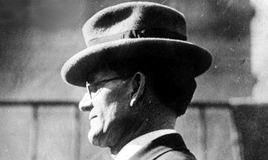 William Hale
Murderer · USA · 1921
Name: William Hale · Known as: the so-called "King of the Osage Hills" · Occupa…
24 victims
William Hale
Murderer · USA · 1921
Name: William Hale · Known as: the so-called "King of the Osage Hills" · Occupa…
24 victims
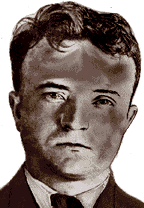 Paul Jaworski
Murderer · USA · 1926
Paul Jaworski was born in Poland as Paul Poluszynski in 1900. He later immigrat…
20 victims
Paul Jaworski
Murderer · USA · 1926
Paul Jaworski was born in Poland as Paul Poluszynski in 1900. He later immigrat…
20 victims
 John S. Williams
Murderer · USA · 1910
John S. Williams was convicted of murder and sentenced to life imprisonment on…
18 victims
John S. Williams
Murderer · USA · 1910
John S. Williams was convicted of murder and sentenced to life imprisonment on…
18 victims
 Edward Adams
Murderer · USA · 1920
Edward J. "Eddie" Adams was born in 1887 on a farm in Hutchinson, Kansas as W.J…
7 victims
Edward Adams
Murderer · USA · 1920
Edward J. "Eddie" Adams was born in 1887 on a farm in Hutchinson, Kansas as W.J…
7 victims
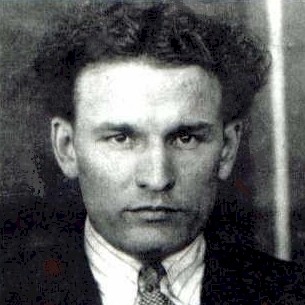 William Kenneth Wagner
Murderer · USA · 1924
William Kenneth (Kinnie) Wagner (born February 18, 1903 in Scott County, VA) wa…
6 victims
William Kenneth Wagner
Murderer · USA · 1924
William Kenneth (Kinnie) Wagner (born February 18, 1903 in Scott County, VA) wa…
6 victims
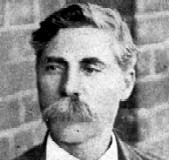 Floyd Allen
Murderer · USA · 1912
Floyd Allen (July 5, 1856 – March 28, 1913) was an American landowner and patri…
5 victims
Floyd Allen
Murderer · USA · 1912
Floyd Allen (July 5, 1856 – March 28, 1913) was an American landowner and patri…
5 victims
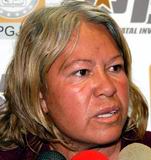 Silvia Meraz
Serial killer · Mexico · 2009
Silvia Meraz Moreno (born 1968) was a Mexican serial killer who was active from…
3 victims
Silvia Meraz
Serial killer · Mexico · 2009
Silvia Meraz Moreno (born 1968) was a Mexican serial killer who was active from…
3 victims
 Jennifer Hyatte
Murderer · USA · 2005
Name: Jennifer Hyatte Born: 11 February 1974 Known role: Shooter; former prison…
1 victim
Jennifer Hyatte
Murderer · USA · 2005
Name: Jennifer Hyatte Born: 11 February 1974 Known role: Shooter; former prison…
1 victim
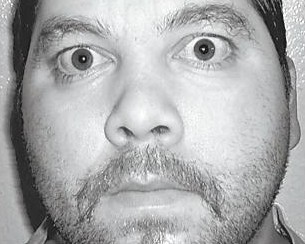 Daniel Lee Zirkle
Murderer · USA · 1999
Daniel Lee Zirkle had an ongoing relationship with Barbara Schifflett, who was…
2 victims
Daniel Lee Zirkle
Murderer · USA · 1999
Daniel Lee Zirkle had an ongoing relationship with Barbara Schifflett, who was…
2 victims
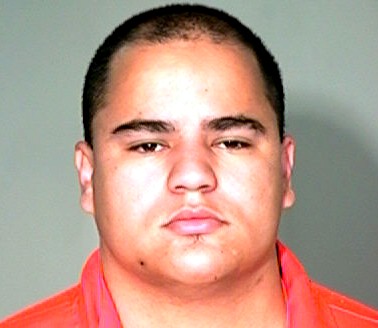 Robert Poyson
Murderer · USA · 1996
Robert Poyson lived in a remote area of Mohave County with Leta Kagen (30), Let…
3 victims
Robert Poyson
Murderer · USA · 1996
Robert Poyson lived in a remote area of Mohave County with Leta Kagen (30), Let…
3 victims
 William Hamilton Little
Murderer · USA · 1983
December 3, 1983 — Michael John Rammel found the body of Marilyn Peter in her h…
1 victim
William Hamilton Little
Murderer · USA · 1983
December 3, 1983 — Michael John Rammel found the body of Marilyn Peter in her h…
1 victim
- Gender
- male
- Country
- USA
- Location
- Barre, Vermont, USA
- Date of birth
- ???
- Characteristics
- rape, convicted rapist, drug addict
- Victim profile
- Lucina Courser Broadwell, 29
- Method of murder
- Strangulation
- Date(s) of murder
- May 4, 1919
- Years active
- 1919
- Date of arrest
- May 15, 1919
- Status
-
Life imprisonment
Sentenced to life in prison on November 5, 1919
Case overview
George Long was convicted of second-degree murder for the killing of Lucina C. Broadwell.
Lucina Courser Broadwell was murdered in Barre, Vermont, United States on May 4, 1919. The murder of the 29-year-old mother of three shocked and consumed the community of 17,000 during the summer and fall of 1919. Her murder was considered "one of the most horrendous crimes to take place in Vermont up to that time." Lucina was buried in Johnson, Vermont, on Wednesday, May 7, 1919.
Victim
Lucina Courser Broadwell
- Born: July 26, 1889
- Age at death: 29
- Family: three children (Doris, Hildred, and Wendell)
- Residence: raised in Johnson, Vermont; moved to Barre in 1915 after marrying Harry Broadwell
Lucina was described as: "[a] woman . . . of rather slight build, probably not weighing over 110 pounds and being about five feet, three inches tall. She was of rather dark complexion and with regular features with the exception of prominent cheekbones."
Timeline
- May 4, 1919 — Harold Jackson, a resident of Brookfield, VT, came across the body of Lucina Broadwell at approximately 7:30 on a morning walk.
- May 7, 1919 — Lucina was buried in Johnson, Vermont; James R. Wood, Jr. of the Wood Detective Agency arrived in Barre the same day.
- May 15, 1919 — George Long and Isabelle Parker were arrested and taken to the Washington County jail in Montpelier.
- May 16, 1919 — Arraignments occurred; both Long and Parker were assigned attorney J. Ward Carver for their defense.
- June 11, 1919 — Long and Parker were indicted by the grand jury.
- October 7, 1919 — Trial of George Long began at 9am with jury selection.
- October 10, 1919 — Opening statements were made by the prosection and the defense.
- October 20, 1919 — Long's second statement to authorities was read into evidence at trial.
- October 24, 1919 — Daisy Luce testified about a conversation with George Long the morning Lucina's body was discovered.
- October 31, 1919 — The judge gave the jury its instructions; the jury later returned its verdict that afternoon.
- November 5, 1919 — Sentencing occurred; Long was ordered to serve a term of life imprisonment.
- April 23, 1920 — Isabelle Parker’s petition for clemency was denied.
- April 26, 1920 — Isabelle Parker began her sentence.
- 1922 — The Vermont Supreme Court held in State v. Long; Long’s appeal was denied.
- September 5, 1922 — Isabelle Parker died.
Background (relationships and early life)
Lucina was raised by her parents, Mr. and Mrs. George Courser in Johnson, Vermont. In 1910, Lucina married Harry Broadwell, a carpenter, and moved to Barre in 1915. She and Harry Broadwell had three children: Doris, Hildred, and Wendell.
Harry Broadwell believed his wife was "sporty."
Harry Broadwell told James R. Wood, Jr. that he suspected Lucina was having an affair with a resident of the Parker house.
The offence (murder of Lucina Broadwell)
On the morning of Sunday, May 4, 1919, at approximately 7:30, Harold Jackson came across Lucina Broadwell’s body. The body was lying face down in the Wheelock garden, off North Main Street. When found, Lucina was only clothed in "shoes, stockings, and kid gloves."
Her clothing, hat, pocketbook, and Waltham watch were found within several feet of the body. The murder scene was described as follows:
"Her hat was found 8 feet from her body; her Waltham watch 13 feet away, and her empty pocketbook, 5 feet beyond that. The gold watch, with its closed case and clasp, was etched with the initials L.P.C., her maiden name: Lucina Phillips Courser. When thrown from her body, the watch was still running. . . . There were clothes, including what were called “corsets,” under the body. A pile of other clothing was tossed in a heap nearby. Some of these articles were torn and when they were picked up, several buttons fell to the ground."
Lucina's hands were tied behind her back with one of her undergarments. A portion of her undergarments and a man's white handkerchief were tied around her neck; it was apparent from the marks on her neck that she had been strangled.
Investigation
James R. Wood, Jr., of the Wood Detective Agency (Boston, MA) was hired by the State of Vermont to conduct an investigation into the murder. Wood was considered a "Chief Detective" and was considered "the best known detective in New England."
Wood and his team arrived in Barre on May 7, 1919, before the transfer of Lucina's body to Johnson for burial.
At the end of the investigation, Wood stated that the Broadwell case was "one of the strongest circumstantial cases ever tried."
Wood met with Attorney General Archibald and other local officials when he arrived in Barre. It had already been deduced that Lucina had been murdered at the Buzzell Hotel and her body moved to the garden where it was ultimately found.
Interview of Harry Broadwell
Wood interviewed Harry Broadwell because, at that time, it was largely believed that Harry killed Lucina. Wood quickly dismissed this theory because Harry had "a perfect alibi" for all of his activities the night of the murder.
Harry also told Wood that he believed his wife was "sporty."
Wood interviewed Long as a person of interest. Long, at that time, was a resident of the Parker house. When initially questioned, Long denied having met Lucina.
Contact with Grace Grimes
Wood followed another lead provided by Harry Broadwell: Lucina had a good friend by the name of Grace Grimes, who had relocated to the Boston area. Wood located Grace and interviewed her.
Grace confirmed that she often corresponded with Lucina by letter and that her most recent letter was from the day of the murder. In the letter, Lucina spoke about meeting a lodger of Mrs. Isabelle Parker's named George.
During the interview with Grace it surfaced that Parker ran a brothel and hosted "so-called cheating parties." Lucina had participated on numerous occasions.
Interview of Isabelle Parker and evidence
Upon Wood’s return to Vermont, he interviewed Isabelle Parker. Parker admitted that Lucina had been at her house the night of the murder and met with Long. There was evidence that Lucina and Long had dinner together, and her autopsy showed that she had eaten approximately one hour prior to her murder.
A search of Parker's house revealed the "Famous Red Book", which listed her customers, "many prominent people, both male and female, of Barre, Vermont."
Wood deduced how Parker operated her brothel in downtown Barre. Wood explained:
"She would go about Barre and get a line of the different men and women who were inclined to be a little sporty. For example, if she knew I was a married man and like to step out, she would make it her business to form my acquaintance and eventually tell me that a certain woman, either married or single, was infatuated with me and would like to meet me. She would invite me down toher [sic] house at a certain time and tell me to come in the back door and when I arrived, would introduce me to some woman, either married or single, whom she had told the same story to that she had told me, namely she would tell the woman that I desired to meet her. In that way she would bring the couples together and they would have their parties there, and naturally the men would pay her something for the use of the room or rooms."
Re-questioning George Long and confession
One week after the body of Lucina was found, Wood questioned Long once again. After disclosing what Parker admitted to, Long finally confessed to knowing Lucina, but denied murdering her.
Clues found and notes
Wood’s investigation proved invaluable to the Broadwell prosecution team. Wood found two major clues:
- "a tire track beside the street curb near where the body was found"
- the owner of the handkerchief tied around Lucina's neck
The tire track was traced back to a car rented by Long.
The owner of the handkerchief, Eddie Barron, testified at Long's trial that the handkerchief had been given to Long by Barron.
Wood kept detailed notes. At one point, in his report, he stated that he "had become disgusted and had left Vermont." He also recorded how local officials "told me they thought I was crazy and thought I had been on a wild goose chase."
Wood also described his first night in Vermont:
"I then spent the entire night at work alone on this case. I visited the lot where the body was found, visited the Buzzell Hotel, studied the lightening conditions and decided then that Mrs. Broadwell wasnot [sic] killed in the Buzzell Hotel. I returned to the hotel shortly before breakfast, no one knowing that I had been working all night."
Arrest
On Thursday, May 15, George Long and Isabelle Parker were arrested and taken to the Washington County jail in Montpelier.
Pretrial and representation
Arraignments occurred on Friday, May 16. Both Long and Parker were assigned attorney J. Ward Carver for their defense. Earle Davis represented the State.
The grand jury hearing was scheduled for June 5. During the period between arraignments and the grand jury proceedings, it was found that George Long was actually George Rath and had only taken the name "Long" prior to moving to Vermont. It was alleged that he had an extensive criminal record.
On June 11, Long and Parker were indicted by the grand jury.
Trial (George Long)
Jury selection and opening statements
The trial of George Long began on October 7, 1919 at 9am with jury selection.
On Friday, October 10, opening statements were made by the prosection and the defense. The courtroom was filled to capacity.
Statement and testimony
On Monday, October 20, Long’s second statement to authorities was read into evidence at the trial. In this statement, he admitted to paying Lucina for sexual relations and Mrs. Parker for providing the room.
On Friday, October 24, Daisy Luce testified that she spoke with George Long the morning that Lucina's body was discovered. During this conversation, Long stated:
"There would be one less woman in Barre."
Closing arguments and verdict
Long’s trial lasted one month before it went to the jury.
In the defense’s closing statement, the defense argued that Long had no motive to kill Lucina since they were intimate partners.
The prosecution demonized Long, referring to him as a "thing." The prosecution relied heavily on the circumstantial evidence provided by the Wood Detective Agency.
On October 31, the judge gave the jury its instructions. That afternoon, the jury returned its verdict. At 3:30, the jury announced that George Long was found guilty of the second-degree murder of Lucina C. Broadwell.
Sentencing and custody
Sentencing was set for November 5, at which time he was ordered to serve a term of life imprisonment.
After sentencing, Long was moved to the Windsor State Prison to carry out his sentence.
Long appealed his case with exceptions made during the trial.
Appeals and appellate outcome
In 1922, the Vermont Supreme Court held in State v. Long:
"[T]he record shows a brutal killing--one unmistakably indicating cool depravity of heart and wanton cruelty."
The appeal was denied.
Trial (Isabelle Parker)
Once the Long trial concluded, Isabelle Parker became the court’s focus.
Parker was initially implicated in Lucina’s murder, but she was only charged with "conducting a house of ill fame." Parker pled guilty to the charge and was sentenced to two to four years imprisonment.
Due to her health, officials allowed her to remain free while she petitioned the governor for clemency. Her petition was denied on April 23, 1920 and she began her sentence on April 26.
Parker served 2.5 years and died on September 5, 1922.
Other details (public attention and later works)
Lucina’s murder captivated the residents of Barre and the entire state of Vermont. There were almost daily reports on the murder, its investigation, and the trials of Long and Parker in the Barre Daily Times throughout the summer and fall of 1919.
In 1990, Richard Bottamini published The Bawdy House Murder in The Central Vermont Magazine.
In 2006, Vermont historian Patricia Belding published One Less Woman, a book that chronicles the events following Lucina’s murder. Belding’s book relied heavily on the newspaper reports of the Barre Daily Times for information regarding the murder and the trials of both Long and Parker. The book provided pictures of the main players in the book, as well as the actual murder scene.
Spotted an error, or have more information about this case?