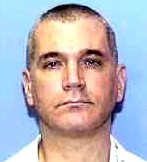
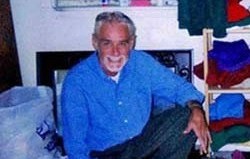
John David Battaglia
Murderer Dr. Wouter Basson
Murderer · 1992
Wouter Basson (born July 6, 1950) was a South African cardiologist and the form…
230 victims
Dr. Wouter Basson
Murderer · 1992
Wouter Basson (born July 6, 1950) was a South African cardiologist and the form…
230 victims
 Russell Ellwood
Murderer · USA · 1991
Russell Ellwood was a former taxi driver. Authorities suspected him of killing…
20 victims
Russell Ellwood
Murderer · USA · 1991
Russell Ellwood was a former taxi driver. Authorities suspected him of killing…
20 victims
 Umesh Reddy
Murderer · India · 1998
Umesh Reddy was sentenced to death on October 27, 2006. The Karnataka High Cour…
18 victims
Umesh Reddy
Murderer · India · 1998
Umesh Reddy was sentenced to death on October 27, 2006. The Karnataka High Cour…
18 victims
 Mohammed Adam Omar
Murderer · Yemen · 1995
Mohammed Adam Omar was a morgue assistant at Sanaa University’s medical faculty…
16 victims
Mohammed Adam Omar
Murderer · Yemen · 1995
Mohammed Adam Omar was a morgue assistant at Sanaa University’s medical faculty…
16 victims
 Robert Martines Perez
Murderer · USA · 1994
Name: Robert Martines Perez · Other name used in proceedings: Robert Martinez P…
15 victims
Robert Martines Perez
Murderer · USA · 1994
Name: Robert Martines Perez · Other name used in proceedings: Robert Martinez P…
15 victims
 Billy Frank Vickers
Murderer · USA · 1993
Billy Frank Vickers Vickers was executed by lethal injection in Texas on Januar…
14 victims
Billy Frank Vickers
Murderer · USA · 1993
Billy Frank Vickers Vickers was executed by lethal injection in Texas on Januar…
14 victims
 David John Copeland
Murderer · United Kingdom · 1999
David John Copeland was born in Isleworth, in the London Borough of Hounslow, a…
3 victims
David John Copeland
Murderer · United Kingdom · 1999
David John Copeland was born in Isleworth, in the London Borough of Hounslow, a…
3 victims
 Henry Martinez Porter
Murderer · USA · 1975
July 9, 1985 — Henry Martinez Porter was pronounced dead at 12:31 a. m. followi…
1 victim
Henry Martinez Porter
Murderer · USA · 1975
July 9, 1985 — Henry Martinez Porter was pronounced dead at 12:31 a. m. followi…
1 victim
 Carolyn Warmus
Murderer · USA · 1989
Name: Carolyn Warmus Status: Warmus was sentenced to 25 years to life in prison…
1 victim
Carolyn Warmus
Murderer · USA · 1989
Name: Carolyn Warmus Status: Warmus was sentenced to 25 years to life in prison…
1 victim
 Geno Capoletti Wilson
Homicide · USA · 1998
Name: Geno Capoletti Wilson TDCJ Number: 999340 Date of Birth: 05/24/1981 Date…
1 victim
Geno Capoletti Wilson
Homicide · USA · 1998
Name: Geno Capoletti Wilson TDCJ Number: 999340 Date of Birth: 05/24/1981 Date…
1 victim
- Gender
- male
- Country
- —
- Location
- —
- Date of birth
- August 2, 1955
- Age at first offence
- 46
- Characteristics
- parricide, domestic violence, mentally ill, motive unclear
- Victim profile
- H is two daughters, Faith, 9, and Liberty, 6
- Method of murder
- Shooting Loca tion : Dallas County, Texas, USA
- Date(s) of murder
- May 2, 2001
- Years active
- 2001
- Date of arrest
- Same day
- Status
-
Sentenced to death
Sentenced to death on May 1, 2002
Case overview
John David Battaglia was charged and convicted in Dallas County of capital murder for the shooting deaths of his two young daughters, Faith, 9, and Liberty, 6. The jury sentenced him to death after rejecting defense arguments that his bipolar illness should lessen his punishment. During the punishment phase, the jury heard evidence including testimony about his bipolar disorder and his history of violence toward his spouses and others.
Timeline
- 05/02/2001 — John David Battaglia shot and killed his two daughters in his Deep Ellum apartment.
- 05/01/2002 — A Dallas jury sentenced Battaglia to death; the sentence was imposed by state District Judge Janice Warder.
- 05/18/2005 — The Court of Criminal Appeals of Texas delivered its opinion on direct appeal affirming the trial court’s judgment.
Background
John David Battaglia had two daughters with his former wife, Mary Jean Pearl. They had been married for nine years, from 1991 to 2000. During their marriage, Battaglia was verbally abusive toward Ms. Pearl. Ms. Pearl filed for divorce when she became afraid that Battaglia would be physically violent.
Battaglia was charged with assault and placed on probation after a Christmas Day 1999 incident at Ms. Pearl’s house when he became angry and attacked and beat her in front of the children. Battaglia and Ms. Pearl’s divorce was final in August 2000. An Agreed Protective Order issued at that time prohibited Battaglia from committing family violence against Ms. Pearl or their daughters and from stalking, threatening, or harassing them. The protective order also prohibited Battaglia from possessing a firearm.
Around Easter 2001, Ms. Pearl received a phone message from Battaglia in which he angrily swore at her and called her names. She reported the call to his probation officer, and a warrant was issued for his arrest.
During the punishment phase, the jury heard evidence about Battaglia’s violent relationship with his first wife, Michelle Gheddi. Ms. Gheddi described incidents during their marriage from 1985 to 1987, when they had a daughter named Kristy. Ms. Gheddi testified that Battaglia became angry and struck or threatened her. She testified about violence toward her son from a previous marriage on two occasions, including a time when he tried to reach for a gun while they were traveling in a car.
After that incident, they separated. Ms. Gheddi obtained a protective order against Battaglia. She testified that despite the protective order, Battaglia came to her house, watched her through the windows, pounded on her doors and windows, followed her in his car, tapped her phone line, constantly called her house and office at all hours, and called her employers and creditors while making false statements. She testified that he threatened to kill himself and her, and once described how he planned to cut her up and kill her with a knife. She testified that one night she woke sometime after midnight to find him standing over her bed and holding her shoulders down; she refused his demand for sex. She testified she filed a police report about the incident.
Ms. Gheddi further testified that Battaglia called a partner at the law firm where she was an attorney, told him Ms. Gheddi was having an affair with another partner and that she was carrying his child, and threatened to go to the press unless the partner convinced Ms. Gheddi to drop the charges. As a result, the law firm initiated security measures to deny Battaglia access to its offices.
In January 1987, Ms. Gheddi testified that Battaglia tried to force her car onto the median of the freeway and pointed his finger at her as if holding a gun. She testified that he threw a rock through his open window at her car, that she filed another police report, and that Battaglia was arrested and spent several days in jail. She testified that after his release he stopped harassing her and apologized, and things improved for a few months.
Ms. Gheddi testified that Battaglia eventually became volatile again and angrily hit her while he was picking up their daughter. She testified that after he hit her on one occasion and pushed her down the front steps on another, she filed charges again. She testified that Battaglia begged her to drop the charges but she refused.
Later that day, Ms. Gheddi testified that Battaglia approached her outside her son’s school, smiled as he came toward her, and said: "If I'm going back to jail, I'm going to make it worth my while." She testified that he beat her until she lost consciousness, breaking her nose and dislocating her jaw, and that she was hospitalized. She testified that after he threatened to do the same to her son, she moved to Louisiana. Ms. Gheddi testified she had always been afraid that Battaglia would hurt Kristy.
The offence
On 05/02/2001, Battaglia killed his two daughters in his apartment. Mary Jean Pearl heard gunshots while she was on the phone with the girls. During the call, one of the girls said, "No, daddy, no, Daddy, no," and then there were gunshots.
Before the shootings, Battaglia had told his daughters he was not very hungry because he might be arrested that night and would not see them again for a year or more. Ms. Pearl dropped the girls off with Battaglia at the agreed meeting place and then went to a friend’s house.
While making plans on the phone about where to eat, Battaglia had ordered Mary Faith to "ask her" using the speaker-phone function. When Ms. Pearl heard the conversation, Mary Faith asked: "Mommy, why do you want Daddy to go to jail?" Ms. Pearl began to tell Battaglia not to do this to the girls, and she heard Mary Faith say, "No, daddy, please don't, don't do it." Ms. Pearl yelled: "Run, run for the door." She heard gunshots and then heard Battaglia scream, "Merry fucking Christmas." Ms. Pearl heard additional gunshots, then hung up and called 911.
The bodies were discovered in Battaglia’s apartment. The girls had been shot with a semiautomatic pistol found near the kitchen phone. Mary Faith’s body was found by the phone in the kitchen. Liberty’s body was found ten to fifteen feet from the front door.
Mary Faith had three gunshot wounds: a shot to her back that severed her spinal cord and ruptured her aorta, a contact shot to the back of her head that exited her forehead, and a shot to her shoulder. Either the first two shots would have been rapidly fatal.
Liberty had four gunshot wounds and a graze wound to the top of her head. One shot entered her back, severed her spinal cord, went through a lung, and lodged in her chest. After losing about one third of her blood, Liberty received a contact shot to her head that passed through her brain, exited her face, and was immediately fatal.
After the shooting, Battaglia went with a girlfriend to a bar and then to a tattoo parlor where he got tattoos related to his daughters. He was later arrested next to his truck outside the tattoo parlor. Police removed multiple firearms from the apartment and took a fully loaded revolver from Battaglia’s truck after his arrest. Investigators removed seven rifles from the loft.
At the time of the offense, the mother of the children was on the phone with the 9-year-old daughter and heard the gunshots.
Investigation
Police sought Battaglia for questioning in the fatal shootings. Battaglia contacted his former mother-in-law asking to reach his ex-wife. He had a prior criminal history according to Dallas County legal records, including a Christmas Day 1999 assault incident resulting in a sentence of two years’ probation and a $1,000 fine on one count.
Investigators broke into Battaglia’s loft apartment Wednesday night and found the girls slain amid half-unpacked boxes and numerous guns and rifles. They took the bodies to the Dallas County medical examiner’s office for autopsies. Police retrieved an answering machine from Ms. Pearl’s house the morning after the offense and recovered two messages from Mary Faith stating that they had a question and asking Ms. Pearl to call them back.
The investigation also included police detaining an unidentified female friend early Thursday. Witnesses reported that Battaglia was seen leaving the complex in a black extended-cab pickup truck. A witness later saw the mother arrive crying and in bad shape.
Officers staking out nightclubs in the Deep Ellum entertainment district spotted a truck that matched the description of Battaglia’s vehicle shortly after 1 a.m. Thursday. The driver was apprehended after a short struggle. Sgt. David Graham testified: "I would consider this strange," and "It's surprising that he would have been located so close to the crime scene."
Arrest
Battaglia was arrested next to his truck outside the tattoo parlor after he had gone there following the shootings. It took four officers to restrain and handcuff him. Officers took a fully loaded revolver from Battaglia’s truck after his arrest. Police recovered two rifles, three shotguns, and a pistol in addition to the murder weapon from Battaglia’s apartment.
Trial
Battaglia was convicted in April 2002 of capital murder for the shooting deaths of his two young daughters. During the trial punishment phase, jurors considered whether Battaglia suffered from a bipolar disorder and whether that condition should lessen his punishment.
Evidence concerning mental illness
The defense called a forensic psychiatrist, Dr. Judy Stonedale, who testified that Battaglia had suffered from bipolar disorder since his mid-to-late twenties. Dr. Stonedale testified that some people with bipolar disorder have psychotic episodes and lose touch with reality, and she believed Battaglia was experiencing a psychotic episode when he killed his daughters. She testified that bipolar disorder was treatable with medication and that he had been much better since taking medication in jail. She concluded that he would not be a future danger if given a life sentence because he would be medicated and in a controlled environment.
On cross-examination, Dr. Stonedale testified that bipolar disorder was a chemical imbalance, not organic brain damage, and she agreed that at the time of the murders, Battaglia knew what he was doing.
Dr. Edward Brown Gripon, another forensic psychiatrist appointed by the court to evaluate Battaglia on sanity and competency, also diagnosed bipolar disorder and concluded that Battaglia would present a low risk of continued acts of criminal violence. On cross-examination by the State, Dr. Gripon agreed that Battaglia knew what he was doing at the time he murdered his children and recognized that it was wrong.
The State called forensic psychiatrist Dr. Richard E. Coons in rebuttal. Dr. Coons concluded that Battaglia killed his children as an act of anger and retribution to punish Ms. Pearl. Dr. Coons agreed Battaglia probably had bipolar disorder but believed he had a milder form, stating his diagnosis as Bipolar II disorder rather than Bipolar I disorder. Dr. Coons testified that Bipolar I is characterized by extremely manic behavior, while Bipolar II involves hypomanic episodes that do not interfere with functioning. Dr. Coons testified that his conscience did not prevent committing offenses in the future because "[h]is conscious [sic] didn't keep him from committing the instant offense." Dr. Coons also testified about concerns whether Battaglia would remain on his medication in jail because he liked the manic states he experienced without medication. Dr. Coons testified that Battaglia exhibited characteristics of antisocial personality disorder and rationalized and blamed others for his actions.
Battaglia rebutted Dr. Coons by calling forensic psychiatrist Dr. Jay Douglas Crowder. Dr. Crowder concluded that Battaglia had "immature personality disorder," a substance-abuse disorder in remission due to confinement, and "bipolar mood disorder type I." Dr. Crowder testified that Battaglia’s mental illness was a contributing factor in the commission of the offense and that if he had been under treatment and receiving medication, he would not have committed the offense. Dr. Crowder believed Battaglia would not present a future danger based on his age, intelligence, the controlled environment in prison, his being on mood-stabilizing medication in prison, and the type of victim he had tended to harm being unlikely to be found in prison. On cross-examination, Dr. Crowder testified: "when appellant killed his children, he made a decision to do it and he knew the wrongfulness of his actions."
Prosecution arguments at sentencing
Prosecutors described Battaglia as an angry, vindictive man with a long history of violence toward his spouses. Prosecutors described the murders as the "ultimate act of revenge" and as showing that Battaglia had no conscience. Assistant District Attorney Pat Kirlin said in closing arguments: "These facts cannot get any clearer," and "If a man can do this and use his kids as pawns to get at his ex-wife, he can do anything." Lead prosecutor Howard Blackmon said after the sentencing: "I think they came to the right decision based on the horrific nature of this crime," and "I think they came to the right decision based on the horrific nature of this crime."
Defense arguments at sentencing
Defense attorneys asked the jury to sentence Battaglia to life in prison because, they contended, there was conclusive psychiatric evidence that the murders would not have occurred if not for his bipolar condition. Defense attorney Paul Johnson argued: "You can't punish a person who is mentally ill the same way you would a person who is not." Mr. Johnson noted that three psychiatrists, including one appointed to examine Battaglia by Judge Janice Warder, agreed that he would not be a threat to society if he received proper medication. Mr. Johnson said he was not surprised by the jury's verdict and stated: "I think we put up for this case and for this evidence about as good a defense [as possible]," and "It's obvious the jury took the time to consider the issues." He also told jurors that sending Battaglia to prison for life would be worse than a death sentence, but said Battaglia prepared himself long ago for death row, stating: "John made peace with himself over what happened several months ago," and "John would rather die than live day for day with what happened." He called the case "a tragedy for all involved, including the defendant."
Jury selection and evidentiary rulings on appeal
Battaglia challenged the denial of challenges for cause against seven venirepersons on the grounds that each had formed an opinion as to guilt based on pretrial publicity. The Court of Criminal Appeals held that the venirepersons could put aside their opinions and base a verdict solely on law and evidence and affirmed the trial court’s denial of those challenges.
Battaglia also challenged the State’s challenge for cause for venireperson Eric Aemisegger. The Court of Criminal Appeals treated any error as nonconstitutional and concluded there was no showing the error deprived Battaglia of a lawfully constituted jury.
Battaglia challenged admission of extraneous-act evidence at the guilt phase, including evidence of the December 1999 assault for which he received probation, evidence he possessed multiple firearms at the time of the murders, evidence he violated Ms. Pearl’s protective order, and evidence of other assaultive and abusive behavior toward Ms. Pearl during their marriage. The Court of Criminal Appeals held the trial court admitted the extraneous-acts evidence to show motive and found no abuse of discretion.
Battaglia challenged admission of evidence obtained as a result of an illegal search and seizure. The appellate court addressed a motion to suppress, reviewing the warrantless entry under the emergency doctrine. Dallas Police Officer Dane Thornton testified that a woman who was "quite frantic" approached him on Canton Street on the evening of May 2, 2001 and told him she had been on the phone with her children when she heard them holler, "No daddy, no," and then heard five gunshots. The appellate court concluded the officers’ belief in an immediate need to protect or preserve life was objectively reasonable and affirmed denial of suppression.
Sentencing
After the jury’s answers to the special issues at the punishment stage, the trial judge sentenced Battaglia to death. The jury deliberated and concluded it had heard no evidence warranting a life sentence and that Battaglia would be a continuing threat to society.
The sentence was imposed by state District Judge Janice Warder after the jury of seven men and five women reached its decision following a weeklong trial and four days of testimony in the punishment phase. The appellate court noted that direct appeal was automatic. Battaglia’s sentence came two days short of the first anniversary of the deaths.
During the punishment proceedings, Battaglia’s former wife Mary Jean Pearle read an emotional statement in court. She told him, "burn in hell forever" for the slayings. She also said: "You are one of the most heinous murderers of modern time," "Hitler didn't kill his own children. [Jeffrey] Dahmer didn't kill his own children." She vowed: "I would like to say the next time you see me is when they put the needle in your arm," and "But I'm not going to waste the time to be there." She told him to forget about her.
Battaglia waved to his father and stepmother as he was led from the courtroom. His father, also named John, told reporters: "No matter what they think or say, he's still my son, and I still love him," describing the loss of his granddaughters and also the loss of his son.
After state District Judge Janice Warder sentenced Battaglia to death, jurors left the courtroom without talking to reporters.
Appeals
Battaglia appealed his conviction and sentence. In the Court of Criminal Appeals of Texas, the case was designated as "No. AP-74,348" with John David Battaglia as Appellant and The State of Texas as Appellee. The Court of Criminal Appeals delivered a unanimous opinion delivered on May 18, 2005.
Battaglia raised twenty-one points of error, including a challenge to the sufficiency of the evidence at punishment. The Court of Criminal Appeals addressed a claim that evidence was legally insufficient to prove beyond a reasonable doubt that he would probably commit criminal acts of violence constituting a continuing threat to society. The Court of Criminal Appeals concluded the evidence was legally sufficient, describing the offense as particularly horrific, calculated, and cold-blooded, and concluding the jury’s future dangerousness finding was supported by evidence of prior assaultive and threatening conduct toward ex-wives and assaults and threats towards Ms. Gheddi’s seven-year-old son, as well as expert testimony and the circumstances of the offense.
The Court of Criminal Appeals overruled the related challenges to jury selection, evidentiary rulings, and constitutional challenges to the Texas death-penalty scheme as raised in points of error fourteen through twenty-one.
The Court of Criminal Appeals affirmed the trial court’s judgment. The court’s judgment remained in effect because it affirmed the conviction and death sentence.
Outcome
The Court of Criminal Appeals affirmed the judgment of the trial court. Battaglia remained sentenced to death following his direct appeal.
Aftermath
Following sentencing, the record reflected that jurors deliberated after hearing the punishment-phase testimony. The deaths occurred while the girls’ mother listened over a speakerphone during the shootings. The punishment-phase proceedings also included the statements and testimony from Battaglia’s former wife and expert witnesses about bipolar disorder and future dangerousness. The jury rejected defense arguments for a life sentence and concluded Battaglia would be a continuing threat to society.

Spotted an error, or have more information about this case?