Ronald Keith Boyd
Murderer Brian Kevin Rosenfeld
Murderer · USA · 1985
Brian Kevin Rosenfeld Brian Kevin Rosenfeld was sentenced to three concurrent l…
23 victims
Brian Kevin Rosenfeld
Murderer · USA · 1985
Brian Kevin Rosenfeld Brian Kevin Rosenfeld was sentenced to three concurrent l…
23 victims
 Yahweh ben Yahweh
Murderer · USA · 1980
Yahweh ben Yahweh was born and legally named Hulon Mitchell Jr. (October 27, 19…
23 victims
Yahweh ben Yahweh
Murderer · USA · 1980
Yahweh ben Yahweh was born and legally named Hulon Mitchell Jr. (October 27, 19…
23 victims
 Russell Ellwood
Murderer · USA · 1991
Russell Ellwood was a former taxi driver. Authorities suspected him of killing…
20 victims
Russell Ellwood
Murderer · USA · 1991
Russell Ellwood was a former taxi driver. Authorities suspected him of killing…
20 victims
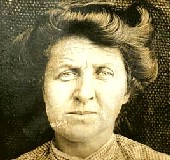 Martha Rendell
Murderer · Australia · 1907
Martha Rendell was executed by hanging at Fremantle Prison on October 6, 1909.…
3 victims
Martha Rendell
Murderer · Australia · 1907
Martha Rendell was executed by hanging at Fremantle Prison on October 6, 1909.…
3 victims
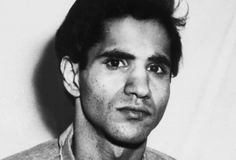 Sirhan Bishara Sirhan
Murderer · USA · 1968
Sirhan Bishara Sirhan was convicted of the murder of United States Senator Robe…
1 victim
Sirhan Bishara Sirhan
Murderer · USA · 1968
Sirhan Bishara Sirhan was convicted of the murder of United States Senator Robe…
1 victim
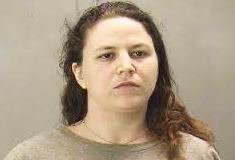 Elizabeth Ramsey
Murderer · USA · 2011
Elizabeth Ramsey was the 33-year-old stepmother of Johnathan Ramsey. Johnathan…
1 victim
Elizabeth Ramsey
Murderer · USA · 2011
Elizabeth Ramsey was the 33-year-old stepmother of Johnathan Ramsey. Johnathan…
1 victim
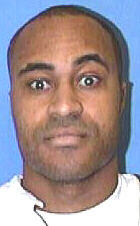 Demarco McCullum
Murderer · USA · 1994
Demarco Markeith McCullum was executed by lethal injection in Texas on November…
1 victim
Demarco McCullum
Murderer · USA · 1994
Demarco Markeith McCullum was executed by lethal injection in Texas on November…
1 victim
- Gender
- male
- Country
- USA
- Location
- Oklahoma County, Oklahoma, USA
- Date of birth
- March 6, 1957
- Age at first offence
- 29
- Characteristics
- robbery, police officer, drugs
- Victim profile
- Richard Oldham Riggs, 32 (Oklahoma City police officer)
- Method of murder
- Shooting
- Date(s) of murder
- January 7, 1986
- Years active
- 1986
- Date of arrest
- Next day
- Status
-
Executed
Executed by lethal injection in Oklahoma on April 27, 2000
Case overview
Ronald Keith Boyd was convicted and sentenced to death for the January 7, 1986 shooting of Oklahoma City police officer Richard Oldham Riggs, and he was also convicted of robbery with firearms and sentenced to fifty years imprisonment for that count. Boyd was executed by lethal injection in Oklahoma on April 27, 2000, and was pronounced dead at 12:21 a.m. after receiving a lethal dose of drugs at Oklahoma State Penitentiary in McAlester.
Timeline
- January 7, 1986 — Ronald Boyd, Byron Gibbs, Joe Jackson, and Lenora Denise Dunn were in a green van driven by Gibbs; they stopped at Tom’s Market; the group robbed Tom’s Market; Oklahoma City officers Richard Riggs and Craig Gravel responded to the robbery report; Boyd was talking on a pay telephone outside the van at a Phillips 66 station; Riggs approached Boyd; Boyd shot Riggs twice, killing him.
- January 8, 1986 — Boyd was arrested and held without bond after a 19-hour intensive search.
- January 10, 1986 — A .38-caliber gun was found in a ravine at Twin Hills Country Club near the shooting site; a piece from the gun’s butt was missing.
- January 11, 1986 — Authorities decided to file first-degree murder charges against the four people arrested in connection of the killing.
- March 7, 1995 — The District Court of Oklahoma County denied Boyd’s Application for Post-Conviction Relief.
- April 27, 2000 — Boyd was executed by lethal injection in Oklahoma; he was pronounced dead at 12:21 a.m.
Background
Boyd spent the evening of January 7, 1986 with friends Byron Gibbs, Joe Jackson, and Lenora Denise Dunn. After riding around Oklahoma City in a van, Boyd asked Gibbs to stop at a convenience store called Tom’s Market located at 36th and Kelly. After the robbery, the group proceeded east on 36th street to Interstate 35 and stopped near the pay phones at a Phillips 66 station so that Boyd could use the pay phone. Boyd got out of the van and used the pay telephone while officers investigated the armed robbery.
The offence
Tom’s Market robbery and aftermath at the Phillips 66 station:
- Boyd and Jackson used the pay phone.
- Boyd handed a revolver to Dunn.
- Dunn robbed Tom’s Market and carried the gun and a wad of money out of the store.
- Dorthy Trimble testified that at approximately 9:00 p.m. she was robbed by a black female with a gun, and she called the police and gave a description of the robber and the van.
- After the robbery, the group proceeded to a Phillips 66 station where Boyd made a call and was outside the van using the pay phone.
Shooting of Officer Richard Oldham Riggs:
- Oklahoma City Police Officers Richard Riggs and Craig Gravel responded to the report of the armed robbery at Tom’s Market.
- The officers were informed that the suspect was a black female who fled the area in a green van.
- Officers noticed a green van parked at a Phillips 66 station and pulled their police car behind the van to investigate.
- Officer Gravel approached the rear of the van, saw that it was occupied by a female and two males, and later ran for protection of the gasoline pumps when Boyd approached.
- Officer Riggs walked toward Boyd, who was talking on the telephone.
- Officer Riggs told Boyd to get off the phone and walk toward him; Boyd did not respond initially, and Riggs repeated the command.
- Boyd dropped the receiver and approached Riggs with his hands concealed in his coat pockets.
- When Riggs instructed Boyd to take his hands out of his pockets, Boyd shot Riggs.
- The bullet struck Riggs in the abdomen.
- Boyd placed the gun against the chest of Officer Riggs and fired a second shot.
- Officer Gravel heard several shots fired as he ran.
- Simultaneously, the van began to slowly roll out of the parking area with Boyd now in front of the van using it for cover.
- Officer Gravel returned to Riggs and both men shot in the direction of the van.
- The van rolled across 36th street and stopped after striking a fence.
- The three persons in the van were arrested at the scene.
- Boyd fled the area on foot.
Eyewitness testimony:
- A passing motorist testified that he saw the person on the phone fire at the police officer.
- Another passing motorist testified that he saw the person talking on the phone shoot Officer Riggs.
- Ronnie Gravel, Riggs’ partner, testified that he heard two shots after Riggs left the car and asked the man on the phone to take his hands out of his pocket.
Boyd’s account:
- Boyd claimed a hitchhiker took the gun from his knapsack and shot Riggs.
- Boyd said there was no gunpowder residue on his hands.
- Boyd claimed he had blanked out and the gun went off, and he ran, as he told Reginald Walker.
- Boyd told Walker that he panicked when the officer approached him because there had been a robbery, he had recently gotten out of jail, and he did not want to be arrested.
- In a statement admitted through Walker’s testimony, Boyd said: he had panicked, the officer approached him, he turned around, he blacked out, the gun went off, another shot went off, and he turned and ran.
- Boyd told Walker: “And he just, you know, the gun went off and another shot went off, and he turned and ran. … [He panicked because] there had been a robbery and … he had just recently gotten out of jail for some problem that he had had. … And that he was afraid of being arrested.” (Testimony attributed to Reginald Walker; as quoted in the appellate proceedings.)
Gun and injuries:
- A .38-caliber gun was found in a ravine at Twin Hills Country Club near the shooting site.
- A piece from the gun’s butt was missing.
- A piece found at the shooting site was consistent with the missing piece.
- A gun expert, police Sgt. Roy Golightly, testified that the sequence of shots could be determined by matching spent shell casings found with the gun to the bullets removed from Riggs’ body.
- The expert testified that only two shots were fired from the gun because it was stuck by a bullet and stopped working.
- The expert testified that injuries to Boyd’s hand were consistent with injuries expected from holding a gun when its grip was shattered.
Investigation
Detention and arrest:
- Boyd was arrested on January 8, 1986 and held without bond after a 19-hour intensive search.
- Prosecutors said Boyd was arrested a day after Riggs was killed and had ample time to wash his hands.
Witnesses and accomplices:
- Additional robbery suspects arrested at the shooting scene were identified as Joe Cornelius Jackson, 23; Byron Demetrius Gibbs, 29; and Lenora Dunn aka Benefee, 29.
- The arrest warrant showed Joe Cornelius Jackson told police that Boyd was the gunman.
Hand injury examination:
- Before Boyd’s court appearance, Boyd was examined at an Oklahoma City hospital for possible hand injuries.
Property and weapon recovery:
- The Colt .38 revolver was found at the golf course after Boyd fled.
- The State presented evidence that the bullets that killed Officer Riggs came from the Colt .38.
- The weapon was damaged in a manner consistent with having been struck by a bullet.
Detective Bill Citty’s statement in the warrant:
- Detective Bill Citty included information in the warrant based on what Joe Jackson told police, including the following quotation:
“Jackson told me that that earlier in the evening he had participated in the armed robbery of Tom’s Market… with three other persons, one of whom was Ronald Boyd. Minutes after the robbery, the suspects stopped at a gas station at NE 36 and I-35. Jackson further told me that while Ronald Boyd was on the pay phone at the station, two police officers approached him and motioned for Boyd to approach the officers. Jackson told me that he saw Boyd turn towards one of the officers and fire two shots from a handgun he had seen earlier in Boyd’s possession. Jackson saw the officer fall to the ground.”
Arrest and charging
Charges:
- Boyd was charged with murder and armed robbery.
- The victim was Oklahoma City Master Patrolman Richard Riggs, 32.
- Boyd was charged with armed robbery and first-degree malice aforethought murder (Count I), and robbery with firearms (Count II).
Other suspects:
- On January 11, 1986, authorities decided to file first-degree murder charges against all four people arrested in connection of the killing, although only Boyd was accused of being the gunman.
- Prosecutors dropped first-degree murder charges against Gibbs because he passed a polygraph test.
- The charge against Jackson was dismissed by a judge because of insufficient evidence.
- Special Judge Niles Jackson ruled that Lenora Dunn should face trial in the death of Officer Richard Riggs.
- Under a plea bargain, the first-degree murder charge was dropped against Dunn after she pleaded guilty to the armed robbery of Tom’s Market; she also pleaded guilty to a 1984 knife attack and a 1985 larceny.
- Dunn was sentenced to 40 years in prison.
Trial
Proceedings and court:
- On September 4, 1986, Boyd was tried for the murder of Richard Riggs.
- Boyd did not testify, going against the recommendation of his attorney.
- Boyd was tried by jury and convicted of First Degree Malice Aforethought Murder (Count I) and Robbery With Firearms (Count II) in Oklahoma County District Court, Case No. CRF-86-218.
- The Honorable James L. Gullett was the District Judge.
Victim and officers:
- Riggs was killed while investigating the robbery of Tom’s Market on 1000 N.E. 36th Street in Oklahoma City.
Trial testimony summary:
- Riggs’ partner Ronnie Gravel testified that he heard two shots after Riggs left the car and asked the man on the phone to take his hands out of his pocket.
- A passing motorist testified that he saw the man on the phone fire at the police officer.
- Boyd had told a friend the gun, which was in his jacket pocket, “went off.”
Defense arguments and quoted statement:
- Boyd’s attorney, Senator E. Melvin Porter questioned whether Boyd could get a fair trial in Oklahoma County, saying:
“it is difficult for a defendant charged with killing a police officer to get a fair trial in any county, particularly if he’s black and the policeman is white.”
- District Attorney Robert Macy disagreed, stating:
“Any person in Oklahoma County can get a fair trial regardless of race, background, financial level or anything else.”
- In discussing lack of proof for the murder and armed robbery, Porter later told reporters:
“We contend that there has not been any proof that Mr. Boyd maliciously or with malice aforethought murdered Officer Riggs or for that matter committed an armed robbery.”
Jury findings and recommended sentences:
- A jury recommended the death penalty for Ronald Keith Boyd.
- The jury found Boyd guilty of robbery and recommended a 50-year prison sentence.
- In the sentencing stage, prosecutors linked Boyd to four other robberies and one planned heist as part of their claim that Boyd was a continuing threat to society.
- The jury recommended the death penalty and also found three aggravating circumstances.
Aggravating circumstances:
- In the direct appeal record, the aggravating circumstances were:
- that Boyd committed the murder for the purpose of avoiding or preventing a lawful arrest or prosecution;
- that Boyd probably would commit criminal acts of violence that would constitute a continuing threat to society; and
- that the victim was a peace officer killed in performance of official duty.
Sentencing
Sentences:
- The Honorable James L. Gullett imposed:
- death on Count I (First Degree Malice Aforethought Murder), and
- fifty years imprisonment on Count II (Robbery With Firearms).
- Boyd’s clemency hearing was held March 20.
- The Oklahoma Pardon and Parole Board denied Boyd’s appeal for clemency.
Prayer vigils and protests:
- Prayer vigils and protests were held at various locations around the state on Wednesday, April 26, with over 80 people participating in a prayer vigil outside the prison gates.
Appeals
United States Supreme Court and direct appeal:
- Boyd’s convictions and sentences were affirmed on direct appeal in Boyd v. State, 839 P.2d 1363 (Okl. Cr. 1992).
- The United States Supreme Court denied Boyd’s petition for writ of certiorari on June 21, 1993.
Post-conviction relief (Oklahoma Court of Criminal Appeals):
- Boyd appealed from the District Court of Oklahoma County’s March 7, 1995 denial of his Application for Post-Conviction Relief.
- The Oklahoma Court of Criminal Appeals decided the appeal on April 9, 1996, affirming the denial of post-conviction relief.
- The court affirmed, stating it would not address propositions barred by waiver or res judicata and evaluating Boyd’s ineffective assistance of counsel arguments under Strickland.
Ineffective assistance claims and rulings (Oklahoma post-conviction):
- Boyd argued appellate counsel was ineffective for failing to raise certain substantive issues on direct appeal and failing to raise specific instances of ineffective assistance of trial counsel.
- The court rejected these arguments, concluding that none met both Strickland requirements.
Federal habeas proceedings (Tenth Circuit):
- Boyd filed a habeas petition seeking to overturn his conviction and sentence.
- The United States Court of Appeals for the Tenth Circuit affirmed the denial of his petition.
- The appellate court described his claims as including ineffective assistance of counsel in both guilt/innocence and penalty phases, due process claims about expert testimony, jury instruction claims, prosecutorial misconduct claims, and claims concerning aggravating circumstances and evidentiary rulings.
- The appellate court affirmed that relief was not warranted, concluding that state court decisions were not contrary to, or an unreasonable application of, clearly established federal law and were not based on an unreasonable determination of the facts.
Outcome
Execution and final actions:
- Boyd was executed by lethal injection in Oklahoma on April 27, 2000.
- He was pronounced dead at 12:21 a.m. at Oklahoma State Penitentiary in McAlester after receiving a lethal dose of drugs.
- Minutes before his death, Boyd turned to his family and said:
“I’m all right. I’m at peace with God. I’m fine,”
“Don’t worry about me. I’m OK y’all.”
Statements by Betty Riggs:
- Hours before the execution, Betty Riggs said:
“I promised Richard as I stood over his coffin that I would live to see this day,”
“I had to keep my promise to Richard, and now I can go to the cemetery and I’ll tell him.”
Other reported pre-execution details:
- Boyd requested catfish, French fries, plums and grapes, strawberry shortcake and a cherry Sprite for his last meal.
- Boyd was listed as having asked for his brother, uncle, two nephews, and a cousin to be there during his death.
- Two spiritual advisers were listed, said Attorney General Drew Edmondson.
- Edmondson said:
“My thoughts today are with Officer Riggs' family and with the men and women who work diligently to protect and serve,”
Aftermath
Letter attributed to Boyd:
- Boyd wrote a letter “Ron Boyd” titled “Ronald Boyd (March 6, 1957-April 27, 2000 ) - His Case for Innocence.”
- The letter included the following opening passage:
“Dear Friend, I write today to attempt to explain the events that lead to me being sentenced to death and my current dire circumstances.”
- In the letter, Boyd stated:
“First, I must say that I never took any part - what-so-ever -in robbing the store, or the shooting of Officer Riggs.”
- The letter included Boyd’s description of his account at the pay phone and the shooting, including:
“When Officer Riggs got out of his patrol car, he instructed me to drop the phone and walk toward him as he stood beside his patrol car.”
- The letter stated:
“The truth of the matter is, as the shooting began, I saw the second officer running away from the van and his partner.”
- The letter included Boyd’s claim about the hospital test and the doctor’s statement:
“This man has not fired a gun.”
- The letter included Boyd’s account about an assistant district attorney:
“One day I was called out of the tank to see Assistant District Attorney Ray Elliot (now a judge).”
- The letter included a concluding request:
“Please, if you can at all, help me!” and it ended with: “Sincerely, Ron Boyd.”
Legal citation included in the case materials:
- The record included the United States Court of Appeals for the Tenth Circuit citation “Boyd v. State, 839 P.2d 1363 (Okl. Cr. 1992) (Direct Appeal).”
- The record also included “Boyd v. State 915 P.2d 922” and “UNITED STATES COURT OF APPEALS For the Tenth Circuit No. 98-6309 Ronald Keith Boyd, Petitioner-Appellant v. RON WARD, Warden, Oklahoma State Penitentiary, Respondent-Appellee.”
Other details
Additional named individuals and roles:
- Joe Cornelius Jackson, 23.
- Byron Demetrius Gibbs, 29.
- Lenora Dunn aka Benefee, 29.
- Fred Tubbs (the house Boyd shared with him).
- Reginald Walker (the person Boyd went to after fleeing and at whose home Boyd was arrested).
- Stephen Gericke (passing motorist witness).
- Ronnie Gravel (Riggs’ partner).
- Dorthy Trimble (clerk at Tom’s Market).
- District Attorney Robert Macy.
- Special Judge Niles Jackson.
- Prosecutor Jim? (not established beyond roles named; only Macy and Porter are named as prosecutors in the provided material).
- Detective Bill Citty (wrote the information in the arrest warrant).
- Detective Bob Horn (interviewed Boyd after arrest, per the Tenth Circuit background).
- Police Sgt. Roy Golightly (firearms expert).
- Dr. Choi (medical examiner; testimony referenced in the appeals).
- Assistant District Attorney Ray Elliot (now a judge, as referenced by Boyd’s letter).
- Oklahoma City police Lt. Dennis Ross.
- Police Chaplain Jack Poe.
- Attorney General Drew Edmondson.
- David Autry (Boyd’s attorney referenced in his letter).
- Ronald Keith Boyd’s execution-related attendees included Riggs’ family members listed as witnesses: Riggs’ sister, uncle, and three brothers, in addition to Betty Riggs.
Counts and sentencing phase structure:
- The direct appeal record described Count I as First Degree Malice Aforethought Murder and Count II as Robbery With Firearms.
- The jury found three aggravating circumstances and sentenced Boyd to death and fifty years imprisonment.
Federal habeas petition claims listed:
- The Tenth Circuit described thirteen major issues raised in Boyd’s federal habeas petition, including ineffective assistance, due process claims about expert testimony and jury instructions, prosecutorial misconduct, challenges to aggravating circumstances and jury instructions in the penalty phase, and denial of an evidentiary hearing in federal court.
Corresponding citations and procedural references included:
- “Boyd v. State, 839 P.2d 1363 (Okl.Cr. 1992) (Direct Appeal).”
- “Boyd v. State, 915 P.2d 922” (post-conviction proceedings).
- “Boyd v. Oklahoma, 509 U.S. 908” (certiorari denial referenced in the post-conviction review material).
- “United States Court of Appeals for the Tenth Circuit No. 98-6309.”
Spotted an error, or have more information about this case?