George Dale
Murderer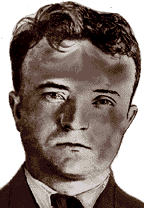 Paul Jaworski
Murderer · USA · 1926
Paul Jaworski was born in Poland as Paul Poluszynski in 1900. He later immigrat…
20 victims
Paul Jaworski
Murderer · USA · 1926
Paul Jaworski was born in Poland as Paul Poluszynski in 1900. He later immigrat…
20 victims
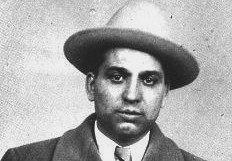 Harry Maione
Murderer · USA · 1937
Harry “Happy” Maione (1908 – February 19, 1942) was a New York mobster who serv…
12 victims
Harry Maione
Murderer · USA · 1937
Harry “Happy” Maione (1908 – February 19, 1942) was a New York mobster who serv…
12 victims
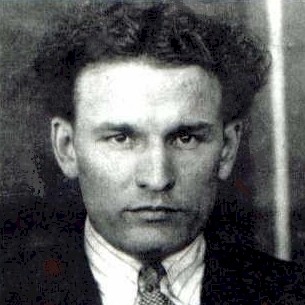 William Kenneth Wagner
Murderer · USA · 1924
William Kenneth (Kinnie) Wagner (born February 18, 1903 in Scott County, VA) wa…
6 victims
William Kenneth Wagner
Murderer · USA · 1924
William Kenneth (Kinnie) Wagner (born February 18, 1903 in Scott County, VA) wa…
6 victims
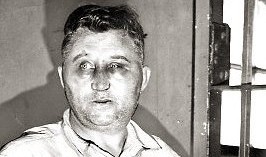 Harry Powers
Murderer · USA · 1931
Harry Powers was executed by hanging on March 18, 1932, at the West Virginia Pe…
5 victims
Harry Powers
Murderer · USA · 1931
Harry Powers was executed by hanging on March 18, 1932, at the West Virginia Pe…
5 victims
 Herman Drenth
Murderer · USA · 1931
Herman Drenth was also known by the aliases Harry F. Powers and Cornelius O. Pi…
5 victims
Herman Drenth
Murderer · USA · 1931
Herman Drenth was also known by the aliases Harry F. Powers and Cornelius O. Pi…
5 victims
 William Edward Hickman
Murderer · USA · 1926
William Edward Hickman was a man who tried to solve his financial problems by k…
5 victims
William Edward Hickman
Murderer · USA · 1926
William Edward Hickman was a man who tried to solve his financial problems by k…
5 victims
 Ignacio Cuevas
Murderer · USA · 1974
Ignacio Cuevas was executed in Texas by lethal injection on May 23, 1991, for h…
3 victims
Ignacio Cuevas
Murderer · USA · 1974
Ignacio Cuevas was executed in Texas by lethal injection on May 23, 1991, for h…
3 victims
 David Lashley
Murderer · United Kingdom · 1977
David Lashley was the prime suspect in the murder of Janie Shepherd. In April 1…
1 victim
David Lashley
Murderer · United Kingdom · 1977
David Lashley was the prime suspect in the murder of Janie Shepherd. In April 1…
1 victim
 Steve Nunn
Murderer · USA · 2009
Stephen Rob Nunn, known as Steve Nunn, was born November 4, 1952, in Glasgow, K…
1 victim
Steve Nunn
Murderer · USA · 2009
Stephen Rob Nunn, known as Steve Nunn, was born November 4, 1952, in Glasgow, K…
1 victim
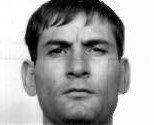 Michael Eugene Sharp
Murderer · USA · 1982
Michael Eugene Sharp (#740), a Texas death row inmate. Brenda Kay Broadway (32)…
2 victims
Michael Eugene Sharp
Murderer · USA · 1982
Michael Eugene Sharp (#740), a Texas death row inmate. Brenda Kay Broadway (32)…
2 victims
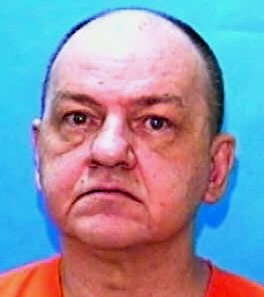 Burley Gilliam
Murderer · USA · 1982
Burley Gilliam, Jr. was born on 08/13/48. Joyce Marlowe was last seen alive on…
1 victim
Burley Gilliam
Murderer · USA · 1982
Burley Gilliam, Jr. was born on 08/13/48. Joyce Marlowe was last seen alive on…
1 victim
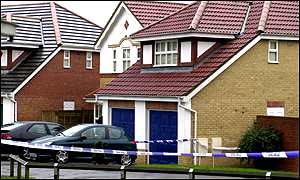 Anthony Smith
Murderer · United Kingdom · 2001
Anthony Smith was a former sergeant in the Coldstream Guards. He had left the C…
3 victims
Anthony Smith
Murderer · United Kingdom · 2001
Anthony Smith was a former sergeant in the Coldstream Guards. He had left the C…
3 victims
- Gender
- male
- Country
- USA
- Location
- Chicago, Illinois, USA
- Date of birth
- 1895
- Age at first offence
- 38
- Characteristics
- armed robbery, convicted rapist
- Victim profile
- Gustav Hoeh, 71 (clothier)
- Method of murder
- Shooting
- Date(s) of murder
- August 4, 1933
- Years active
- 1933
- Date of arrest
- —
- Status
-
Executed
Executed by electrocution in Illinois on April 20, 1934
Case record: George Dale
Background
George Dale (1895 – April 20, 1934) was the lover and criminal partner of Eleanor Jarman, who was dubbed by the press “The Blonde Tigress.” Dale was a member of the gang responsible for the robbery of Chicago clothier Gustav Hoeh.
The offence
Dale and Eleanor Jarman, together with another gang member, Leo Minnici, planned to rob Hoeh’s clothing store. The robbery went bad, and Dale shot Gustav Hoeh.
Testimony at the trial included that while Hoeh lay dying, Jarman kicked him in the face.
Gustav Hoeh was 71 years old.
Investigation
After the murder, the trio was arrested shortly after the incident. The three defendants denied planning to kill Hoeh.
Arrest
Eleanor Jarman, George Dale, and Leo Minnici were arrested shortly after the murder.
Jarman asserted in her brief trial that she was completely unaware that Dale and Minnici were going to rob Hoeh’s store.
Dale said that Jarman carried the murder weapon in her oversized purse.
Trial
Jarman told the jury: “It was fun and it was an easy way to get swell clothes and anything you wanted.”
The case involved a trial in Chicago in August 1933 connected to the murder of a Chicago haberdasher. During the almost-unprecedented sessions, “Technicalities were pushed aside,” wrote The Edwardsville (Ill.) Intelligencer during the almost-unprecedented sessions. “In few cases have jury deliberations been more than a few hours, and in virtually every trial a guilty verdict has been returned.”
The trial included statements about Jarman’s background and her participation in robberies:
- Jarman came to Chicago from Sioux City, Iowa, after leaving her husband of six years, whom she said was a “drunken lout.”
- She took her two children to Chicago where she ran a “beer flat” until beer was legalized as Prohibition was relaxed.
- With Dale and Minneci, she began to take up armed robbery.
- Jarman testified there were so many robberies that no particular hold-up stood out in her memory.
At trial, Jarman’s defence was that she did not know her companions planned the robbery of Hoeh’s store and that she did not fire the fatal shots. Her story was that she was elsewhere in the store—looking at neckties—when Dale shot Hoeh. Other testimony contradicted this, and it was stated that Jarman was beating and “clawing” Hoeh when he was struck by the bullet and kicked him while he was down.
A parade of hold-up victims passed through cellblocks, and more than 50 people identified Jarman as robbing them. At the trial, it was described that the court moved with swift efficiency.
Sentencing
Eleanor Jarman was sentenced to a 199-year prison term.
The court sentenced Minnici to a 199-year term as well, and Minnici later served a term of around 20 years before being released in the 1950s.
George Dale was sentenced to death.
Dale died in the electric chair on April 20, 1934, in Illinois.
Appeals
No appeals were included in the provided information.
Outcome
George Dale was executed by the State of Illinois via electrocution in Illinois on April 20, 1934.
Aftermath
One of Dale’s last acts before his electrocution was to write a love letter to Jarman.
Jarman was serving her term in Joliet and was described as “an industrious, obedient, and model woman in almost every respect,” according to warden Helen Hazard.
Jarman escaped from a cottage on prison grounds together with another stick-up artist, Mary Foster. Foster was described as a bank robber serving a 1-to-10 year stretch. Foster and Jarman were located in Massachusetts a few months later.
The pair had been scrubbing floors when they jimmied the cottage lock, stole dresses from the closet (the cabin belonged to a staff member), and scaled a 10-foot fence around the reformatory. They had a one-hour head start on jailers and Jarman “hasn’t been seen since.”
Over the years, some people learned her real identity—mostly family members—and they protected her from authorities. Generally, they believed her claims that she was innocent of Hoeh’s murder.
In 1993, her grandchildren submitted a clemency petition to Gov. Jim Edgar that included: “Jarman has served 7 years in jail for being with the wrong people at the wrong time.” “She is and will in whatever time remains for her be an remain a good and completely rehabilitated citizen.”
Gustav Hoeh’s survivors were unconvinced. Hoeh’s grandson, Kenneth Hoeh, said: “In one respect I could understand their feeling,” said Hoeh’s grandson, Kenneth Hoeh. “I just as soon they leave alone what was left forgotten.”
Another grandson said: “It was a vicious crime. As I understand the details, she played an active part,” Dan Hoeh told The Chicago Tribune. “Even if it had been a minor role, she would get no mercy from me.”
After her father, LeRoy, died in 1993, Doug Jarman began a campaign to clear his grandmother’s name. Doug Jarman said that a letter she sent during her incarceration, as well as conversations with people who knew her before her arrest, convinced him that she was innocent. Doug Jarman quoted her as writing: “‘I’m goig to be here the rest of my life. I’m never going to be with you,’” “‘I always want you to know that I was innocent.’”
A Jarman family legend said that shortly after her escape, she appeared in Sioux City where her two sons, LaVerne and LeRoy, were living. The legend stated she had received a letter days before that her sons were threatening to run away from their custodians.
After telling her boys to behave, she disappeared for 35 years, communicating through classified ads, and she was described as apparently “afraid of rejection” by her family.
In 1975, Jarman arranged for a meeting with her brother, Otto Berendt, and they went to a lake outside Sioux City to talk. Berendt’s widow told The Chicago Tribune in 1993: “She was relaxed and looked pretty good,” Berendt’s widow told The Chicago Tribune in 1993. “All she wanted to know was if her boys were OK. We told her they were grown men and doing good for themselves.”
LeRoy, who also saw his mother that night, pleaded with her to surface and straighten out her situation. Returning to Illinois was said to be required to do so, but it was stated that she apparently declined to do so despite her assumption that police had stopped looking for her years before.
By the mid-1990s, contact with Jarman through newspapers tapered off, and Doug Jarman began to attempt to locate his grandmother in midwest nursing homes. Patient privacy rules were described as making that extremely difficult. Publicly, her fate was described as remaining a mystery.
Other details
The trial was described as occurring in the context of August 1933 in Chicago, after the shooting death of a policeman in a Cook County courtroom and the decisions made by the county’s chief judge, the Hon. John Prystalski, to vent his anger on the defendants who appeared in the dock.
Spotted an error, or have more information about this case?