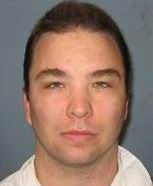
Michael Jeffrey Land
Murderer Brian Kevin Rosenfeld
Murderer · USA · 1985
Brian Kevin Rosenfeld Brian Kevin Rosenfeld was sentenced to three concurrent l…
23 victims
Brian Kevin Rosenfeld
Murderer · USA · 1985
Brian Kevin Rosenfeld Brian Kevin Rosenfeld was sentenced to three concurrent l…
23 victims
 Russell Ellwood
Murderer · USA · 1991
Russell Ellwood was a former taxi driver. Authorities suspected him of killing…
20 victims
Russell Ellwood
Murderer · USA · 1991
Russell Ellwood was a former taxi driver. Authorities suspected him of killing…
20 victims
 Robert Martines Perez
Murderer · USA · 1994
Name: Robert Martines Perez · Other name used in proceedings: Robert Martinez P…
15 victims
Robert Martines Perez
Murderer · USA · 1994
Name: Robert Martines Perez · Other name used in proceedings: Robert Martinez P…
15 victims
 Billy Frank Vickers
Murderer · USA · 1993
Billy Frank Vickers Vickers was executed by lethal injection in Texas on Januar…
14 victims
Billy Frank Vickers
Murderer · USA · 1993
Billy Frank Vickers Vickers was executed by lethal injection in Texas on Januar…
14 victims
 Larry Allen Hayes
Murderer · USA · 1999
Larry Allen Hayes was convicted of capital murder and was executed by lethal in…
2 victims
Larry Allen Hayes
Murderer · USA · 1999
Larry Allen Hayes was convicted of capital murder and was executed by lethal in…
2 victims
 Grace Fortescue
Murderer · USA · 1932
Grace Hubbard Fortescue (née Grace Hubbard Bell; 1883–1979) was a New York soci…
1 victim
Grace Fortescue
Murderer · USA · 1932
Grace Hubbard Fortescue (née Grace Hubbard Bell; 1883–1979) was a New York soci…
1 victim
 Scott Roeder
Murderer · USA · 2009
Scott Roeder was an anti-abortion activist. George Tiller, a physician from Wic…
1 victim
Scott Roeder
Murderer · USA · 2009
Scott Roeder was an anti-abortion activist. George Tiller, a physician from Wic…
1 victim
 Stuart Kennedy
Murderer · USA · 1986
Stuart Kennedy was a White male from West Chester, Ohio. Stuart Kennedy was con…
1 victim
Stuart Kennedy
Murderer · USA · 1986
Stuart Kennedy was a White male from West Chester, Ohio. Stuart Kennedy was con…
1 victim
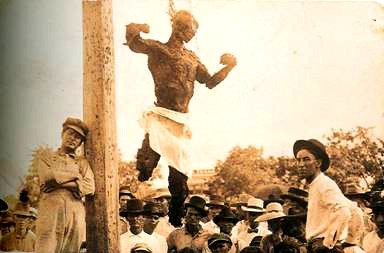 Jesse Washington
Homicide · USA · 1916
Jesse Washington was an African American farmhand from Waco, Texas. He was 17 y…
1 victim
Jesse Washington
Homicide · USA · 1916
Jesse Washington was an African American farmhand from Waco, Texas. He was 17 y…
1 victim
 Allan Grimson
Serial killer · United Kingdom · 1986
December 1997 — Nicholas Wright met Allan Grimson, who had given him a telephon…
3 victims
Allan Grimson
Serial killer · United Kingdom · 1986
December 1997 — Nicholas Wright met Allan Grimson, who had given him a telephon…
3 victims
- Gender
- male
- Country
- USA
- Location
- Jefferson County, Alabama, USA
- Date of birth
- May 23, 1969
- Age at first offence
- 23
- Characteristics
- rape, robbery
- Victim profile
- Candace Brown (female, 30)
- Method of murder
- Shooting ( .45 caliber automatic handgun)
- Date(s) of murder
- May 19, 1992
- Years active
- 1992
- Date of arrest
- —
- Status
-
Executed
Executed by lethal injection in Alabama on August 12, 2010
Case record: Michael Jeffrey Land
Background
Michael Jeffrey Land was an Alabama death row inmate. He received DOC# 00Z553. He was male, race listed as white, and he was born 5/23/1969. He was received by Holman Correctional Facility on 1/18/1994. His charge was murder. His death sentence followed his capital murder conviction for the 1992 killing of Candace Brown.
Land’s mother was a Birmingham police officer at the time of the crime and conviction. Land’s family members included his mother, Gayle Gossett, a former Birmingham police officer; his stepfather, Ellis Gossett; his brother, Jason Land; and his grandfather, Glenn Morrison. His family members and others attended the execution, including Candace Brown’s parents, John and Brenda Brown, and her three brothers. At the execution, Michael Brown, Candace Brown’s son (now 19), witnessed the execution.
Land’s prior history included that he had previously been to prison twice for receiving stolen property. Candace Brown had briefly met Land when she visited a friend of his in prison as part of a prison ministry. Candace Brown had named Land as a suspect in a prior burglary of her home in which her purse was stolen.
Land also raised an equal protection claim at a later stage of litigation, arguing about peremptory challenges and alleged discrimination, and raised a fair cross-section claim based on the representation of African-Americans in the jury venire.
The offence
Candace Brown was kidnapped from her home and later found shot in the head. Her two-year-old child was left alone in the house when she was abducted and was found unharmed by police the next day.
Investigators found signs of forced entry and disruption at Candace Brown’s home. A window to her apartment was broken and her telephone wires had been cut. Police found a puppy and Candace Brown’s unharmed two-year-old child inside the apartment, but Candace was missing. Investigators found a note on a bulletin board bearing Michael Land’s name and phone number. They also found a shoe print with distinctive tread spelling out “USA” on one of the broken windowpanes.
Candace Brown’s body was discovered later in a nearby quarry on Ruffner Mountain. She had been shot in the back of her head by a .45 caliber automatic handgun.
At trial, the jury found Land guilty of:
- murder during a burglary in first degree (Ala.Code 1975, § 13A-5-40(a)(4))
- murder during a kidnapping in first degree (Ala.Code 1975, § 13A-5-40(a)(1))
Land was sentenced to death. The trial court followed the jury’s recommendation after a 11-1 vote recommending a death sentence.
Investigation
Police were called after Candace Brown’s landlord found that a window had been broken and the telephone wires had been cut. Officers found Candace Brown’s infant son alone and unharmed. Officers also found a note on a bulletin board with Michael Jeffrey Land’s name and phone numbers and a shoe imprint with distinctive tread bearing the lettering “USA” on one of the removed panes of glass.
During the investigation, police established that doors to the house were locked and that a storm window near a rear entry to the house had been removed and several panes of the interior window behind that storm window had been cut and removed.
Police located Land after telephoning Candace Brown’s mother and learning where Land was working. Detectives Steve Corvin and Larry Fowler went to Riverchase Galleria, a shopping mall in Hoover, where Jeffrey Land was repairing the roof of the mall. The detectives informed Land they were investigating the disappearance of Candace Brown, and Land agreed to accompany them to the police station for questioning.
Forensics evidence included:
- Wire cutters found during the search of Land’s car made the cuts on the telephone wire leading into Candace Brown’s residence.
- Two types of glass fragments found on a pair of gloves seized from Land’s car were consistent with the glass in the shattered window and the broken window near the rear entry.
- Land’s tennis shoe sole had the same distinctive design as the shoe print found on a removed pane of glass at Candace Brown’s house.
- A bullet recovered from Candace Brown’s head had been fired from a .45 caliber handgun and matched a bullet test-fired from the .45 caliber handgun found in Land’s car.
- A DNA profile made from a semen stain found on Candace Brown’s blouse matched Land’s blood sample with a degree of certainty of roughly one in 20 million (or one in 20,620,000 white males, as described in later appellate discussion).
- Wire-cutters and gloves with glass fragments embedded consistent with the broken window were found. A .45 handgun was located in Land’s car (trunk), and the bullet matching was made by comparison to a bullet test-fired from that gun.
Police also took Land’s shoes and had a detective inspect them when bloodstains appeared to be present. The detectives asked Land to change into jail uniform so his clothes could be inspected for bloodstains.
Land’s initial taped statement and later statement were part of the evidence collection. Land initially claimed he had not seen Candace Brown for about a week and provided an alibi. During the course of the interview, the alibi witness was contacted and did not substantiate Land’s story. Police confronted Land with evidence and inconsistencies and told him to be truthful. Land then provided a second statement.
In Land’s second statement, he said he had met two men, named “Tony” and “Edward,” at a gas station late the previous night and that they asked him if he knew an “easy mark” for a burglary. Land stated he suggested Candace Brown’s house and that the men paid him $20 to cut and remove glass to a window and that the three entered the kitchen through that window. Land stated Candace Brown walked into the kitchen and that either Tony or Edward slapped her, knocking her to the floor and causing her nose and mouth to bleed. Land claimed he became frightened and left the house. He also stated he had lied previously about where his car was and that it could be found at the mall where he worked. Land admitted refusing to allow the second statement to be tape-recorded.
Land also admitted requesting that the police agree not to charge him with carrying a gun if the car was searched, and when the detectives asked for car keys, Land handed over keys. Police located Land’s car, opened the trunk, conducted a visual inventory, and saw a .45 caliber semi-automatic handgun; the gun was not seized at that time, and the car was towed to a secure lot and searched two days later pursuant to a valid search warrant.
Arrest
At the time police took Land’s shoes and clothes for inspection and gave him a jail uniform, the parties agreed that Land was arrested at that point. Police later formally arrested Land after his second statement on the evening of May 19.
Trial
Land was charged with capital murder. The charging included capital murder-murder during burglary and murder during kidnapping.
At oral argument and in appellate review, Land argued that his conviction should be reversed and he should receive a new trial because the prosecutor allegedly commented on Land’s failure to testify. The prosecutor’s rebuttal closing argument included the following quoted statement:
“Jeff tell us the truth, tell us the truth.”
The prosecutor’s rebuttal closing also included these quoted statements:
“They arrested him, ladies and gentlemen, for murder. They arrested him following his statement to the Birmingham Police Department: ‘I wasn't there, I didn't have anything to do with it. I don't know what you're talking about. I was at my girlfriend's house, my car was out at Marie F.'s. They take his shoes. They call Marie, they come back and say, ‘Hey, Jeff, Marie ain't got your car. And your shoes match the shoeprint out there on the scene. What you got to say? Tell us the truth.’
“ ‘Well, I'll talk to you, but not if that thing's running. I'll talk to you, I don't want it recorded like that. I'll tell you what happened.’
“So, then the defense wants you to believe that we have so intimidated this man [that] he is going to confess to breaking in a house that we haven't even told him anything about. He talks to you about how he went in the window. That was known at 8:30 in the morning. How he broke the glass to go in that window. It's broken, it's stacked up.
“How he was wearing the same clothes that he's got on right now. That matches the footprint out on the scene [sic].
“How he went inside, committed the burglary. They wanted to commit a burglary. What do you do during a burglary? You steal. You steal.
“He gets inside with these two fictional human beings, I guess, and he gets scared and leaves because he realizes he is in some deep trouble. He has got to get out of this thing somehow. He ain't about to admit to committing the killing, so he is going to lay it off on Tony and Edward. ‘Oh, I got scared and left. And I had my car and I drove home and I went over-I went on to work.’ That means he has got his car the entire time. And where do we find the gun that fires the bullet into Candy Brown's head? We find it in the trunk of his automobile at 4:00 o'clock that afternoon. And he's got the keys until such time [as] the Birmingham Police Department takes them from him. He's got the keys.
“There was a bullet found inside that house by the front door. It is consistent with having been fired out of this gun. Remember that.
“Of course, Mr. Land, even in the statement where he talks to the police, starts hedging his bets and covering his tail a little bit. Said, ‘Oh, I got scared after she got hit by Tony and Edward and there was blood everywhere and that's how it got on my hands-on my gloves and on my pants.’
“ ‘Phyllis Rollan, did you go out there and luminol that place?’ ‘Yep, no blood.’
“ Jeff tell us the truth, tell us the truth. [Because Land questions whether these words were the prosecutor's own words or were part of the prosecutor's summary of other persons' statements, we have not added the quotation marks that have been added on other sentences or phrases.]
“Ladies and gentlemen, the Birmingham Police Department did not conspire against Jeffrey Land. I don't care about this guy unless or until he breaks the law here in the state of Alabama. And that's what he has done in this case. He committed a burglary and during that burglary he fired in that house. And then he marched Candy Brown up to Ruffner Mountain and he tried to blow her brains out. Now, you tell me, is a shot to the back of the head with a .45, is that an intent to kill?
“....
“He is wearing gloves. He goes in and at some point Candy Brown wakes up and he says, ‘You're going with me.’ She said, ‘I'm not going anywhere.’ Maybe she ran towards the front door, maybe she was trying to get out. But at one point Michael Jeffrey Land fires the gun and said, ‘The next one's for the kid. You're going with me.’
“....
“And he tells her to lie down. ‘Lie down.’ ...
“... He stands above her, bang, right in the back of the head.
“....
“And he had the gall, gosh, the gall to be wearing the same clothes that he had just blown her brains out with. He didn't even go home and take a bath. He didn't go home and change clothes to get out of these death clothes, if you will. He didn't think nobody was going to find her. But Candy Brown knew somebody would find Michael, the little boy.
“....
“But this man right here, ladies and gentlemen, he stands before you and says, ‘They lied, those people lied, I don't know anything about a footprint nor a statement saying I was there.’ Through his attorneys he continues to say ‘I don't know anything about the wire cutters or the phone lines or the glass fragments, I don't know anything about the gun or how that bullet got into her head. It may not even be the right bullet. And if it is, David Higgins is so dumb he can't read it.’ That's how with utter and total degradation of the Birmingham Police Department, Department of Forensic Sciences, Coroner's Office [sic].
“No Birmingham police officer, with what they go through day in and day out, *232 should have to put up with the accusations that were put forth in this room. No Department of Forensic Sciences personnel should have to put up with those kinds of accusations, but they have to, part of their job.”
The quoted jury note written by Juror C. and read on the record included:
“I object to Mr. Dodd's statement about them wanting us to kill him. I feel he did it to play on our guilt. Whatever the verdict may be we are not responsible for the punishment of the defendant if found guilty, the defendant is. If I may object.”
During sentencing, Land argued before appellate courts about the trial judge’s consideration of letters and victim impact material, juror misunderstanding, jury procedures, and other issues. The appellate court opinions addressed multiple claims and concluded there was no reversible error and affirmed the conviction and death sentence.
The trial court rejected Land’s claim of an involuntary statement, addressed admissibility of evidence based on chain of custody, and found death was a proper sentence.
Sentencing
The jury recommended a death sentence by a vote of 11-1. The trial court followed the recommendation and sentenced Land to die in the electric chair.
The trial judge stated during sentencing:
“[JUDGE HARD]: I have also received, as you know, additional correspondence from family members, both [members of the] Brown family and [members of the] Land family. I would like to thank each person who has written me from both sides for the heartfelt sentiments that you have forwarded to me, many of you. I appreciate it. Many of the comments were very disturbing, but I thought very carefully about everything that's been written to me by every person. Of necessity, I copied everything and gave it to the lawyers and Mr. Land.
“....
“[JUDGE HARD]: All right. Proceeding to the determination of sentence, as we know, we lawyers know that I am to determine sentence based squarely on whether or not prevailing [sic] circumstances found to exist outweigh mitigating circumstances found to exist. I am to consider the jury's recommendation contained in their advisory verdict, though, as we all understand, we are in a jury-override state and the jury's recommendation is not binding on the Court.
“....
“[JUDGE HARD]: To mitigation. Number one....
“....
“[JUDGE HARD]: As I mentioned earlier, ladies and gentlemen, I have carefully read every scrap of paper submitted to me, including the Hillcrest discharge papers, Dr. Rosecran's findings, the pre-sentence report by Mr. Bryant, the letters submitted by the respective families. I have listened, of course, to the trial, first and second stage and, as well in October, comments of counsel, and I have reviewed the entire case, recalling the arguments given at the first and second stage and third stage in October.
“To conclude, I find no mitigating circumstance by way of 13A-5-52.”
The Alabama appellate decisions also discussed Land’s arguments about:
- whether the prosecutor made impermissible comments
- juror misunderstanding about punishment responsibility
- victim impact evidence during guilt phase
- letters read by the trial judge
- sufficiency of evidence for the burglary count and intent to commit theft
- admissibility of “fruits” of arrest
- limits on cross-examination and an internal police memorandum
- denial of motions to strike prospective jurors for cause
- mitigation based on Hillcrest mental facility records
- jury selection and voir dire procedures
- calculation of Land’s age at the time of the murder
- admission of evidence relating to a prior burglary and phone-line disruption
- underrepresentation of African-Americans in jury venire
- transcription gaps in trial proceedings
- peremptory strike arguments raised in an application for rehearing
Appeals
Land appealed his conviction and death sentence in state court and pursued federal habeas relief.
State direct appeal results:
- Land v. State, 678 So.2d 201 (Ala.Cr.App. 1995) (Direct Appeal)
- Land v. State, 678 So.2d 224 (Ala.Cr.App. 1995) (Direct Appeal)
In those appeals, the Court of Criminal Appeals:
- affirmed Land’s conviction and death sentence
- held that there was no error in key evidentiary and trial issues, including that death was proper sentence
Review by the Alabama Supreme Court included:
- Affirmation of conviction and sentence following certiorari, with the Alabama Supreme Court affirming the judgment of the Court of Criminal Appeals.
Federal habeas:
- Land v. Allen, 573 F.3d 1211 (11th Cir. 2009) (Habeas) The Court of Appeals affirmed the district court’s denial of Land’s 28 U.S.C. § 2254 habeas petition. The federal court found no basis for reversal on the claims addressed, and it affirmed denial of habeas relief.
Application for rehearing:
- Land’s argument about peremptory challenges and alleged discrimination was addressed in an overruling of the application for rehearing, with the court concluding no prima facie showing of Batson/J.E.B. violation and finding no error in the State’s use of peremptory challenges.
- APPLICATION OVERRULED.
Outcome
Land’s conviction and death sentence were affirmed on direct appeal and in federal habeas proceedings. He was executed by lethal injection.
Aftermath
Land’s execution occurred at Holman Prison in Atmore. He was pronounced dead at 6:23 p.m. Prison officials declared he died from injection. The execution took place on August 12, 2010. Gov. Bob Riley turned down Land’s request for clemency. Efforts by Land’s attorneys to halt the execution failed, including attempts to get the Alabama Supreme Court and the U.S. Supreme Court to stop the execution.
Last meal: A prisons spokesman said Land got his last meal out of vending machines at the visitation yard. He ate a meatball sub sandwich, a double pork chop sandwich and a Philly cheesesteak sandwich, with an orange soda and orange juice.
Final words: When Warden Tony Patterson asked Land if he had any final statements, Land replied: “No. Thank you though.”
Chaplains and last moments: Holman Correctional Facility Chaplain Chris Summers held Land’s left hand and prayed with him until Land fell into unconsciousness. When Summers stepped away, Land’s hands relaxed and he seemed to lose consciousness. A guard rubbed Land’s forehead, Land made no response, and he was pronounced dead minutes later.
Direct execution-related attendance: Michael Brown, now 19, witnessed the execution along with Candace Brown’s parents, John and Brenda Brown, and Candace Brown’s three brothers. The Browns did not talk to reporters after the execution. Land spent much of Thursday visiting with his mother, Gayle Gossett; his stepfather, Ellis Gossett; his brother, Jason Land; and his grandfather, Glenn Morrison.
Spotted an error, or have more information about this case?