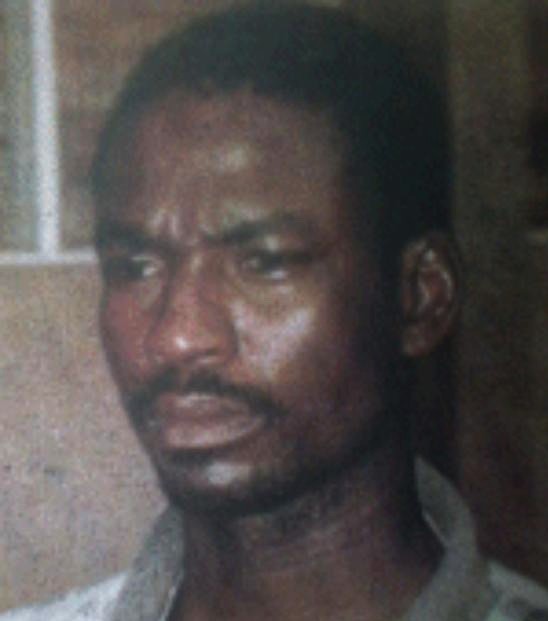
Charles Ebo Quansah
Serial killer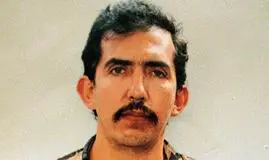 Luis Alfredo Garavito
Serial killer · Colombia/Ecuador · 1992
Luis Alfredo Garavito Cubillos, also known as "La Bestia" ("The Beast") or "Tri…
192 victims
Luis Alfredo Garavito
Serial killer · Colombia/Ecuador · 1992
Luis Alfredo Garavito Cubillos, also known as "La Bestia" ("The Beast") or "Tri…
192 victims
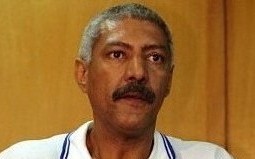 Edson Isidoro Guimaraes
Serial killer · Brazil · 1999
Edson Isidoro Guimarães was a Brazilian nursing assistant and nurse’s aide at S…
131 victims
Edson Isidoro Guimaraes
Serial killer · Brazil · 1999
Edson Isidoro Guimarães was a Brazilian nursing assistant and nurse’s aide at S…
131 victims
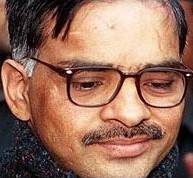 Javed Iqbal
Serial killer · Pakistan · 1998
Javed Iqbal (born 1956 in Lahore, Punjab, Pakistan; died October 8, 2001, in La…
100 victims
Javed Iqbal
Serial killer · Pakistan · 1998
Javed Iqbal (born 1956 in Lahore, Punjab, Pakistan; died October 8, 2001, in La…
100 victims
 Glen Edward Rogers
Serial killer · USA · 1993
Glen Edward Rogers was a spree killer whose cross-country rampage in 1994-95 le…
70 victims
Glen Edward Rogers
Serial killer · USA · 1993
Glen Edward Rogers was a spree killer whose cross-country rampage in 1994-95 le…
70 victims
 Yang Xinhai
Serial killer · China · 2000
Yang Xinhai (simplified Chinese: 杨新海; pinyin: Yáng Xīnhǎi; 17 July 1968–14 Febr…
67 victims
Yang Xinhai
Serial killer · China · 2000
Yang Xinhai (simplified Chinese: 杨新海; pinyin: Yáng Xīnhǎi; 17 July 1968–14 Febr…
67 victims
 Yang Xinhai
Serial killer · China · 2000
Yang Xinhai (simplified Chinese: 杨新海; pinyin: Yáng Xīnhǎi; 17 July 1968–14 Febr…
67 victims
Yang Xinhai
Serial killer · China · 2000
Yang Xinhai (simplified Chinese: 杨新海; pinyin: Yáng Xīnhǎi; 17 July 1968–14 Febr…
67 victims
 William Clifford Bryson
Murderer · USA · 1988
William Clifford Bryson was convicted in Oklahoma of first-degree murder for th…
1 victim
William Clifford Bryson
Murderer · USA · 1988
William Clifford Bryson was convicted in Oklahoma of first-degree murder for th…
1 victim
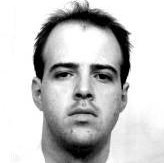 Jonathan Nobles
Murderer · USA · 1986
Jonathan Nobles was a death row inmate. He was executed by lethal injection in…
2 victims
Jonathan Nobles
Murderer · USA · 1986
Jonathan Nobles was a death row inmate. He was executed by lethal injection in…
2 victims
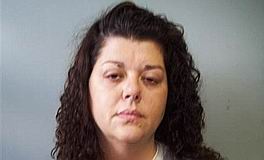 Tonya Ford
Murderer · USA · 2009
Tonya Ford was a Taylor County woman convicted of killing her police officer hu…
1 victim
Tonya Ford
Murderer · USA · 2009
Tonya Ford was a Taylor County woman convicted of killing her police officer hu…
1 victim
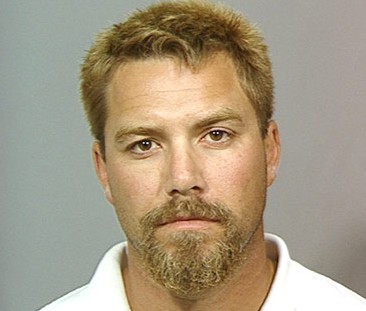 Scott Lee Peterson
Murderer · USA · 2002
Scott Lee Peterson (born 24 October 1972 in San Diego, California) was a former…
1 victim
Scott Lee Peterson
Murderer · USA · 2002
Scott Lee Peterson (born 24 October 1972 in San Diego, California) was a former…
1 victim
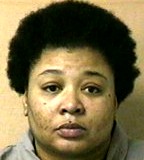 Carlette Parker
Murderer · USA · 1998
Carlette Elizabeth Parker was indicted in connection with the death of Alice Co…
1 victim
Carlette Parker
Murderer · USA · 1998
Carlette Elizabeth Parker was indicted in connection with the death of Alice Co…
1 victim
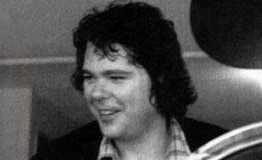 James Beck Gordon
Homicide · USA · 1983
James Beck “Jim” Gordon (born January 1, 1945) was an American recording artist…
1 victim
James Beck Gordon
Homicide · USA · 1983
James Beck “Jim” Gordon (born January 1, 1945) was an American recording artist…
1 victim
- Gender
- male
- Country
- Ghana
- Location
- Accra/Kumasi, Ghana
- Date of birth
- 1964
- Age at first offence
- 29
- Characteristics
- rape
- Victim profile
- Women
- Method of murder
- Strangulation
- Date(s) of murder
- 1993 - 2000
- Years active
- 1993–2000
- Date of arrest
- J uly 2000
- Status
-
Sentenced to death
Sentenced to death in 2002
Case record: Charles Ebo Quansah
Background
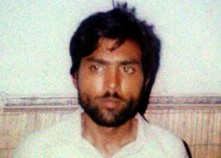
Charles Ebo Quansah, also known as Charles Papa Kwabena Ebo Quansah, was born in 1964. He was described as a convicted Ghanaian serial killer. Quansah lived in the Accra, Ghana neighborhood of Adenta and worked as a mechanic.
Police and prison records said Quansah was jailed at the James Fort prisons in 1986 for the offence of rape. After completing his sentence, he committed another rape and was jailed for three years at the Nsawam Prisons in 1987. Quansah was imprisoned again for robbery in 1996 at the Nsawam Medium Prisons in Kumasi, Ghana. After his release in 1996, he relocated to Accra. He was previously under police surveillance as a suspect in the killings.
Quansah was arrested at his Adenta residence in February 2000 following intensive investigations into serial murders, including the setting up of a special team made up of experts in crime scene management and interrogation. He was described as having admitted killing nine of the women, and the deaths of thirty-four women were attributed to a serial killer beginning in 1993.
The offence
Quansah was arrested for the murder of his girlfriend Joyce Boateng. While in custody, he was subsequently charged with the murder of Akua Serwaa, who was found strangled near Kumasi Sports Stadium in Kumasi in January 19, 1996.
The police statement issued on May 15 alleged that Quansah killed women in Kumasi, Dansoman, Mataheko and Adenta, all in Accra. The statement said Quansah, who hails from Komenda in the Central Region, allegedly killed the women by strangulating them.
The narrative about the serial killings described the victims as mostly found lying in supine positions with their legs widely opened with blood or substances which had the semblance of semen on their private parts. The killings were described as “Ritual Murders”. Areas where some dead bodies were located included the Spintex Road, Kwabenya, Asylum Down, Kisseman, Teshie, Adenta, Achimota, Adabraka and Dansoman. Mataheko was described as the worse hit community.
A separate list of victims was provided for the “Quansah Serial Murders” case cases in Accra (1998 – 1999), and it stated that 34 women had been killed in the same fashion, while Quansah admitted to killing only 8 of them. The women identified among the 8 included Millicent Mawunya Adeku of Adenta Housing Down, Joyce Boateng of Adenta, Accra and Yaa Serwa of Kumasi.
Investigation
It was said that while a bill of indictment and summary of evidence was being prepared by the Attorney General’s Office to begin his trial, Quansah was in prison custody.
In relation to the murder of Serwa, it was said that in 1996 while serving a prison term for robbery at the Nsawam Medium Prisons, Quansah met William Bittar, a Lebanese, who helped him to secure a job in Kumasi. The accused befriended Serwa in 1996 while in Kumasi, where he allegedly strangled her after a drinking spree at a drinking bar near the Kumasi Sports Stadium.
The Enquirer material described allegations that a lie detector test and state prosecutors’ presentation supported a finding of guilt, and it also described issues concerning court-directed production of evidence:
- It said the police disregarded a subpoena issued by the High Court to produce the said lie detector and the alleged confession tape recording.
- It stated that during Quansah’s trial, the Police disregarded a subpoena issued by the High Court to produce the said lie detector used on Quansah as well as the alleged confession tape recording.
- It stated that the court subpoenaed the police to produce the lie detector and confession tapes to back their claim that the suspect was, indeed, guilty of the charges.
A subpoena is quoted verbatim:
“You are hereby commanded to attend before Judge at High Court Criminal Sessions, Accra, Court 6 on Thursday, the 11th day of July, 2002, at the hour of 9am in the fore noon, and so from day to day until the above cause is tried, to give evidence on behalf of the Accused person, and also bring with you and produce at the time and place aforesaid: 1 The Lie Detector used on the Accused person 2 Various Statements made by Accused Person before 8th May, 2001. 3 The Tape Recording of the Confession”
The quoted narrative further stated that Justice Agnes Dordzie did not cite the Commissioner of Police CID for contempt of court despite failure to obey the directives. Legal experts were said to have commented that contempt should have led to a charge landing him in jail, and it described expectations about a bench warrant, custody, and production upon request.
In relation to the alleged lie detector device, the narrative described statements attributed to the accused’s interlocutors:
- It reported that the Commissioner Police CID said he could not remember seeing any subpoena during his term of office at the CID Headquarters, and speculated it might have been served on the Legal Directorate or handled by the Attorney General’s Department.
- It reported that Deputy Superintendent David Senanu Eklu said the IGP explained that it might not have been served directly and included a quote:
- “It would have been served on the IGP and handled by the Legal Directorate on his behalf, or the Attorney General's Department might have handled it,” he guessed.
- “As far as I am aware, the Police CID does not have a device, hence he (Mr. Acheampong), could not have produced it in court if he had appeared.”
- It also included an additional quoted statement attributed to Mr. Acheampong:
- “As far as I am aware, the Police CID does not have the device, hence he (Mr.
Arrest
Quansah was arrested at his Adenta residence in February 2000, following intensive investigations into the serial murders.
The narrative also stated that he was arrested in Adenta in July 2000 for murdering his girlfriend Joyce Boateng, and it said he was prosecuted for the murder of Akua Serwaa found dead around Kumasi Sports Stadium in Kumasi in January 19, 1996.
Trial
Quansah’s trial for the serial killings began on Thursday, July 11, 2002 at the High Court Criminal Sessions, Accra. The case was described as beginning hearing on Thursday, July 11, 2002.
It was said that on March 15 (this year in the narrative), an Accra Community Tribunal committed Quansah to stand trial at a High Court on the murder of Akua Serwa, who was described as a 24-year-old hairdresser in Kumasi. The facts described the meeting with William Bittar and the alleged strangling after a drinking spree near Kumasi Sports Stadium.
The narrative stated that after a mini trial, the trial judge accepted a confession statement, and attributed acceptance details:
- It said the trial judge accepted the confession statement tendered by one Inspector Gove in the Homicide Unit “as evidence in proof of the charge” against the accused.
- It quoted the judge’s reasoning:
- “If what the D.W. 2 described he saw happened to the accused in the cells ever happened at all, it happened a year before the accused was interrogated and his caution statements taken in respect of this case.”
A defence witness named George Yaw Asare Asamoah was described as having told the court that he saw the accused on several occasions beaten and brought back to the cells battered.
The narrative stated that Quansah was pronounced guilty by an Accra High Court on the basis of a doubtful lie detector test administered on him as well as state prosecutors’ claims that he confessed to the serial killing.
The sentencing was described as “sentenced to be hanged until death.”
Sentencing
Quansah was convicted of the strangulation deaths of nine women and sentenced to be hanged until death.
Appeals
No appeals outcome was stated. The narrative included a statement about considering an appeal advised by Nana Oye Lithur:
- It said on the subpoena, Nana Oye Lithur advised Quansah’s counsel to go for an appeal against the conviction if he felt he had a genuine case to determine his fate. It quoted a line:
“On the subpoena, she told The Enquirer that failure to respond to it is a serious crime against the court, and advised Quansah's counsel, to go for an appeal against the conviction if he feels he has a genuine case to determine his fate.”
Outcome
Quansah was sentenced to death in 2002 and was described as being on death row in the Condemned cells of the Nsawam Medium Security Prison.
Aftermath
Quansah spoke to the press in 2003 and denied killing any of the nine women he was convicted of murdering and denied the further twenty-three women he was suspected of murdering. He also issued a statement proclaiming that he was tortured whilst in police custody.
In June 2004, Quansah was described as being aggrieved and claiming he needed a willing counsel to help him clear his name and expressing doubts about his innocence. Prison officers at the Nsawan Prison were quoted as saying Quansah maintained that there was a miscarriage of justice because he was innocent of the heinous crime.
The narrative described alleged torture methods and claims by Quansah:
- It said Quansah claimed the statement he was alleged to have made was made after rounds of brutal torture on the orders of officers of the Criminal Investigation Department (CID) who handled the case.
- It said his claims implicated key players as well as their subordinates who were investigating the serial killings, with names withheld.
- It said Quansah exhibited scars on his body and insisted they were the result of continuous inhuman treatment by interrogators (names withheld).
- It said prison officials claimed the police administration statement that Quansah openly confessed to killing 9 out of the 34 women was not accurate.
- It said Quansah claimed the statement presented to the court as his confession was not written by him.
- It said he claimed he never confessed to killing the women.
- It said he claimed that while in the cells at the Police Headquarters in Accra, he was blindfolded on several occasions, handcuffed from behind, taken to an unknown location in a vehicle, and subjected to hours of gruesome torture that left him bleeding profusely from his nostrils, ears and mouth.
- It said he also alleged that interrogators had other motives such as prompting him to admit killing the women and to implicate certain persons as real architects of the serial killings even though he resisted their promptings because his conscience would not permit him.
- It said he burst out in one torture session that he killed 90 of the women and not the 34 they were asking him to admit, and that “conveniently” the CID altered it to mean he confessed to killing 9 of the women.
- It further said he alleged that despite police arresting him in July 2000 for allegedly killing his girl friend Joyce Boateng of Adenta in Accra, he was charged for the murder of Akua Serwaa around the Kumasi Sports Stadium on 19 January 1996.
- It said he insisted that he was dragged to the location by the interrogators and shown where they said the Kumasi Police found the corpse, and he denied that he took the interrogation team to the crime scene to show them where he murdered Akua Serwaa.
The narrative said a document on the court proceedings available to the Network Herald indicated that the defence team drew the judge and jury’s attention to the inhuman treatment and the statement’s lack of voluntariness. It also said the trial judge accepted the confession statement as evidence.
On August 8, 2005, Quansah was described as having secretly spoken to prison officers about his case and alleged that the Director of the CID, Mr. David Asante-Apeatu, ordered his men to torture him to implicate high profile personalities (names withheld). The narrative said he mentioned officers alleged to have tortured him and forced him to admit killing the women at the Police Headquarters in Accra: Inspector Onipa, Superintendent Issah and Sergeant Charles. It also said he was still maintaining miscarriage of justice and claiming innocence.
The narrative stated that in April 2004, David Asante-Apeatu denied ordering torture and included a quote:
“do you know what a criminal can do?”
It said Asante-Apeatu continued that Quansah broke down on one occasion and voluntarily confessed to killing nine of the women in Accra. It further said that although Quansah was accused of murdering nine women, he was tried for only one of the murders and the dockets on the eight other cases were at that time lying with then Attorney-General and Minister of Justice, Papa Owusu-Ankomah.
The narrative also reported that Quansah had been quoted by prison sources as saying that during one of the torturous interrogations he told police he killed 90 of the women and not the 34 they were asking him to admit, and that prison sources said this was what the interrogating officers twisted to mean that he confessed to killing nine of the 34 women.
Quoted material from defence and prison officials (verbatim where present)
A defence lawyer named Joseph Obliquaye Amui confirmed facts and included quotations:
- It quoted him saying:
- “there has been a miscarriage of justice.”
- It quoted him again in context:
- “He is just like you, very lucid,” he said.
- It quoted his account of judge/defence arguments as well as a statement about his observations:
- “They (police) had a list of the victims (murdered women) and beating him severely to admit killing them. He said they used pliers to clip his skin on many occasions, and asked him to admit to killing the women,” he said.
It also included a quote:
“He did not appear insane to me. He is just like you, very lucid,” he said.
A reference to the “72-year-old man” was included in the narrative about Joseph Obliquaye Amui.
Victims list (as provided)
The narrative provided a list of victims of the “Quansah Serial Murder” cases in Accra (1998 – 1999), including places and dates of death. The following entries were listed in order:
(1) Monica Serwaa — Dansoman — Thursday, 20 August, 1998 — It said she had an uncle called Kwadwo Kusi at Dansoman. (2) Unidentified — Saakaman — Tuesday, 29 September, 1998 (3) Gifty Annan — New Abossy Okai — Saturday, 17 October, 1998 — It said she was born and bred at Larterbiokorshie, lived with grandmother, Mrs. Anna Annan at New Abossy Okai; and said the father Curtis Nii Teikofio Annan was now outside Ghana; and that the mother was dead. (4) Adwoa Lareah — Kaneshie — Saturday, 25 April, 1998 — It said mother was Esi Twumwaa of Kwashieman and father was Kwasi Awurapa (deceased). (5) Beatrice Naadu Lartey — Russia — Friday, 30 October, 1998 — It said father was Lartey Larteye, native of Prampram; mother was Okai Jojoo, native of Swalaba; husband was George Gumah, bar operator, Mataheko. (6) Adwoa Kyereh — Flamingo Junction, Mataheko — Friday, 27 November, 1998 — It said she lived alone at Zongo Junction and has a relative called Yaw Gyeni. (7) Akua Martey — Tweneboa, Odorkor — Saturday, 5 December 1998 — It said she had a son called Edward Acquah Tetteh, H/No. B510/A Tweneboa, Odorkor. (8) Grace Amoah — Kaneshie — Tuesday, 13 October, 1998 — It said she had a son called Ofori Attah, H/No. 132, Kaneshie. (9) Mary Lakor Larkai — Mataheko — Thursday, 12 November 1998 — It said she stayed in H/No. B92/4 Mataheko with Kofi Appiah & Osafo Bediaako.
(10) Alimatu Seidu — Omanjour, Sowutuom — Friday, 26 February, 1999 — It said she had a brother by name Kwabena Amoako of H/No. 43/6, New Town, Accra. (11) Florence Dome — Asoredanho, Dansoman — Thursday, 18 March 1999 — It said the mother was Abena Katsekpor of H/No. 356/17, Asoredanho, Dansoman. (12) Beatrice Gadesse — Dansoman — Sunday, 28 March, 1999 — It said she had a sister called Janet Gadesse residing at La, Accra. (13) Comfort Larbi — Manko Henaku — Dansoman — Wednesday, 7 April, 1999 — It said the husband was Maxwell Owusu of Wesley Grammer School, Dansoman. (14) Mariama Chaana — Zabrama Line, Dansoman — Sunday, 11 April, 1999 — It said she had a cousin called Amadu Bonkaney; and that the mother was Aisha Bonkaney of Sukura. (15) Victoria Mackitteh — Awoshie, Accra — Friday, 16 April, 1999 — It said she had a cousin called Anthony Awortwi of H/No. AN246, Awoshie, Accra. (16) Ama Ampofowah — Cathedral, Mateheko — Wednesday, 28 April, 1999 — It said she was the daughter of Esi Panyin, a farmer of Akim Asene, Eastern Region. (17) Comfort Buxgon — Dansoman, Exhibition — Friday, 14 May, 1999 — It said no information for identification. (18) Georgina Amoah — Abossey Okai — Saturday, 16 May, 1999 — It said publication of her photograph led to identification as Georgina Amoah; and it said investigation hinted that deceased was a known prostitute. (19) Martha Ankrah — Santa Maria, Odorkor — Thursday, 3 June, 1999 — It said her father was Emmanuel Ankrah of H/No. 8M/127, Santa Maria. (20) Unnamed — Dansoman — Tuesday, 22 June, 1999 — It said her body was discovered by Edward Dufe & the Assemblyman. (21) Unnamed — Laterbiokoshie — Sunday, 15 August, 1999 — It said she was found dead in a maize farm at Zoti and had no identification. (22) Araba Quansima — Russia, Accra — Monday, 30 August 1999 — It said her sister was Mrs. Sara Appiah of Dansoman. (23) Unnamed — Akoko-Foto, Dansoman — Friday, 24 September, 1999 — It said body was discovered by Mr. K.B. Coleman, a resident of Dansoman, in the bush. (24) Patience Awa Ohiefe — Mataheko — Thursday, 30 September, 1999 — It said she was born and bred in Ohiefe State in Nigeria; and that the younger sister was Blessed Usin. (25) Comfort Boafo — Adabraka — Saturday, 2 October 1999 — It said she had a sister called Mercy Mango of H/No. 127/3, La, Accra.
It also included a list of six unidentified victims of the “Quansah Serial Murders” case:
- Unidentified — Sakaman — Tuesday, 29 September, 1998
- Unidentified — Dansoman — Tuesday, 22 June, 1999
- Unidentified — Laterbiokoshie — Sunday, 15 August, 1999
- Unidentified — Akokofoto, Dansoman — Friday, 24 September, 1999
- Unidentified — in a bush at Waakye, Kissehman — Sunday, 25 June, 2000
- Unidentified — IPS Junction, Near Unipetrol, Legon — body found; date unknown
Other details
The narrative included statements about Quansah allegedly hinting his lawyer about a possible use of a Lie Detector machine on him by the police in the presence of some white men believed to be officials of the United States Federal Bureau of Investigations (FBI).
It said Quansah’s lawyer, Joseph Obliquaye Amui of Tetterley Chambers, caused a subpoena to be issued to compel the Commissioner of Police CID to come to court with the lie detector used on Quansah and statements he gave to the interrogators before May 8 as well as tape recordings of the confession during interrogation, but the Commissioner Police CID never showed up.
The narrative stated that Joseph Obliquaye Amui said he had opted to represent the accused upon a request from the Legal Aid Board and that his family, colleague lawyers and friends were unhappy with him for doing so.
It said he was yet to be paid his fees by the Legal Aid Board, three clear years after the trial.
It said Quansah’s counsel said he faced an uphill task due to many issues, including having a female judge sitting on the case and the publications of numerous pictures of Charles Quansah which likened him to Dr. Ram Beckley, a medical doctor and an occultist who was prosecuted for possessing human parts. It said he denied the claim that his client was insane, and he said the confession statements, if any, were not voluntary but were taken under duress.
The narrative also included names tied to court proceedings and police leadership:
- It said the subpoena was signed on behalf of the then Chief Justice, Edward K. Wiredu, and it was dated July 9, 2002.
- It said the subpoena ordered the then Commissioner of Police (CID), Patrick K. Acheampong (now Inspector-General of Police (IGP)), to appear.
- It said the subpoena directed appearance before trial judge Mrs. Justice Agnes Dordzie and to bring the lie detector and listed statements and tape recording.
- It said Ernest Owusu Poku was then Inspector of Police (IGP).
- It said Attorney General and Minister of Justice was Papa Owusu-Ankomah.
- It said the trial judge was Mrs. Justice Agnes Dordzie.
- It said Inspector Gove was in the Homicide Unit.
- It said the narrative mentioned a “D.W. 2” who described seeing events in the cells and that the judge referenced caution statements taken in respect of this case.
- It said the narratives mentioned Nana Oye Lithur. It also referenced “Mrs. Justice Agnes Dordzie and the jury” being shown attention.
Finally, the narrative included a “Roll-call of the victims…” section noting that though 34 women had been killed in the same fashion, Charles Quansah admitted to killing only 8, and it singled out Joyce Boateng and Yaa Serwa alongside Millicent Mawunya Adeku.
Spotted an error, or have more information about this case?