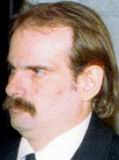
John Charles Lesko
Spree killer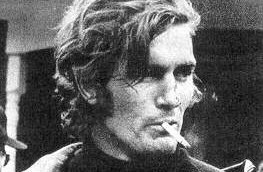 Paul John Knowles
Spree killer · USA · 1974
Paul John Knowles (April 17, 1946 – November 18, 1974) was an American spree ki…
35 victims
Paul John Knowles
Spree killer · USA · 1974
Paul John Knowles (April 17, 1946 – November 18, 1974) was an American spree ki…
35 victims
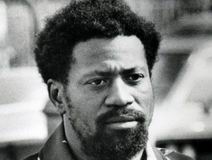 Bobby Joe Maxwell
Spree killer · USA · 1978
Name: Bobby Joe Maxwell Sex: M Race: B Type: T Motive: PC-nonspecific Method of…
11 victims
Bobby Joe Maxwell
Spree killer · USA · 1978
Name: Bobby Joe Maxwell Sex: M Race: B Type: T Motive: PC-nonspecific Method of…
11 victims
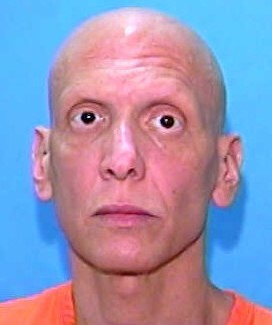 Manuel Pardo
Spree killer · USA · 1986
Manuel Pardo, Jr. was a former police officer who was convicted of nine counts…
9 victims
Manuel Pardo
Spree killer · USA · 1986
Manuel Pardo, Jr. was a former police officer who was convicted of nine counts…
9 victims
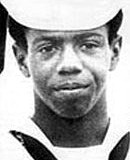 Mark Essex
Spree killer · USA · 1973
Mark James Robert Essex was a Navy veteran who engaged in a shooting and arson…
9 victims
Mark Essex
Spree killer · USA · 1973
Mark James Robert Essex was a Navy veteran who engaged in a shooting and arson…
9 victims
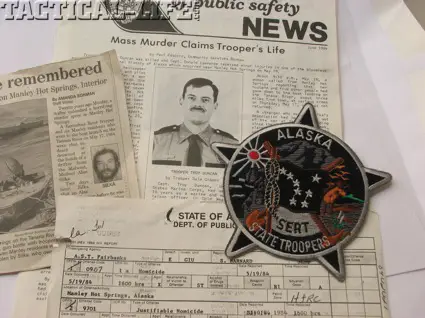 Michael Alan Silka
Spree killer · USA · 1984
Michael Alan Silka was killed during a shoot-out with the police on May 19, 198…
9 victims
Michael Alan Silka
Spree killer · USA · 1984
Michael Alan Silka was killed during a shoot-out with the police on May 19, 198…
9 victims
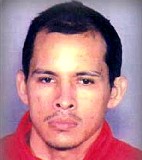 Cesar Rodriguez
Murderer · USA · 2006
Nixzmary Brown was a seven-year-old abused child and murder victim from the Bed…
1 victim
Cesar Rodriguez
Murderer · USA · 2006
Nixzmary Brown was a seven-year-old abused child and murder victim from the Bed…
1 victim
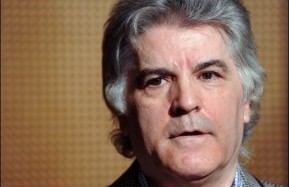 Pierre Bodein
Murderer · 2004
Pierre Bodein was nicknamed “Pierrot le fou,” or “Crazy Pierre.” He was 59 at t…
3 victims
Pierre Bodein
Murderer · 2004
Pierre Bodein was nicknamed “Pierrot le fou,” or “Crazy Pierre.” He was 59 at t…
3 victims
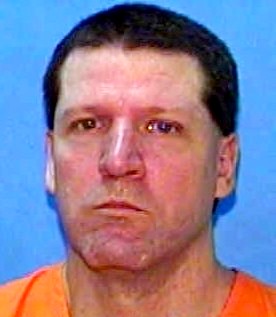 Daniel Lee Doyle
Murderer · USA · 1981
Daniel Lee Doyle was sentenced to death on May 13, 1982. He was convicted of fi…
1 victim
Daniel Lee Doyle
Murderer · USA · 1981
Daniel Lee Doyle was sentenced to death on May 13, 1982. He was convicted of fi…
1 victim
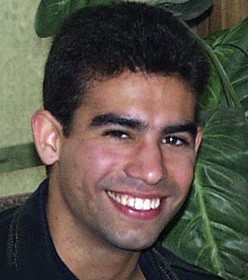 Ricky Rodriguez
Murderer · USA · 2005
Ricky Rodriguez committed suicide by shooting himself the same day. Ricky Rodri…
1 victim
Ricky Rodriguez
Murderer · USA · 2005
Ricky Rodriguez committed suicide by shooting himself the same day. Ricky Rodri…
1 victim
 Carlos de Luna
Murderer · USA · 1983
Carlos de Luna was executed by lethal injection in Texas on December 7, 1989. H…
1 victim
Carlos de Luna
Murderer · USA · 1983
Carlos de Luna was executed by lethal injection in Texas on December 7, 1989. H…
1 victim
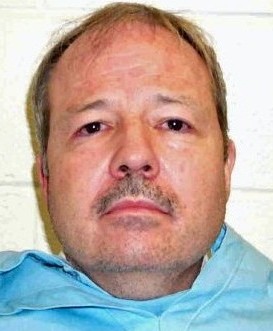 Larry Bill Elliott
Murderer · USA · 2001
Larry Bill Elliott · 1 January 2001 — Elliott broke into Finch's Woodbridge tow…
2 victims
Larry Bill Elliott
Murderer · USA · 2001
Larry Bill Elliott · 1 January 2001 — Elliott broke into Finch's Woodbridge tow…
2 victims
- Gender
- male
- Country
- USA
- Location
- Pennsylvania, USA
- Date of birth
- 19 59
- Characteristics
- drug addict, torture, robbery, kidnapping
- Victim profile
- Peter Levato, 49 / Marlene Sue Newcomer, 26 / William Nicholls, 32 / Leonard C. Miller, 21 (Apollo police Officer)
- Method of murder
- Shooting
- Date(s) of murder
- 1979 - 1980
- Years active
- 1979–1980
- Date of arrest
- January 1980
- Status
-
Sentenced to death
Death sentence imposed in 1981 and 1995; conviction overturned in 2006 with a new trial ordered; 1991 death sentence vacated and remanded for issuance of a conditional writ of habeas corpus insofar as the death sentence was concerned
Case record: John Charles Lesko
Timeline
- December 27, 1979 — Peter Levato was killed.
- January 1, 1980 — Marlene Sue Newcomer was killed.
- January 2, 1980 — William Nicholls was killed.
- January 3, 1980 — Leonard C. Miller was killed.
- February 1981 — John Lesko and Michael Travaglia were convicted of murder of Leonard Miller and sentenced to death.
- March 11, 1991 — The United States Court of Appeals for the Third Circuit reversed insofar as it sustained the imposition of the death penalty and remanded for an evidentiary hearing on Lesko’s claim about the voluntariness of his Indiana County guilty plea.
- 1995 — Westmoreland County resentenced Lesko to death.
- 1996 — A federal appeals court vacated Travaglia sentence.
- December 10, 2005 — Lesko and Michael Travaglia said that they had discovered Jesus while on Pennsylvania’s death row.
- August 9, 2006 — Lesko’s conviction was overturned and a new trial was ordered.
- Wednesday, August 9, 2006 — Westmoreland County Common Pleas Judge Richard E. McCormick Jr. ruled that Lesko’s attorney had been “woefully deficient” during the 1981 murder trial and a 1995 resentencing hearing.
Background
John Charles Lesko was convicted and sentenced to death for the murder of Leonard Miller, an officer of the Apollo, Pennsylvania police department. Lesko and Michael Travaglia were characterized in local coverage as carrying out a brutal string of murders committed during an eight-day killing spree ending on Jan. 3, 1980. The murders were described as being for money, for a vehicle, or “simply for fun,” and the term “Kill for Thrill” was adopted by area newspapers because there was “no rhyme or reason to the murders.”
The book “Kill for Thrill” was written by Michael W. Sheetz. Sheetz was raised in the Alle-Kiski Valley and had been a part-time police officer for Apollo. Sheetz was “haunted by the death of rookie Apollo police officer Leonard C. Miller, 21.” Sheetz said: “My biggest motivator in writing this was every day I went into that police station and saw the picture of Leonard Miller on the wall.” He also said: “It just hit me how senseless this murder was.”
Sheetz moved to Florida in 1986. His partner was Richard Murphy, who was police chief in Apollo when Miller was killed. Sheetz worked at writing the book “off and on for 10 years.” He said he was “lucky enough to find a Duquesne University professor who shared her students’ research into Lesko's childhood.”
Sheetz described Lesko’s childhood and family history: Lesko lived in “squalid conditions, often without heat,” suffered physical abuse by his mother, and was sent “out into the streets to steal” along with his younger siblings. Sheetz stated that Lesko and his younger brother were sexually abused by men. Sheetz said Lesko “went AWOL from the Marines.” Lesko testified at the penalty phase about being given up to an orphanage when he was seven or eight years old, being returned to his grandmother at fourteen, attending a number of schools, and being “a ‘straight A’ student in the eleventh grade,” and about serving in the Marine Corps from March 1976 until his administrative discharge in December 1978.
Lesko’s co-defendant, Michael J. Travaglia, was described as having a childhood with influences that included a strict father and a detached, religious mother. Sheetz said Travaglia felt his parents favored his older brother. Travaglia and Lesko “met while working at the Allegheny County Airport.” Sheetz said both abused alcohol and drugs. By some reports, both tortured animals. Travaglia was described as “apparently addicted to amphetamines” and “an avowed Satanist.”
The offence
Victims and killings during the spree
Lesko and Michael J. Travaglia were convicted for their roles in four murders that occurred during an eight-day killing spree ending on Jan. 3, 1980.
- Peter Levato, 49, of Pittsburgh’s North Side, was shot in the woods near Loyalhanna Dam.
- Marlene Sue Newcomer, 26, a single mother from Leisenring, Fayette County, picked up the hitchhikers along Route 66 after attending a New Year’s Eve party in Vandergrift. She was killed.
- William Nicholls, 46, of Mt. Lebanon, was bound and drowned in an Indiana County lake. In the account of the killing, Nicholls was tied to rocks, thrown in the frigid water, and left to die. In another account in the same proceedings, Nicholls was described as making a homosexual advance on Travaglia.
- Leonard C. Miller, 21, a rookie Apollo police officer, was killed after the pair attempted to rob an Apollo convenience store. Travaglia shot Miller twice from close range during a police chase that resulted after Miller gave chase.
Events leading to the Miller homicide (January 3, 1980, early hours)
In the early hours of Jan. 3, 1980, John Lesko, Michael Travaglia, and Richard Rutherford were cruising the outskirts of the city of Pittsburgh in a stolen sports car. The trio drove past police officer Leonard Miller, sitting in his patrol car parked at the side of the road outside the Stop-and-Go convenience store. Travaglia stated that he “wanted to have some fun with this cop.” Travaglia raced past the officer’s car beeping his horn, but “no pursuit followed.” Travaglia turned the car around, again sped past the patrol car, and again failed to elicit a response. The third time, Officer Miller turned on his lights and gave chase.
Lesko cautioned Rutherford in the back seat: “lay down in the back, because it might turn into a shooting gallery.” Officer Miller forced the sports car off the side of the road and approached on foot. Travaglia rolled down his window, extended his .38 caliber hand gun, and shot Officer Miller twice from close range. Officer Miller returned fire, shattering the passenger side of the window. The three companions sped away, and the gunshot wounds Miller received proved fatal.
Events prior to the Miller homicide (January 2, 1980, late evening)
Earlier, in the late evening of Jan. 2, 1980, the trio began their escapade at a hot dog shop in Pittsburgh. At Travaglia’s instruction, Lesko and Rutherford went to the alleyway behind the Edison Hotel and waited. About ten minutes later, a sports car appeared. Travaglia sat in the front seat beside the driver and owner of the car, William Nicholls, a stranger. While Lesko and Rutherford were climbing into the back seat, Travaglia pulled out a .22 caliber hand gun and shot Nicholls in the arm. Travaglia took the driver’s seat. Lesko told Rutherford to handcuff Nicholls behind the back. As Travaglia drove, Lesko repeatedly punched Nicholls in the face and chest and called him a queer. Lesko asked Nicholls if he wanted to perform oral sex on him and taunted him with a knife. Lesko took Nicholls’s belongings, a wallet and an extra set of keys, and told Rutherford to place them in the glove compartment.
After Nicholls lost consciousness, Rutherford and Lesko gagged him with a scarf. Travaglia stopped the car near a lake in a wooded area. Lesko propped Nicholls against a nearby tree with his hands cuffed, his mouth gagged, and his feet bound with a belt. Travaglia and Lesko dragged Nicholls down to the lake and rolled him into the water, where he disappeared.
Attempted robbery and gun retrieval at Travaglia’s father’s house
After the Nicholls murder, the trio drove to Travaglia’s father’s house. Travaglia knew his father kept a gun. Lesko and Rutherford waited in the car while Travaglia entered the house. Travaglia returned with a .38 caliber handgun and handed it to Lesko. Upon inspection, Lesko discovered it contained only bird shot. Travaglia then turned the car around and returned to his father’s house. Travaglia instructed Rutherford to retrieve the box of bullets lying in the trunk of the car inside the garage. Lesko stood guard outside and warned Rutherford that if anything went wrong, Rutherford “had six shots to get out.” Rutherford returned with the box of bullets and the trio drove off. The bullets were later used to kill Officer Miller.
Post-shooting statements and gun handover (Montgomery)
After the Miller shooting, Lesko and Travaglia returned to Pittsburgh. At the hot dog shop they met a friend, Keith Montgomery, and took him to a room in the Edison Hotel and told him about the Miller shooting. Travaglia told Montgomery: “I shot a cop.” Lesko added: “I wanted to.” Travaglia then gave Montgomery the .38 caliber gun used to shoot Officer Miller.
When Pittsburgh police found Montgomery with that same gun later that evening, Montgomery told the police how he had gotten the gun and that it had been used to shoot a policeman. Lesko and Travaglia were arrested that night.
Before surrendering, Lesko pointed a gun at tSU21
After receiving Miranda warnings, Lesko and Travaglia each gave statements admitting involvement in the killing of Officer Miller. Lesko told the police that he and Travaglia had instigated the car chase with Officer Miller: “So he'd be chasing us ... and the car was fast and that--we'd lose him and could go and knock off the Stop-N-Go.” Travaglia told police that he was “playing around with [Officer Miller], trying to aggravate him, and I figured he couldn't chase me across county lines; and since he did, I figured if I pointed the gun at him and told him to throw his gun away, he couldn't stop me and I could keep on going. In the process of pulling the gun on him, the hammer slipped and the shot discharged.”
Lesko and Travaglia also admitted killing William Nicholls.
Prior robbery and kidnapping connected to Marlene Sue Newcomer
The account stated that during an armed robbery spree operating out of their Edison, Pennsylvania hotel room, the men were hitchhiking on the north side of Pittsburgh when Sue Newcomer stopped to give them a ride on a bitter cold New Year’s Day morning. As a reward, they commandeered Newcomer’s sport utility vehicle and kidnapped her while they robbed an Indiana County party store. Following the robbery, they shot their handcuffed hostage twice with a .22 and abandoned her and her truck in a Pittsburg parking garage.
Recruitment of Richard Rutherford and handcuffing Nicholls; binding and murder method
In the proceedings, Richard Rutherford was offered immunity in exchange for his testimony. The method described for Nicholls included gagging, binding, and being dragged toward an ice-covered pond, with a 25-pound rock used as the means to drop him into the water.
Investigation and arrest
Following Montgomery’s possession of the gun, Pittsburgh police found him “later that evening” and learned how he had gotten it. Lesko and Travaglia were arrested the same night that they were located with the gun. Rutherford was offered immunity in exchange for his testimony.
Trial
Charges and court proceedings
After their capture, Lesko and Travaglia faced murder charges in the Court of Common Pleas of Indiana County for the Nicholls homicide and in the Court of Common Pleas of Westmoreland County for the Miller homicide.
In the Westmoreland County trial in January 1981, Lesko and Travaglia were tried jointly for the Miller homicide. Their sole defense to the charge of first degree murder was that each lacked the requisite intent to kill. Lesko’s counsel argued principally that his client was at most guilty of felony-murder. Lesko’s counsel argued that the defendants planned first to divert the officer from the Stop-and-Go store and later return to rob the establishment, so the killing was not pre-meditated but an unintended result of a botched robbery attempt. Travaglia’s lawyer emphasized that pulling the trigger was accidental because the hammer of the gun slipped as Travaglia aimed at the officer.
Neither defendant testified at the guilt phase. The Commonwealth introduced taped confessions into evidence, and defense counsel relied on statements in those confessions.
Richard Rutherford was the Commonwealth’s principal witness and, over defense objections, testified about both defendants’ roles in the abduction and killing of Nicholls and in the events surrounding the Miller homicide.
On January 30, 1981, the jury found Lesko and Travaglia guilty of murder in the first degree and criminal conspiracy to commit murder.
Indiana County guilty plea
On May 19, 1980, Lesko pled guilty in Indiana County to second degree murder. No written record of a plea agreement existed, but Armstrong and the Indiana County prosecutor stated at the plea hearing that Lesko’s guilty plea was made with the understanding that other charges related to the Nicholls murder would be dismissed and that sentencing on the murder charge would be delayed until “late June.”
On December 3, 1980, before a sentence had been imposed, Armstrong filed a motion to withdraw Lesko’s Indiana County guilty plea, stating that his client wished to stand trial for the charges related to the Nicholls homicide.
Penalty phase and aggravating circumstance
Pursuant to Pennsylvania’s death penalty statute (42 Pa.Cons.Stat. Ann. Sec. 9711(a)), the trial proceeded to a penalty phase. The prosecution introduced as a statutory “aggravating circumstance” the fact that defendants had pled guilty in Indiana County to the Nicholls murder.
Counsel for both defendants objected on the grounds that the Indiana County convictions were not “final” because sentences had not yet been imposed and that the pleas were entered with the understanding that the pleas could not be used against them in the Westmoreland County trial. Lesko’s counsel also objected based on his still pending motion in Indiana County to withdraw his guilty plea. The trial court denied counsel’s motion for an evidentiary hearing on the status of that motion.
Mitigating testimony was introduced from Lesko’s mother, aunt, former girlfriend, and the former girlfriend’s mother. Lesko testified about his background and character, including that he never knew his father, that his mother gave him up to an orphanage when he was seven or eight years old, and that he was “a ‘straight A’ student in the eleventh grade” and enlisted in the Marine Corps. He served from March 1976 until his administrative discharge in December 1978. He returned to the Pittsburgh area and “bounced from job to job.” He first met Michael Travaglia in late November 1979. He was not asked about and did not discuss the events surrounding the Nicholls and Miller murders.
On February 3, 1981, the jury returned death verdicts against both defendants. As to Lesko, the jury found both aggravating circumstances offered by the prosecution and found that the aggravating circumstances outweighed the mitigating circumstances.
Sentencing
Lesko was sentenced to death in 1981 in Westmoreland County Court for killing rookie Apollo police officer Leonard Miller.
Lesko later received additional death sentences as his case proceeded through appeals and resentencing, including:
- 1995 — After retrial, Lesko was again sentenced to death.
- 2006 — A Westmoreland County judge ordered a third trial and re-sentencing for Lesko.
At the 2005 appellate stage, Lesko and Travaglia each said they had discovered Jesus during their time on Pennsylvania’s death row.
Appeals
United States Court of Appeals for the Third Circuit (1991)
In appellate proceedings dated March 11, 1991, the United States Court of Appeals for the Third Circuit addressed Lesko’s petition for a writ of habeas corpus. The panel described the matter as the second appeal involving Lesko’s petition.
The Court held that:
- The district court had erred in failing to hold an evidentiary hearing on Lesko’s claim that the introduction of evidence of his guilty plea to the Nicholls murder at the penalty phase violated due process rights.
- The jury’s sentencing determination had been tainted by improper prosecutorial comments during the penalty phase.
The Court stated it would reverse and remand for issuance of a conditional writ of habeas corpus insofar as Lesko’s death sentence was concerned, and would affirm dismissal of the petition insofar as Lesko challenged the jury’s guilty verdict.
The Court described the issues Lesko raised in the appeal, including:
- Whether Lesko was entitled to an evidentiary hearing on the claim about the introduction of his Indiana County guilty plea at the penalty phase and its alleged non-use understanding.
- Claims about jury selection under Witherspoon v. Illinois.
- Claims about improper prosecutorial remarks in the penalty phase closing argument, including an “appeal to vengeance” and improper comments about Lesko’s failure to testify on the merits.
- Whether the trial court erred in instructing the jury not to consider sympathy.
- Whether the death penalty was unconstitutionally disproportionate for Lesko as a non-triggerman accomplice.
- Various constitutional challenges to Pennsylvania’s death penalty statute as applied and its procedures.
- Whether the trial court erred in allowing “gruesome details” of Lesko’s role in the Nicholls homicide.
The Court’s decision specifically addressed:
- The guilty plea evidentiary hearing issue: It concluded the plea hearing and later withdrawal hearing did not provide a “full and fair” hearing on the voluntariness claim, and remanded for an evidentiary hearing.
- The prosecutor’s penalty phase remarks: It identified improper comments including a comment about Lesko’s failure to express remorse and improper “appeal to vengeance” comments.
The Court quoted the prosecutor’s penalty-phase remarks:
“Good character and record. All of the character witnesses limited their testimony to a certain period of time ... We heard about John Lesko up to a certain point. And I want you to consider that. John Lesko took the witness stand, and you've got to consider his arrogance. He told you how rough it was, how he lived in hell, and he didn't even have the common decency to say I'm sorry for what I did. I don't want you to put me to death, but I'm not even going to say that I'm sorry.”
“Show them sympathy. If you feel that way, be sympathetic. Exhibit the same sympathy that was exhibited by these men on January 3rd, 1980. No more. No more. I want you to remember this: We have a death penalty for a reason. Right now, the score is John Lesko and Michael Travaglia two, society nothing. When will it stop? When is it going to stop? Who is going to make it stop? That's your duty.”
The Court also described the prosecutor’s improper “appeal to vengeance” as inviting the jury to impose death not only for the Miller murder but also for the Nicholls murder.
The Court concluded that the errors were not harmless and remanded for habeas relief regarding the death sentence, including instructions that depended on the outcome of an evidentiary hearing.
Westmoreland County resentencing and further review
The later narrative described that after numerous appeals, Travaglia was retried and once again sentenced to death in 2005. For Lesko:
- Lesko was retried and again sentenced to death in 1995.
- In 2006, a Westmoreland County judge ordered a third trial and re-sentencing for Lesko.
- The district attorney appealed the ruling, and the appeal was pending before the state Supreme Court.
2006 new trial order and findings about counsel effectiveness
On August 9, 2006, Westmoreland County Common Pleas Judge Richard E. McCormick Jr. ruled that the attorney who represented Lesko for nearly two decades was “woefully deficient” during the 1981 murder trial and a 1995 resentencing hearing.
The ruling described specific deficiencies and grounds, including that:
- Marsh did not properly question prosecution witnesses.
- Marsh failed to allow Lesko to testify during the trial.
- Marsh provided insufficient medical evidence at the resentencing hearing.
- The judge found a “reasonable likelihood that the jury may have come to a different conclusion had it heard this evidence.”
The 2006 account described that, during an appeal hearing before McCormick in 2001, Lesko claimed he told Marsh he had wanted to testify in his defense 20 years earlier; Marsh presented no defense and rested without calling any witnesses on Lesko’s behalf.
The ruling described that Lesko did not testify during the trial but had been called before the trial judge in a separate context for Travaglia regarding voluntary waiver; the court found the record did not establish that Lesko’s constitutional right to testify was protected or knowingly and personally waived.
The 2006 account also described a defense witness hired on the eve of trial who later changed his diagnosis, indicating brain damage evidence that was not presented during the resentencing hearing.
The district attorney, John Peck, said the case would be appealed and responded to the claim about errors by stating:
“Even assuming the errors, that wouldn't change the outcome of the case. The evidence showed the defendant was indisputably involved in four shockingly brutal murders in (a little) more than a week,”
Peck said that if an appeal failed, he would retry Lesko in the Miller homicide and again seek the death penalty.
Outcome
Lesko’s 1981 conviction and death sentence for killing rookie Apollo police Officer Leonard Miller were overturned in a court opinion released Tuesday, and Lesko was to get a new trial.
The United States Court of Appeals for the Third Circuit reversed insofar as it sustained the imposition of the death penalty and remanded for an evidentiary hearing and issuance of a conditional writ of habeas corpus insofar as the death penalty was concerned. The Court directed conditional issuance of the writ subject to the holding of a state court resentencing proceeding and directed that evidence of the guilty plea not be introduced at resentencing if the plea was found involuntary.
Aftermath and other details
Lesko and Michael Travaglia were described as having been on death row for 25 years by the time of the “Born Again Too Late” account dated December 10, 2005.
The narrative included comments by survivors and friends of victims about the defendants’ claims of religious discovery, including:
- Survivors of Marlene Sue Newcomer said that Sue knew Jesus and sang in the church choir when they murdered the 26-year-old.
- Friends of William Nicholls “probably” thought it was ironic that it took a quarter-century behind bars for the two men to find religion.
The narrative also included local reflections on Miller’s death and the decision-making process during long appeals. It identified:
- Robin Davis, former police chief in Apollo, who said: “When will our emotional wounds be allowed to heal?” and “The old wounds of anger, aggravation and hurt have been ripped open.” Davis added: “I don't know how much the people can take.”
Key dates involving John Lesko included:
- Dec. 27, 1979 — Peter Levato killed.
- Jan. 1, 1980 — Marlene Sue Newcomer killed.
- Jan. 2, 1980 — William Nicholls killed.
- Jan. 3, 1980 — Leonard C. Miller killed.
- February 1981 — Lesko and Travaglia convicted for Miller homicide; sentenced to death.
- 1991 — Federal appeals court vacated Lesko sentence.
- 1995 — Westmoreland County jury resentenced Lesko to death.
- 1996 — Federal appeals court vacated Travaglia sentence.
- 1999 — Death warrant signed for Lesko; a month later Lesko filed a new appeal claiming defense lawyer Rabe Marsh was ineffective; death warrant vacated.
- 2000 — Westmoreland County Judge Richard E. McCormick Jr. allowed Lesko’s appeal to go forward.
- 2001 — Lesko testified during three-day hearing on appeal.
- August 2006 — Lesko conviction overturned and new trial ordered.
The victims’ ages were presented in different parts of the narrative as follows: Peter Levato was 49, Marlene Sue Newcomer was 26, William Nicholls was 46, and Leonard C. Miller was described as 21. The 1991 appellate opinion described Lesko as twenty-one years old at the time of the Miller homicide. In the 2006 appellate narrative, Lesko was described as now 47 after the long period since 1981. Lesko’s current incarceration places were described as:
- Lesko was on death row at the State Correctional Institution-Greene, near Waynesburg, although an appeal was before the state Supreme Court.
- Lesko was at the State Correctional Institution-Graterford in suburban Philadelphia.
People involved
Defendants
- John Charles Lesko — defendant; convicted and sentenced to death for the murder of Leonard Miller.
- Michael J. Travaglia — co-defendant; convicted with Lesko for murder of Leonard Miller; sentenced to death in 1981; again sentenced to death in 2005 after retrial.
Victims
- Leonard C. Miller — Apollo police officer; killed in the Miller homicide; described as 21 and a rookie.
- Peter Levato — killed.
- Marlene Sue Newcomer — killed.
- William Nicholls — killed.
Key witnesses and other persons named in the proceedings
- Richard Rutherford — Commonwealth’s principal witness at trial; was offered immunity in exchange for his testimony.
- Keith Montgomery — friend; took to a room in the Edison Hotel; testified in part about statements and the gun.
- Tom Tridico — former state police Sgt.; described as one of the lead investigators.
- James Clawson — former Apollo officer; described as one of Miller’s best friends.
- William Kerr — former Apollo Mayor; described as having appointed Miller to a full-time position.
- Rabe Marsh — Greensburg attorney representing Lesko during trial and resentencing; appointed by the court; later found “woefully deficient” in the 2006 decision.
- John Armstrong — attorney representing Lesko in Indiana County proceedings; also discussed in the guilty plea withdrawal context.
- Richard E. McCormick Jr. — Westmoreland County Common Pleas Judge who ordered a new trial in 2006.
- Art Heinz — spokesman for the Administrative Office of Pennsylvania Courts; quoted on the reasons for qualifications raised in 2004.
- John Peck — Westmoreland County District Attorney; stated the case would be appealed.
- Esther Kroh (Ms. Kroh) — veniremember excluded for cause during voir dire.
- Art Heinz — quoted in relation to administrative court rules for death penalty attorney qualifications.
- Richard Murphy — described as police chief in Apollo when Miller was killed.
- Michael W. Sheetz — author of “Kill for Thrill” and former part-time police officer for Apollo.
Court officials and parties in the federal appellate opinion (March 11, 1991)
- John Charles Lesko — appellant.
- Joseph Lehman — Commissioner of the Pennsylvania Department of Corrections; appellee.
- Charles Zimmerman — Superintendent of State Correctional Institution at Graterford; appellee.
- Joseph P. Mazurkiewicz — Superintendent of State Correctional Institution at Rockview; appellee.
- James J. Haggerty — General Counsel of Pennsylvania; appellee.
- Ernest D. Preate, Jr. — Attorney General of the Commonwealth of Pennsylvania; appellee.
- A. Leon Higginbotham, Jr. — circuit judge writing opinion.
- Higginbotham, MANSMMANN and COWEN — circuit judges (as listed).
Relevant quotations included verbatim
“My biggest motivator in writing this was every day I went into that police station and saw the picture of Leonard Miller on the wall”
“It just hit me how senseless this murder was.”
Travaglia:
“wanted to have some fun with this cop”
Lesko’s caution to Rutherford:
“lay down in the back, because it might turn into a shooting gallery.”
Lesko’s statement to police about the chase:
“So he'd be chasing us ... and the car was fast and that--we'd lose him and could go and knock off the Stop-N-Go.”
Travaglia’s statement to police about the shooting:
“I was playing around with [Officer Miller], trying to aggravate him, and I figured he couldn't chase me across county lines; and since he did, I figured if I pointed the gun at him and told him to throw his gun away, he couldn't stop me and I could keep on going. In the process of pulling the gun on him, the hammer slipped and the shot discharged.”
Travaglia to Montgomery:
“I shot a cop.”
Lesko to Montgomery:
“I wanted to.”
Lesko warning Rutherford about escape shots:
“had six shots to get out.”
Prosecutor’s penalty phase closing remarks (as quoted in the opinion):
Robin Davis:
“When will our emotional wounds be allowed to heal?”
“The old wounds of anger, aggravation and hurt have been ripped open,”
“I don't know how much the people can take.”
John Peck:
Charges and procedural posture stated in the case record
- Lesko and Travaglia were convicted of murder in the first degree and criminal conspiracy to commit murder for the murder of Leonard Miller.
- Lesko pled guilty in Indiana County to second degree murder related to the Nicholls homicide.
- During the Miller homicide trial, the defendants’ defense to first degree murder was that they lacked the requisite intent to kill, with arguments that the killing was at most felony-murder and that the trigger was accidental due to the gun’s hammer slipping.
- Rutherford was offered immunity in exchange for testimony.
- The federal appellate opinion addressed several habeas corpus issues, including evidentiary hearing entitlement regarding guilty plea voluntariness, prosecutorial remarks, and other constitutional claims.
- A Westmoreland County judge ordered a new trial and re-sentencing after finding ineffective assistance by Lesko’s attorney.
Spotted an error, or have more information about this case?