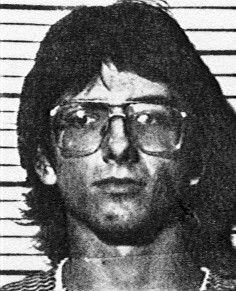
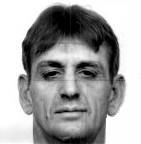
Terry Allen Langford
Murderer Brian Kevin Rosenfeld
Murderer · USA · 1985
Brian Kevin Rosenfeld Brian Kevin Rosenfeld was sentenced to three concurrent l…
23 victims
Brian Kevin Rosenfeld
Murderer · USA · 1985
Brian Kevin Rosenfeld Brian Kevin Rosenfeld was sentenced to three concurrent l…
23 victims
 Yahweh ben Yahweh
Murderer · USA · 1980
Yahweh ben Yahweh was born and legally named Hulon Mitchell Jr. (October 27, 19…
23 victims
Yahweh ben Yahweh
Murderer · USA · 1980
Yahweh ben Yahweh was born and legally named Hulon Mitchell Jr. (October 27, 19…
23 victims
 Russell Ellwood
Murderer · USA · 1991
Russell Ellwood was a former taxi driver. Authorities suspected him of killing…
20 victims
Russell Ellwood
Murderer · USA · 1991
Russell Ellwood was a former taxi driver. Authorities suspected him of killing…
20 victims
 Robert Martines Perez
Murderer · USA · 1994
Name: Robert Martines Perez · Other name used in proceedings: Robert Martinez P…
15 victims
Robert Martines Perez
Murderer · USA · 1994
Name: Robert Martines Perez · Other name used in proceedings: Robert Martinez P…
15 victims
 Melissa Friedrich
Murderer · Canada · 1991
Melissa Friedrich was also known as Melissa Stewart and Melissa Ann Weeks (also…
1 victim
Melissa Friedrich
Murderer · Canada · 1991
Melissa Friedrich was also known as Melissa Stewart and Melissa Ann Weeks (also…
1 victim
 Charles Finney
Murderer · USA · 1991
01/16/91 — Sandra Sutherland’s body was discovered on the bed of her apartment…
1 victim
Charles Finney
Murderer · USA · 1991
01/16/91 — Sandra Sutherland’s body was discovered on the bed of her apartment…
1 victim
 David Jay Brown
Murderer · USA · 1988
Defendant: David Jay Brown · Victim: Eldon McGuire (also referred to as Eldon L…
1 victim
David Jay Brown
Murderer · USA · 1988
Defendant: David Jay Brown · Victim: Eldon McGuire (also referred to as Eldon L…
1 victim
 George Cordova
Murderer · USA · 1979
George “Spiderman” Cordova was executed by lethal injection in Texas on Februar…
1 victim
George Cordova
Murderer · USA · 1979
George “Spiderman” Cordova was executed by lethal injection in Texas on Februar…
1 victim
 Kelli Murphy
Murderer · USA · 2011
Kelli Lynn Murphy was a Castle Rock, Colorado mother. She filed for divorce aga…
2 victims
Kelli Murphy
Murderer · USA · 2011
Kelli Lynn Murphy was a Castle Rock, Colorado mother. She filed for divorce aga…
2 victims
- Gender
- male
- Country
- USA
- Location
- Powell County, Montana, USA
- Date of birth
- 1967
- Age at first offence
- 21
- Characteristics
- robbery
- Victim profile
- Celene and Edward "Ned" Blackwell / Man (inmate)
- Method of murder
- Shooting / St abbing with knife
- Date(s) of murder
- 1988 / 1991
- Years active
- 1988–1991
- Date of arrest
- August 12, 1988
- Status
-
Executed
Executed by lethal injection in Montana on February 24, 1998
Case details
Defendant: Terry Allen Langford Crimes: deliberate homicide (two counts), aggravated kidnapping (two counts), aggravated burglary, robbery, theft Other conviction during incarceration: deliberate homicide and burglary in connection with a 1991 riot at Montana State Prison
Background
Terry Allen Langford was a North Carolina drifter who wanted to be a “mountain man.” He went camping for a couple of days and eventually ended up on the property of Celene and Edward “Ned” Blackwell near Ovando, Montana. Langford watched the Blackwells for a couple of days before entering their garage.
At the time of the murders, Langford was 22 years old. He arrived in Montana in the summer of 1988 and wandered into the Blackwells’ home in July 1988. Langford was on probation in North Carolina for forgery and tampering with a vehicle at the time of the Blackwells’ murders.
The offence
On July 5, 1988, Edward “Ned” Blackwood and Celene Blackwood were found dead in their home near Ovando.
Langford entered the Blackwells’ garage, took a rifle, and forced them into the house. Inside, Langford hogtied Celene Blackwood and bound Edward “Ned” Blackwood to a chair/rocking chair. Edward Blackwood was shot once in the back of the head. Celene Blackwood was shot once in the side of the head, and her throat was slashed. Langford took guns from the house and fled in their pickup truck. He also took money from their wallets and a blue athletic bag and other possessions, including several handguns.
Langford left the Blackwoods’ home with money from their wallets, a blue athletic bag and other possessions, including several handguns. He later discarded the blue athletic bag, which police later recovered. The bag contained guns owned by the Blackwoods, including the murder weapon.
Langford drove their blue pickup truck to Great Falls, where authorities found it July 7, and fingerprints from the truck matched Langford.
Investigation
On July 5, 1988, then-Powell County Sheriff Dave Collings went to the home of Edward “Ned” and Celene Blackwood near Ovando at the request of friends who had been unable to contact them for several days. At the residence, Sheriff Collings found the Blackwoods’ bodies in their living room.
The police entered the serial numbers of guns into the National Crime Information Computer (NCIC). The truck was found a few days later about sixty miles away, and police lifted latent fingerprints from inside its cab. Later that month, Indiana authorities notified the Montana authorities that they had found a bag containing the Blackwoods’ guns that was believed to have been abandoned by a fleeing suspect after an attempted robbery of a motel. The robbery suspect had registered at the motel as Terry Allen Langford and listed his residence as Raleigh, North Carolina. One of the guns in this bag later was determined to be the murder weapon.
Montana and Indiana authorities secured Langford’s fingerprints and photograph from North Carolina authorities, and warrants for Langford’s arrest were issued in connection with the Indiana attempted robbery. Langford was arrested in Raleigh, North Carolina.
Confession
Shortly after his arrest in North Carolina, Langford was interviewed by Sheriff Dave Collings and Montana Criminal Investigation Bureau Agent Ward McKay. Langford waived his Miranda rights and confessed to the killings. In his confession, Langford described traveling to Montana by bus from North Carolina in late June 1988, leaving the bus at Ovando, camping for a couple of days, eventually ending up on the Blackwoods’ property, watching their movements for several days, and entering their garage one evening where he found a rifle.
Langford stated that when Ned Blackwood entered the garage the next day, Langford pointed the rifle at him, ordered him to the floor, and told him to call for his wife. When Celene entered the garage, he made her lie on the floor and then later had her tie Ned’s hands before he ordered them into their home. He tied Ned to a chair and tied Celene’s feet and hands together behind her back after having her lie down on the couch.
Langford said he talked with the couple for a few hours, asking Ned about his background and whether he owned more guns, and retrieved five or six handguns from the bedroom when told of them. He said he shot Ned and then Celene with one of the handguns and then, when Celene appeared still alive and choking in her own blood, he slashed her throat. Langford stated he left with money from their wallets, a blue athletic bag, and other possessions including several handguns, and he drove their blue pickup truck to Great Falls.
Langford said that after leaving Great Falls he traveled by bus to Louisville, Kentucky, then by taxi to Indiana, where he stayed at the Star Motel in Jeffersonville. He stated that the following morning he pulled a knife on a maid when she entered his motel room, that she screamed, that he fled, and that he discarded the blue athletic bag in a nearby wooded area where it—and the guns it contained—were discovered July 27. Langford stated that a criminal records check of the guns showed they belonged to the Blackwoods.
Arrest
Langford was arrested Aug. 12, 1988 in Raleigh, N.C., on an Indiana warrant accusing him of attempted robbery of the Star Motel on July 6. He had been seen leaving the motel with the bag later found to contain the handguns.
The police transported Langford to Montana. About three days later, Langford appeared before a Montana Justice of the Peace on the charges subject to his appeal.
Trial
Langford was charged with two counts of deliberate homicide, two counts of aggravated kidnapping, and one count each of aggravated burglary, robbery and theft.
Langford’s court-appointed attorney was C.F. MacKay. On Sept. 9, 1988, Langford’s court-appointed attorney C.F. MacKay asked the court to admit Langford to the Montana State Hospital at Warm Springs for a psychiatric evaluation.
Following a 54-day evaluation, he was found to have no mental disorder that would exclude him from responsibility for his crimes or prevent him from appreciating the criminality of his conduct.
Guilty plea
On Jan. 5, 1989, Langford pleaded guilty to all charges against him. At a Jan. 26, 1989 sentencing hearing, he asked to be sentenced to death, and Judge Ted Mizner imposed the death penalty during that hearing.
At sentencing, the trial court said it “searched the entire record for mitigating circumstances sufficiently substantial to call for leniency for this Defendant and there are no such mitigating circumstances.” The court found Langford did not have an extensive prior criminal record; however, it found Langford’s chances of rehabilitation and treatment were “virtually nonexistent.” The trial court sentenced Langford to death for the murders and the aggravated kidnapping counts and imposed consecutive terms of imprisonment totalling 100 years on the other counts.
Langford testified at sentencing. He said he was motivated to ask for the death penalty because his lawyer told him his choices were either the death penalty or life in prison. He denied that he was seeking the death penalty as retribution against his parents and said he would kill again if provoked. The trial court asked him questions concerning his prior criminal history.
Sentencing
At sentencing on Jan. 26, 1989, Judge Ted Mizner imposed the death penalty. The aggravating factors were that Langford used a firearm in the commission of the offense, that the murders were part of a scheme that resulted in the death of two persons, and that Langford committed aggravated kidnapping that resulted in the death of two persons.
The sentencing judge found the mitigating circumstances sufficiently substantial to call for leniency did not exist and specifically found no sufficiently substantial mitigating circumstances.
The sentencing judge’s discussion concerning the lack of an extensive prior criminal record included:
Although the Defendant does not have an extensive documented prior record, at the time of the commission of this offense, Defendant was on probation from Raleigh, North Carolina, for the felony crimes of forgery and tampering with a vehicle. Defendant was in violation of this probation at the time of the commission of the instant offenses. The brutality of these homicides, coupled with Defendant's own statements that he had intended to kill a pizza delivery boy and a hotel maid in order to aid his flight back to Raleigh, North Carolina, dictate that Defendant not be given any leniency for his lack of an extensive prior criminal record. State v. Langford , No. DC-88-30, Findings of Fact, Conclusions of Law, Judgment and Sentencing, at 4 (D. Montana, Jan 1, 1989) (citations omitted).
Appeals
State direct appeals
First direct appeal (automatic review and related filings):
- Jan. 5, 1989: Langford pleaded guilty and asked for the death penalty to be imposed.
- July 12, 1989: Langford’s attorney C.F. MacKay filed an appeal of the death sentence and notified the Supreme Court that Langford had changed his mind and decided against seeking the death penalty.
- Aug. 13, 1989: Langford dismissed his attorney and Michael Donahoe was substituted as counsel.
- Oct. 12, 1989: The Montana Supreme Court sent the case back to District Court to allow Langford to file a motion to withdraw his guilty pleas.
- July 16, 1990: District Court Judge Ted Mizner denied Langford’s motion to withdraw his pleas.
- June 4, 1991: The Montana Supreme Court affirmed the denial of Langford’s motion and the imposition of the death penalty.
Second direct appeal:
- Feb. 10, 1992: Langford filed an appeal seeking to declare hanging an unconstitutional method of execution.
- July 9, 1992: The Montana Supreme Court affirmed Judge Mizner’s ruling on hanging as moot because Langford had selected hanging as his preferred method of execution.
State postconviction relief:
- July 6, 1989: Langford filed an appeal challenging the constitutionality of Montana’s death penalty laws.
- July 1, 1991: The Montana Supreme Court denied Langford’s appeal.
- Sept. 6, 1991: Langford filed another appeal challenging an issue decided in the Supreme Court’s initial review of his death sentence.
- Nov. 14, 1991: The Montana Supreme Court denied the appeal.
- Oct. 21, 1997: Langford initiated a new petition with the Montana Supreme Court seeking an injunction prohibiting his execution on the grounds that his right to appeal the constitutionality of hanging as a means of execution was improperly terminated when the 1997 Legislature eliminated hanging.
- Dec. 30, 1997: The Montana Supreme Court unanimously rejected Langford’s request for an injunction.
- Feb. 12, 1998: Langford filed a motion in the Montana Supreme Court seeking a stay of execution while a concurrently filed U.S. Supreme Court appeal was pending.
Federal court petitions
- Dec. 13, 1991: Langford filed a federal habeas corpus petition in U.S. District Court in Helena.
- April 1, 1992: U.S. District Judge Charles Lovell stayed the proceedings until Langford had completed his appeals in the Montana Supreme Court.
- Jan. 24, 1995: Judge Lovell denied Langford’s petition.
- Feb. 21, 1995: Langford appealed to the 9th U.S. Circuit Court of Appeals.
- Dec. 24, 1996: A Circuit Court panel denied the appeal.
- Jan. 3, 1997: Langford filed a petition for rehearing before a larger panel.
- April 14, 1997: The Circuit Court denied the petition.
- July 11, 1997: Langford asked the U.S. Supreme Court to review his case.
- Oct. 6, 1997: The U.S. Supreme Court denied the petition.
- Oct. 14, 1997: Langford filed a motion in U.S. District Court in Helena asking to amend his habeas corpus petition to consider how the 1997 Legislature’s elimination of hanging affected his ability to raise issues about the constitutionality of hanging.
- Nov. 13, 1997: Judge Lovell denied the motion and lifted the stay of execution.
- Dec. 15, 1997: Langford filed an appeal of that decision with the 9th Circuit Court of Appeals.
- Jan. 22, 1998: The 9th Circuit Court denied the appeal.
- Dec. 29, 1997: A motion for a stay of execution was filed in a separate federal civil case involving prison inmates suing the state for their treatment after the 1991 prison riot, saying Langford was a party and his live testimony was needed.
- Jan. 14, 1998: Judge Lovell rejected the motion for a stay.
- Jan. 22, 1998: The 9th Circuit Court refused to hear the case.
- Feb. 12, 1998: Langford filed a writ of certioari with the U.S. Supreme Court reiterating arguments that the 1997 Legislature removed an avenue of appeal by eliminating hanging as a method of execution.
Outcome
Langford was executed by lethal injection in Montana on February 24, 1998.
Aftermath
Langford was pronounced dead at 12:07 a.m., six minutes after a sedative began flowing into his arm. He was moved from a holding cell to the execution chamber and strapped to a gurney at 11:40 p.m. Intravenous tubes were inserted into his arm.
Warden Mike Mahoney asked Langford if he had any last words; Langford replied simply: “No.”
Tom Laceky, an Associated Press newsman, said: “there is markedly very, very little to see. We had to have someone tell us a man died. We couldn't tell.”
The sedative began flowing at 12:01 a.m., Langford coughed twice and then began snoring. The sedative was followed by chemicals that quickly stopped his heart, and he was thereafter pronounced dead.
The execution was carried out after Montana Governor Marc Racicot refused a request from Langford’s court-appointed lawyer for a delay. Racicot told attorney Michael Donahoe he would not “usurp the powers of the courts in this case.” A governor’s spokesman said Donahoe told Racicot he was acting at Langford’s request.
Langford had no final statement.
Opponents of capital punishment gathered at the Immaculate Conception Roman Catholic Church in Deer Lodge to pray and hold a pre-execution vigil; they moved near the prison grounds shortly before the execution. Similar vigils were held in other Montana cities; 40 people gathered and prayed at a Roman Catholic church in Missoula.
Timeline
- July 5, 1988 — The bodies of Edward and Celene Blackwood were found in their home near Ovando.
- July 7, 1988 — The Blackwoods’ pickup truck was found in Great Falls.
- July 27, 1988 — Guns recovered from a bag found near the Star Motel in Jeffersonville, Ind., were identified as having been stolen from the Blackwoods’ home.
- Aug. 12, 1988 — Terry Langford was arrested in Raleigh, N.C., on an Indiana warrant accusing him of attempted robbery of the Star Motel.
- Aug. 15, 1988 — Then-Powell County Sheriff Dave Collings and Montana Criminal Investigation Bureau Agent Ward McKay interviewed Langford in Raleigh; Langford confessed to the murders.
- Sept. 1, 1988 — Langford was charged with two counts of deliberate homicide, two counts of aggravated kidnapping and one count each of aggravated burglary, robbery and theft.
- Sept. 9, 1988 — Langford’s court-appointed attorney C.F. MacKay asked the court to admit Langford to the Montana State Hospital at Warm Springs for psychiatric evaluation.
- Jan. 5, 1989 — Langford pleaded guilty to all charges.
- Jan. 26, 1989 — Langford was sentenced to death.
- Dec. 4, 1992 — While incarcerated at the Montana State Prison pending state and federal appeals, Langford was convicted of one count of deliberate homicide and one count of burglary in connection with the 1991 prison riot in which five inmates were killed; he received 20 years on burglary and life imprisonment on murder, and was declared ineligible for parole.
- July 12, 1989 — C.F. MacKay filed an appeal of the death sentence notifying the Supreme Court that Langford had changed his mind and decided against seeking the death penalty.
- Aug. 13, 1989 — Langford dismissed his attorney; Michael Donahoe was substituted.
- Oct. 12, 1989 — Montana Supreme Court sent the case back to District Court to allow Langford to file a motion to withdraw his guilty pleas.
- July 16, 1990 — District Court Judge Ted Mizner denied Langford’s motion to withdraw his pleas.
- June 4, 1991 — Montana Supreme Court affirmed denial of motion and the imposition of the death penalty.
- Feb. 10, 1992 — Langford filed an appeal seeking to declare hanging unconstitutional as a method of execution.
- July 9, 1992 — Montana Supreme Court affirmed as moot because Langford had selected hanging as preferred method.
- July 6, 1989 — Langford filed an appeal challenging the constitutionality of Montana’s death penalty laws.
- July 1, 1991 — Montana Supreme Court denied that appeal.
- Sept. 6, 1991 — Langford filed another postconviction petition challenging an issue decided in the Supreme Court’s initial review.
- Nov. 14, 1991 — Montana Supreme Court denied the appeal.
- Oct. 21, 1997 — Langford initiated a new postconviction petition seeking an injunction based on the 1997 Legislature eliminating hanging.
- Dec. 30, 1997 — Montana Supreme Court unanimously rejected the request for an injunction.
- Dec. 13, 1991 — Langford filed a federal habeas corpus petition in U.S. District Court in Helena.
- April 1, 1992 — Judge Charles Lovell stayed federal proceedings.
- Jan. 24, 1995 — Judge Lovell denied the federal habeas corpus petition.
- Feb. 21, 1995 — Langford appealed to the 9th Circuit.
- Dec. 24, 1996 — A Circuit Court panel denied the appeal.
- Jan. 3, 1997 — Langford filed a petition for rehearing.
- April 14, 1997 — The Circuit Court denied the petition.
- July 11, 1997 — Langford asked the U.S. Supreme Court to review the case.
- Oct. 6, 1997 — U.S.
- Oct. 14, 1997 — Langford filed a motion in federal district court to amend his habeas petition.
- Nov. 13, 1997 — Judge Lovell denied the motion and lifted the stay of execution.
- Dec. 15, 1997 — Langford filed an appeal of that decision with the 9th Circuit.
- Jan. 22, 1998 — The 9th Circuit denied the appeal.
- Jan. 14, 1998 — Judge Lovell rejected a separate federal motion for a stay related to prison inmates’ civil case.
- Feb. 12, 1998 — Langford filed a writ of certiorari with the U.S. Supreme Court.
- Feb. 24, 1998 — Langford was executed by lethal injection in Montana. He was pronounced dead at 12:07 a.m.
Other details
Prior criminal history
At the time of the Blackwoods’ murders, Langford was on probation in North Carolina for forgery and tampering with a vehicle.
Subsequent criminal history while incarcerated
On Dec. 4, 1992, while incarcerated at the Montana State Prison pending state and federal appeals, Langford was convicted of one count of deliberate homicide and one count of burglary in connection with a 1991 prison riot at Montana State Prison in which five prisoners were killed. He received 20 years on the burglary charge and life imprisonment for the murder charge, and he was declared ineligible for parole.
Persons and roles named
- Edward “Ned” Blackwell — victim
- Celene Blackwood — victim
- Terry Langford — defendant
- Dave Collings — then-Powell County Sheriff; interviewed Langford and found the bodies
- Ward McKay — Montana Criminal Investigation Bureau Agent; interviewed Langford
- C.F. MacKay — court-appointed attorney at trial and counsel during parts of the proceedings
- Ted Mizner — sentencing judge at trial
- Conde F. MacKay — attorney appointed to represent Langford in the Third Judicial District Court of Powell County, Montana
- Michael Donahoe — substituted counsel
- Charles Lovell — U.S. District Judge; handled federal habeas proceedings
- Marc Racicot — Governor of Montana; refused request for delay
- Michael Donahoe — attorney whose request for delay was refused
- Linda Moodry — prison spokeswoman
- Warden Mike Mahoney — asked Langford about last words
- Tom Laceky — Associated Press newsman

Spotted an error, or have more information about this case?