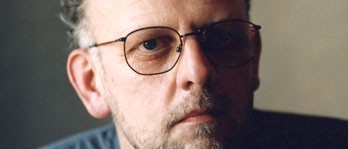
Thomas Quick
Serial killer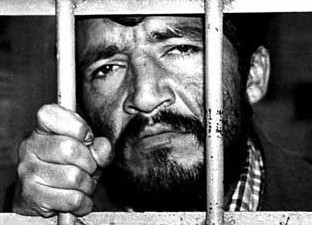 Pedro Alonso Lopez
Serial killer · Peru - Ecuador - Colombia · 1969
Name: Pedro Alonso Lopez · Nationality/Background: Colombian-born · Birth: born…
300 victims
Pedro Alonso Lopez
Serial killer · Peru - Ecuador - Colombia · 1969
Name: Pedro Alonso Lopez · Nationality/Background: Colombian-born · Birth: born…
300 victims
 Donald Henry Gaskins
Serial killer · USA · 1969
Donald Henry Gaskins, also known as Donald “Pee Wee” Gaskins, was a serial kill…
200 victims
Donald Henry Gaskins
Serial killer · USA · 1969
Donald Henry Gaskins, also known as Donald “Pee Wee” Gaskins, was a serial kill…
200 victims
 Carl Eugene Watts
Serial killer · USA · 1974
Carl Eugene Watts (born November 7, 1953; died September 21, 2007), also known…
100 victims
Carl Eugene Watts
Serial killer · USA · 1974
Carl Eugene Watts (born November 7, 1953; died September 21, 2007), also known…
100 victims
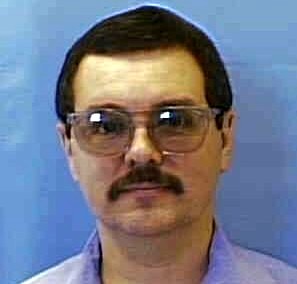 Donald Harvey
Serial killer · USA · 1970
Donald Harvey was known as an American serial killer and a self-professed “Ange…
87 victims
Donald Harvey
Serial killer · USA · 1970
Donald Harvey was known as an American serial killer and a self-professed “Ange…
87 victims
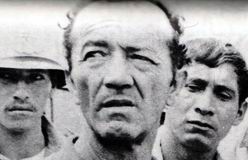 Daniel Camargo Barbosa
Serial killer · Colombia / Ecuador · 1974
Daniel Camargo Barbosa was a psychopathic serial killer from Colombia. It was b…
72 victims
Daniel Camargo Barbosa
Serial killer · Colombia / Ecuador · 1974
Daniel Camargo Barbosa was a psychopathic serial killer from Colombia. It was b…
72 victims
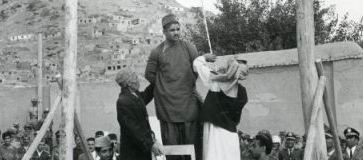 Abul Djabar
Serial killer · Afghanistan · 1960
Abul Djabar died on October 21, 1970. He was an Afghan serial killer who had ki…
65 victims
Abul Djabar
Serial killer · Afghanistan · 1960
Abul Djabar died on October 21, 1970. He was an Afghan serial killer who had ki…
65 victims
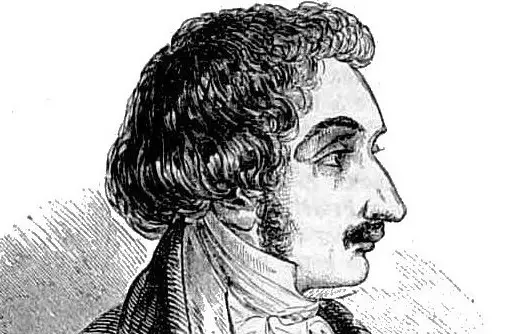 Pierre François Lacenaire
Murderer · France · 1834
Pierre François Lacenaire Pierre François Lacenaire was a famous French poet an…
2 victims
Pierre François Lacenaire
Murderer · France · 1834
Pierre François Lacenaire Pierre François Lacenaire was a famous French poet an…
2 victims
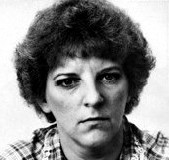 Genene Jones
Serial killer · USA · 1977
Genene Anne Jones (born July 13, 1950) was a former pediatric nurse who worked…
11 victims
Genene Jones
Serial killer · USA · 1977
Genene Anne Jones (born July 13, 1950) was a former pediatric nurse who worked…
11 victims
 John Frank Hickey
Serial killer · USA · 1883
John Frank Hickey, “The Postcard Killer,” was one of the first known and captur…
3 victims
John Frank Hickey
Serial killer · USA · 1883
John Frank Hickey, “The Postcard Killer,” was one of the first known and captur…
3 victims
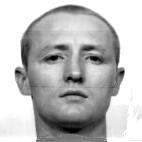 John Christopher Sawyers
Murderer · USA · 1983
John Christopher Sawyers was convicted by a jury of capital murder and sentence…
1 victim
John Christopher Sawyers
Murderer · USA · 1983
John Christopher Sawyers was convicted by a jury of capital murder and sentence…
1 victim
- Gender
- male
- Country
- and Finland
- Location
- Sweden, Norway, Denmark, and Finland
- Date of birth
- April 26, 1950
- Age at first offence
- 14
- Characteristics
- child molester, history of mental illness, mentally ill, drug addict
- Victim profile
- Men, women and children
- Method of murder
- Several
- Date(s) of murder
- 1964 - 1996
- Years active
- 1964–1996
- Date of arrest
- 1996
- Status
-
Sentenced to closed psychiatric confinement
Case identification
Thomas Quick (born Sture Bergwall, 1950, Korsnäs, Falun, Sweden) was sentenced to closed psychiatric confinement.
Background
Thomas Quick changed his name after the first known murder he described. He adapted the first name from that of his first victim, Thomas Blomgren, and used Quick as his surname, his mother's maiden name.
In an autobiographical book titled Kvarblivelse, Thomas Quick said he had been abused by his father as a child. His brother, Sten-Ove Bergwall, denied the abuse in his book Min bror Thomas Quick: en berättelse om det ofattbara (My brother Thomas Quick: A story about the incomprehensible).
Quick’s confessions and subsequent withdrawal of confessions became the subject of widespread debate. Critics claimed that Quick never murdered anyone and that he was a compulsive liar. Critics included the parents of a child Quick confessed to having murdered in the late 1970s.
Thomas Quick wrote an article for the Swedish newspaper Dagens Nyheter in 2001, stating that he refused to cooperate further with the authorities concerning all open murder investigations.
Several principals in law and psychiatry, including Swedish police professor Leif G. W. Persson and journalist and writer Jan Guillou, and secret sources in the Swedish police claimed Quick was mentally unstable but not guilty in many, if any, of the crimes to which he had confessed. They described the handling of the Quick cases as the "most scandalous" chapter of Scandinavian crime history, branding it as glaring incompetence, naiveté and opportunism within the police and judicial system.
Quick withdrew all of his confessions in 2008 during the taping of a TV documentary. Quick’s attorney contended that the Prosecution withheld important investigative material from the defense, which the Prosecution denied. Quick’s attorney also maintained that Quick was mentally ill and had been under the influence of narcotics prescribed by a doctor when he confessed to the killings.
Quick recanted his confessions and requested that the Svea Court of Appeals order a new trial for the murder case of Yenon Levi at Rörshyttan. Quick had since changed his name to his baptismal name Sture Bergwall.
The offence
Thomas Quick had confessed to more than 30 murders, with eight convictions.
His first known murder, according to his own accounts, occurred in Växjö in 1964 when he was 14 years old. Quick described the victim, Thomas Blomgren, as the same age but not as strong and tall as himself.
He confessed to an alleged second victim, Alvar Larsson, whom he claimed he murdered at Sirkön in the lake Åsnen outside the town of Urshult. Quick’s sister said he never left Falun at the time of this murder.
Thomas Quick also confessed to abducting and killing Therese Johannessen. The girl disappeared from a residential area in Drammen on July 3, 1988, and nothing was ever heard of her again until March 30, 1996, when Quick confessed to abducting and killing her. He described her wristwatch in detail and pointed out a gravel pit near the pond where he supposedly buried her.
Thomas Quick was convicted of killing an Israeli tourist, Yinon Levy, in 1988. The conviction was described as his fourth conviction, and sentence was described as being likely to continue confinement at Säters Sjukhus, Sweden's high security asylum for the criminally insane. Quick’s sentence was discussed as continuing at Säters Sjukhus.
Over time, Quick was convicted of eight murders at six different trials:
- Charles Zelmanovits, Piteå 1976
- Johan Asplund, Sundsvall, 1980
- The Stegehuis couple, Appojaure, 1984
- Yenon Levi, tourist from Israel, Rörshyttan, 1988
- Therese Johannesen, Drammen, Norway, 1988
- Trine Jensen, Oslo, 1981
- Gry Storvik, Oslo, 1985
Some of these convictions were described with “no forensic evidence” themes and contrasts against confession-based evidence. For example, the Gry Storvik matter was described as involving semen found in the victim that did not belong to Quick. The statements included in Quick’s testimony were described as being matched against undisclosed police facts in the Yenon Levi matter. In the Stegehuis case, Quick was described as having given information regarding facts that had never been disclosed to the public, which was later put into question as Quick had been party to all information before the trial. The Stegehuis case description also referred to the absence of forensic evidence.
Investigation
Quick confessed to numerous murders during his years in Säter hospital, receiving treatment for being criminally insane. During therapy, he confessed to some 20 murders committed in Sweden, Norway, Denmark, and Finland between 1964 and 1993.
One of Quick’s confessions led to the solving of an 18-year-old murder considered unsolvable. Another confession led to the informal solving of a murder in Växjö in 1964. It was described that the 1964 crime had passed the then Swedish 25-year limit of punishment, but with information given by Quick the murderer was considered to be found, and his story matched information that had never been published about the crime.
Quick’s confessions were described as having been widely debated in Swedish media since 1993 up until 2008, when he withdrew all of his confessions.
A dubious circumstance described in the case narrative was that no witnesses had ever testified to seeing Quick in the proximity of any of the crime scenes, despite more than 10,000 people being interviewed for intricate details.
SKL (Statens kriminaltekniska laboratorium, State Forensic-Technical Laboratory) in March 2010 found that two forensic objects the prosecution had claimed were bone fragments were, in fact, small pieces of charred wood.
Arrest
Quick was arrested in 1990 for attempting to rob a bank outside Falun, Sweden. The same narrative also described that in 1990 he and a 16-year-old boy robbed a bank and took the bank manager's family as hostage, and they were arrested, with Quick then going to prison.
Trial
During therapy after his sentencing for the 1990-1991 armed robbery matter, Quick confessed to some 20 murders. He was convicted of eight of them.
In the case narrative, it was stated that there was “no technical evidence,” and that the only evidence police had held was his own confessions and elements in those confessions that were judged to match classified facts from police dossiers on the crimes.
A detailed narrative included that the sentencing described for some convictions involved no forensic evidence and relied on confession-based information.
Quick’s withdrawal of confessions was discussed as occurring in 2008 during the taping of a TV documentary.
Quick requested a retrial for the murder case of Yenon Levi at Rörshyttan. In December 2009, the court of appeals granted a retrial of the Yenon Levi case.
Quick’s attorney declared intention to ask for a retrial of the Therese Johannesen case, claiming that Quick had an alibi for the day when Therese Johannesen was abducted and murdered.
Sentencing
In 1990-1991, Quick was sentenced to lengthy prison terms for armed robbery and consigned to closed psychiatric care. This resulted in his placement in closed psychiatric confinement.
The narrative also discussed that Quick’s continued confinement at Säters Sjukhus was expected following a conviction described as occurring on May 28, 1997, relating to the 1988 murder of the Israeli tourist Yinon Levy.
Appeals
As the prosecutor found that the evidence was not sufficient, Quick moved for a judgment of acquittal.
Outcome
Quick was acquitted in September 2010 in the retrial of the Yenon Levi case.
Aftermath
In November 2006, Thomas Quick's trials were reported to the Swedish Chancellor of Justice by a retired lawyer, Pelle Svensson, on the behalf of two relatives of a murder victim who wished to have the trials declared invalid and presumably have Quick retried.
The Therese Johannessen case involved Norwegian police finding bone fragments in November 1997 following Quick’s instructions, and the narrative stated that the case had been under investigation for almost ten years. It also stated that the girl disappeared on July 3, 1988, and nothing was ever heard of her again until March 30, 1996, when Quick confessed and described her wristwatch and pointed out a gravel pit.
The case narrative also described a scenario involving police unearthing bone fragments believed to be from a calf and potentially human finger bone from the cellar of an abandoned farmhouse near Falun, with the victim not identified and no further charges filed.
A final narrative portion described that Quick had confessed over 30 killings in Sweden between 1964 and 1994, with a 30-year killing spree. It also described that his brother, Sten-Ove Bergwall, wrote a book called Min bror Thomas Quick, describing Thomas as a liar and as a sick human being.
The narrative described Quick’s confession patterns and withdrawal: Quick withdrew all confessions in 2008. It also described his attorney’s position that confessions were influenced by narcotics prescribed by a doctor and that the prosecution withheld investigative material.
Other details
Thomas Quick was born in 1950 in Korsnäs, Falun, Sweden under the name Sture Bergwall.
A narrative described a childhood claim that Quick had been raped by his father and abused by his mother, and stated that his father stopped sexually abusing him after Quick came into puberty at the age of 11.
A narrative described Quick’s account that at age 12 he played a game in the showers called "The Strangulation Game" and that he strangled boys and touched their private parts.
A narrative described Quick’s account that when he was 14 he met with an older man in his 20s that had a car, and that they traveled looking for young boys they could pick up and molest; it further described that Quick met Thomas Blomgren as his first victim during a trip to a tivoli, that Quick then strangled Blomgren to death, touched Blomgren’s penis, took Blomgren’s shirt, and disappeared into the woods, and that on his way home Quick told the man and had to make him promise he would not tell anyone anything.
A narrative also described Quick’s account that one year later he pushed an 8-year-old boy into a river and the boy drowned.
The narrative described that after some years Quick began experimenting with drugs and was sent to a rehab. It further described that he killed a 13-year-old boy during his rehab visit and that he began working as a medic.
The narrative also stated that Quick called a priest and confessed the whole thing, and that police arrested him for attempt of murder and he had to stay in a psychiatric ward for three years; it included a claim that he killed one person during these three years and that he said the security was terrible and that he was sometimes let out when he wanted.
The narrative described that when Quick was in prison, he realized he was getting out pretty soon and that it was his only chance to confess his murders and escape from dark thoughts of murder.
The narrative described that Thomas Quick took the name Thomas Quick while previously being Sture Bergwall, and that the first name Thomas related to Thomas Blomgren, and the surname Quick came from his mother's maiden-name.
Spotted an error, or have more information about this case?