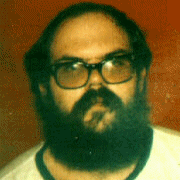
David Lawson
Murderer Ervil LeBaron
Murderer · USA · 1972
Ervil Morrell LeBaron (1925 to August 16, 1981) was the leader of a polygamous…
35 victims
Ervil LeBaron
Murderer · USA · 1972
Ervil Morrell LeBaron (1925 to August 16, 1981) was the leader of a polygamous…
35 victims
 Brian Kevin Rosenfeld
Murderer · USA · 1985
Brian Kevin Rosenfeld Brian Kevin Rosenfeld was sentenced to three concurrent l…
23 victims
Brian Kevin Rosenfeld
Murderer · USA · 1985
Brian Kevin Rosenfeld Brian Kevin Rosenfeld was sentenced to three concurrent l…
23 victims
 Marvin Gray
Murderer · USA · 1975
Marvin Gray was convicted killer who claimed responsibility for 23 slayings and…
23 victims
Marvin Gray
Murderer · USA · 1975
Marvin Gray was convicted killer who claimed responsibility for 23 slayings and…
23 victims
 Yahweh ben Yahweh
Murderer · USA · 1980
Yahweh ben Yahweh was born and legally named Hulon Mitchell Jr. (October 27, 19…
23 victims
Yahweh ben Yahweh
Murderer · USA · 1980
Yahweh ben Yahweh was born and legally named Hulon Mitchell Jr. (October 27, 19…
23 victims
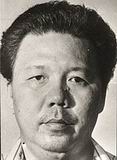 Adrian Lim
Murderer · Singapore · 1981
Adrian Lim (unemployed 39-year-old professed to be a medium with powers to cure…
2 victims
Adrian Lim
Murderer · Singapore · 1981
Adrian Lim (unemployed 39-year-old professed to be a medium with powers to cure…
2 victims
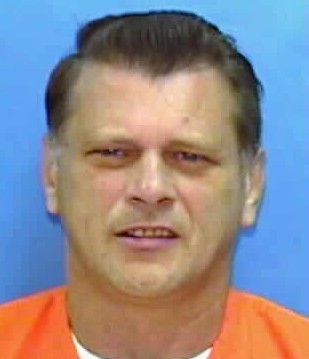 Gary Eldon Alvord
Murderer · USA · 1973
Gary Eldon Alvord was tried in the Thirteenth Judicial Circuit, Hillsborough Co…
3 victims
Gary Eldon Alvord
Murderer · USA · 1973
Gary Eldon Alvord was tried in the Thirteenth Judicial Circuit, Hillsborough Co…
3 victims
- Gender
- male
- Country
- USA
- Location
- Cabarrus County, North Carolina, USA
- Date of birth
- J une 22, 1955
- Age at first offence
- 25
- Characteristics
- robbery
- Victim profile
- Wayne Shinn (male)
- Method of murder
- Shooting
- Date(s) of murder
- December 4, 1980
- Years active
- 1980
- Date of arrest
- —
- Status
-
Executed
Executed by asphyxiation-gas in North Carolina on June 15, 1994
Case record: David Lawson
Background
David Lawson was scheduled to be executed by the State of North Carolina using lethal gas at 2 a.m. on the morning of Wednesday, June 15, 1994. On April 13, 1994, two days after he received notice of his scheduled execution date, Lawson wrote to the warden of Central Prison, Gary Dixon, and designated the individuals he desired to be present at the time of his execution. Among the individuals named were Phillip Donahue and James Arnold.
In the same letter, Lawson requested that Donahue and Arnold be allowed to videotape his execution for inclusion in a documentary that was being prepared on his life. Lawson stated that he desired that his life serve as an example to others of “the effects of child abuse, anxiety disorder, depression and the pitfalls of a life of crime; and that it be used as an educational medium to aid in the prevention of and hopefully as a deterrent to others who might fall into the same lifestyles and patterns of conduct which I followed.”
Lawson also stated:
“I also feel and am equally committed to do all within my power to inform the public of the true significance of the death penalty and thereby to make a meaningful contribution to the significant public debate over the use of the death penalty.”
In a separate letter the same day, Donahue wrote to Dixon requesting that he be allowed to make an audio-visual recording of the execution. Donahue assured Dixon that:
“we intend to do this program tastefully, in a responsible way, without sensationalism and with no discredit to your institution.”
On April 26, 1994, Dixon responded to Donahue and Lawson, indicating that he would not allow them to video record Lawson’s execution because of “interests of the orderly operation and security of this institution.”
The offence
In December 1980, Buren Shinn and his son Wayne resided in houses approximately 100 yards apart on Old Salisbury Road some three miles from Concord, North Carolina. Buren and Wayne worked together in a family electrical repair business headquartered at Buren’s house.
After driving to work early on the morning of December 4, 1980, Wayne heard the burglar alarm sound in his own house. Buren and Wayne immediately leapt into Wayne’s truck and proceeded to Wayne’s house, where they observed a dirty, brown Ford automobile parked in the driveway. Wayne left the truck and ran towards the patio that lay on one side of the house. Buren saw Wayne throw up his hands and walk through a set of sliding glass doors, whereupon Buren heard two or three shots ring out.
Buren ran to the truck, got in, and began backing the truck in an effort to escape. A man ran towards him, waving a pistol. Buren’s attention diverted, Buren backed the truck into a ditch. The man approached the truck and ordered Buren to get out and move towards Wayne’s house. Buren did so, pleading with the man not to hurt him. Before Buren reached the patio, he heard another gun shot and felt a sharp blow to his head. He fell to the ground, unconscious.
When Buren regained consciousness he found himself lying in a large pool of blood. Fearing that his assailant might still be in the vicinity, he kept silent. Some twenty or thirty minutes later, Buren heard someone walk toward him and felt a hand reach into his pocket and remove his wallet. Buren remained motionless for twenty more minutes. Hearing no footsteps and seeing no one, he began to crawl from the patio toward the road, hoping to halt a passing car. When no one stopped, he struggled to his feet and walked home. After telephoning for help, Buren’s second son, Jerry, left to check on his brother’s condition.
Law enforcement officers arrived at Wayne’s house and found Wayne lying in a pool of blood in the basement near the patio. Wayne and Buren were taken to a hospital where Wayne was pronounced dead as the result of a bullet wound to the head. Buren’s injuries were not severe, for the bullet which struck him did not penetrate the skull. He recovered after a short hospital stay.
The police found Wayne’s house ransacked. They discovered a pillowcase containing several pieces of jewelry and a camera, apparently dropped by the intruder. Marks on the kitchen door indicated that the house had been forcibly entered.
At the time of sentencing-phase testimony, Lawson was convicted for the first-degree murder of Wayne Shinn and for other crimes arising from the break-in at Wayne Shinn’s house.
Charges
David Lawson was charged in the Superior Court of Cabarrus County with three crimes:
- the first-degree murder of Wayne Shinn;
- the assault with a deadly weapon with intent to kill inflicting serious injury on Buren Shinn;
- the felonious breaking and entering of the home of Wayne Shinn.
Investigation and key witness testimony
The State’s case-in-chief consisted primarily of the testimony of Buren Shinn and Phyllis Soden.
When Buren Shinn took the stand, he identified Lawson as his assailant and related the facts described above.
Phyllis Soden testified that she returned home from work at about 4:00 a.m. on December 4, 1980. Shortly after 9:00 a.m. Lawson arrived at Soden’s house and stated that he needed her to “take him someplace immediately.” Leaving his brown Ford in her driveway, the two departed in her automobile. Lawson directed Soden to drive on Old Salisbury Road. As they neared Wayne Shinn’s residence Lawson told Soden to stop, let him out, drive a short distance farther, turn around, and return to pick him up. Soden followed Lawson’s directions.
When she returned to Shinn’s house, Lawson ran to the car carrying a crowbar. After they returned to Soden’s residence, Lawson explained that he had broken into a house and left the crowbar there. He said he had been anxious to retrieve the crowbar because he feared it might have his fingerprints on it.
Lawson showed Soden a wallet and removed the money from it. He told Soden that he had broken into a house after hearing that the residents had gold and jewelry. According to Soden’s testimony, Lawson told her that he had found some items in the house and stuffed them into a pillowcase.
As he was preparing to leave, a man entered the patio door. Lawson pointed his gun at the man, who promptly put up his hands. Lawson ordered the man to turn around, whereupon he shot him in the back of the head. After the man fell, Lawson ran out of the house and spied another man approaching the patio. The other man turned, ran, and got into a truck. Lawson ordered the man out of the truck. Although the man begged Lawson not to shoot, Lawson forced him to walk toward the patio and shot him in the back of the head. Soden testified that Lawson was confident that both men were dead because he shot them at close range.
Soden testified that Lawson killed them both in order to eliminate witnesses to the robbery and because he did not want to “go back to prison.”
Trial
Lawson offered no evidence during the guilt-innocence phase of the trial.
Conviction
After the jury returned guilty verdicts on all three charges, the proceedings turned to sentencing.
Sentencing
In open court but outside the presence of the jury, Lawson was examined under oath by his attorney, James C. Johnson. Lawson testified that Johnson had fully advised him regarding the nature of the sentencing phase of the proceeding.
Lawson acknowledged that on June 6, 1981 he signed an affidavit in which he acknowledged that he told Johnson “on at least five occasions ... that I should be found guilty, then in the second trial dealing with punishment, I wished to have my attorney seek and request the death penalty. I do not wish to spend the rest of my life in jail. I had rather have the death penalty than a life term. I understand my right to a second trial at which the jury will consider both mitigating and aggravating circumstances. I have, nevertheless, for some months before the trial told my attorney I do not want a life sentence, but a death sentence and I want him to take such legal steps as may be necessary to see that the sentence is carried out.”
The superior court advised Lawson that, notwithstanding his desire to be sentenced to death, the jury must decide his punishment and that the court was required by law to submit whatever aggravating and mitigating circumstances were supported by the evidence to the jury for consideration. The court stated:
“Even though you may ask the jury to recommend the death sentence in this case, the jury is not bound by it and the jury may ... still see fit to recommend life imprisonment.”
Jury findings: aggravating and mitigating circumstances
The jury was brought back into the courtroom. Lawson testified before the jury that his criminal record consisted of “two cases of breaking and entering some years ago in Stanly County.” He had assisted the State “involving some criminal matters in Stanly County some years ago.”
The following colloquy took place between Lawson and his attorney:
Q: At this time would you tell the jury what your request is regarding their decision?
A: I'd like the death penalty.
Q: Would you care to tell us why you want the death penalty?
A: To be locked up in prison for something I did not do, is truly cruel and inhuman. I didn't do it. I don't care what anybody says. I'm innocent. That to be put in prison for life, that's not right. You think I done it, gas me.
Q: And you're--you know what you're asking?
A: Yes, sir.
Q: You know it's my responsibility to try to save your life?
Q: That's all.
A brief cross examination by the state followed, during which Lawson admitted that he owned a .32 calibre pistol in September 1980; that he attempted to purchase a pistol shortly after December 4, 1980; and that on December 4, 1980 he had gone to Salisbury with Phyllis Soden. At the guilt-innocence phase of the trial, a ballistics expert had testified that the bullet which killed Wayne Shinn was a .32 calibre bullet.
The jury found as aggravating circumstances that:
- the murder of Wayne Shinn was “committed for the purpose of avoiding a lawful arrest”;
- it was “part of a course of conduct in which [Lawson] engaged and [which] include[d] the commission by the defendant of other crimes of violence against [another person].”
The jury found that the aggravating circumstances were sufficiently substantial to call for the imposition of the death penalty.
Two mitigating circumstances were submitted:
- that Lawson had no “significant prior history of criminal activity,” and
- that Lawson “testified truthfully on behalf of the prosecution in another prosecution of a felony.”
The jury was also asked to consider whether any other circumstances existed which it deemed to have mitigating value.
The jury did not specify which of the mitigating circumstances it found, but it did indicate that it found the existence of “one or more mitigating circumstances.” The jury finally found that the aggravating circumstances outweighed the mitigating circumstances and recommended that Lawson be sentenced to death by administration of lethal gas.
Appeals
Supreme Court of North Carolina (direct appeal)
Following affirmance of his convictions and death sentence by the Supreme Court of North Carolina, Lawson v. Lawson (State v. Lawson, 310 N.C. 632, 634, 314 S.E.2d 493, 495 (1984)).
United States Supreme Court (certiorari)
The United States Supreme Court denied Lawson’s petition for certiorari in Lawson v. North Carolina, 471 U.S. 1120, 105 S.Ct. 2368, 86 L.Ed.2d 267 (1985).
State motion for appropriate relief and subsequent denials
After direct review, Lawson filed a motion for appropriate relief pursuant to N.C. Gen. Stat. Sec. 15A-1411 in the Superior Court of Cabarrus County, raising claims of ineffective assistance of counsel at trial and on direct appeal. The motion challenged impartiality of the jury and sufficiency of evidence supporting the aggravating circumstances.
Lawson amended his motion to challenge the State’s excusal for cause of jurors with scruples against capital punishment, and further amended it to allege:
- ineffective assistance of counsel in failing to present mitigating evidence at the penalty phase of the trial;
- absence of a reliable sentencing determination because of the absence of mitigating evidence;
- unconstitutionality of a jury instruction imposing on the jury a duty to pronounce the death sentence if aggravating circumstances outweighed mitigating circumstances; and
- ineffective assistance of counsel in failing to have transcribed and to present closing arguments of counsel at trial to the Supreme Court of North Carolina for review.
After an evidentiary hearing, the superior court denied the motion as amended. The Supreme Court of North Carolina denied petitions for appellate review in State v. Lawson, 322 N.C. 114, 367 S.E.2d 919 (1988). The United States Supreme Court also denied petitions in Lawson v. North Carolina, 485 U.S. 1016, 108 S.Ct. 1494, 99 L.Ed.2d 883 (1988).
Federal habeas corpus litigation
On July 12, 1988, assisted by new counsel, Lawson sought federal collateral relief by filing a petition for writ of habeas corpus pursuant to 28 U.S.C. Sec. 2254 in the United States District Court for the Middle District of North Carolina.
Lawson acknowledged that many claims raised had not been presented to the Superior Court of Cabarrus County in his motion for appropriate relief. He filed a “mixed” petition and also expeditiously filed a second motion for appropriate relief raising previously unexhausted claims appearing in the habeas petition.
Lawson asked the district court not to consider his habeas petition until state remedies on claims first raised in the petition had been exhausted. The respondent objected, and the district court dismissed the “mixed” petition under Rose v. Lundy, dissolved the stay of execution, and later vacated the dismissal after the respondent promised an unconditional waiver of nonexhaustion.
On April 6, 1989, a magistrate judge heard oral argument and held the litigation in abeyance pending disposition of state-court proceedings for reconsideration in light of McKoy v. North Carolina. On November 19, 1991, the magistrate judge recommended dismissal of the petition and denial of Lawson’s motions for discovery, appointment of a psychiatric expert, and an evidentiary hearing. The district court adopted the recommendations and entered judgment dismissing the petition on January 7, 1992.
Lawson then moved to alter or amend and for relief from judgment under Rule 60(b), both of which were denied. Lawson appealed; the appeals were consolidated.
In 1993, the United States Court of Appeals for the Fourth Circuit affirmed the district court’s dismissal and denial of relief from judgment in Lawson v. Dixon, 3 F.3d 743 (4th Cir. August 26, 1993), cert. denied referenced later.
In that appellate decision, Lawson assigned error related to the district court’s denial of his motion for appointment of a psychiatric expert, denial of an evidentiary hearing, and three matters regarding guilt-innocence and penalty-phase proceedings, and the court affirmed.
A later per curiam decision affirmed the dismissal of a federal habeas corpus petition and denial of discovery, evidentiary hearing, and stay requests.
Execution videotaping litigation
State litigation
Lawson, Donahue, and Arnold initiated state court proceedings against Dixon and Freeman, the Secretary of the Department of Correction, alleging violations under the First and Fourteenth Amendments and Article 1, Section 14 of the North Carolina Constitution. After proceedings, the Supreme Court of North Carolina issued a decision on May 17, 1994 on the merits, finding that Lawson, Donahue, and Arnold did not have a right under either the United States or North Carolina Constitutions to audiotape or videotape Lawson’s scheduled execution. Lawson’s petition for rehearing was denied on May 31.
The May 17, 1994 decision stated:
“And the Court, having reviewed the request in plaintiff's complaint and the orders, concludes that only a question of law is raised by plaintiffs' complaint; that plaintiffs David Lawson, Phillip J. Donahue, and James Arnold do not have a right under either the First or Fourteenth Amendments to the United States Constitution or under Article 1, Section 14 of the North Carolina Constitution to audiotape or videotape plaintiff Lawson's scheduled execution, see Houchins v. KQED, Inc., 438 U.S. 1 (1978); Pell v. Procunier, 417 U.S. 817 (1974); Garrett v. Estelle, 556 F.2d 1274 (1977); that under N.C.G.S. Sec. 15-190 the execution is under the supervision and control of Warden Dixon; and that, as a matter of law, neither Secretary Freeman nor Warden Dixon can be mandamused to permit the requested audiotaping or videotaping. Lawson v. Dixon, No. 198P94-2 (May 17, 1994), at 2.”
Federal litigation
On June 1, Lawson, Donahue, and Arnold initiated a complaint for declaratory and injunctive relief in the United States District Court for the Eastern District of North Carolina, Raleigh Division. It named Dixon and Freeman and alleged violations of freedoms of speech and expression protected by the First and Fourteenth Amendments.
The district court held hearings on June 7, 1994 and dismissed the case. On appeal, the United States Court of Appeals for the Fourth Circuit affirmed on procedural and preclusion grounds, stating it held Lawson was precluded from raising the claim due to the final state judgment on the merits and that procedural due process requirements were met under the circumstances.
Outcome
David Lawson was executed by asphyxiation-gas in North Carolina on June 15, 1994.
Spotted an error, or have more information about this case?