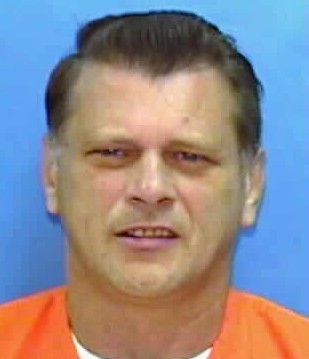
Gary Eldon Alvord
Murderer Ervil LeBaron
Murderer · USA · 1972
Ervil Morrell LeBaron (1925 to August 16, 1981) was the leader of a polygamous…
35 victims
Ervil LeBaron
Murderer · USA · 1972
Ervil Morrell LeBaron (1925 to August 16, 1981) was the leader of a polygamous…
35 victims
 Marvin Gray
Murderer · USA · 1975
Marvin Gray was convicted killer who claimed responsibility for 23 slayings and…
23 victims
Marvin Gray
Murderer · USA · 1975
Marvin Gray was convicted killer who claimed responsibility for 23 slayings and…
23 victims
 Yahweh ben Yahweh
Murderer · USA · 1980
Yahweh ben Yahweh was born and legally named Hulon Mitchell Jr. (October 27, 19…
23 victims
Yahweh ben Yahweh
Murderer · USA · 1980
Yahweh ben Yahweh was born and legally named Hulon Mitchell Jr. (October 27, 19…
23 victims
 Charles Manson
Murderer · USA · 1969
Charles Milles Manson (born November 12, 1934) was an American criminal and mus…
9 victims
Charles Manson
Murderer · USA · 1969
Charles Milles Manson (born November 12, 1934) was an American criminal and mus…
9 victims
 Jerry Lynn McCracken
Mass murderer · USA · 1990
Jerry Lynn McCracken was an Oklahoma death row inmate executed by lethal inject…
4 victims
Jerry Lynn McCracken
Mass murderer · USA · 1990
Jerry Lynn McCracken was an Oklahoma death row inmate executed by lethal inject…
4 victims
 Kevin Underwood
Murderer · USA · 2006
Kevin Ray Underwood (born December 19, 1979) was a convicted murderer from Purc…
1 victim
Kevin Underwood
Murderer · USA · 2006
Kevin Ray Underwood (born December 19, 1979) was a convicted murderer from Purc…
1 victim
 Della Sorenson
Serial killer · USA · 1918
Della Sorenson was a Nebraska woman who killed relatives by poisoning. She was…
8 victims
Della Sorenson
Serial killer · USA · 1918
Della Sorenson was a Nebraska woman who killed relatives by poisoning. She was…
8 victims
 Kate Webster
Murderer · United Kingdom · 1879
Kate Webster was executed by hanging at Wandsworth Prison on July 29, 1879. · 2…
1 victim
Kate Webster
Murderer · United Kingdom · 1879
Kate Webster was executed by hanging at Wandsworth Prison on July 29, 1879. · 2…
1 victim
 Dr. Wouter Basson
Murderer · 1992
Wouter Basson (born July 6, 1950) was a South African cardiologist and the form…
230 victims
Dr. Wouter Basson
Murderer · 1992
Wouter Basson (born July 6, 1950) was a South African cardiologist and the form…
230 victims
- Gender
- male
- Country
- USA
- Location
- Hillsborough County, Florida, USA
- Date of birth
- January 10, 1947
- Age at first offence
- 26
- Characteristics
- rape, torture, child molester, history of mental illness
- Victim profile
- Georgia Tully, 53; Ann Herrman, 36, and Lynne Herrman, 18
- Method of murder
- Strangulation with a nylon cord
- Date(s) of murder
- June 17, 1973
- Years active
- 1973
- Date of arrest
- —
- Status
-
Sentenced to death
Sentenced to death on April 9, 1974
Case overview
Gary Eldon Alvord was tried in the Thirteenth Judicial Circuit, Hillsborough County, Case #73-1398. He was sentenced to death on April 9, 1974 for three counts of First-Degree Murder.
Timeline
- 06/17/73 — Date of offense was listed as 06/17/73.
- 06/18/73 — Investigators of the Hillsborough County Sheriff’s Office responded to a residence in reference to a triple homicide.
- 06/16/73 — The time of death was estimated to have occurred between 11:00 a.m. Saturday June 16, 1973 and 1:30 p.m. Monday, June 18, 1973.
- 06/25/73 — Paul Brock’s girlfriend contacted the Hillsborough County Sheriff’s Office and wanted to make a statement.
- 04/04/74 — The defendant was found guilty by the trial jury of three counts of First-Degree Murder.
- 04/09/74 — Defendant was sentenced to death on all three counts.
- 08/03/79 — The order denying the defendant’s motion in Circuit Court for a protective order was denied.
- 01/09/80 — The executive order was dissolved.
- 11/02/84 — A second Death Warrant was signed.
- 11/20/84 — Another competency hearing was ordered.
- 09/24/87 — Alvord filed a Petition for Writ of Habeas Corpus with the Florida Supreme Court.
- 09/28/95 — The denial of the amended 3.850 motion was entered.
- 04/10/97 — The Florida Supreme Court affirmed the denial of the 3.850 motion on appeal.
- 09/29/87 — A future examination was ordered by the Governor.
The offence
On June 18, 1973, investigators of the Hillsborough County Sheriff’s Office responded to a residence in reference to a triple homicide. Three victims were discovered at the scene:
- Victim I: Georgia Tully (age 53) — Her body was found in the back bedroom of the house.
- Victim II: Ann Herrman (age 36) — Her body was located in a hallway between the living room and kitchen.
- Victim III: Lynne Herrman (age 18) — Her body was discovered in the kitchen.
Pathology reports indicated that all three women died from asphyxia due to strangulation with a nylon cord.
The pathologist discovered sperm in the vaginal tract of Lynne Herrman indicating recent sexual intercourse.
The time of death for the victims was estimated to have occurred between 11:00 a.m. Monday, June 18, 1973.
Investigation and suspect identification
Investigators suspected an individual known as Paul Brock. After attempting to locate the suspect, investigators discovered that the suspect had left town with his girlfriend and her son.
On June 25, 1973, Paul Brock’s girlfriend contacted the Hillsborough County Sheriff’s Office and wanted to make a statement. She related to investigators that her boyfriend, Paul Brock, had admitted that his real name was Gary Alvord and confessed to her that he had murdered the three victims.
Background and mental health history
It was reported that Gary Alvord had a long history of documented mental health problems and a family history of mental illness.
In Alvord’s 3.850 Motion, he claimed that his mother was treated and hospitalized off and on for mental illness, possibly schizophrenia, throughout her life. He claimed that she had a breakdown and was subsequently hospitalized immediately following the birth of her son. Mental health practitioners concluded that abandonment in Alvord’s infancy exacerbated his mental problems.
It was alleged that Alvord’s father was abusive to Gary and blamed him for his wife’s breakdown.
Beginning at 11 years of age, Gary Alvord was placed in various foster homes where it was alleged that the cycle of abuse continued at the hands of his foster parents. At age 12, he was placed in Northville Hospital in Michigan for psychiatric care.
Alvord received numerous mental health evaluations. The evaluations included a variety of psychiatric diagnoses, including Sociopathic Personality Disorder, Passive Aggressive with underlying Schizophrenia, and it was noted that his behavior could be described as psychotic.
During reported escapes from institutionalization, Alvord participated in violent behavior. He threatened one of his attending physicians, threatened to kill any officer who tried to apprehend him, and was allegedly involved in a shooting with his brother-in law.
In 1963, Alvord was transferred to the Iona State Hospital, described as a maximum-security hospital for the criminally insane. At Iona, he was diagnosed with Schizophrenic Reaction, Paranoid Type.
During one of Alvord’s escapes, he was arrested for the kidnapping and rape of a ten-year-old girl. It was noted that Alvord admitted his participation in that crime and confessed his involvement in other rapes.
In 1970, he was tried for that crime but was found not guilty by reason of insanity.
Alvord attempted to escape from the hospital again in 1971, but he was immediately apprehended.
Alvord was later granted leave from the hospital despite classification as a dangerous offender, and he did not return on the scheduled date. He went to Florida and was on escape status during the commission of this offense.
Competency to stand trial and related proceedings
Throughout the appellate process, Alvord’s attorneys alleged that he was not competent to be executed.
In 1973, during the defendant’s trial, he was transferred to Florida State Hospital to determine if he was competent to stand trial. He was determined to be competent by Dr. Daniel J. Sprehe.
Prior to the signing of the death warrant, Governor Graham ordered a competency hearing pursuant to Florida Statute 922.07 (Executive Order # 79-53). Governor Graham appointed three psychiatrists to evaluate Alvord.
Alvord’s attorney filed a motion in Circuit Court for a protective order to prevent the evaluation from taking place. The order was denied on 08/03/79.
The psychiatrists went to Florida State Prison for the purpose of evaluating the inmate. The inmate, under the advice of counsel, refused to participate in the evaluation process.
The executive order was dissolved on 01/09/80.
After the Governor signed the second Death Warrant on 11/02/84, the Governor ordered another competency hearing on 11/20/84 (Executive Order # 84-214).
Alvord filed a Petition for All Writs to the Florida Supreme Court requesting that he be evaluated separately from the procedures as set forth in F.S. 922.07. The petition was denied.
Alvord was found to be incompetent by the panel of psychiatrists appointed by the Governor. The Governor then ordered a future examination to be conducted on September 29, 1987.
Trial
On 04/04/74, the defendant was found guilty by the trial jury of three counts of First-Degree Murder as charged in the indictment.
Upon advisory sentencing, the trial jury recommended the death penalty for all three counts.
Sentencing
On 04/09/74, Defendant was sentenced as follows:
- Count I: First-Degree Murder (Georgia Tully) — Death
- Count II: First-Degree Murder (Ann Herrman) — Death
- Count III: First-Degree Murder (Lynn Herrman) — Death
Habeas corpus and post-conviction proceedings
On 09/24/87, Alvord filed a Petition for Writ of Habeas Corpus with the Florida Supreme Court seeking a stay of a mental health examination ordered by the Governor, claiming that a Hitchcock error had occurred.
The matter referenced the 1987 United States Supreme Court ruling in Hitchcock v. Dugger, 481 U.S. 393 (1987), which held that it was an error for a judge to refuse to consider nonstatutory mitigating circumstances and to instruct a jury not to consider such evidence.
The Florida Supreme Court determined that a Hitchcock error had occurred; however, it determined the error to be harmless.
Alvord then filed a second 3.850 Motion in State Circuit Court. He alleged he should be entitled to an evidentiary hearing. In 1992, the trial court entered an order granting an evidentiary hearing to allow the presentation of non-statutory mitigating evidence.
Prior to this hearing, Alvord amended his motion to include an unrelated matter. The Trial Court considered the amended motion and then reversed its previous ruling by denying the evidentiary hearing. This motion was then denied on 09/28/95.
Alvord appealed the trial court’s denial of the 3.850 motion to the Florida Supreme Court. The Florida Supreme Court affirmed the decision on 04/10/97.
There were presently no appeals pending in this case and no further psychiatric evaluations had been ordered.
Other details
- Name: Gary Eldon Alvord
- Also known as: Paul Brock
- DC #041482
- Date of birth: 01/10/47
- Sentencing Judge: The Honorable Robert W. Rawlins
- Trial Attorney: Tom Meyers – Assistant Public Defender
- Direct Appeal: Richard W. Seymour – Assistant Public Defender
- Collateral Appeals: William Sheppard – Private
- Date of offense: 06/17/73
- Case: Thirteenth Judicial Circuit, Hillsborough County, Case #73-1398

Spotted an error, or have more information about this case?