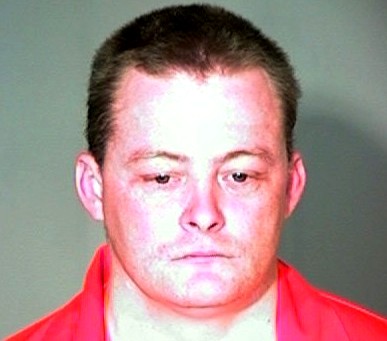
John Edward Sansing
Murderer Russell Ellwood
Murderer · USA · 1991
Russell Ellwood was a former taxi driver. Authorities suspected him of killing…
20 victims
Russell Ellwood
Murderer · USA · 1991
Russell Ellwood was a former taxi driver. Authorities suspected him of killing…
20 victims
 Robert Martines Perez
Murderer · USA · 1994
Name: Robert Martines Perez · Other name used in proceedings: Robert Martinez P…
15 victims
Robert Martines Perez
Murderer · USA · 1994
Name: Robert Martines Perez · Other name used in proceedings: Robert Martinez P…
15 victims
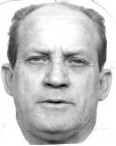 Billy Frank Vickers
Murderer · USA · 1993
Billy Frank Vickers Vickers was executed by lethal injection in Texas on Januar…
14 victims
Billy Frank Vickers
Murderer · USA · 1993
Billy Frank Vickers Vickers was executed by lethal injection in Texas on Januar…
14 victims
 Brandy Holmes
Murderer · USA · 2003
Brandy Aileen Holmes was convicted of first-degree murder and sentenced to deat…
1 victim
Brandy Holmes
Murderer · USA · 2003
Brandy Aileen Holmes was convicted of first-degree murder and sentenced to deat…
1 victim
 Charles Sinclair
Serial killer? · USA / Canada · 1980
Charles Sinclair was described as having been sought for killings that were lin…
13 victims
Charles Sinclair
Serial killer? · USA / Canada · 1980
Charles Sinclair was described as having been sought for killings that were lin…
13 victims
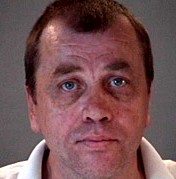 David William Tiley
Murderer · United Kingdom · 2007
David William Tiley was born in 1960. In 1995, he received a six-year jail term…
2 victims
David William Tiley
Murderer · United Kingdom · 2007
David William Tiley was born in 1960. In 1995, he received a six-year jail term…
2 victims
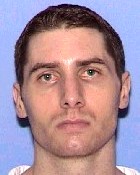 Justen Grant Hall
Murderer · USA · 2002
Justen Grant Hall Hall was sentenced to death on May 11, 2005. The trial court’…
2 victims
Justen Grant Hall
Murderer · USA · 2002
Justen Grant Hall Hall was sentenced to death on May 11, 2005. The trial court’…
2 victims
 Stacey Castor
Murderer · USA · 2005
Stacey Castor (born July 24, 1967) was a resident of Clay, New York. She was co…
1 victim
Stacey Castor
Murderer · USA · 2005
Stacey Castor (born July 24, 1967) was a resident of Clay, New York. She was co…
1 victim
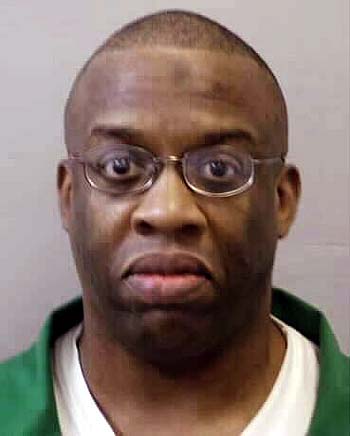 James Earl Reed
Murderer · USA · 1994
James Earl Reed was convicted of murdering Joseph Lafayette and Barbara Lafayet…
2 victims
James Earl Reed
Murderer · USA · 1994
James Earl Reed was convicted of murdering Joseph Lafayette and Barbara Lafayet…
2 victims
- Gender
- male
- Country
- USA
- Location
- Maricopa County, Arizona, USA
- Date of birth
- February 11, 1967
- Age at first offence
- 31
- Characteristics
- rape, kidnapping, armed robbery, sexual assault
- Victim profile
- Trudy Calibrese
- Method of murder
- St abbing with knife
- Date(s) of murder
- February 24, 1998
- Years active
- 1998
- Date of arrest
- —
- Status
-
Sentenced to death
Sentenced to death on September 30, 1999; conviction and death sentence affirmed on direct appeal, with a Ring harmless error analysis applied.
Case information
John Edward Sansing was convicted in Superior Court (Maricopa) of first-degree murder, kidnapping, armed robbery and sexual assault. He was sentenced to death for raping and killing a volunteer worker from the Living Springs Church who had come to his home to deliver food.
Timeline
- February 24, 1998 — The defendant called the Living Springs Assembly of God Church and requested a food box; later that afternoon, the victim, Trudy Calibrese, arrived at his home with the food box.
- September 18, 1998 — Start of trial: guilty plea.
- September 30, 1999 — Sentencing: death.
- 2001 — Published opinions: State v. Sansing, 200 Ariz. 347, 26 P.3d 1118 (2001).
- Sept. 24, 2003 — Published opinions: State v. (John Edward) Sansing, 206 Ariz. 232, 77 P.3d 30 ( Sept. 24, 2003 ).
The offence
On February 24, 1998, the defendant called the Living Springs Assembly of God Church and requested a food box. Later that afternoon, the victim, Trudy Calibrese, arrived at the home with the food box.
Once inside, the defendant grabbed her from behind and dropped her to the floor. The victim was then tied up and hit over the head with a broom stick. The defendant took her car keys, went outside and moved the victim's car to another location. He returned to the home and took the victim to the bedroom where he sexually assaulted her. The defendant then stabbed the victim and left her in the bedroom while he and his wife, the co-defendant, slept in the living room. The defendant woke up in the middle of the night and took the victim's body to the back yard where he hid it between a shed and a wall.
The defendant's actions were conducted while his four children were in the home.
Investigation and evidence
The Supreme Court affirmed all convictions and the death sentence on direct appeal, despite the fact that it struck the (F)(5) aggravator—pecuniary gain. While Sansing was awaiting the direct appeal mandate to issue, the United States Supreme Court decided Ring II. A supplemental opinion performed the Ring harmless error analysis on Sansing’s death sentence.
Trial and proceedings
Presiding Judge: Ronald S. Reinstein Prosecutor: William Culbertson Defense Attorney: Emmet Ronan Start of Trial: Guilty Plea, September 18, 1998 Sentencing: September 30, 1999
Sentencing
Aggravating circumstances
- Pecuniary gain under A.R.S. § 13-703(F)(5) — struck on direct appeal (as described in the affirmed-with-struck-aggravator procedural posture).
- Cruel, heinous or depraved under A.R.S. § 13-703(F)(6) — upheld.
Upheld detail under (F)(6):
- Cruelty — Upheld
- It took Sansing fifteen minutes to initially attack the victim, bind her and club her into unconsciousness. While being bound, the victim pleaded, “Lord, please help me” and “ I don't want to die, but if this is the way you want me to come home, I am ready.”
- He then dragged her into the bedroom and sexually assaulted her while her arms and legs were bound.
- Sansing’s wife, who was present all along, heard the victim and Sansing speaking during the rape. The rape satisfied this element, also.
- Physical — Upheld
- The victim died of three stab wounds to the abdomen, each of which were not immediately fatal. It would have taken several minutes for the victim to bleed to death.
- The wound patterns were consistent with twisting the knife inside the victim, and Sansing’s wife testified that she saw Sansing “grind” the knife into the victim.
- The medical examiner testified that the stab wounds would have caused pain.
- Also, the victim’s head wound from the initial clubbing was “substantial” and resulted in a “tremendous amount of bleeding” and would have caused pain.
- “The evidence of the rape independently establishe[d] both mental and physical suffering.”
- Heinous or Depraved — Upheld
- Helplessness — Upheld
- Sansing admitted to grabbing the victim, kneeing her in the back, and binding her wrists and ankles with electrical cords. He then tied her wrists and ankles together.
- No reasonable jury would have failed to find that the victim was helpless to defend herself.
- Gratuitous Violence — Upheld
- Stipulated and uncontroverted facts established that Sansing struck the victim on the head with a club using enough force to break the club into two pieces and lacerate the victim’s scalp.
- He later dragged her into his bedroom and raped her while her arms and legs were bound.
- At some point he blindfolded her, gagged her with a sock in her mouth, and stabbed her in the abdomen three times.
- Sansing’s wife observed Sansing “grind” the knife into the victim.
- The victim was also found with ligature marks around her neck.
- There was swelling and bruising on her forehead and left orbital region.
- Her face and lips were swollen and her frenulum was severed, which was attributed by the medical examiner to blunt force trauma to the mouth.
- In all, the “rape, facial wounds, neck ligatures, gagging, blind-folding, and grinding of the knife constitute violence beyond that necessary to kill” beyond a reasonable doubt.
- Helplessness — Upheld
Mitigating circumstances
- (G)(1) (Significant Impairment) — NOT FOUND
- Sansing presented no expert testimony to support his assertion that his use of cocaine impaired his ability to control his physical behavior during the killing.
- Sansing took steps shortly after the murder to hide the body and the victim’s truck so as to avoid detection.
- He lied to the victim’s pastor when he called Sansing inquiring after the victim; thereby negating his claim that intoxication overwhelmed his ability to control his physical behavior.
- (G)(5) (Age) — NOT FOUND
- No reasonable jury would have applied this factor.
- Sansing was 31 at the time of the offense.
- He was a married man with four children.
- Drug Use
- Sansing’s drug impairment qualified as a non-statutory mitigator, but because Sansing failed to provide any expert testimony as to how his drug use was connected to his inability to control himself on the day of the murder, no reasonable jury would have given this factor more than minimal weight.
- Troubled Childhood
- There was evidence that Sansing’s parents divorced when he was young and that he had “basically no relationship with his biological father.”
- The evidence also included that he did not complete high school and achieved poor grades.
- There was no causal link between these circumstances and the crime, so a reasonable jury could have accorded those two factors only minimal weight.
- No Future Danger
- Given the “shocking circumstances of this crime,” no reasonable jury could have given more than minimal weight to Sansing’s argument that he presents no future threat.
Outcome
JUDGMENT: Death Sentence Affirmed.
On direct appeal, the Supreme Court affirmed all convictions and the death sentence, despite the fact that it struck the (F)(5) aggravator—pecuniary gain. A supplemental opinion performed the Ring harmless error analysis on Sansing’s death sentence while Sansing was awaiting the direct appeal mandate to issue.
Other details
- The defendant was described as Caucasian, and the victim, Trudy Calibrese, was described as Caucasian.
- The defendant’s wife was the co-defendant.
- The defendant’s conduct involved four children being in the home at the time.
- The victim’s pastor was involved through a call when Sansing lied when inquiring after the victim.
Spotted an error, or have more information about this case?