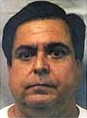
David Leisure
Murderer Ervil LeBaron
Murderer · USA · 1972
Ervil Morrell LeBaron (1925 to August 16, 1981) was the leader of a polygamous…
35 victims
Ervil LeBaron
Murderer · USA · 1972
Ervil Morrell LeBaron (1925 to August 16, 1981) was the leader of a polygamous…
35 victims
 Brian Kevin Rosenfeld
Murderer · USA · 1985
Brian Kevin Rosenfeld Brian Kevin Rosenfeld was sentenced to three concurrent l…
23 victims
Brian Kevin Rosenfeld
Murderer · USA · 1985
Brian Kevin Rosenfeld Brian Kevin Rosenfeld was sentenced to three concurrent l…
23 victims
 Marvin Gray
Murderer · USA · 1975
Marvin Gray was convicted killer who claimed responsibility for 23 slayings and…
23 victims
Marvin Gray
Murderer · USA · 1975
Marvin Gray was convicted killer who claimed responsibility for 23 slayings and…
23 victims
 Yahweh ben Yahweh
Murderer · USA · 1980
Yahweh ben Yahweh was born and legally named Hulon Mitchell Jr. (October 27, 19…
23 victims
Yahweh ben Yahweh
Murderer · USA · 1980
Yahweh ben Yahweh was born and legally named Hulon Mitchell Jr. (October 27, 19…
23 victims
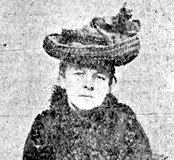 Emily Swann
Murderer · United Kingdom · 1903
Emily Swann (42-year-old mother of 11 children; defendant; convicted of murderi…
1 victim
Emily Swann
Murderer · United Kingdom · 1903
Emily Swann (42-year-old mother of 11 children; defendant; convicted of murderi…
1 victim
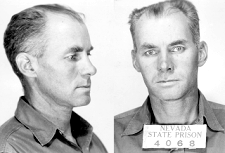 Burton Williamson
Murderer · USA · 1939
Burton Franklin Williamson was executed by asphyxiation-gas in Nevada on Novemb…
1 victim
Burton Williamson
Murderer · USA · 1939
Burton Franklin Williamson was executed by asphyxiation-gas in Nevada on Novemb…
1 victim
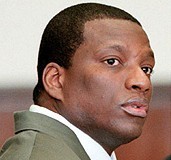 Alfred Gaynor
Serial killer · USA · 1995
Alfred Gaynor was a serial killer from western Massachusetts who was convicted…
9 victims
Alfred Gaynor
Serial killer · USA · 1995
Alfred Gaynor was a serial killer from western Massachusetts who was convicted…
9 victims
 Uthai Dechawiwat
Murderer · Thailand · 2008
Uthai Dechawiwat — Thai police officer and former sergeant; defendant. · Leo De…
2 victims
Uthai Dechawiwat
Murderer · Thailand · 2008
Uthai Dechawiwat — Thai police officer and former sergeant; defendant. · Leo De…
2 victims
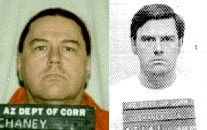 Anthony Lee Chaney
Murderer · USA · 1982
Anthony Lee Chaney (DOB: April 4, 1954) · September 6, 1982 — Coconino County S…
1 victim
Anthony Lee Chaney
Murderer · USA · 1982
Anthony Lee Chaney (DOB: April 4, 1954) · September 6, 1982 — Coconino County S…
1 victim
- Gender
- male
- Country
- USA
- Location
- St. Louis, Missouri, USA
- Date of birth
- J une 25, 1950
- Age at first offence
- 30
- Characteristics
- disputes, domestic violence
- Victim profile
- James Michael Sr. , 75 ( rival crime family leader )
- Method of murder
- Explosives ( planting a remote-controlled car bomb)
- Date(s) of murder
- September 17, 1980
- Years active
- 1980
- Date of arrest
- May 1985
- Status
-
Executed
Executed by lethal injection on September 1, 1999 in Missouri
Case record: State of Missouri v. David Leisure
Status and outcome
David Leisure was executed on September 1, 1999.
Background
In early 1977, Ray Massud promised Anthony Leisure, a cousin of David Leisure, that he would succeed Massud as the business manager of Local 110 of the Laborers Union in St. Louis. While Massud was in the hospital with a terminal illness, Massud changed his mind and asked Anthony Leisure to accept the position of assistant business manager so that Massud’s son, John Massud, could serve as business manager of the union. Leisure agreed to the new arrangement.
The agreement took effect on June 30, 1977 following Ray Massud’s death. Under the arrangement, Leisure would be in charge of hiring and firing union officers, and John Massud would be in charge of the business office.
The offence
John Massud expanded his authority outside the original agreement and hired union officers without consulting Anthony Leisure. Massud hired Vince Giordano as a union organizer and Mike Trupiano as President of the Union. Vince Giordano and Mike Trupiano were related to Anthony Giordano, a rival of the Leisures who headed the Italian faction of the union.
Angered by Massud’s actions, Anthony Leisure met with his brothers Paul and David along with Ronald Broderick, John Ramo and Charles Loewe to discuss whether they should kill Massud. They decided not to because of Massud’s political influence.
Citing financial problems, Massud announced that he planned to fire Ronald Broderick from his position as a union officer; Broderick was the only union official that Anthony Leisure had hired.
Leisure again convened a meeting with his brothers, Broderick, Ramo and Fred Prator to discuss whether someone should be killed. Because the group feared the political connections of Massud and the war that would result if they killed a member of the Giordano family, they decided to kill James Michaels Sr., the head of the Laborers’ Union in St. Louis.
The group surmised that by killing James Michaels Sr. they would strengthen their position in the union among the Syrian faction headed by Michaels. The group also believed that Michaels had protected the murderer of David Leisure’s older brother Richard and that revenge was in order.
After an unsuccessful attempt to shoot Mr. Michaels at a St. Louis restaurant, the Leisures and their co-conspirators decided to bomb Michaels’ car. David Leisure and John Ramo stole a car similar to Michaels’ and practiced planting a bomb. David Leisure also followed Michaels to learn his habits. On September 17, 1980, David Leisure and John Ramo stole a car similar to Michaels’ and practiced planting a bomb.
Investigation and trial
The case involved a Leisure group that acted out of a common purpose to dominate local labor unions, profit economically from that domination, and murder opponents of their efforts to the extent necessary. The structure and personnel of the Leisure group were described as continuous and consistent throughout the entire period of racketeering activity.
The Leisure group included Paul Leisure, Anthony Leisure, David Leisure, John Ramo, Joe Broderick, Fred Prater, and Charles Loewe during the entire period of the racketeering events. Paul Leisure directed and coordinated the group, except during the period of recovery from his own bombing injuries, when Anthony Leisure stood in his place. The opinion described that each member participated in nearly all of the criminal acts. It further described that the Leisure group had an ascertainable structure distinct from that inherent in the conduct of the pattern of racketeering activity, identified as “the sequence of murders and attempted murders,” and that this structure was found in family and social relationships between members and their concerted attempt to gain control of the local unions.
Obstruction of justice issue (federal proceedings)
Paul Leisure, David Leisure, and Steven Wougamon challenged the sufficiency of the evidence to support their Count III obstruction of justice convictions under 18 U.S.C. § 1510. They were charged, and found by the jury, to have endeavored to prevent the communication of information relating to the RICO violations to federal law enforcement officials by murdering Michael Kornhardt on or about July 31, 1982.
The appellants asserted there was no evidence showing that a federal investigation was underway at the time of the Kornhardt murder, or that the appellants had any knowledge that Kornhardt had communicated, or was about to communicate, information to agents. The court addressed that it was only necessary for a defendant to have believed that a witness might give information to federal officials, and to have prevented that communication, to violate 18 U.S.C. § 1510.
The court stated that the evidence was more than sufficient to support the obstruction of justice convictions because appellants feared Kornhardt would become a witness against them. It included a quotation attributed to Paul Leisure: “he would take a lot of good people with him.”
It also stated that Wougamon, a friend of Kornhardt, warned John Ramo that Kornhardt would “turn over and talk to the FBI” following his arrest. It described evidence that appellants took Kornhardt to a secluded part of St. Charles County and shot him.
The court affirmed the convictions of Anthony Leisure, Paul Leisure, Charles Loewe, and David Leisure on all counts, and that of Stephen Wougamon on the Count III obstruction of justice charge.
Indictment amendment issue (Wougamon)
In addition to substantive and conspiracy RICO charges in Counts I and II, and an obstruction of justice charge in Count III connected to the Kornhardt murder, Wougamon was charged in Count IV with a separate obstruction of justice count. Count IV alleged Wougamon obstructed justice under 18 U.S.C. § 1510 “by means of intimidation and threats of force” in dealings with Innes Anderson on the evening of November 9, 1982.
The court described the legislative amendment to 18 U.S.C. § 1510 effective October 12, 1982, striking out “misrepresentation, intimidation, or force or threats thereof.” The court stated that as a result, Wougamon’s alleged threat to Anderson on November 9, 1982, did not constitute a violation of 18 U.S.C. § 1510, and that Count IV charged him with a crime that had been repealed.
The district court, over defense counsel’s objection, struck the reference to 18 U.S.C. § 1510 from Count IV and, effectively amended the indictment by instructing the jury on elements of § 1512 at the close of trial. The court agreed with Wougamon that his conviction on Count IV had to be reversed because he was effectively convicted of an offense for which it was impossible to know the grand jury would have indicted him.
The opinion stated that “Since 1887, it has been ‘the settled rule in the federal courts that an indictment may not be amended except by resubmission to the grand jury, unless the change is merely a matter of form.’” It cited Russell v. United States.
The court discussed the mens rea differences between the charged § 1510 offense and the convicted § 1512 offense and the difference between the charged “endeavoring” and the convicted “attempting.” It concluded that the amendment was impermissible and that Wougamon’s conviction on Count IV had to be reversed, with the count dismissed without prejudice to the government to resubmit it to the grand jury.
RICO convictions issue (Wougamon)
The opinion described that Wougamon challenged the validity of his substantive and conspiracy RICO convictions in light of the amendment issue. It stated that to convict of the substantive RICO offense, the government needed to establish a “pattern of racketeering activity,” defined as at least two acts of racketeering activity.
The substantive RICO count alleged the required two acts: the murder of Michael Kornhardt in violation of state law and the threat to Innes Anderson in violation of 18 U.S.C. § 1510. The opinion stated that at the time of indictment and trial, violations of § 1510 were specifically included as racketeering acts under 18 U.S.C. § 1961(1), but that the indictment did not sufficiently state a violation of § 1510, making the indictment effectively amended to allege a violation of § 1512. The opinion stated that at the time of trial, violations of § 1512 were not a racketeering act as defined in § 1961(1), and therefore the amended indictment failed to allege two acts of racketeering activity.
Accordingly, the opinion stated that it reversed Wougamon’s Count I substantive RICO conviction.
The opinion upheld Wougamon’s Count II RICO conspiracy conviction, stating that conspiracy required only that each defendant agree to join the conspiracy, not that each agreed to commit at least two acts of racketeering activity. It concluded there was ample evidence that Wougamon agreed to join the Leisure RICO enterprise with knowledge that other members were to commit at least two acts of racketeering activity.
Appellate outcome (affirmations and reversals)
The opinion’s conclusion stated:
- It affirmed all convictions of Anthony Leisure, Charles Loewe, David Leisure, and Paul Leisure.
- It affirmed the convictions of Steven Wougamon as to Counts II and III.
- It reversed the convictions of Wougamon as to Counts I and IV.
- It vacated Wougamon’s sentences on Counts II and III and remanded to the district court for resentencing as to Wougamon.
Timeline
- June 30, 1977 — The arrangement between Ray Massud’s death and the union roles took effect, with Anthony Leisure as assistant business manager and John Massud as business manager.
- September 17, 1980 — David Leisure and John Ramo stole a car similar to Michaels’ and practiced planting a bomb, and David Leisure followed James Michaels Sr. to learn his habits.
- On or about July 31, 1982 — Michael Kornhardt was murdered in connection with the obstruction of justice count.
- November 9, 1982 (evening) — Wougamon dealt with Innes Anderson in a way alleged to have involved intimidation and threats of force.
- September 1, 1999 — David Leisure was executed by lethal injection in Missouri.
Other details
A quotation included in the appellate reasoning was: “the proof used to establish these separate elements may in particular cases coalesce.” The opinion also quoted: “Th[e] distinct structure [of a RICO enterprise] might be demonstrated by proof that . . . it has an organizational pattern or system of authority beyond what was necessary to perpetrate the predicate crimes. The command system of a Mafia family is an example of this type of structure.” The opinion quoted: “the very purpose of the requirement that a man be indicted by grand jury is to limit his jeopardy to offenses charged by a group of his fellow citizens acting independently of either prosecuting attorney or judge.”
Spotted an error, or have more information about this case?