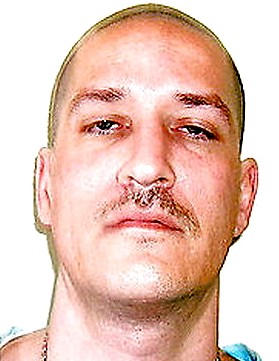
Michael William Lenz
Murderer Russell Ellwood
Murderer · USA · 1991
Russell Ellwood was a former taxi driver. Authorities suspected him of killing…
20 victims
Russell Ellwood
Murderer · USA · 1991
Russell Ellwood was a former taxi driver. Authorities suspected him of killing…
20 victims
 Robert Martines Perez
Murderer · USA · 1994
Name: Robert Martines Perez · Other name used in proceedings: Robert Martinez P…
15 victims
Robert Martines Perez
Murderer · USA · 1994
Name: Robert Martines Perez · Other name used in proceedings: Robert Martinez P…
15 victims
 Billy Frank Vickers
Murderer · USA · 1993
Billy Frank Vickers Vickers was executed by lethal injection in Texas on Januar…
14 victims
Billy Frank Vickers
Murderer · USA · 1993
Billy Frank Vickers Vickers was executed by lethal injection in Texas on Januar…
14 victims
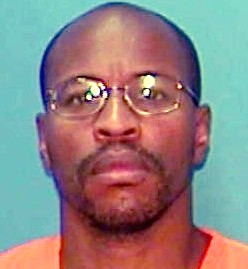 Robert Rimmer
Murderer · USA · 1998
Robert Rimmer was indicted in a case involving 11 counts: two counts of First-D…
2 victims
Robert Rimmer
Murderer · USA · 1998
Robert Rimmer was indicted in a case involving 11 counts: two counts of First-D…
2 victims
 Chris Wayne Shuffield
Murderer · USA · 2001
Chris Wayne Shuffield was born on 03/26/1980. He received his sentence on Febru…
1 victim
Chris Wayne Shuffield
Murderer · USA · 2001
Chris Wayne Shuffield was born on 03/26/1980. He received his sentence on Febru…
1 victim
 Luigi Chiatti
Murderer · Italy · 1992
Luigi Chiatti was an Italian serial killer. He was born Antonio Rossi to a 24-y…
2 victims
Luigi Chiatti
Murderer · Italy · 1992
Luigi Chiatti was an Italian serial killer. He was born Antonio Rossi to a 24-y…
2 victims
 David Carty
Murderer · United Kingdom · 1984
David Carty was 18 years old and worked as an employee at Courier Display Syste…
2 victims
David Carty
Murderer · United Kingdom · 1984
David Carty was 18 years old and worked as an employee at Courier Display Syste…
2 victims
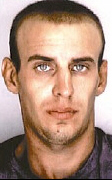 Richard Cartwright
Murderer · USA · 1996
Richard Cartwright was a white man from Chicago. He was convicted of capital mu…
1 victim
Richard Cartwright
Murderer · USA · 1996
Richard Cartwright was a white man from Chicago. He was convicted of capital mu…
1 victim
- Gender
- male
- Country
- USA
- Location
- Augusta County, V irginia, USA
- Date of birth
- February 27, 1964
- Age at first offence
- 36
- Characteristics
- abuse, drug addict, alcohol, murder for hire, white supremacist
- Victim profile
- Brent Henry Parker, 41 (fellow inmate)
- Method of murder
- St abbing with makeshift knife
- Date(s) of murder
- January 16, 2000
- Years active
- 2000
- Date of arrest
- Same day
- Status
-
Executed
Executed by lethal injection in Virginia on July 27, 2006
Case overview
Michael William Lenz was convicted of capital murder for the willful, deliberate, and premeditated killing of Brent H. Parker, while both men were inmates at the Augusta Correctional Center.
Lenz was sentenced to death. After separate legal proceedings, Lenz was executed by lethal injection in Virginia on July 27, 2006.
Status at execution
Lenz was brought into the execution chamber at 8:56 p.m. at Greensville Correctional Center. He was secured to the gurney with leather straps. The lethal drugs began to flow into his veins at 9:03 p.m. Lenz was pronounced dead at 9:07 p.m. Lenz declined to say any last words when asked before the injection was administered.
Background
Lenz was born on February 27, 1964, in San Diego, California. He and his family moved to northern Virginia after his fourth grade. Although Lenz never completed high school, he received his GED when he was 17 years old.
After several run-ins with the law, Lenz returned to northern Virginia, where he camped outdoors and committed burglaries to support his drug habit and other needs. He was arrested and charged for these burglaries, and was sentenced to spend time in the Augusta Correctional Center.
Lenz served a 29-year sentence at the Augusta Correctional Center after being convicted in Prince William County of burglary and illegal firearm possession. He was transferred to a super-max prison about 250 miles from the Augusta Correctional Center; later, when counsel requested a closer transfer, he was moved only about a hundred miles closer.
People involved
- Michael William Lenz — defendant; inmate at Augusta Correctional Center; adherent of Asatru; convicted and sentenced to death; executed by lethal injection.
- Brent H. Parker — victim; convicted murderer; inmate at Augusta Correctional Center; served a 50-year sentence for the 1985 murder of Ralph “Jimmy” Jenkins in Winchester, Virginia; Parker was stabbed 68 times.
- Jeffrey Remington — fellow inmate; co-defendant; sentenced to death; committed suicide while incarcerated in 2004.
- Rita K. Dietz — registered nurse employed at the Augusta Correctional Center who rendered emergency assistance to Parker.
- Gregory Price Wanger — Assistant Chief Medical Examiner for the Western District of Virginia who performed an autopsy on Parker.
- Earl Jones — correctional officer assigned to Building J-5; permitted the inmates to enter; observed the fight and called for help.
- Edward V. Houching — correctional officer who responded to Jones’ request.
- John Edward Simmons — correctional officer who responded and observed the stabbing.
- Patricia Daley Lenz — Lenz’s mother who testified about his childhood and family interaction.
- Martin Rogozinski — psychologist employed at the Augusta Correctional Center who testified for mitigation.
- Gary Lee Bass — Chief of Operations at the Virginia Department of Corrections who testified about “prison life.”
- Jerry Wayne Armentrout — Assistant Warden of Operations at the Red Onion State Prison who testified about security conditions.
- Stephen McNallen — director of the Asatru Folk Assembly; provided estimates about Asatru followers and compared the religion to Native American religions.
- A. Lee Ervin — Augusta County Commonwealth’s Attorney who prosecuted the case.
- Larry Traylor — spokesman for the Virginia Department of Corrections.
The offence
On the evening of January 16, 2000, Lenz, Parker, Jeffrey Remington, and three other inmates attended a meeting of a group referred to as the Ironwood Kindred. The group practiced the Asatru religion, described as worship of Nordic gods.
The meeting occurred in Building J-5 at the Augusta Correctional Center. Earl Jones permitted the six inmates to enter a room where the meeting occurred. Jones closed the door containing windows and “secured” the room.
Lenz and Remington attacked Parker with knives during the meeting. During the assault, correctional officers ordered Lenz and Remington to stop stabbing Parker and to drop their knives; the assailants continued stabbing after initial orders. Once a sufficient number of correctional officers arrived, officers entered the room, and Simmons told Lenz and Remington “to drop” their knives. Lenz placed his knife on a table, and Remington eventually surrendered his knife. Officers then placed handcuffs on Lenz and Remington and escorted them from the area.
Extent and medical findings
Parker was stabbed 68 times and sustained one cut wound. The stab wounds were inflicted while Parker was alive. Parker died after transport to the Augusta Medical Center.
The autopsy described that a stab wound is “shorter on the surface than it is deep” and “implies a thrusting motion[,]” whereas a cut wound is “longer on the surface than it is deep” and “implies a slashing-like motion.”
Dr. Wanger identified 40 stab wounds from the upper part of Parker’s chest through the middle and center part of the chest and into the abdomen. Parker’s left lung and liver were each stabbed seven times, and the wounds produced serious internal bleeding. The wounds to the lungs would have been fatal without the other wounds, and the wounds to the liver “by themselves, would have been fatal without the other wounds to [his] body.”
Lenz’s account of motive and circumstances
Lenz testified that he was a practicing member of the “Asatru” religion and that several inmates had approached him to “construct” an Asatru group, but Parker thwarted him.
Lenz testified that on the evening of the murder, he planned to perform an Asatru ceremony in the meeting room. He recited poetic literature and asked Parker to approach an altar. Lenz testified:
“I called [Parker] up to the altar and I asked-and I said to him, ‘It's been a long, hard path between us.’ And [Parker] said, ‘Yes, it is.’ And I pulled the knife out of my pocket. And I said, ‘Are you trying to take it to the next step?’ And he said, ‘Yes, I am.’ And so I stabbed him.”
Lenz admitted he did not like Parker and that he had planned to kill Parker that day. Lenz also stated he had threatened others in the meeting room with the knife.
In the evidence described in appellate materials, Lenz also testified that Parker had threatened to kill him twice before and that the fight broke out mutually; the narrative also stated that Jeffrey Remington had jumped in the fight unprovoked.
Investigation and arrest
No separate investigative or arrest facts were provided beyond the description of correctional officers observing and responding to the stabbing during the incident.
Trial
Charge and conviction
Lenz was tried before a jury on an indictment charging him with the capital murder of Brent H. Parker in violation of Code § 18.2-31(3), “[t]he willful, deliberate, and premeditated killing of any person by a prisoner confined in a state or local correctional facility.”
The jury found Lenz guilty of capital murder.
Guilt-phase evidence
Lenz, Parker, Remington, and three other inmates attended the Ironwood Kindred meeting during the early evening of January 16, 2000 in Building J-5 at the Augusta Correctional Center.
Earl Jones testified that he “noticed a commotion” and requested help because he observed a fight. He heard an inmate say, “[t]hey're stabbing him.” Jones went to the door and saw “Remington and Lenz stabbing Parker.” Parker was described as lying on his back on the floor between Remington and Lenz, making a feeble attempt to defend himself with his hands up. The evidence stated that as Parker tried to block the knives, the defendant and Remington “took their free hand[s]; pushed [Parker's] hands aside and then stabbed him.”
Jones ordered them to stop stabbing Parker; he testified:
“[t]hey simply looked at me and went back to stabbing him.”
Jones used his radio again to request help and asked correctional officers to hurry because Remington and the defendant “were trying to kill this guy.” Jones did not go into the room because Remington and the defendant had knives and Jones was unarmed.
Edward V. Houching testified that when he arrived he saw Lenz and Remington stab Parker between 10 to 15 times as Parker was lying on the floor in a fetal position, and that he ordered them to stop but they continued. The evidence described Parker as not “doing anything to defend himself,” and that Lenz “was bent over, stabbing [Parker], over and over and over.”
John Edward Simmons testified that he saw Lenz stab Parker six or seven times in an area extending from Parker’s “underarm” to his waist as Parker lay on his side on the floor, and Remington stab Parker in the shoulder and back.
After sufficient correctional officers arrived, officers entered the room with some armed with mace and ordered Lenz and Remington to drop their knives. The defendant placed his knife on a table and Remington eventually surrendered.
Medical testimony and autopsy
Rita K. Dietz provided emergency assistance. She testified that when she encountered Parker he was “very pale” and “surrounded by blood,” and that his shirt was soaked in blood. She testified:
“[e]very time I encountered a couple of wounds, I encountered more wounds.”
She described Parker’s condition as “[v]ery critical.” She placed bandages until she “ran out” and testified:
“at that point, the stretcher had arrived. So we took the sheet off the stretcher ··· Parker was still alive, and he helped roll onto the sheet. And we lifted the sheet up, which the one wound, out of the left side, just poured like water; like somebody had turned a faucet on, when we lifted him. And we got him on the stretcher.”
Parker was transported by ambulance to the Augusta Medical Center and died there.
Dr. Wanger testified that Parker had sustained 68 stab wounds and one cut wound, all inflicted when Parker was alive. Dr. Wanger explained the difference between stab and cut wounds as quoted above.
Dr. Wanger identified 40 stab wounds and testified about fatal internal bleeding related to wounds to the lungs and liver.
Penalty phase evidence and findings
During the penalty phase, the Commonwealth presented evidence regarding Lenz’s future dangerousness and the vileness of his crime. The Commonwealth introduced prior convictions for possession of a firearm after being convicted of a felony and breaking and entering, and relied on evidence presented in the guilt phase.
Martin Rogozinski testified that he spoke with Lenz soon after Parker was murdered and that, in his opinion, Lenz had murdered Parker based “solely on a religious conviction.”
Lenz testified during the penalty phase about Asatru, threats, and his actions at the altar ceremony, including the quoted testimony about calling Parker to the altar and stabbing him.
Gary Lee Bass and Jerry Wayne Armentrout testified about “prison life” and security conditions if Lenz were sentenced to life imprisonment, including that they would encounter Virginia maximum security correctional facility conditions.
Two officers testified that Lenz never gave them problems while he was under their supervision.
Patricia Daley Lenz testified about his childhood and family interaction, stating that his biological father was absent during much of his early childhood and that his adoptive father was very strict and favored his biological child.
Sentencing and verdict form
The jury returned a verdict fixing Lenz’s punishment at death based on both aggravating factors in Code § 19.2-264.2: future dangerousness and vileness.
Lenz challenged a proposed instruction about unanimity and the necessity of proof beyond the minimum necessary to accomplish an act of murder. The reviewing court did not decide the contention because the jury fixed punishment at death based on both statutory aggravators, and because the jury’s finding of continuing serious threat to society provided an independent basis.
Direct appeal outcome
The Supreme Court of Virginia affirmed the conviction and death sentence. The judgment was affirmed.
Sentencing
Lenz was sentenced to death in accordance with the jury verdict after the circuit court considered a report prepared by a probation officer pursuant to Code § 19.2-264.5.
Appeals and post-conviction proceedings
Direct appeal
Lenz’s direct appeal was decided in Lenz v. Commonwealth, 261 Va. 451, 544 S.E.2d 299 (Va. 2001) (Direct Appeal). The Supreme Court affirmed the conviction and sentence.
State habeas
Lenz filed state habeas petitions, including decisions:
- Lenz v. Warden, 265 Va. 373, 579 S.E.2d 194 (Va. 2003) (State Habeas).
- Lenz v. Warden of the Sussex I State Prison, 267 Va. 318, 593 S.E.2d 292 (Va. 2004) (State Habeas).
In Lenz v. Warden, 265 Va. 373, 579 S.E.2d 194 (Va. 2003), after evidentiary hearing in the Circuit Court, Augusta County, the Supreme Court held that (1) trial counsel was ineffective for failing to object to incomplete verdict form; (2) petitioner was not prejudiced by use of stun belt during trial; and (3) defendant was not entitled to jury instruction that he could only be convicted of capital murder if jury found he was the “triggerman.” The petition was dismissed in part, granted in part, and remanded for new sentencing hearing.
In Lenz v. 318, 593 S.E.2d 292 (Va. 2004), on rehearing, the Supreme Court held that (1) evidence did not establish bailiff provided ex parte answers to jurors’ questions about trial court’s sentencing instructions; (2) prejudice would not be presumed as to allegations that jurors read from Bible during sentencing deliberations; (3) evidence did not establish that prospective juror would automatically vote for death penalty in every case; and (4) counsel did not perform deficiently in failing to seek additional continuance before sentencing hearing. The petition was denied.
Federal habeas
Lenz filed federal habeas:
- Lenz v. Washington, 444 F.3d 295 (4th Cir. 2006) (Federal Habeas).
The Court of Appeals affirmed the district court’s denial of habeas relief. The appellate court held that it affirmed denial of the petition and judgment of the district court was affirmed.
The federal habeas record included a claim that jurors consulted a Bible during sentencing deliberations. The Court of Appeals addressed the claim and held it did not merit relief under governing standards and precedents.
Clemency and execution
Attorneys for Lenz asked Governor Timothy M. Kaine for clemency. Kaine rejected the request for clemency. The Governor stated in a written statement:
“Having carefully reviewed the petition for clemency and judicial opinions regarding this case, I find no reason to set aside the sentence that was recommended by the jury and then imposed and affirmed by the courts,” Kaine said in a written statement. “Accordingly, I decline to intervene.”
Lenz met with immediate family members for several hours before the execution. No members of the victim’s family planned to attend the execution.
Other details
Victim background
Brent H. Parker was a convicted murderer serving a 50-year sentence for the 1985 murder of Ralph “Jimmy” Jenkins in Winchester, Virginia. The 1985 crime was described as occurring in a trailer park. Parker parked the car that he and Jenkins were riding in together and suddenly attacked Jenkins. The descriptions included that Jenkins was highly intoxicated and unable to defend himself, and that Parker laughed and took smoke and drink breaks during an hour-long beating. An eyewitness testified there was no provocation by Jenkins and that Jenkins asked “why are you hitting me?” Parker was described as boasting about backing over Jenkins with his car and leaving him for dead.
Asatru and Ironwood Kindred
The Ironwood Kindred was described as a group practicing the Asatru religion, worship of Nordic gods, and as involving worship of Viking warrior god Thor and others. The meeting room had a door that contained windows and was secured while the meeting occurred. A guard was stationed outside the meeting room.
Prison suicide of co-defendant
Jeffrey Remington was sentenced to death and committed suicide while incarcerated in 2004.
Defense and sentencing controversies described in appeals
The appellate and habeas materials included disputes about verdict forms, jurors’ consideration of Bible materials during penalty phase deliberations, and claims about juror impartiality and the location and conditions of incarceration affecting counsel access.
Final meal and final words
Final meal: None. Final words: Declined.
Prison transfers and access issues described in habeas materials
The narrative included that Lenz was initially transferred to a super-max prison 250 miles away from Augusta Correctional Center, requiring long travel time for attorneys, and that he was moved only about a hundred miles closer after requests. The narrative also described non-contact visit restrictions and glass partitions and communication limitations affecting psychiatric evaluations and counsel meetings.
Spotted an error, or have more information about this case?