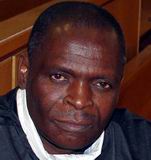
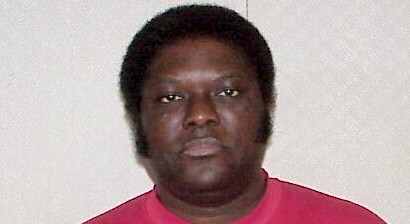
David Simelane
Serial killer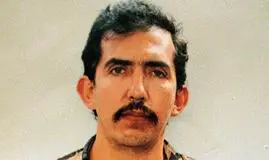 Luis Alfredo Garavito
Serial killer · Colombia/Ecuador · 1992
Luis Alfredo Garavito Cubillos, also known as "La Bestia" ("The Beast") or "Tri…
192 victims
Luis Alfredo Garavito
Serial killer · Colombia/Ecuador · 1992
Luis Alfredo Garavito Cubillos, also known as "La Bestia" ("The Beast") or "Tri…
192 victims
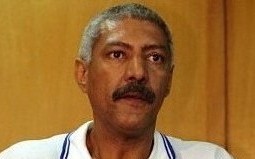 Edson Isidoro Guimaraes
Serial killer · Brazil · 1999
Edson Isidoro Guimarães was a Brazilian nursing assistant and nurse’s aide at S…
131 victims
Edson Isidoro Guimaraes
Serial killer · Brazil · 1999
Edson Isidoro Guimarães was a Brazilian nursing assistant and nurse’s aide at S…
131 victims
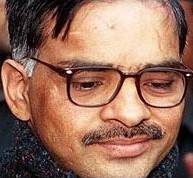 Javed Iqbal
Serial killer · Pakistan · 1998
Javed Iqbal (born 1956 in Lahore, Punjab, Pakistan; died October 8, 2001, in La…
100 victims
Javed Iqbal
Serial killer · Pakistan · 1998
Javed Iqbal (born 1956 in Lahore, Punjab, Pakistan; died October 8, 2001, in La…
100 victims
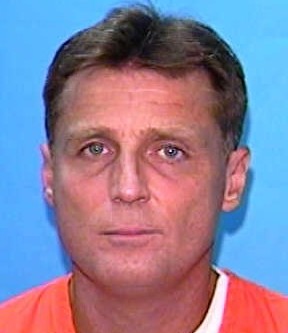 Glen Edward Rogers
Serial killer · USA · 1993
Glen Edward Rogers was a spree killer whose cross-country rampage in 1994-95 le…
70 victims
Glen Edward Rogers
Serial killer · USA · 1993
Glen Edward Rogers was a spree killer whose cross-country rampage in 1994-95 le…
70 victims
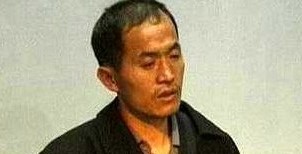 Yang Xinhai
Serial killer · China · 2000
Yang Xinhai (simplified Chinese: 杨新海; pinyin: Yáng Xīnhǎi; 17 July 1968–14 Febr…
67 victims
Yang Xinhai
Serial killer · China · 2000
Yang Xinhai (simplified Chinese: 杨新海; pinyin: Yáng Xīnhǎi; 17 July 1968–14 Febr…
67 victims
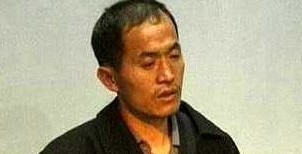 Yang Xinhai
Serial killer · China · 2000
Yang Xinhai (simplified Chinese: 杨新海; pinyin: Yáng Xīnhǎi; 17 July 1968–14 Febr…
67 victims
Yang Xinhai
Serial killer · China · 2000
Yang Xinhai (simplified Chinese: 杨新海; pinyin: Yáng Xīnhǎi; 17 July 1968–14 Febr…
67 victims
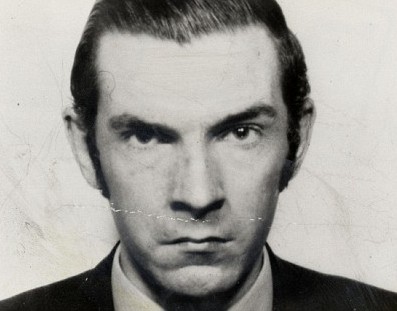 Graham Young
Homicide - Murderer · United Kingdom · 1962
Graham Young was convicted as a “Teacup Poisoner” for poisoning multiple people…
3 victims
Graham Young
Homicide - Murderer · United Kingdom · 1962
Graham Young was convicted as a “Teacup Poisoner” for poisoning multiple people…
3 victims
 John Charles Eichinger
Murderer · USA · 1999
John Charles Eichinger was convicted of murdering Jennifer Still, Heather Greav…
4 victims
John Charles Eichinger
Murderer · USA · 1999
John Charles Eichinger was convicted of murdering Jennifer Still, Heather Greav…
4 victims
 Linda Henning
Murderer · USA · 1999
Linda Henning was convicted of felony murder and kidnapping in connection with…
1 victim
Linda Henning
Murderer · USA · 1999
Linda Henning was convicted of felony murder and kidnapping in connection with…
1 victim
 Michelle Byrom
Murderer · USA · 1999
Name: Michelle Byrom · Offender data (as stated): White; age 43 at crime (DOB 1…
1 victim
Michelle Byrom
Murderer · USA · 1999
Name: Michelle Byrom · Offender data (as stated): White; age 43 at crime (DOB 1…
1 victim
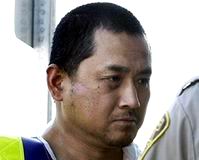 Vince Weiguang Li
Murderer · Canada · 2008
Vince Weiguang Li (simplified Chinese: 李伟光 ; traditional Chinese: 李偉光 ; pinyin:…
1 victim
Vince Weiguang Li
Murderer · Canada · 2008
Vince Weiguang Li (simplified Chinese: 李伟光 ; traditional Chinese: 李偉光 ; pinyin:…
1 victim
 John Albert Hinchey
Murderer · USA · 1985
Defendant: John Albert Hinchey · Victim: Tammy (17-year-old daughter of Hinchey…
1 victim
John Albert Hinchey
Murderer · USA · 1985
Defendant: John Albert Hinchey · Victim: Tammy (17-year-old daughter of Hinchey…
1 victim
- Gender
- male
- Country
- Swaziland
- Location
- Malkerns, Manzini, Swaziland
- Date of birth
- 1956
- Age at first offence
- 44
- Characteristics
- serial rapist, rape, drug addict, history of mental illness
- Victim profile
- Women and children
- Method of murder
- St abbing with knife
- Date(s) of murder
- 2000 - 2001
- Years active
- 2000–2001
- Date of arrest
- April 25, 2001
- Status
-
Sentenced to death
Sentenced to death on April 1, 2011
Parties
David Simelane — accused; serial killer convicted of murder.
Judge Jacobus Annandale — presiding judge at the High Court sentencing and during the guilty verdict.
Director of Public Prosecutions Mumcy Dlamini — appeared for the Crown; argued there were no extenuating factors and presented evidence of prior convictions.
Mduduzi “Tsotsi” Mabila — defence counsel representing Simelane at the trial stage described; said he would appeal the verdict and the admissibility of the confession.
Lucky Howe — initially represented Simelane as pro deo counsel; later was fired as pro deo counsel after accusations of delaying the case; Simelane later engaged him privately before being forced to drop him because of alleged delays.
Magistrate Charles Masango — late magistrate before whom a confession statement had been made.
Magistrate Nkosinathi Nkonyane — former magistrate (now an Industrial Court Judge) referred to as having involved in confession statements.
Superintendent Jomo Mavuso — late superintendent mentioned by Simelane in relation to threats during the confession and described in mitigation context.
Khethokwakhe Ndlangamandla — late police senior superintendent; officer-in-charge of the investigation team; testified and was killed in a car accident during the course of the trial.
Sergeant Solomon Mavuso — member of the investigation team; referenced as a key witness (PW 79).
Detective Solomon Mavuso (PW 79) — key witness whose evidence was described as voluminous and detailed.
Nelsiwe Mamba — witness mentioned in connection with Simelane being seen with one Sibongile Dlamini.
Nelsiwe Mamba — mentioned as having seen Simelane with Sibongile Dlamini, his in-law.
Mhlanga — referenced by the judge in the sentencing ruling sentence line: “Mr. Simelane or Mhlanga you shall hang by your neck till you die.”
Lusiba Paul “Touch” Simelane — Swaziland’s long-serving hangman who said he would be ready to hang David Simelane if called to do so; shared the same surname.
Detective Solomon Mavuso (PW 79) — referred to as detailing the overall process: missing-person reports, discovery of human remains, evidence collection, confession, pointing out, evidence gathering, identification processes, and indictment.
Timeline
- late 1990s — the killings were thought to have begun.
- 2001 — police arrested Simelane after a tip-off; he led police to shallow graves with bodies found altogether.
- 2004 — Simelane’s trial began.
- 9 September 2004 — the Mbabane High Court ordered Simelane to be sent for psychiatric observation; 35 murder charges were read and he pleaded not guilty to all charges.
- 14 April 2001 — Simelane was said to have left with one sister (Busisiwe Dlamini’s testimony context) at St. Philip’s public transport, and the family expected the three sisters to return home during Easter holidays; they did not.
- May 31, 2006 — Busisiwe Dlamini testified that Simelane confessed to the family that he murdered three deceased women; Simelane pleaded not guilty.
- January 2011 — “Tsotsi” Mabila was appointed as pro deo after Lucky Howe’s prior involvement; the court’s reasons included alleged delaying by continuous absence while waiting for an appeal decision.
- March 24, 2011 — Simelane was found guilty of murder on 28 counts after being acquitted on six; he faced 34 murder charges at the start.
- April 1, 2011 — Simelane was sentenced to death by hanging.
- April 2, 2011 — sentencing reported: the judge handed down the death sentence nine days after conviction; Simelane’s lawyer said he would appeal both the verdict and sentence.
- April 30, 2001 — reporting described Simelane as charged with 34 murders after the discovery of bodies in shallow graves and that he was remanded in custody without pleading.
- April 26, 2001 — reporting described police arresting a 40-year-old man in connection with the killing of at least 28 people, with identity not disclosed in that report.
- 8 May 2001 — Simelane’s confession was recorded by Magistrate Charles Masango after Simelane was arrested in Nhlangano.
- October 1999 — murders were described as occurring beginning in October 1999 in relation to the range given in one report.
- 1993 to 1997 — prior convictions were described as including rape and robbery cases between 1993 and 1997.
- 1998 — reports said Simelane served 15 years of a 20-year-rape sentence and was released in 1998 from Matsapha Maximum Prison; killings were linked to his release.
- 15 years — Simelane served 15 years of a 20-year-rape sentence in the narrative describing his incarceration.
Background
David Simelane was described as a Swaziland serial killer and a convicted rapist in reporting about the investigation and trial.
The killings were thought to have begun in the late 1990s and to have lasted until 2001, when police arrested Simelane after a tip-off. Simelane led the police to shallow graves where 45 bodies were found altogether, including several pregnant women.
Simelane was charged with 34 murders and convicted of 28. During the verdict reporting, he was also described as being acquitted on six after spending 10 years in custody, with his unduly protracted trial brought to finality.
Police suspected Simelane had used the forest where bodies were found to hide in while wanted on other charges. Reporting also stated that after his release he went on the run using the alias David Ali Mhlanga.
The offence
Simelane was convicted of killing 28 women.
The sentencing remarks described the victims as defenceless women and referred to innocent infants among the atrocities.
In the verdict discussion of individual counts, the court described strangling by hand and killing by strangling and stabbing for particular victims as set out below.
Victims and counts (as set out in the verdict discussion)
- Count 1 — deceased Thandi Dlamini and her child (the judge described a confession involving a sister-in-law from St. Philip’s and a child). The Crown proved guilt beyond reasonable doubt in respect of counts one and two.
- Count 2 — deceased Kwanda Khanya.
- Count 3 — withdrawn by the prosecution prior to plea due to duplication of identities of the deceased person referred to in count 1.
- Count 4 — deceased Vosho Dlamini, described as his girlfriend from St. Philipp’s; the court referred to strangling until death in Malkerns.
- Count 5 — deceased Zanele Thwala, described as his live-in lover and advanced pregnancy; strangling to death with his hands.
- Count 6 — deceased Twana Dlamini, described as Vosho and Thandi Dlamini’s sister; the confession described a job promise and strangling to death.
- Count 7 — deceased Dumsile Tsabedze, described as a live-in lover; the confession described strangling to death with his hands.
- Counts 8 and 9 — deceased Fikile Motsa and her one-year-old baby Lindokuhle Motsa; the confession described killing the mother and child by strangling.
- Count 10 — deceased Phakamile Vilakati; the confession described taking her after promising a job and strangle to death in Capha.
- Count 11 and 12 — deceased Rose Nunn and her 13-month-old baby Nothando Khumalo; the confession described finding her with a child and strangling her with the child.
- Count 13 — deceased Sanele Tsabedze; the confession described going with her to Bhunya forest where he strangle and stabbed her to death.
In reporting about the investigation and discovery of the bodies:
- Victims were described as having been found with their breasts and vaginas cut out in some cases, with some victims beheaded, others strangled, and some raped.
- Children were described as being suffocated, including some found with plastic bags over their heads.
- Police said most bodies were naked and some women were found lying face-down with hands tied behind their backs; about half the bodies had been decapitated.
Investigation
Simelane’s arrest followed police being alerted by a tip-off.
Police arrested Simelane in Nhlangano after which he led them to sites; one reporting account stated that he pointed out a number of sites where police found human bones and skeletons and indicated he would take police to other sites.
The High Court judge described a “well established” pattern of evidence present in all counts, including the enticement of female victims to take employment somewhere, followed by discovery of remains and evidence gathering.
A key witness was described as Detective Solomon Mavuso (PW 79), whose evidence detailed:
- missing-person reports escalating,
- discovery of human remains in isolated areas,
- collection of evidence,
- description of the suspect person,
- events after arrest,
- confession,
- pointing out,
- evidence gathering,
- identification processes,
- and ultimately the indictment.
Arrest
Simelane was arrested in April 2001 in Nhlangano after a tip-off. Police remanded him in custody in April 2001 after he was charged with 34 murders, described as remanded for a new hearing date to be announced.
Reporting also described an earlier police arrest of a 40-year-old man in Nhlangano in connection with the killing of at least 28 people after a man was alerted when his wife went missing shortly after she was seen with the suspect; the report stated the man’s identity had not been disclosed and described that he was a former convict who had served time for housebreaking and rape.
Trial
Charges and plea
Simelane faced murder charges including 34 murder charges at the time of conviction reporting.
At the start of the trial, he was read 35 charges of murder in the context of the order for psychiatric observation and he pleaded not guilty to all charges.
Simelane was found guilty of 28 counts and was acquitted on six.
Simelane was described as having been represented initially by attorney Lucky Howe, who was fired as pro deo counsel after accusations of delaying the case. Simelane later engaged Howe as a private attorney, but was eventually forced to drop him because of alleged delays. Top criminal attorney Mduduzi Mabila was described as coming in and seeing the case take a new twist when Simelane said he killed no one despite a confession made before Magistrate Charles Masango.
Simelane later disputed aspects of the confession: he stated in the witness box that the confession was not voluntarily recorded and described police threats.
Evidence and verdict reasoning
The judge said the identification of personal property recovered either near the human remains or from a place where Simelane took the police supported the conclusion that the deceased persons were missing relatives who used to own the personal belongings.
The judge also stated it was clear that Simelane killed the women out of revenge after he was allegedly incarcerated for a rape he never committed.
The judge said the court accepted that he murdered the victims out of revenge, and that this dispelled “diverse theories and speculation” in the media about more sinister motives or assistance by highly placed persons or harvesting body parts for equally sinister, undisclosed but highly placed individuals.
Quotes from the trial/judgment context
Justice Annandale directed Simelane:
“Your matter has been before this court for an enormously long time and determination of the appropriate sentence is the most difficult part,” he said.
Judge Annandale said:
“I carefully use the word premeditated simply because you have mentioned it that you committed the crimes after you were convicted for an offence you had not committed,” the judge directed to Simelane.
Judge Annandale said:
“What is not acceptable is for you to revenge on women and your hatred was not focused on the women only but on innocent infants,” he stated.
Judge Annandale ruled:
“Mr. Simelane or Mhlanga you shall hang by your neck till you die,” he ruled.
The judge said, in a passage reported about motive and confession:
“Although the establishment of motive for the crime of murder does not carry remotely the same prominence in our law as contrast with American jurisprudence, the accused has volunteered his motive for the multiple murders as part of his confession.”
The judge stated:
“The court accepts that he murdered the victims out of revenge.”
The judge stated:
“This dispels the often mooted diverse theories and speculation in the media that he had some more sinister motives, or that he was assisted by highly placed persons, or that he harvested body parts for equally sinister, undisclosed but highly placed individuals,” said the judge.
Simelane, through his version of the confession context, told the court that the confession was not voluntary. He stated that Superintendent Jomo Mavuso warned him that if he complied he would die in police custody; he stated that he was suffocated and that Khethokwakhe Ndlangamandla was shocked he was alive.
Simelane also denied remorse and the judge described it as probable that he premeditated the offences.
Judge Annandale said:
“You have not shown an iota of remorse and the court cannot find you remorseful,” he said.
Judge Annandale said:
“There is not even a single half-hearted attempt to show remorse,” he stated.
Judge Annandale said:
“The only thing that appears is revenge,” he stated.
Sentencing
On April 1, 2011, Simelane was sentenced to death by hanging.
Judge Jacobus Annandale sentenced him to death and stated the sentencing decision was the most difficult aspect of any case.
Judge Annandale said:
“One the one hand, I considered that for the 28 people you could be sentenced to 700 years in jail and the other could be death sentence as the Crown has suggested,” he said.
He also said:
Judge Annandale stated the court was enjoined by the Criminal Procedure Act of 1938 where the death sentence can be passed in certain crimes of murder and described considering “the 28 people which could equal to 700 years” against death penalty.
The judge said Simelane could not be released from Correctional Services and there was no easy way.
Submissions on extenuating factors and confession
Director of Public Prosecutions Mumcy Dlamini stated there were no extenuating factors and that Simelane was a previous convict who embarked on a killing spree soon after release because he was vengeful.
Dlamini argued:
“I do not see any extenuating circumstances in this matter. The reason stated in the confession does not extenuate at all,” Dlamini argued.
Dlamini argued about the issue of children:
“If he killed women because they fabricated a story for him, what about the children?” she said.
Mabila submitted that Simelane committed the offences out of revenge because of injustices done to him and argued the court’s finding in the confession should be applied subjectively:
“The court should apply the subjective test in dealing with the confession. Its truthfulness should not be selective,” he pleaded.
Judge Annandale said:
“I have elevated the flimsiest of excuses or remorse to enable the court find extenuating circumstances, however, not with the present matter,” he stated.
He said:
“Even if it was so, how would it apply to the infants that were killed?” the judge said.
He stated the court could not find any extenuating circumstances to prevent a death penalty.
Prior convictions presented at sentencing
The court heard evidence that Simelane had 18 previous convictions and the judge asked Simelane, who responded affirmatively to being convicted before.
Simelane was said to have been convicted of rape and robbery cases between 1993 to 1997.
Mabila argued the previous convictions were irrelevant to the present one because they were committed more than 10 years ago and were not similar to murder.
Dlamini argued that the offences were relevant because soon after Simelane was released he started committing crimes, described as attack after attack on other people.
Mabila questioned how robbery convictions could be competent verdict for murder and decried that there was no evidence when Simelane was released from custody.
Appeals
Mduduzi Tsotsi Mabila said he would appeal both the verdict and the sentence.
Mabila stated he would appeal the admissibility of the confession Simelane made before Magistrate Charles Masango.
Mabila complained that at the time the confession was made, Simelane should not have been in police custody but correctional services. He also said the confession was not voluntarily recorded because Simelane was threatened with death.
Simelane also stated he did not record the confession voluntarily and described:
- being warned that compliance would result in death in police custody,
- suffocation,
- and that Khethokwakhe Ndlangamandla was shocked that he was alive.
Mabila argued the confession must be taken wholly because it had been admitted as evidence:
“Irrespective of the fact that we are going to challenge the confession, it must be taken in all its four corners,” he argued.
Other details
Trial length and witnesses
The trial was described as taking a long time beginning in 2004.
About 83 witnesses testified against Simelane.
The judge described Khethokwakhe Ndlangamandla as an outstanding witness, describing his capacity for memory and his demeanour under cross-examination. The judge also said Ndlangamandla had undergone kidney dialysis in hospital to avoid renal failure and still attended court as often as he could.
The judge described cross-examination and note-reading verification issues involving Lucky Howe accusing Ndlangamandla and Sergeant Solomon Mavuso of reading from their notes.
The judge remarked on the cross-examination duration and his conclusion that the evidence could be relied upon as full and accurate.
Judicial remarks about remorse and public reaction
Judge Annandale said Simelane never showed any remorse nor apologised to the friends and families.
Judge Annandale warned the public gallery against celebrating while in court, stating:
“This is bad. You should be shocked,” the judge stated.
He said a person was going to be killed and did not know why people were celebrating.
The public gallery celebrated after hearing the sentencing news, and some felt justice had been done.
Defence position about confession and motive
Simelane said in English and addressed the judge at least once in English, and one report stated that he told the court “I have no comment” when asked about a witness seeing him with one Sibongile Dlamini.
The judge stated Simelane premeditated the commission of offences and referred to Simelane being upset with a prior rape conviction he said he never committed.
Procedural events and postponements
In one reporting period, key witness Khethokwakhe Ndlangamandla was indisposed and the trial was postponed; DPP Mumcy Dlamini and defence counsel Lucky Howe had not arrived at the beginning of the day’s schedule and the judge waited for their arrival.
In another set of reporting about protests, women sang and danced outside the court and were instructed that singing inside court was not allowed, with an officer telling them they were disturbing court proceedings.
Prison and maximum custody
Mabila argued that Simelane had been kept at the maximum prison since arrest and was not allowed to see other people, and this was said to explain why he could not say apologies.
Psychiatric observation
The Mbabane High Court ordered psychiatric observation for Simelane to determine whether he was fit to stand trial, after 35 charges of murder were read and he pleaded not guilty to all charges.
Hangman comments
Lusiba Paul “Touch” Simelane said he could not wait for the assignment and stated that previously killers were paroled after doing a very short time in prison and claiming to be born again Christians.
He recalled his last assignment in the early 80s and said no one had been hanged in Swaziland even though capital punishment was enshrined in the constitution, describing the last person to be hanged as Phillipa Mdluli.
Names and relationships referenced in count explanations
The judge referenced a confession where Simelane stated a deceased person Thandi Dlamini was his sister-in-law and from St. Philip’s, and that he promised her work.
The judge referenced a confession involving Vosho Dlamini as his girlfriend from St. Philipp’s and a serious relationship over a year.
The judge referenced Zanele Thwala as a live-in lover with advanced pregnancy.
The judge referenced Twana Dlamini as the sister of Vosho and Thandi Dlamini.
The judge referenced Fikile Motsa and her one-year-old baby Lindokuhle Motsa, and the confession described finding them at Manzini bus rank after she said she was looking for work and promising work.
The judge referenced Rose Nunn and her 13-month-old baby Nothando Khumalo, and a confusion over similar names and spelling being of no consequence.
The judge referenced Sanele Tsabedze as staying at Matsapha but from Malindza and being found at Manzini Bus Rank looking for a job, with the confession describing strangling and stabbing to death at Bhunya forest.
Additional factual points mentioned in reporting
Reporting stated that the murders of female job seekers took place between 1999 and 2001.
One report described that police believed Simelane started killings shortly after being released in 1998 from Matsapha Maximum Prison, where he served 15 years of a 20-year-rape sentence.
Reporting also stated that one victim’s breasts and vaginas were cut out in some cases, and some victims were decapitated, strangled, raped, or had children suffocated.
Police investigations were described as including reward postings for information leading to apprehension of the killers.
A narrative described a fiancé tailing Simelane after hearing a woman he was to wed was last seen with him, and the fiancé alerted police to Simelane’s whereabouts leading to arrest while shopping at a supermarket in Nhlangano.
Senators were quoted about the verdict and delays, including statements attributed to:
- Moi Moi Maselela,
- Victor Malambe,
- Nozibele Bujela,
- Winnie Nxumalo,
- Ndileka,
- Themba Msibi,
- Edgar Hillary, with the quoted lines provided in the reporting.
A Swazi Times report described Simelane lashed out and sternly warned over 60 women who taunted him in court to shut up, including the quote:
“You women up there, stop talking about things you don’t know. Stop castigating me. You are clueless about what you are talking about. The court knows the truth. Stop saying things that will provoke me,” he said in vernacular (Yeyi nine bomake. Aseniyekele lokungimosha. Nite liciniso lekutsi loku lenitsi ngakwenta vele ngakwenta. Yinkantolo kuphela leneliciniso ngalendzaba. Yekelani ke lokungimosha).
That report also described women mobilised by Sinethemba Dlamini and involved in 16 Days of Activism against Gender Abuse, along with coordinated assembly and T-shirts referencing “Justice delayed is justice denied.”
Spotted an error, or have more information about this case?