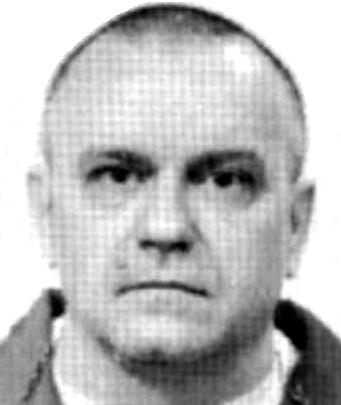
James Lowery
Murderer Ervil LeBaron
Murderer · USA · 1972
Ervil Morrell LeBaron (1925 to August 16, 1981) was the leader of a polygamous…
35 victims
Ervil LeBaron
Murderer · USA · 1972
Ervil Morrell LeBaron (1925 to August 16, 1981) was the leader of a polygamous…
35 victims
 Brian Kevin Rosenfeld
Murderer · USA · 1985
Brian Kevin Rosenfeld Brian Kevin Rosenfeld was sentenced to three concurrent l…
23 victims
Brian Kevin Rosenfeld
Murderer · USA · 1985
Brian Kevin Rosenfeld Brian Kevin Rosenfeld was sentenced to three concurrent l…
23 victims
 Marvin Gray
Murderer · USA · 1975
Marvin Gray was convicted killer who claimed responsibility for 23 slayings and…
23 victims
Marvin Gray
Murderer · USA · 1975
Marvin Gray was convicted killer who claimed responsibility for 23 slayings and…
23 victims
 Yahweh ben Yahweh
Murderer · USA · 1980
Yahweh ben Yahweh was born and legally named Hulon Mitchell Jr. (October 27, 19…
23 victims
Yahweh ben Yahweh
Murderer · USA · 1980
Yahweh ben Yahweh was born and legally named Hulon Mitchell Jr. (October 27, 19…
23 victims
 Debra Brown
Serial killer · USA · 1984
Debra Denise Brown was an African-American serial killer and the partner-in-cri…
8 victims
Debra Brown
Serial killer · USA · 1984
Debra Denise Brown was an African-American serial killer and the partner-in-cri…
8 victims
 Ali Hassan Abu Kamal
Murderer · USA · 1997
Ali Hassan Abu Kamal opened fire on the observation deck of the Empire State Bu…
1 victim
Ali Hassan Abu Kamal
Murderer · USA · 1997
Ali Hassan Abu Kamal opened fire on the observation deck of the Empire State Bu…
1 victim
 Robert Andrew Shafer
Murderer · USA · 1990
Robert Andrew Shafer was sentenced to death on January 6, 1993. His conviction…
2 victims
Robert Andrew Shafer
Murderer · USA · 1990
Robert Andrew Shafer was sentenced to death on January 6, 1993. His conviction…
2 victims
 Marion Albert Pruett
Serial killer · USA · 1981
Marion Albert Pruett was born circa 1950 and was executed in Arkansas on April…
5 victims
Marion Albert Pruett
Serial killer · USA · 1981
Marion Albert Pruett was born circa 1950 and was executed in Arkansas on April…
5 victims
 Henry Colin Campbell
Murderer · USA · 1928
Henry Colin Campbell, known as "The Torch Murderer," was executed by the State…
2 victims
Henry Colin Campbell
Murderer · USA · 1928
Henry Colin Campbell, known as "The Torch Murderer," was executed by the State…
2 victims
 Shane Ragland
Murderer · USA · 1994
Shane Ragland was convicted of murder for the sniper-style shooting death of Un…
1 victim
Shane Ragland
Murderer · USA · 1994
Shane Ragland was convicted of murder for the sniper-style shooting death of Un…
1 victim
- Gender
- male
- Country
- USA
- Location
- Tippecanoe County, Indiana, USA
- Date of birth
- March 16, 1947
- Age at first offence
- 32
- Characteristics
- armed robbery
- Victim profile
- Mark, 80, and Gertrude Thompson, 80 ( his former employers )
- Method of murder
- Shooting ( .32 handgun)
- Date(s) of murder
- September 30, 1979
- Years active
- 1979
- Date of arrest
- October 2, 1979
- Status
-
Executed
Executed by lethal injection in Indiana on June 27, 2001
Case information
- Defendant: James (Jim) Lowery
- Age: 54
- Race: white
- Status: Executed by lethal injection in Indiana on June 27, 2001
The offence
James Lowery committed the murders of Mark Thompson and Gertrude Thompson, an elderly couple, and was convicted of their murders and of attempted murder of Janet Brown.
Mark and Gertrude Thompson were killed by gunshot in their country home in West Point, Tippecanoe County, Indiana on September 30, 1979. Both victims were past 80 years of age and were in declining health and needed assistance in caring for themselves and their property.
Before the killings, the Thompsons had employed Lowery and his wife as caretakers. The Thompsons ordered the Lowerys to leave and off the property immediately after they were dissatisfied with their service. Mark Thompson gave Lowery a check for one-hundred ($100.00) dollars in exchange for leaving immediately.
Lowery and his accomplice Jim Bennett discussed committing a crime for pecuniary gain. Lowery told Bennett he knew where he could get some money, and about three weeks before September 30, Bennett gave Lowery a .32 caliber nickel or chrome plated pistol and some ammunition. The gun was supposedly for Barbara Lowery’s protection while Lowery was not home.
On September 30, 1979, Lowery and Bennett intended to rob and murder the couple. Lowery planned to force Mark Thompson to write a check for nine-thousand ($9,000.00) dollars, then kill and bury both Thompsons. He also planned to take the Thompsons’ gun collection. Lowery was armed with the pistol and Bennett with a sawed-off shotgun.
Lowery and Bennett approached the Thompson residence around dark. Janet Brown, the new caretaker, was in the trailer where she lived adjacent to the Thompson’s garage, reading a book when she heard the Thompson’s dog bark. A man with a gun kicked the door open and entered. Brown identified the man as the Thompson’s former caretaker. Brown testified she recognized him as Lowery because the two had met at the post office a week earlier, struck up a conversation, and she worked for the Thompsons.
Lowery forced Brown at gunpoint to take him into the Thompson home. Bennett joined them as they crossed the lawn to the house. Mark Thompson was in the kitchen. Thompson said: "You don't want to do this now, Jim." Lowery responded by shooting Thompson in the stomach (a non-fatal shot into his abdomen).
Lowery then forced Brown through the kitchen and down the hall into the den where Gertrude Thompson was watching television and ordered Gertrude to get up and move into the kitchen. As Gertrude walked down the hall, Lowery struck her in the head with the gun. Blood spurted and she began to stagger. Lowery then shot Gertrude in the head at close range; Gertrude died before help could arrive.
Lowery also shot Janet Brown. Brown raised her hand to shield herself; the bullet struck her hand first, reducing its velocity, and it only barely penetrated her skull. Brown survived by feigning death. As Brown lay on the floor, the burglar alarm began ringing; Mark Thompson had apparently activated it by setting off a siren he had attached to his barn. Lowery and Bennett became excited when the siren sounded. Lowery went back to Mark Thompson and fired two more shots.
Lowery and Bennett fled. They returned to Lowery’s place and told Barbara Lowery about the shootings. Lowery’s wife said they were visibly upset and shaking, with Bennett explaining that it “went bad” and, in Lowery’s presence, Bennett said “he” (meaning Lowery) shot them in the head.
Lowery was arrested two days later, and Bennett the day after that. After his arrest, Lowery made several incriminating statements to numerous police officers. Later, in the jail cell, he admitted the crimes to his cellmate and described the manner in which they were executed.
In a later account, after the shootings, Brown called the police. When they arrived, Gertrude Thompson was dead and Mark Thompson was dying from a gunshot wound to the head. Before his death, Mark Thompson was able only to say that four “monkeys” assaulted him.
Investigation / arrest and statements
After Lowery was apprehended by police, he made several voluntary incriminating statements to numerous police officers. In the jail cell, he also admitted the perpetration of the crimes to his cellmate and detailed the manner in which they were executed.
Before trial, Lowery challenged the admissibility of the incriminating statements and the court excluded only some of them.
People involved
- James (Jim) Lowery — defendant
- Mark Thompson — victim
- Gertrude Thompson — victim
- Janet Brown — housekeeper and attempted murder victim; caretaker for the Thompsons
- Jim Bennett — accomplice
- Barbara Lowery — Lowery’s wife; caretaker who testified about admissions and events
- Monica Foster — one of Lowery’s attorneys
- Brent Westerfeld — one of Lowery’s attorneys
- Rev. Paul LeBrun — administered last rites
- Pam Pattison — spokeswoman for the Indiana Department of Correction
- Gov. Frank O’Bannon — governor
- Heather Rice — Lowery’s stepdaughter; testified before the Parole Board about intimidation as a child
- Charlie Kafoure — Indiana Coalition To Abolish Capital Punishment
- John Krull — executive director of the Indiana Civil Liberties Union
- Valerie Parker — Parole Board vice chairman
- Nate Holdren — protested outside the prison
- Mia Cabibbo — protested outside the prison
- LeBrun, Foster, Westerfeld — asked to watch the execution; Lowery declined a special last meal in favor of standard inmate fare
Trial
Procedural history within Indiana Supreme Court decisions
Lowery was convicted before the Superior Court, Boone County, Paul H. Johnson, Jr., J., of murder and attempted murder and appealed. The Supreme Court reversed in Lowery v. State, 434 N.E.2d 868 (Ind. May 5, 1982). The stated holdings included that Lowery was entitled to have the jury sequestered after a timely pretrial motion in a capital case, and that denial of the motion on that basis was reversible error. The Supreme Court reversed.
After reversal, a second trial occurred. Lowery was convicted before the Circuit Court, Hendricks County, J.V. Boles, J., of two counts of murder and one count of attempted murder and again appealed. The Supreme Court affirmed in Lowery v. State, 478 N.E.2d 1214 (Ind. 1985) and held the imposition of the death penalty was not arbitrarily or capriciously arrived at and was reasonable and appropriate. The judgment was affirmed and remanded for setting a date for the execution.
Later, the conviction for attempted murder was reversed (attempted murder conviction reversed in Lowery v. State, 640 N.E.2d 1031 (Ind. 1994)). The State chose not to retry Lowery for attempted murder.
Direct appeal 1982
The Supreme Court described this as a direct appeal arising out of convictions on a three-count indictment, charging two counts of murder and one count of attempted murder. The jury returned guilty verdicts on each of the three counts. The court found Lowery guilty on each count and sentenced him to suffer the death penalty under Ind.Code s 35-50-2-9 (Burns 1979).
On direct appeal, the court addressed challenged rulings:
- denial of a defense motion to sequester the jury throughout the trial;
- admission of a taped pre-trial statement;
- admission of a photograph of Lowery taken on the day of his arrest some two days following the charged crimes;
- admission of an accomplice’s plea agreement with issues regarding a polygraph examination; and
- assistance of counsel and mandatory review of the death sentence in the absence of waiver.
The Supreme Court held that:
- upon a timely pretrial motion for jury sequestration during trial for murder and attempted murder, Lowery was entitled to have the jury sequestered;
- the denial of the motion was reversible error.
It also described a portion of the trial record, including details of the robbery and killings, Lowery’s armed status, Brown’s testimony about being forced to the home, Mark Thompson’s siren activation, the sequence of shootings, and Brown’s survival by feigning death.
The Supreme Court included a quote explaining the legal standard for jury sequestration and referenced precedent. It also included a statute quotation:
"When the jurors are permitted to separate, after being impaneled, and at each adjournment, they must be admonished by the court that it is their duty not to converse among themselves, nor suffer others to converse with them, on any subject connected with the trial, or to form or express any opinion thereon, until the cause is finally submitted to them."
In addition, it stated:
"At common law it was not permissible for a jury to separate even with the defendant's consent; but under our statute above quoted, it has been held and is the general practice that a jury be allowed to separate with the defendant's consent. McCorkle v. State (1859), 14 Ind. 39."
The Supreme Court concluded:
- "We therefore hold that it was reversible error for the court to deny the motion on the basis asserted and that consequently appellant must be granted a new trial."
It also noted disagreement:
- Givan, C.J., dissented and filed an opinion in which Pivarnik, J., concurred.
Second direct appeal 1985
In the second direct appeal, Lowery was found guilty by a jury in a bifurcated trial of two counts of murder and one count of attempted murder. The jury recommended the death penalty for each murder conviction. The trial court sentenced Lowery to death for the two murder convictions and to a term of fifty (50) years for the attempted murder conviction.
Fifteen issues were presented for determination in that direct appeal.
The Supreme Court recounted that on September 30, 1979, Mark and Gertrude Thompson were in their country home in West Point, Tippecanoe County, Indiana and were killed by gunshot. It also described the prior firing of Lowery as caregiver and that the Thompsons asked Lowery and his wife to leave. It described evidence that weeks before September 30, Lowery and Jim Bennett discussed committing a crime for pecuniary gain and that about three weeks prior to September 30 Bennett gave Lowery the pistol and ammunition.
The Supreme Court described Brown’s testimony about the evening of September 30:
- Brown described the man kicking the door open and entering;
- Brown described having met the man at the West Point Post Office and the conversation about motorcycles;
- Brown identified Lowery as the man with the gun and said he forced her to take him to the Thompson residence.
The Supreme Court also described the sequence of shootings:
- Lowery told Mark Thompson he was being held up and shot him in the stomach;
- Lowery forced Brown with a gun to her head through the house into the den where Gertrude was watching television;
- Lowery struck Gertrude in the head with the gun as she walked down the hall;
- Lowery shot Gertrude in the head and also shot Brown;
- Brown survived by deflecting the shot by raising her hand;
- the burglar alarm began ringing;
- Lowery went back to Mark Thompson and there were two more shots.
The Supreme Court also described witnesses:
- the accomplice and housekeeper testified against Lowery regarding the crime;
- Lowery’s wife testified about admissions Lowery made to her in front of the accomplice immediately after Lowery and Bennett returned to Lowery’s home in Crawfordsville.
The Supreme Court described the sentencing remarks by the trial judge:
"I can find no factor that mitigates in your favor in this case. You have nothing going for you except a brutal cold blooded pre-planned killing of old people." (Record at 207).
and:
"There are no, there is no justification and not even the wildest theorist can provide the justification for what you did under any circumstances of logic or reason." (Record at 205).
The Supreme Court affirmed:
"the imposition of death, recommended by the jury and imposed by the trial court, was not arbitrarily or capriciously arrived at and is reasonable and appropriate. We affirm the trial court in its judgment, including its imposition of the death penalty."
It included concurrences and dissents:
- DeBruler, J., concurred and dissented with separate opinion.
- Prentice, J., concurred in result with separate opinion.
Sentencing
Lowery was sentenced to death for the two murder convictions. He also received a term of fifty (50) years for the attempted murder conviction in the second trial.
In the 1985 appeal, the Supreme Court remanded for the purpose of setting a date for the death sentence to be carried out.
Appeals / post-conviction / federal review
Lowery’s federal habeas corpus petition was decided by the U.S. Court of Appeals for the Seventh Circuit in Lowery v. Anderson, 7th Cir. August 29, 2000 (225 F.3d 833).
The Seventh Circuit described the case:
- Lowery was under sentence of death for the 1979 murders of Mark and Gertrude Thompson.
- A direct appeal to the Supreme Court of Indiana won him a new trial, but after retrial he was again convicted and again sentenced to death.
- His appeals thereafter were fruitless.
- His habeas corpus attempt from the U.S. District Court failed.
The Seventh Circuit affirmed the denial of the writ:
- "We find that neither his conviction nor his sentence were the result of constitutional violations and affirm the District Court's decision to deny the writ."
The Seventh Circuit addressed issues including:
- admission of Jim Bennett’s prior testimony when Bennett refused to testify;
- whether the jury’s role in sentencing violated Caldwell v. Mississippi;
- ineffective assistance of counsel.
It described Caldwell-related jury instructions, including:
"it's not the function of the jury to sentence a defendant. It is solely the responsibility of the Judge, me, and the Judge must make the final decision. The jury's decision is merely a recommendation."
It also described that under Indiana law:
- "the jury recommends to the judge whether the death penalty should be imposed" and the final decision was his under Ind. Code sec. 35-50-2-9(e).
The Seventh Circuit concluded:
- "we find that there was no violation of Lowery's rights" as to Caldwell.
- It affirmed the finding of no constitutional violation based on the ineffective assistance of counsel claim and based on harmlessness of any assumed error regarding Bennett’s prior testimony.
In the federal decision, Lowery’s attempted murder conviction was already described as reversed later, and the State did not retry the attempted murder.
The Seventh Circuit’s decision ended with:
- "AFFIRMED."
Clemency and parole
A parole hearing occurred and the Indiana Parole Board heard testimony, including from a psychologist who diagnosed Lowery as still suffering from post-traumatic stress disorder as a result of his treatment in mental institutions and testified he should never have been placed in those facilities.
The Parole Board also heard testimony that Lowery had been a model prisoner with no single disciplinary write-up in his 22 years on death row, entrusted with a job as a prison porter, helping save another prisoner’s life by calling attention to his suicide bid, and serving as a mediator between prisoners and authorities during tensions on Indiana’s death row.
On June 19, 2001, the Indiana Parole Board voted against clemency.
The Parole Board’s vice chairman Valerie Parker stated:
"It was almost as if he seemed to enjoy the power he held over his victims."
The parole board recommendation proceeded to Gov. Frank O’Bannon, who was described as the only person who could commute Lowery’s death sentence to life in prison without possibility of parole under Indiana law when applicable.
Lowery’s stepdaughter Heather Rice told the Parole Board:
"The goal: intimidation."
and:
"Let this man finally be brought to justice."
Charlie Kafoure of the Indiana Coalition To Abolish Capital Punishment described Lowery’s role as a peacemaker on Death Row as “heroic.”
Lowery had told Parole Board members earlier that month that he had been raped repeatedly by employees at a state-run mental institution.
Execution
Lowery was scheduled to be executed in Indiana on June 27, 2001 after more than two decades on death row.
The Indiana Department of Correction spokeswoman Pam Pattison stated that Lowery spent much of Tuesday night sleeping. Earlier, he met with his attorneys and the Rev. Paul LeBrun, who would administer the last rites.
The article reported that the U.S. Supreme Court and the 7th U.S. Circuit Court of Appeals declined to intervene on Lowery’s behalf, and Gov. Frank O’Bannon refused to commute his death sentence to life in prison.
Lowery was put to death at 12:29 a.m. for the 1979 slayings of an elderly Tippecanoe County couple. A series of three drugs flowed into Lowery’s veins shortly after midnight.
Afterward, attorneys Monica Foster and Brent Westerfeld spoke to reporters outside the prison. Foster read a lengthy handwritten statement from Lowery that ended with the words:
"I am so very sorry."
Foster said Lowery made no statement inside the prison before his execution.
Lowery asked LeBrun, Foster, and Westerfeld to watch the execution and he declined a special last meal in favor of standard inmate fare.
Foster also said:
"He's clearly more concerned about the impact of his death on other people."
and:
"I think he would tell you that he views his death as a private thing."
and:
"He really doesn't like the whole circus atmosphere."
A spokeswoman for the Indiana Department of Correction described the execution and Lowery’s meetings.
The execution was described as the third person executed in Indiana in 16 days.
Background / personal history mentioned in the case record
The background described Lowery’s childhood and history of mental illness and abuse. It described that Lowery was born in 1947 to a 14-year-old mother and an alcoholic father. It stated his childhood was marked by poverty and parental neglect.
It stated Lowery got into trouble as a young teenager after taking his father’s car for joyriding. It said that when he was 15 or 16, his parents took him to court and a judge committed him to a state mental facility even though no evidence had been presented that he was mentally ill.
The record described the teenager running away from the institution several times and telling his brothers and sisters that he had witnessed inmates being given electro-shock treatment and that he was afraid this would happen to him.
It stated he was transferred to the maximum security unit of another institution, the Norman Beatty Hospital (since closed), and there he was subjected to repeated gang rapes by staff, held in isolation, and witnessed further electro-shock treatment. It stated he was released at the age of 18 and took to drugs, alcohol, and property crime, being in and out of the prison system until the crime for which he was sentenced to die.
The record also described another former teenage inmate, Frank Davis, who was sentenced in 1996 to life imprisonment for two murders and that, as a 14-year-old, Davis was subjected to rape at the hands of other patients in the hospital.
It described a sentencing judge’s rejection of the prosecution’s bid for a death sentence in Davis’s case, including the statement:
"the Court finds of great significance the fact that the State created the monster it now seeks to destroy. The mitigation provided by the horrors perpetrated upon Defendant while at Norman Beatty Hospital and while the State was in loco parentis with the Defendant, are so strong as to overcome the substantial aggravating circumstances also found in this case."
The record stated that at a clemency hearing on 18 June, the Indiana Parole Board heard testimony from a psychologist who diagnosed Lowery as still suffering from post-traumatic stress disorder due to his treatment in mental institutions and testified that Lowery should never have been placed in those facilities.
It also stated that others cited his “exemplary” prison record.
Other details
- Lowery was described as “Jim Lowery” and “USA (Indiana): James (Jim) Lowery, white, age 54.”
- Amnesty International was mentioned in the record as part of a “Jim Lowery is scheduled to be executed…” description.
- The Parole Board unanimously recommended against clemency and Lowery asked that his attorneys and the Rev. Paul LeBrun watch the execution.
Spotted an error, or have more information about this case?