
Robert MacGregor
Serial killer ?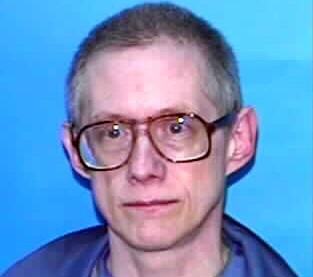 John Crutchley
Serial killer ? · USA · 1977
June 1986 — Crutchley plea-bargained to guilt on kidnap and rape charges in exc…
10 victims
John Crutchley
Serial killer ? · USA · 1977
June 1986 — Crutchley plea-bargained to guilt on kidnap and rape charges in exc…
10 victims
 Thomas Huskey
Serial killer ? · USA · 1991
Thomas Huskey, also known as “Zoo Man,” was a former zoo elephant trainer. Loca…
4 victims
Thomas Huskey
Serial killer ? · USA · 1991
Thomas Huskey, also known as “Zoo Man,” was a former zoo elephant trainer. Loca…
4 victims
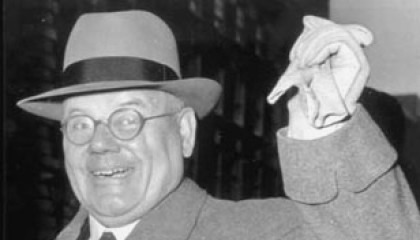 John Bodkin Adams
Serial killer ? · United Kingdom · 1935
John Bodkin Adams was a British general practitioner and euthanasia enthusiast,…
163 victims
John Bodkin Adams
Serial killer ? · United Kingdom · 1935
John Bodkin Adams was a British general practitioner and euthanasia enthusiast,…
163 victims
 Billy Gohl
Serial killer · USA · 1903
Billy Gohl (? - 1928) was an American serial killer who, while working as a uni…
40 victims
Billy Gohl
Serial killer · USA · 1903
Billy Gohl (? - 1928) was an American serial killer who, while working as a uni…
40 victims
 Helmuth Schmidt
Serial killer? · USA · 1918
Helmuth Schmidt used a false name to place advertisements, which lured young, l…
30 victims
Helmuth Schmidt
Serial killer? · USA · 1918
Helmuth Schmidt used a false name to place advertisements, which lured young, l…
30 victims
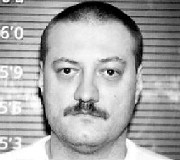 Thomas Schiro
Murderer · USA · 1981
Thomas Schiro was sentenced to death on October 2, 1981. Schiro was serving a 3…
1 victim
Thomas Schiro
Murderer · USA · 1981
Thomas Schiro was sentenced to death on October 2, 1981. Schiro was serving a 3…
1 victim
 Naomi Gaines
Murderer · USA · 2003
Naomi Gaines was a 24-year-old mother from St. Paul, Minnesota. On July 4, 2003…
1 victim
Naomi Gaines
Murderer · USA · 2003
Naomi Gaines was a 24-year-old mother from St. Paul, Minnesota. On July 4, 2003…
1 victim
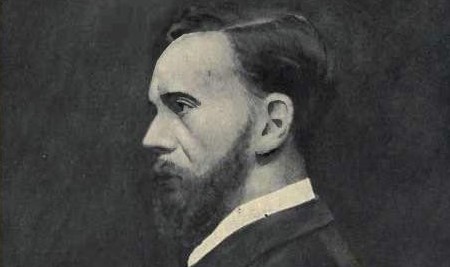 George Lamson
Murderer · United Kingdom · 1881
George Lamson was an English physician who, after the Crimean War, suffered fro…
1 victim
George Lamson
Murderer · United Kingdom · 1881
George Lamson was an English physician who, after the Crimean War, suffered fro…
1 victim
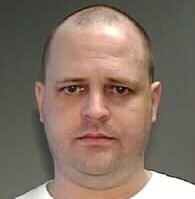 Troy Burkhart
Murderer · USA · 1997
Troy Alan Burkhart was convicted of three counts of murder and three counts of…
3 victims
Troy Burkhart
Murderer · USA · 1997
Troy Alan Burkhart was convicted of three counts of murder and three counts of…
3 victims
 Velma West
Murderer · USA · 1927
Velma West killed her husband, Thomas Edward West. She was a 21-year-old Clevel…
1 victim
Velma West
Murderer · USA · 1927
Velma West killed her husband, Thomas Edward West. She was a 21-year-old Clevel…
1 victim
- Gender
- male
- Country
- USA
- Location
- Ubly, Michigan, USA
- Date of birth
- 1879
- Age at first offence
- 30
- Characteristics
- poisoner, to collect insurance money
- Victim profile
- John Wesley Sparling, 53 (his lover's husband) and three sons, Peter, 25, Albert, 23, and Scyrel, 19
- Method of murder
- Poisoning (arsenic)
- Date(s) of murder
- 1909 - 1911
- Years active
- 1909–1911
- Date of arrest
- —
- Status
-
Life imprisonment
Full and unconditional pardon granted by the Governor on November 27, 1916; sentenced to life in prison on June 10, 1912.
Case record: Dr. Robert MacGregor (Robert MacGregor)
Background
Robert MacGregor was a doctor who established his practice in the Ubly area in 1905, purchasing the practice of Dr. Wesley A. Griffen. He was born and raised in London, Ontario. He married Ida in Nebraska before coming to Ubly. MacGregor had a reputation as a man of good character.
MacGregor advised Carrie Sparling to consider buying insurance for each of the boys. Carrie Sparling named herself as the sole beneficiary on all four policies.
MacGregor played the role of country doctor in the Ubly area, treating illnesses including ringworm and rickets. He traveled within all societal classes, attended to patients in different circumstances, and accepted bartered food such as chicken.
The Sparling family included John Wesley Sparling and Carrie Sparling, who reared five children: four boys and a girl. The sons were Peter (aged 25), Albert (aged 23), Ray (aged 21), and Scyrel (aged 19). After daughter May had married and moved away, the Sparling boys worked on the farm. The family had a makeshift gymnasium in the barn.
The offence
MacGregor was convicted of the murder of Scyrel Sparling by arsenical poisoning. His alleged motive in the killing was that his modest doctor fees could be paid from Scyrel’s life insurance proceeds.
The story also described the deaths of John Wesley Sparling, Peter Sparling, and Albert Sparling as part of the wider Sparling murders; the trial proceeded on Scyrel’s death as the charge, with circumstantial evidence regarding Albert allowed for consideration.
Timeline
- 1905 — MacGregor established his practice in the Ubly area by purchasing the practice of Dr. Wesley A. Griffen.
- January 1909 — Carrie Sparling developed a problematic eye affliction and traveled to Ubly to seek help from MacGregor.
- January 1894 — An infant son of John Wesley Sparling died in January 1894 and was buried in the Tyre Cemetery.
- 1908 — John Wesley Sparling’s father died.
- 1910 — Two of John Wesley Sparling’s brothers died in 1910.
- 1911 — Two of John Wesley Sparling’s brothers died in 1911.
- July 8, 1909 — John Wesley Sparling died a few days after seeking treatment in an Ontario hospital arranged by MacGregor.
- March 24, 1910 — A deed filed at the county courthouse described Carrie Sparling’s new 40-acre farm transaction; the sellers named were Robert E. and May Hurford.
- April 1911 — MacGregor decided to ride to Bad Axe and order one of the new horseless carriages.
- Mid-May 1911 — Albert complained of stomach pains, took to his bed, and died after being diagnosed with acute pancreatitis.
- August 3 — Scyrel Sparling and Lem Douglas, along with their girlfriends, spent the evening in Bad Axe at an ice cream parlor.
- August 4 — After helping a neighbor thrash, Scyrel retreated to his bed with complaints of nausea.
- August 10 — Dr. Conboy paid a surprise visit to the Sparling home at the request of the prosecutor.
- August 14 — Scyrel died; an autopsy was performed.
- January 12, 1912 — MacGregor was charged with the murder of Scyrel Sparling.
- April 2, 1912 — Jury selection began and the trial commenced for Huron County’s trial of MacGregor.
- May 1 to June 6, 1912 — Testimony was given.
- June 6, 1912 — Closing arguments were completed.
- June 10, 1912 — MacGregor was sentenced to life imprisonment.
- Thursday, after midnight — The jury sent word to the judge and reached a unanimous vote.
- November 10, 1911 — An auction was held at 12 noon on Friday, November 10, 1911.
- December 1912 — MacGregor’s attorney requested a new trial.
- Last week of February (following December 1912) — Judge Beach denied MacGregor a new trial.
- 1916 — Governor Ferris granted MacGregor a full pardon.
- November 27, 1916 — The Governor granted a full and unconditional pardon to Dr. MacGregor.
- 1928 — MacGregor died.
- 1933 — Carrie Sparling died.
- 1954 — Xenophen Boomhower died.
- 1955 — Ida MacGregor died in a San Diego rest home.
- 1917 — A deed dated March 21, 1917, showed Ray Sparling sold the 40-acre farm to Mr. William Elliot for $4000.
Investigation
Arsenic was found in Scyrel’s body. The arsenic finding was described as potentially attributable to medicines he had taken. MacGregor was alleged to have benefited from the insurance proceeds by directing suspicion and by having his accounts profited when Mrs. Sparling cashed insurance checks.
After Governor Ferris received an appeal on MacGregor’s behalf, the case was reinvestigated; the results were not made public, so what facts it established were not known.
University of Michigan pathologists provided findings to Prosecutor Xenophon Boomhower that described high levels of arsenic contaminating Scyrel’s major organs and concluded that Scyrel Sparling died from arsenical poisoning.
Arrest
MacGregor was tried in Huron County after being charged with the murder of Scyrel Sparling on January 12, 1912.
Trial
Charge and scope
On January 12, 1912, MacGregor was charged with the murder of Scyrel Sparling. In Huron County, officials ordered Albert Sparling’s body exhumed and his organs sent for analysis; in Sanilac County, shovels dug into the Sparling plot in the Tyre Cemetery; portions of organs of John Wesley and Peter Sparling were shipped for testing. During trial proceedings, Judge Watson Beach informed the court that MacGregor was being tried solely for the death of Scyrel Sparling, while circumstantial evidence regarding Albert could be taken into consideration. Testimony regarding the deaths of John Wesley and Peter Sparling was not admitted at that point.
Jury selection and trial participants
The trial was held on April 2, 1912, in Bad Axe with jury selection beginning. Jury selection took two full weeks before 12 men, who had not formed an opinion, were selected. The jurymen resided at the Steadman Hotel during the trial, and contact with members outside the jury was not permitted.
Prosecuter Xenophon Boomhower prepared the case with attorney E.A. Snow of Saginaw acting as special counsel. Attorney George M. Clark of the defense assisted until he could no longer function in mid-April due to typhoid fever; the trial was adjourned for a week, and defense attorney Joseph Walsh of Port Huron stepped up to fill Clark’s vacancy. Judge Watson Beach presided.
Dr. MacGregor pleaded “not guilty.”
Witnesses and evidence described during trial
Dr. Conboy testified that MacGregor placed the blame directly on Carrie Sparling. Dr. Holdship testified he performed Scyrel’s autopsy but it was under the guiding hand of Dr. MacGregor. Dr. Holdship also testified that Dr. MacGregor specifically told him not to cut open Scyrel’s stomach during the post-mortem, while Dr. MacGregor later told the prosecutor that he himself had slit open the stomach.
Annie Pieruski testified about many visits by MacGregor and alleged that when she assisted, MacGregor and Mrs. Sparling went behind a locked bedroom door to conduct their “30-minute business,” and that when Mrs. MacGregor accompanied her husband to the Sparling farm, the doctor had no need to go into the bedroom with Mrs. Sparling.
Henry Bacon testified for the defense that he saw MacGregor and Mrs. Sparling go into the bedroom together a week before John Wesley died, and that they remained in the bedroom for 20 minutes.
The University of Michigan pathologists analyzing Scyrel’s organs were Assistant Professor of Hygiene Richard Pryor and Professor of Pathology Alfred Scott Warthin, whose findings were described as showing arsenic levels that could not be explained away by consumption of patent tonics.
Carrie Sparling stated she sprayed plants with arsenic, explaining the box of poison found in her house. Ray Sparling defended MacGregor, saying the brothers changed the representative to Carrie Sparling on each of their life insurance policies by their own idea so their mother would be properly cared for if they passed away before she did.
Prosecutor Boomhower asked Ray how many times MacGregor frequented the Sparling farm; Ray stated: “more than a half-dozen and less than 3,000.”
Dr. MacGregor’s wife, Ida MacGregor, testified that the families exchanged Christmas gifts and took turns entertaining, and that the Sparling boys were at the MacGregors and that Ida helped Carrie during harvest season.
When MacGregor took the stand, he faced five days of questioning, and his statements directly contradicted the testimony of Drs. Conboy, Herrington, and Holdship, as well as the county coroner and the sheriff. MacGregor explained that Mrs. Sparling’s eye ailments required multiple visits to the farm. He also explained that the endorsement by Mrs. Sparling on Albert’s insurance proceeds merely paid off the Sparling debt owed to the doctor. MacGregor’s testimony included a denial of improper conduct with Mrs. Sparling.
Prosecutor Boomhower called Nick Prezinski, who testified that the bottle MacGregor drew drops from contained atropin, which dilated the pupils and could cause temporary blindness.
Over 100 witnesses on behalf of either side took the stand.
Verdict
After midnight, the jurors deliberated and sent word to the judge. The jury reached a unanimous vote.
Robert Bowman, foreman of the jury, stated the verdict to Judge Watson Beach: “We find Dr. Robert A. MacGregor guilty as charged of murder in the first degree; of murdering Scyrel Sparling by arsenical poisoning.”
Judge Watson Beach sentenced Dr. MacGregor to life imprisonment. Judge Beach stated MacGregor would serve his time at Michigan’s state prison in Jackson.
Sentencing
MacGregor was sentenced to life imprisonment on June 10, 1912, to be served in Michigan’s state prison in Jackson.
Appeals and post-trial motions
In December 1912, MacGregor’s attorney requested a new trial. The defense asserted new evidence in the form of a written statement by Mr. J.W. Douglas of Bingham, alleging that Scyrel had consumed dangerous amounts of patent tonics, and that a bottle filled with an arsenic concoction fell from Scyrel’s coat pocket.
The defense also claimed the jurors had not been sufficiently contained at the Steadman Hotel, asserting that letters and mail were handed to jurors on the street, and that jurors were seen talking to various parties on the street numerous times.
Judge Beach considered the information and denied MacGregor a new trial during the last week of February.
MacGregor’s attorney then appealed to the Supreme Court in Michigan. The Michigan Supreme Court upheld the conviction.
Outcome
A full and unconditional pardon was granted by the Governor to Dr. MacGregor on November 27, 1916, on the ground of his innocence.
Governor Ferris took the unusual step of having MacGregor brought to the state capital at Lansing where Ferris handed him the pardon personally. In the Governor’s statement, he said: “I am firmly convinced that Dr. MacGregor is absolutely innocent of the crime for which he was convicted.”
Aftermath
After conviction and sentencing, Sheriff McAuley safely escorted MacGregor to Michigan’s state prison in Jackson after anticipating riot conditions and planning transport to Elkton.
By July after imprisonment, it was reported that MacGregor gained employment within prison confines as an assistant to the prison physician. In December 1912, his attorney requested a new trial. After the pardon in 1916, MacGregor resumed his position as the Jackson prison physician, now coming and going as he pleased.
Mrs. MacGregor remained committed to her husband and remained in Ubly for a time; she later moved. In 1955, she died in a San Diego rest home.
Xenophen Boomhower served as a Circuit Judge for 24 years and died in 1954. Attorney E.A. Snow later became Chief Justice of the Michigan Supreme Court. Joseph Walsh later served as Justice of the Michigan Supreme Court.
Prosecutor Boomhower dropped the charges against Carrie Sparling due to insufficient evidence. Mrs. Sparling and her son Ray moved to Port Huron. Carrie Sparling died in 1933.
Ray Sparling sold the 40-acre Bingham Township farm described earlier to Mr. William Elliot for $4000 in a deed dated March 21, 1917.
MacGregor died in 1928.
Spotted an error, or have more information about this case?