
Velma West
Murderer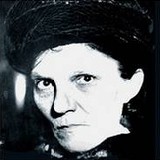 Martha Wise
Murderer · USA · 1924
Martha Wise (born 1885; died June 28, 1971), also known as “the Borgia of Ameri…
3 victims
Martha Wise
Murderer · USA · 1924
Martha Wise (born 1885; died June 28, 1971), also known as “the Borgia of Ameri…
3 victims
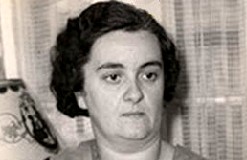 Mary Frances Creighton
Murderer · USA · 1923
Mary Frances Creighton (c. 1898 - July 16, 1936) was a housewife and was execut…
3 victims
Mary Frances Creighton
Murderer · USA · 1923
Mary Frances Creighton (c. 1898 - July 16, 1936) was a housewife and was execut…
3 victims
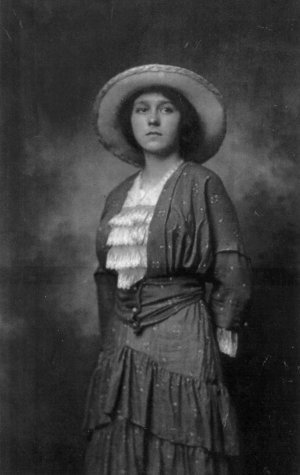 Inez Palmer
Murderer · USA · 1926
Inez Palmer — defendant; lived at the Stout farmhouse and pleaded guilty to a f…
2 victims
Inez Palmer
Murderer · USA · 1926
Inez Palmer — defendant; lived at the Stout farmhouse and pleaded guilty to a f…
2 victims
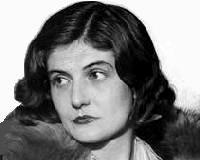 Winnie Ruth Judd
Murderer · USA · 1931
Winnie Ruth Judd (January 29, 1905 – October 23, 1998) was a Phoenix, Arizona m…
2 victims
Winnie Ruth Judd
Murderer · USA · 1931
Winnie Ruth Judd (January 29, 1905 – October 23, 1998) was a Phoenix, Arizona m…
2 victims
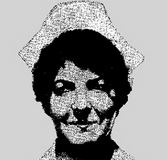 Antoinette Scieri
Serial killer · France · 1924
Antoinette Scieri was born in Italy and emigrated to France as a child. In the…
12 victims
Antoinette Scieri
Serial killer · France · 1924
Antoinette Scieri was born in Italy and emigrated to France as a child. In the…
12 victims
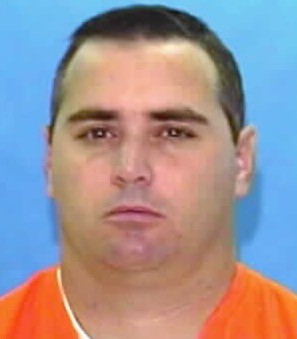 Robert Alan Knight
Murderer · USA · 1993
Robert Alan Knight (DOB: 06/26/68) was convicted in a nonjury trial in the Fift…
1 victim
Robert Alan Knight
Murderer · USA · 1993
Robert Alan Knight (DOB: 06/26/68) was convicted in a nonjury trial in the Fift…
1 victim
 William Irvan
Murderer · USA · 1987
Name: William Irvan TDCJ Number: 999472 Date of Birth: 07/11/1966 Gender: Male…
1 victim
William Irvan
Murderer · USA · 1987
Name: William Irvan TDCJ Number: 999472 Date of Birth: 07/11/1966 Gender: Male…
1 victim
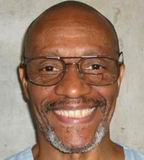 Anthony Banks
Murderer · USA · 1978
Anthony Banks was sentenced to death and later executed by lethal injection in…
2 victims
Anthony Banks
Murderer · USA · 1978
Anthony Banks was sentenced to death and later executed by lethal injection in…
2 victims
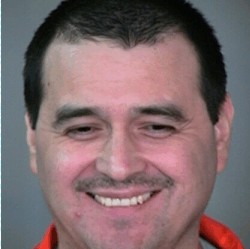 Toribio Rodriguez
Murderer · USA · 1988
Toribio Rodriguez attacked Dawn Dearing in her Tucson apartment. On August 25,…
1 victim
Toribio Rodriguez
Murderer · USA · 1988
Toribio Rodriguez attacked Dawn Dearing in her Tucson apartment. On August 25,…
1 victim
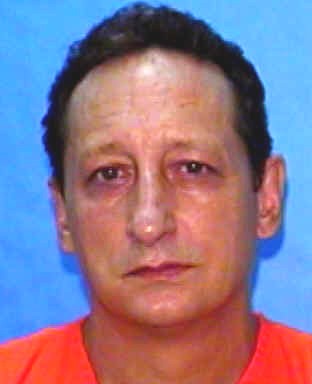 Paul William Scott
Murderer · USA · 1978
Defendant: Paul William Scott · Also known as / aliases: Steven William Prince;…
1 victim
Paul William Scott
Murderer · USA · 1978
Defendant: Paul William Scott · Also known as / aliases: Steven William Prince;…
1 victim
- Gender
- female
- Country
- USA
- Location
- East Cleveland, Cuyahoga County, Ohio, USA
- Date of birth
- 1906
- Age at first offence
- 21
- Characteristics
- parricide, alcohol
- Victim profile
- Thomas Edward West (her father)
- Method of murder
- Beating with a hammer
- Date(s) of murder
- December 6, 1927
- Years active
- 1927
- Date of arrest
- Next day
- Status
-
Died in custody
Sentenced to life in prison after pleading guilty to second degree murder on March 5, 1928; died at the Marysville Women's Reformatory on October 10, 1959
Background
Velma West killed her husband, Thomas Edward West. She was a 21-year-old Cleveland woman who received nationwide attention after killing her husband with a claw hammer and a library table leg. She was transported to the Lake County jail for questioning after local police and the Lake County sheriff met her and her mother, Catherine Van Woert, when they returned from Christmas shopping in downtown Cleveland.
Velma was associated with the West family of Perry, Ohio, which was known for nursery and horticultural products. She became a pariah in Perry after moving there with her husband. Newspapers and public attention also focused on descriptions of her short hair, choice of clothes, cigarette smoking, biting tongue, and care-free attitude.
The offence
Velma beat Thomas Edward West to death. Accounts described that she used a hammer and later finished the job with a library table leg. She also bound his hands with cords, threw a blanket over him, left the lights burning, and later changed her blood-soaked dress and burned it. She covered his body with a quilt and tied a handkerchief over his mouth.
Velma’s confession included that, after quarreling, she “saw red,” went down to the cellar, got a hammer, hit him over the head, and when he went down she finished the job with a library table leg which was “just lying around” until the table could be repaired.
After the murder, she went to a bridge party in Cleveland, stayed overnight with her parents, the Van Woerts, and then Christmas-shopped the next morning, buying presents for the Wests including her husband. She was later found to have admitted to the crime after being taken into custody and interrogated.
Investigation
Velma was taken into custody after local police and the Lake County sheriff met Velma and her mother Catherine Van Woert upon their return to Catherine’s home in East Cleveland. Velma was transported to the Lake County jail for questioning about the murder of Thomas Edward West.
After three hours of interrogation, Velma admitted to the murder of her husband.
Painesville authorities were involved after her arrest at the home of her mother in East Cleveland. Although she presented a perfect alibi, she later confessed to Painesville authorities that she had committed the crime. She was charged with first-degree murder after confessing on the trip back to Perry.
Arrest
Velma was arrested the following day at the home of her mother in East Cleveland after police and deputies were waiting for her to return to Perry.
Trial
The crime never went to trial because Velma pleaded guilty to second degree murder on March 5, 1928. The plea concluded many hours of conference between the attorneys, the prosecution, and the trial Judge J. D. Barnes.
At the court session, Attorney Francis Poulson, chief counsel for Velma West, stepped forward and entered the plea:
“The defendant Velma West, at this time desiree to enter a plea of guilty,” Poulson said.
Trial Judge J. D. Barnes looked to Seth Paulin, Lake-co prosecutor. Paulin announced that the state would accept the plea, ending the trial of a day’s duration.
Velma West was brought to the bench at the court’s request and was asked if she agreed to the plea of guilty.
“Yes sir.”
When Judge Barnes asked if she had anything to say before sentence was imposed, Velma responded after gulping three times:
“I have nothing to say.”
Judge Barnes later stated that Judge Reynolds and he agreed that a verdict of guilty of first degree murder was not justified by the evidence, and that a plea of guilty to second degree murder was the proper thing to do. Judge Barnes said:
“This does not come to the court as a new proposition this morning. This proposition was submitted to me before court opened yesterday morning. Counsel for the prosecution and defense spent the entire day going over the matter. They very properly took the matter up with this court for advice and sanction as to what was proper to do. Not only with this court but with Judge Reynolds. After giving the fullest consideration to all of the evidence and circumstances of this case, both Judge Reynolds and I came to the full and complete agreement that a verdict of guilty of first degree murder was not Justified by this evidence. But that admittance of a plea of guilty of second degree murder was the proper thing to do. This would save a great amount of money, the expenditure of a great deal of time and produce the only outcome which could be expected from a full jury trial. “I don’t think this is the time for talking. Your crime was a horrible and unthinkable thing. This staid community was stirred by It. It was terrible. The mandate of the law must be fulfilled. This is the first time I have ever had to sentence a woman on a like charge.”
Before her plea, Velma had been expected to enter a plea of insanity and perhaps self-defense when a first degree murder trial opened in January.
The state offered to accept a plea of guilty to a homicide charge, and the defense offered to have Velma plead guilty to second degree murder. A continuance was taken until March 5, 1928, with an understanding that Velma would plead guilty to second degree murder.
In jailhouse material, Velma denied any sexual relationship with another woman and expressed bitterness toward her reputed lover. In a jailhouse interview, Velma told reporter James Kilgallen:
“Why should I get so much blame, rather than her?”
“She was the same toward me as I was toward her. She wrote me letters as bad as I wrote her.”
Sentencing
On March 5, 1928, Velma West pleaded guilty to second degree murder and was sentenced to life in prison.
The plea resulted in automatic sentencing to life in the penitentiary. Judge J. D. Barnes sentenced Velma West to life in the Marysville Ohio state reformatory.
After sentencing, Velma returned to her cell in Lake-co jail and expressed a wish to go to Marysville at once:
“I want to get out in the sunshine,” she said.
Her defense attorneys requested delay before taking her to the reformatory so she could wind up personal affairs. They sought permission to take her to the bungalow at Perry to reclaim personal effects. Sheriff Rasmussen granted the request, and she was to be taken to Marysville the next day.
Appeals
No appeals are described.
Outcome
Velma West pleaded guilty to second degree murder on March 5, 1928. She was sentenced to life in prison and was transported to the Woman’s Reformatory at Marysville.
She was denied parole by the Ohio Pardon and Parole Commission on May 29, 1959. The board said it would review her case again in 1964. On May 29, 1959, Velma West was described as 53 years old and convicted of the second-degree murder of her husband, Thomas, 26, of Perry, Lakeco. The denial of parole followed her serving time in Marysville since she was 21.
Aftermath
Escape and prison events (1939)
On June 30, 1939, Marysville women’s reformatory officials said they established that Velma West, described as a hammer slayer of her husband, escaped with three others after receiving assistance from another prisoner in unlocking her cell early Monday.
Officials reported that Mrs. Lenora Leach, 26, who had been sent to the reformatory for smuggling and who had been described as having hacksaws to her former husband in the Gallipolis jail, had aided the escape of Mrs. West after Velma wrote that she wanted “one little adventure in this dull life of mine.” Officials said Mrs. Leach denied seeing Mrs. West escape even though she slept on a cot in the corridor just outside Velma’s cell, and that her story was not believed; she was placed in solitary confinement.
Officials said another prisoner was allowed to talk to Mrs. Leach in her solitary cell, and by listening to their conversation, officials learned that she had unlocked Mrs. West’s cell with a key which the hammer murderess had given her. The cell door could be unlocked only from the outside. Officials said Velma West then unlocked the cell of at least one other of the three who fled with her.
Ohio authorities searched for the fugitives and ran down numerous tips. Two girls who aroused suspicion were seen in Lorain at 3 a.m. A gasoline station attendant at Russell’s Point reported seeing a son of a Marysville prisoner with five women in his automobile, two of whom he thought might have been fugitives. Mrs. Marguerite Reilley, reformatory superintendent, reported two other prisoners were under suspicion of aiding the escape. Mrs. Reilley questioned Rachel Thomas, formerly of Mansfield, and Lenora Leach, 26, who slept in the corridor outside Mrs. West’s cell. Mrs. Leach denied hearing anything early Monday when Mrs. West escaped. Mrs. Reilley said:
“We think she is holding something back.”
Mrs. Reilley revealed that a Marysville man who had been a friend of Mary Ellen Richards, one of the fugitives, was sought for questioning. The superintendent said the man had been missing for a week and his automobile had been standing in the street. Miss Richards worked in Marysville before her conviction. Mrs. Reilley said there was no indication that the man had contacted Miss Richards recently.
All prisoners were ordered to wear uniforms. Prior to the escape, those considered more trustworthy wore thin print “honor” dresses. Mrs. West escaped in an “honor” dress. Mrs. Reilley said:
“Maybe I have been mistaken,”
“Maybe this place should be run like any jail after all. It was a real joy to see Velma develop from the kind of a creature she was when I came here three and a half years ago. Her failing me tears down the thing I have tried to build up ever since I have been here.”
Mrs. Reilley also said there was a possibility that a master key which disappeared shortly before she became superintendent was used in the escape.
Mrs. West pleaded guilty after she had beaten her husband, T. Edward West, to death with a hammer and table leg at their home near Painesville on Dec. 7, 1927. She went to a bridge party in Cleveland afterwards and was “the life of the party.”
The letter which Mrs. West wrote to Mrs. Reilley in ink on yellow note paper was reproduced verbatim:
“Mrs. Reilley .Dear:— “I wonder if you can ever forgive me for this — I am doing it for several reasons. Because I must have, one little adventure in this dull life of mine — because I am so tortured with pain in this body of mine that it drives me almost crazy—because I have lost, hope of getting out as I would like to get out—it’s fear of these things that have finally made, me do the thing that I have been fighting against, for years. — You’ve been so wonderful to me, so understanding, so patient. — This thing isn’t easy for me to do because I have a conscience and a tender heart. — I shall probably always despise myself for it. — Do not blame the other girls. — I found out by accident that they were going, and I asked them to take me. They didn’t want to because of my health—but finally decided to, and promised to take care of me, and .not subject me to anything immoral. That may be for them—but never for cue, dear. “If this should in any way cause you trouble I shall come back Immediately, for I love you, as I love my own mother. I only hope you can understand — oh, please do. “I would be happy if you would let my mother and dad read this, and try in some way to comfort them. I don’t know how to tell you just how I feel — I’m being torn between two different ways — my desire not to hurt you, and my folks who I love — and my desire to have just one little adventure before I get too old and too dulled by pain ever to enjoy life — to tell you the honest truth I hope someone catches us before we get out. “This is terrible — to be so utterly silly, but I cannot help it — darling, you have been wonderful to me — and I realize that the others have done as much as they could in here for my health. But I have not been without pam for so long now that I’m at the breaking point — I’ve hid it as much as I could, after I realized that nothing could be done for me. “Please don’t let them talk too awfully about me after this — I’m not bad — just frightfully unlucky — in life.”
The other fugitives were listed as Virginia Brawdy, 19, Akron; Mary Ellen Richards, 23, Cincinnati; and Florence Sheliner, 23, Gallipolis.
Miss Helen Rahmel, night matron in the building from which the four escaped, said she had tested the doors of all cells Sunday night and had found them locked.
The material also said Velma might have had a chance for parole had she not escaped. Mrs. Reilley said in 1934, the parole board continued her case “until expiration of sentence,” meaning life imprisonment. Mrs. Reilley said that last October she asked the board to reconsider and it had been taken under advisement.
In later narrative material, it was said that in 1939 Velma walked away from Marysville with three other inmates and was captured a month later in Dallas, and that she blamed the escape on a need to “have one last adventure in this dull life of mine.” In that narrative, Velma told the warden:
“lost hope of getting out as I would like to get out.”
“I am being torn two different ways — my desire not to hurt you and my folks whom I love — and my desires to have just one little adventure before I get too old and too dulled by pain to ever enjoy life.”
Death (1959)
Velma West died on October 10, 1959 at the Marysville Women’s Reformatory where she had been since she was 21. One report described her age as 52 and attributed death to natural causes. It also described that she had suffered from a severe heart condition for many years and over the past year had been practically a full-time hospital patient.
Other details
Victim and relationships mentioned
Thomas Edward West was described as 26 in the May 29, 1959 parole denial account. He was described as Edward, and as “Ed” in other accounts. James West, a brother who discovered the body, was mentioned as waiting in the prosecutor’s office after Velma’s plea proceedings.
Velma West’s mother was Catherine Van Woert. Velma West’s father was also named in the proceedings as present, with B. L. Van Woert described as Cleveland salesman and father of the girl. It was also said that T. B. West, father of the slain man, was waiting in the prosecutors office.
A rumored relationship with another woman was discussed in narratives: the material named Miss Mabel Young, Cleveland, as the woman Velma was said to have loved more than her husband. It also said Miss Mabel Young hoped to cure Velma by having her associate with wholesome young women of her own age, and that Miss Young might not have testified if the trial had gone forward.
Quotations and narrative details
A detailed quotation sequence in narrative material included Homer Croy’s comments about chainings and husbands:
“When Velma struck at her husband, she was striking at everything that tortured her in Perry, Ohio,” said Homer Croy. “Every young husband is in danger during his early matrimonial life because he wants to put his wife into his own chains. When you start to chain a wife, it is like trying to chain the submerged seven-eighths of an iceberg. It cannot be done.”
In the narrative of the confession, investigators asked:
“Why did you leave the back door open when you went away?”
and Velma responded: “All right, I’ll tell you everything.”
The confession narrative described her actions and included the table leg described as:
“just lying around” until the table could be repaired.
Lake County Sheriff Edward T. Rasmussen was quoted describing the number of blows and the sequence:
“He tried to rise and she struck him again and again,” Lake County Sheriff Edward T. Rasmussen said. “Six times or more.”
In jailhouse interview narrative, Velma said:
“Within 10 years I shall be eligible for parole,”
and: “That gives me hope.”
In a newspaper narrative, Velma West was also quoted saying about confession and hope:
“I am glad the anxiety is over,” she said. “Imprisonment is not pleasant to contemplate, but I am willing to pay the penalty the law exacts. I am glad my friends and relatives will be spared the anguish of a long and bitter trial.”
Places referenced
Places mentioned included Cleveland, East Cleveland, Lake County jail, Painesville (county seat), Perry, Ohio, Marysville (Marysville Women’s Reformatory and Marysville Ohio state reformatory), Gallipolis (Gallipolis jail), Lorain, Russell’s Point, Dallas, Akron, Cincinnati, and Mansfield.

Spotted an error, or have more information about this case?