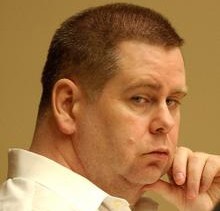
Thomas Huskey
Serial killer ?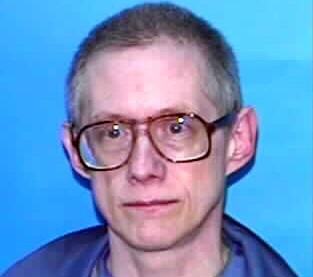 John Crutchley
Serial killer ? · USA · 1977
June 1986 — Crutchley plea-bargained to guilt on kidnap and rape charges in exc…
10 victims
John Crutchley
Serial killer ? · USA · 1977
June 1986 — Crutchley plea-bargained to guilt on kidnap and rape charges in exc…
10 victims
 Robert MacGregor
Serial killer ? · USA · 1909
Robert MacGregor was a doctor who established his practice in the Ubly area in…
4 victims
Robert MacGregor
Serial killer ? · USA · 1909
Robert MacGregor was a doctor who established his practice in the Ubly area in…
4 victims
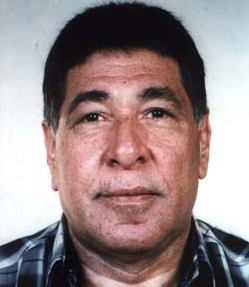 Gameel Al-Batouti
Mass murderer · USA · 1999
Gameel Al-Batouti (also rendered “Gamil ElBatouty” or “El Batouty” in U.S. offi…
216 victims
Gameel Al-Batouti
Mass murderer · USA · 1999
Gameel Al-Batouti (also rendered “Gamil ElBatouty” or “El Batouty” in U.S. offi…
216 victims
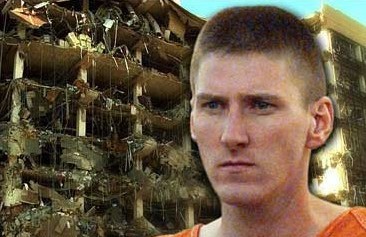 Timothy McVeigh
Mass murderer · USA · 1995
Timothy James McVeigh (April 23, 1968 – June 11, 2001) was a United States Army…
168 victims
Timothy McVeigh
Mass murderer · USA · 1995
Timothy James McVeigh (April 23, 1968 – June 11, 2001) was a United States Army…
168 victims
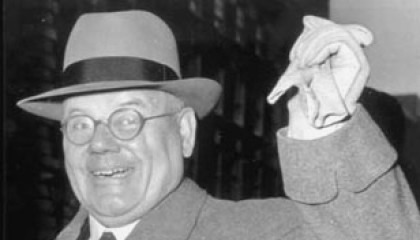 John Bodkin Adams
Serial killer ? · United Kingdom · 1935
John Bodkin Adams was a British general practitioner and euthanasia enthusiast,…
163 victims
John Bodkin Adams
Serial killer ? · United Kingdom · 1935
John Bodkin Adams was a British general practitioner and euthanasia enthusiast,…
163 victims
 Adolph Gil Hernandez
Murderer · USA · 1988
Adolph Gil Hernandez was executed by lethal injection in Texas on February 8, 2…
1 victim
Adolph Gil Hernandez
Murderer · USA · 1988
Adolph Gil Hernandez was executed by lethal injection in Texas on February 8, 2…
1 victim
 Emma Hall
Murderer · United Kingdom · 2012
Emma Hall was sentenced to life in prison with a minimum term of 15 years on Ap…
1 victim
Emma Hall
Murderer · United Kingdom · 2012
Emma Hall was sentenced to life in prison with a minimum term of 15 years on Ap…
1 victim
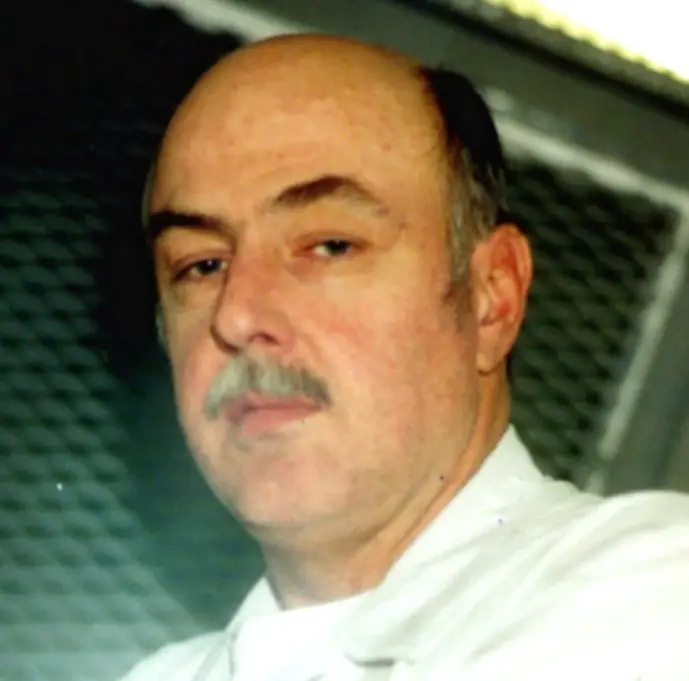 Roy Michael Roberts
Murderer · USA · 1983
Roy Michael Roberts was convicted and sentenced to death for alleged participat…
1 victim
Roy Michael Roberts
Murderer · USA · 1983
Roy Michael Roberts was convicted and sentenced to death for alleged participat…
1 victim
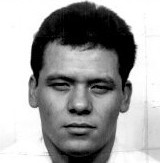 Irineo Tristan Montoya
Murderer · USA · 1985
Irineo Tristan Montoya, offender No. 847, was executed by lethal injection in T…
1 victim
Irineo Tristan Montoya
Murderer · USA · 1985
Irineo Tristan Montoya, offender No. 847, was executed by lethal injection in T…
1 victim
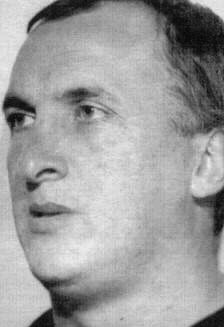 Colin Ireland
Serial killer · United Kingdom · 1993
Name: Colin Ireland · Also known as / tabloid name: London's "Gay Slayer" · Cri…
5 victims
Colin Ireland
Serial killer · United Kingdom · 1993
Name: Colin Ireland · Also known as / tabloid name: London's "Gay Slayer" · Cri…
5 victims
- Gender
- male
- Country
- USA
- Location
- Knoxville, Tennessee, USA
- Date of birth
- 1960
- Age at first offence
- 31
- Characteristics
- convicted rapist, rape, serial rapist
- Victim profile
- Patricia Rose Anderson, Patricia Ann Johnson, Darlene Smith and Susan East Stone (prostitutes)
- Method of murder
- Strangulation
- Date(s) of murder
- 1991 - 1992
- Years active
- 1991–1992
- Date of arrest
- October 21, 1992
- Status
-
Imprisoned
Sentenced to 66-year prison term for raping four other women; in the quadruple murder trial, a mistrial was declared on February 13, 1999
Case record: Thomas Huskey
Thomas Huskey, also known as “Zoo Man,” was a former zoo elephant trainer. Local prostitutes nicknamed him “Zoo Man” because he liked to have sex by the Knoxville zoo.
Background
Huskey qualified for parole in two years and was described as serving a 64-year sentence at the South Central Correctional Facility in Clifton, Tenn. The case record also stated that Huskey was serving a 66-year prison term for raping four other women.
The record described Huskey as having claimed insanity at the time of his arrest. He told authorities the women died at the hands of “Kyle,” an alternate personality.
The record also described a dispute about whether Huskey’s confession was genuine or whether it reflected an insane “Kyle” alter ego. Prosecutors said he faked mental illness and blamed the killings on “Kyle.” Defense lawyers claimed he suffered multiple personality disorder and that “Kyle” framed him.
The offence
The record described a quadruple murder connected to the 1992 murders of four women. Huskey was charged with killing Stone, Darlene Smith, Patricia Rose Anderson and Patricia Johnson and leaving their bodies in trash-strewn woods off Cahaba Lane in East Knox County, Tennessee. The record described victims as prostitutes for all except Smith.
The record described investigators as saying Huskey lured victims using the same voice and strangled them with the same hands.
The record also stated that Huskey was convicted in a series of rapes committed before the Cahaba Lane slayings and was serving a sentence for those crimes.
Investigation
A woman came to Knoxville police with a lie that led them to a rapist in the act. Tom Pressley, a retired Knoxville Police Department investigator, described the woman’s account and what she showed him:
"She told me she'd been abducted inside the city, taken to a spot in the county and raped, then tied up and robbed."
Pressley added:
"She lied to begin with, because she didn't want to admit she was a prostitute. She took me and showed me where it happened."
Pressley led investigators to a secluded patch of woods off Cahaba Lane in East Knox County. The record described the location as littered with mattresses and used condoms and favored by prostitutes and their johns. Pressley described how they arrived at a dead end and found evidence:
"We got to the dead end, and she said, 'There's his car,' "
Pressley continued:
"As I went on up there, she saw her stuff. We went into the woods, and she said, 'There he is now.' He had this other little girl naked and on her knees."
The record said Pressley stopped Huskey at gunpoint and arrested him on the spot. Stewart, a retired Knox County Sheriff’s Office detective who helped win Huskey’s only conviction, picked up the case after the women admitted being prostitutes who went to Cahaba Lane willingly. The women refused to testify, and Huskey went free.
Stewart said:
"I think he did what a lot of criminals do."
Stewart also said:
"He learned from his mistakes. He decided the next time, he was not going to leave any witnesses behind."
The record described that eight months later, on Oct. 20, 1992, a hunter walked up on the body of Patricia Rose Anderson, 32, in the same woods off Cahaba Lane. A search by deputies the following week turned up two more bodies, then a fourth.
Pressley said he recognized the spot and called the county:
"I called the county and told them, 'I think I know who your killer is,' "
The record stated that Huskey earned the nickname “Zoo Man” from Knoxville’s prostitutes after a series of rapes near the zoo, where he worked in the elephant barn.
The record said that a search of Huskey’s parents’ home in nearby Pigeon Forge turned up rope, porn and jewelry detectives believed had been taken from the dead women. The record also said that investigators relied on a search warrant issued by a city judicial commissioner, and that an appellate court ruled it had no authority to issue the warrant.
The record described Huskey’s explanation as multiple personality disorder and blame on “Kyle,” an alter ego who claimed to hate Huskey and wanted to ruin his life. Prosecutors said he pulled the name from East Knoxville’s Kyle Avenue.
Arrest
The record stated that Pressley arrested Huskey on the spot during the initial incident described as occurring in February 1992, based on the woman’s account and her showing of where it happened.
The record also stated that Huskey was taken into custody on Oct. 21, 1992.
Trial
The record described that the case dragged on for years, and that two juries found Huskey guilty in rapes committed before the killings. It stated that a jury deadlocked on the murder charges in 1999.
In the quadruple murder trial, the record stated that on February 13, 1999, after a jury said it was unable to decide whether the defendant was insane, a mistrial was declared. The record stated that the 12-member panel, brought 200 miles from Nashville to Davidson County because of intense local publicity, told Judge Richard Baumgartner they were deadlocked 6-6. The record described the trial as involving a question of responsibility and the defendant’s mental state, and it included a juror comment:
"But it was on the responsibility part, not the guilt," one juror said, referring to the mental state of the defendant, Thomas (Zoo Man) Huskey.
Defense and prosecution positions were described as follows:
- The defense claimed Huskey possessed multiple personalities he could not control, and that one personality named “Kyle” confessed to the 1992 murder rampage that claimed the lives of four prostitutes.
- The prosecution said Huskey was faking mental illness and suggested that he may have stolen his identities from the soap opera “Days of Our Lives.”
The record also described that during trial, jurors agreed Huskey suffered from a mental disease, but were evenly divided on whether the illness prevented him from being responsible for the murders.
The record described defense psychologist Diana McCoy, Ph.D., as examining Huskey 27 times over a three-year period and meeting several alter egos, including “Kyle,” “Jericho,” “Timmy” and “Larry.” McCoy testified that several factors contributed to development of Huskey’s alleged multiple personalities, including being raised at a zoo by parents who were not emotionally supportive and physical and sexual abuse by his teachers. The record described an alleged involvement in a prostitution ring as a teen-ager and an alleged gang rape by a “Sargeant Blackie” and several teen-age boys. It stated that McCoy believed the multiple personalities formed to help him cope with traumatic experiences, and that she believed “Kyle” represented a role Huskey played in the prostitution ring and that “Timmy” emerged after the gang rape.
The record stated that a former cell mate, William Fletcher, testified for the prosecution that Huskey told him he intended to fake mental illness to avoid the death penalty. It also stated that Fletcher testified that Huskey told him he killed the women to rob and rape them and to prevent them from approaching authorities and talking to each other about the crimes.
The record stated that prosecutors also believed Huskey learned how to fake his illness by reading the book “Sybil,” about a woman with multiple personalities.
The record described a defense challenge to the confession, with “Kyle” framed as manipulating Huskey and the confession as coerced. The record stated that the defense suggested another person killed one of Huskey’s alleged victims. Linda Jarnigan testified that an inmate, Jesse James Coffey, wrote her a letter confessing to killing one of the women, and that in the same letter Coffey confessed to participating in the murders of two other women and burying their bodies. The record stated that Billy Jarnigan denied raping and murdering women with Coffey. It stated that Billy Jarnigan admitted he and Coffey got high on cocaine together but insisted they did not commit murder.
The record also included a defense expert statement by Dr. Jeffrey W. Erickson, Ph.D., who testified for the defense saying Huskey was suffering from a brain disorder when he examined him in 1977. It stated that Erickson first saw Huskey when he was 16 after he broke into a house on the grounds of the Knoxville Zoo to steal money.
The record described the defense as claiming that Huskey was recruited by a sado-masochistic prostitution ring when he was a young man and that it permanently scarred his psyche.
Sentencing
The record stated that Huskey had already been sentenced to 66 years in prison for raping four women.
The record also stated that Huskey was serving a 64-year sentence at the South Central Correctional Facility in Clifton, Tenn., and that he qualifies for a parole hearing in 2012.
The record further stated that Huskey qualifies for parole in two years.
Appeals
The record stated that after a 13-year legal battle, judges ruled that missteps by investigators made prosecution of Thomas Dee Huskey impossible, and that a series of rulings resulted in dismissal of the case.
It stated that in October 2005, District Attorney General Randy Nichols gave up the murder case, and Criminal Court Judge Richard Baumgartner dismissed those charges.
The record also described a Court of Criminal Appeals of Tennessee opinion: “49828 opinion 51903.” It stated that judges ordered the case remanded to the Criminal Court of Knox County for dismissal. It quoted the appellate court’s order:
"It is, therefore, ordered and adjudged that the judgment of the trial court is affirmed, and the case is remanded to the Criminal Court of Knox County for the dismissal of the case,"
The record also described that the appellate judgment left the case effectively finished:
- Defense attorney Herbert S. Moncier said: “It's over,” and co-counsel Gregory P. Isaacs added, “Finally - justice.”
- Dan Stewart, a retired Knox County Sheriff’s Office detective who helped win Huskey’s only conviction, said:
"We got beat by the system,"
and also: "He wasn't tried for it, but he did it. We acted in good faith, but the very paper we picked him up on was thrown out by the courts."
The record stated that Gregory P. Isaacs did not discuss specifics but described the long litigation and the attorneys’ experience, including these quotes:
"It was an all-star lineup of attorneys, prosecutors and experts from across the country,"
"When I first began representing Tom Huskey, it was the biggest case in the state of Tennessee. I had no children then. Now, 17 years and four kids later, we're still litigating cases involving Tom Huskey. It was, is, and always will be an overwhelming case."
The record quoted Randy Nichols as saying:
"He killed more people than anybody in the history of this county,"
and: "I'm going to do my best to try to put a case together."
It also quoted Nichols wondering:
"Can I weave a web of circumstantial (evidence)?"
The record stated that Nichols would not use certain evidence at trial because deputies arrived at the parents’ home via a flawed court document.
It described Nichols as having hoped the state Supreme Court would review a “good faith exception.” It stated that under that exception, evidence obtained when officers believe the court order they are executing is legally sound should be allowed even if the order was flawed. Nichols said:
"We're in the minority in not having a good faith exception."
The record quoted Isaacs about the dismissal validating the system:
"validate"
It also included Isaacs’s quote: "I can't wait to give the Huskey family a big hug and close a lot of big files,"
The record stated that Nichols described the likely outcome as:
"The chances are very strong that he will never see freedom again,"
It also included a later statement by Dan Stewart (retired Knox County Sheriff’s Office detective): and:
Outcome
The record stated that four murder charges were formally dropped in Knoxville against an accused serial killer known as the “Zoo Man,” Thomas Dee Huskey.
The record stated that the case against Huskey was dismissed following the appellate rulings that ruled key evidence unusable and declared prosecution impossible.
The record also stated that Huskey would never be tried in the serial killings, and it described that he remains in prison serving a 66-year prison term.
Aftermath
The record said that Huskey’s case was described as the most protracted in Knox County history and the most expensive in Tennessee history, and that it was funded on the taxpayer dime.
The record said that an appellate court order required dismissal after affirmance and remand for dismissal of the case.
It also described the effect on victims’ relatives and Huskey’s family, including these statements:
- Isaac Huskey (one of Huskey’s two sons) said:
- Carolyn Lerner of Dearborn, Mich., sister of a victim Susan Stone, said:
"I am extremely disappointed,"
and: "It has been seven long years."
"I would rather have this than have my father put to death,"
Timeline
- February 1992 — A woman told Knoxville police she had been abducted inside the city, taken to a spot in the county, and raped, tied up and robbed; Pressley led investigators to Cahaba Lane woods, where Huskey was stopped at gunpoint and arrested.
- Oct. 20, 1992 — Patricia Rose Anderson, 32, was found in the woods off Cahaba Lane.
- Oct. 21, 1992 — Huskey was taken into custody.
- February 5, 1999 — Dr. Jeffrey W. Erickson, Ph.D., testified for the defense about a brain disorder when he examined Huskey in 1977.
- February 8, 1999 — Conflicting testimony was presented in the murder trial.
- February 9, 1999 — Jury deliberations began.
- February 13, 1999 — A mistrial was declared in the quadruple murder trial after a 6-6 deadlock on whether the defendant was insane; Judge Richard Baumgartner was informed by the jury.
- February 15, 1999 — Reported that jurors found Huskey suffered from a mental disease but could not decide responsibility; retrial was expected to be rescheduled.
- March 11, 2006 — Four murder charges were formally dropped in Knoxville against Thomas Dee Huskey.
- November 1, 2005 — A report described the state Supreme Court letting stand a June lower-court decision that required dismissal of the case.
- 2012 — Huskey was stated to qualify for a parole hearing.
Spotted an error, or have more information about this case?