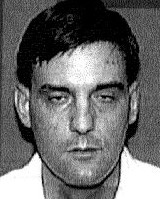
Scott Louis Panetti
Murderer Brian Kevin Rosenfeld
Murderer · USA · 1985
Brian Kevin Rosenfeld Brian Kevin Rosenfeld was sentenced to three concurrent l…
23 victims
Brian Kevin Rosenfeld
Murderer · USA · 1985
Brian Kevin Rosenfeld Brian Kevin Rosenfeld was sentenced to three concurrent l…
23 victims
 Russell Ellwood
Murderer · USA · 1991
Russell Ellwood was a former taxi driver. Authorities suspected him of killing…
20 victims
Russell Ellwood
Murderer · USA · 1991
Russell Ellwood was a former taxi driver. Authorities suspected him of killing…
20 victims
 Robert Martines Perez
Murderer · USA · 1994
Name: Robert Martines Perez · Other name used in proceedings: Robert Martinez P…
15 victims
Robert Martines Perez
Murderer · USA · 1994
Name: Robert Martines Perez · Other name used in proceedings: Robert Martinez P…
15 victims
 Billy Frank Vickers
Murderer · USA · 1993
Billy Frank Vickers Vickers was executed by lethal injection in Texas on Januar…
14 victims
Billy Frank Vickers
Murderer · USA · 1993
Billy Frank Vickers Vickers was executed by lethal injection in Texas on Januar…
14 victims
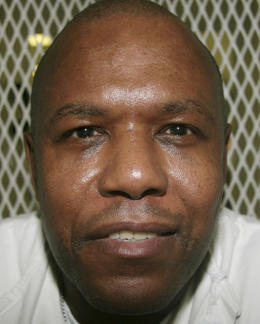 Larry Wayne Wooten
Murderer · USA · 1996
Defendant: Larry Wayne Wooten Status: Executed by lethal injection in Texas on…
2 victims
Larry Wayne Wooten
Murderer · USA · 1996
Defendant: Larry Wayne Wooten Status: Executed by lethal injection in Texas on…
2 victims
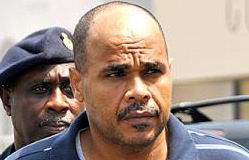 Cyril Darville
Serial killer? · The Bahamas · 1990
Cyril Darville was convicted for a murder committed in 1990. He had a prior rec…
9 victims
Cyril Darville
Serial killer? · The Bahamas · 1990
Cyril Darville was convicted for a murder committed in 1990. He had a prior rec…
9 victims
 James Dupree Henry
Murderer · USA · 1974
James Dupree Henry was sentenced by Florida state courts to be executed for the…
1 victim
James Dupree Henry
Murderer · USA · 1974
James Dupree Henry was sentenced by Florida state courts to be executed for the…
1 victim
 David Kevin Hocker
Murderer · USA · 1998
March 21, 1998 — David Kevin Hocker stabbed and beat his boss, Jerry Wayne Robi…
1 victim
David Kevin Hocker
Murderer · USA · 1998
March 21, 1998 — David Kevin Hocker stabbed and beat his boss, Jerry Wayne Robi…
1 victim
 José Antonio Rodríguez Vega
Serial killer · Spain · 1987
José Antonio Rodríguez Vega was a Spanish serial killer nicknamed El Mataviejas…
16 victims
José Antonio Rodríguez Vega
Serial killer · Spain · 1987
José Antonio Rodríguez Vega was a Spanish serial killer nicknamed El Mataviejas…
16 victims
- Gender
- male
- Country
- USA
- Location
- Kerr County, Texas, USA
- Date of birth
- February 28, 1958
- Age at first offence
- 34
- Characteristics
- revenge, history of mental illness
- Victim profile
- Joe Gaitan Alvarado, Jr., 55, and Amanda Carrion Alvarado, 56 (his parents-in-law)
- Method of murder
- Shooting
- Date(s) of murder
- September 8, 1992
- Years active
- 1992
- Date of arrest
- Same day
- Status
-
Sentenced to death
Sentenced to death on September 25, 1995; execution blocked by the U.S. Supreme Court on June 28, 2007
Case record: Scott Louis Panetti
Background
Scott Louis Panetti was a white male aged 45. He had a long history of serious mental illness, including schizophrenia.
He had been hospitalized more than a dozen times in numerous facilities before the crime. In a later account, he was described as having a history of mental problems including schizophrenia, with 14 hospital stays over 11 years before his conviction.
Panetti and his second wife, Sonja Alvarado, separated in August 1992 because of his drinking and abusive behavior. Sonja Alvarado took their three-year-old daughter and went to stay with her parents, Amanda and Joe Alvarado. Sonja Alvarado obtained a restraining order against Panetti.
Panetti’s father later recalled that Panetti’s behavior at the trial had been "very bizarre": "I wanted to tell the judge to stop the trial because my son was sick and incompetent". Panetti’s sister later said in her affidavit: "I think that justice broke down in my brother's trial. It was not fair to let a mentally ill man be his own attorney when he did not know what he was doing. I am sorry to say that the trial was a farce. It was a circus-like atmosphere. I never expected justice to allow this."
A psychiatrist who evaluated Panetti in 1997 concluded that he suffered from schizoaffective disorder, a combination of schizophrenia and manic depression. The expert added that Panetti’s "decision to waive his own counsel was under the influence of persecutory delusions, and his ability to represent himself in court was substantially impaired by disturbances in his thought processes". The psychiatrist further concluded that Panetti had not been competent to stand trial.
In a later interview from behind thick glass in the Polunsky Unit in East Texas, Panetti said he was drowned and electrocuted as a child and that he was recently stabbed in the eye in his death row cell by the devil. He said, "The devil has been trying to rub me out to keep me from preaching," explaining why he faced execution. He also said that he had wounds inflicted by demons that healed by President John F. Kennedy.
The offence
On the morning of 8 September 1992, Panetti shaved his head, dressed in military fatigues and drove to the Alvarados' home, taking a sawn-off shotgun and a rifle with him. He broke into the house and shot his parents-in-law at close range with the rifle.
Panetti allowed Sonja and their daughter to leave.
Investigation
Panetti later said that "Sarge" (an auditory hallucination) controlled him at the time of the crime. He said that divine intervention had meant that the victims did not suffer, and that demons had been laughing at him as he left the house.
Arrest
Later that day, Panetti changed into a suit and gave himself up to the police.
Trial
In July 1994, a hearing to determine whether Panetti was competent to stand trial was declared a mistrial after the jury was unable to reach a verdict. The competency issue concerned whether he had sufficient mental capacity to understand his situation and to assist in his defense.
A second competency hearing was held in September 1994. Panetti’s lawyer testified that in the previous two years he had had no useful communication with Panetti because of his delusional thinking. A psychiatrist for the defense concluded that Panetti was not competent to stand trial. A psychiatrist who testified for the prosecution agreed with the previous diagnoses of schizophrenia, and concluded that Panetti’s delusional thinking could interfere with his communications with his legal counsel, particularly under situations of stress such as in a courtroom. However, the prosecution psychiatrist concluded that Panetti was competent to stand trial. The jury agreed.
Panetti waived his right to counsel. The case went to trial in September 1995 with Panetti acting as his own lawyer.
During the proceedings, Panetti dressed as a cowboy and gave a rambling presentation in his defense. Numerous people who attended the trial as witnesses described it as a "farce", a "joke", a "circus", and a "mockery".
After the trial, witnesses submitted post-conviction affidavits concluding, from their prior knowledge of Panetti and observations of him during the proceedings, that he was incompetent to stand trial.
A doctor who had previously treated Panetti for his mental illness said: "I thought to myself 'My God. How in the world can our legal system allow an insane man to defend himself? How can this be just?'"
Another doctor who had treated Panetti for schizophrenia in 1986 said Panetti was "acting out a role of an attorney as a facet of the mental illness, not a rational decision to represent himself".
An attorney called by Panetti as a witness later said: "The courtroom had the atmosphere of a circus. The judge just seemed to let Scott run free with his irrational questions and courtroom antics."
Another lawyer, appointed as Panetti’s stand-by counsel, wrote in an affidavit: "This was not a case for the death penalty. Scott's life history and long term mental problems made an excellent case for mitigating evidence. Scott did not present any mitigating evidence because he could not understand the proceeding."
That lawyer recalled that Panetti had dressed in a costume "like an old TV western", including cowboy hat, trousers tucked into his cowboy boots, and cowboy shirt.
The lawyer added that Panetti had "wanted to subpoena Jesus Christ, JFK, actors, actresses, and people who had died... His trial was truly a judicial farce, and a mockery of self-representation. It should never have been allowed to happen".
The lawyer said he spoke to two jurors who "told me that Scott probably would not have received the death penalty if the case had been handled differently".
Another lawyer spoke to two other jurors. They "said that if Scott had been represented by attorneys that he would not have received the death penalty". One of them said that the jurors had voted for death out of their fear of his irrational behavior at the trial.
In Texas, a jury can only vote for death if they decide the defendant will pose a future danger to society if allowed to live.
A psychiatrist had stated that a former ranch hand and native of Hayward, Wis. had a history of mental problems before his conviction, and four courts had said he was competent when he fired his trial lawyers. A jury and two courts rejected his defense of not guilty by reason of insanity.
In later proceedings described for the U.S. Supreme Court matter, it was stated that Panetti personally argued that only an insane person could prove the insanity defense, dressing in cowboy clothing and submitting
Spotted an error, or have more information about this case?