Billy Hurley
Murderer Russell Ellwood
Murderer · USA · 1991
Russell Ellwood was a former taxi driver. Authorities suspected him of killing…
20 victims
Russell Ellwood
Murderer · USA · 1991
Russell Ellwood was a former taxi driver. Authorities suspected him of killing…
20 victims
 Robert Martines Perez
Murderer · USA · 1994
Name: Robert Martines Perez · Other name used in proceedings: Robert Martinez P…
15 victims
Robert Martines Perez
Murderer · USA · 1994
Name: Robert Martines Perez · Other name used in proceedings: Robert Martinez P…
15 victims
 Billy Frank Vickers
Murderer · USA · 1993
Billy Frank Vickers Vickers was executed by lethal injection in Texas on Januar…
14 victims
Billy Frank Vickers
Murderer · USA · 1993
Billy Frank Vickers Vickers was executed by lethal injection in Texas on Januar…
14 victims
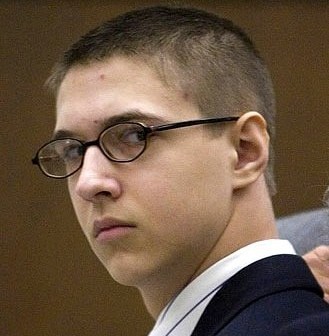 Eric Hainstock
Homicide · USA · 2006
Eric Hainstock was 15 years old when he shot principal John Klang at Weston Hig…
1 victim
Eric Hainstock
Homicide · USA · 2006
Eric Hainstock was 15 years old when he shot principal John Klang at Weston Hig…
1 victim
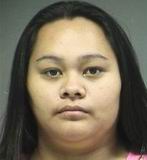 Jessica Dutro
Murderer · USA · 2012
Jessica Dutro was the mother of Zachary Dutro-Boggess, a 4-year-old boy who die…
1 victim
Jessica Dutro
Murderer · USA · 2012
Jessica Dutro was the mother of Zachary Dutro-Boggess, a 4-year-old boy who die…
1 victim
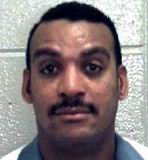 Emmanuel Hammond
Murderer · USA · 1988
Emmanuel Fitzgerald Hammond was convicted by a jury in Fulton County of murder,…
1 victim
Emmanuel Hammond
Murderer · USA · 1988
Emmanuel Fitzgerald Hammond was convicted by a jury in Fulton County of murder,…
1 victim
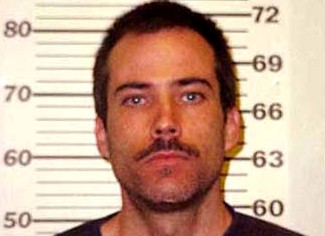 Eric Rudolph
Murderer · USA · 1996
Eric Robert Rudolph (born September 19, 1966), also known as the “Olympic Park…
2 victims
Eric Rudolph
Murderer · USA · 1996
Eric Robert Rudolph (born September 19, 1966), also known as the “Olympic Park…
2 victims
 John Manuel Quintanilla
Murderer · USA · 2002
John Manuel Quintanilla · 11/24/2002 — Quintanilla and two male co-defendants e…
1 victim
John Manuel Quintanilla
Murderer · USA · 2002
John Manuel Quintanilla · 11/24/2002 — Quintanilla and two male co-defendants e…
1 victim
 James Ritchie
Serial killer · USA · 2016
James Dale Ritchie (November 4, 1976 – November 12, 2016) was known in the medi…
5 victims
James Ritchie
Serial killer · USA · 2016
James Dale Ritchie (November 4, 1976 – November 12, 2016) was known in the medi…
5 victims
- Gender
- male
- Country
- USA
- Location
- Jacksonville, Florida, USA
- Date of birth
- 1925
- Age at first offence
- 76
- Characteristics
- parricide, history of mental illness, former mental patient, mentally ill
- Victim profile
- Hurley's wife, 73-year-old Billie T. Hurley; their daughter, 53-year-old Veda Crockett; and son-in-law, 51-year-old Clayton Crockett
- Method of murder
- Shooting
- Date(s) of murder
- January 10, 2001
- Years active
- 2001
- Date of arrest
- —
- Status
-
Died in custody
Committed suicide by shooting himself the same day
Case overview
Billy Hurley, 75, committed suicide by shooting himself the same day after a mass shooting of his family in Jacksonville, Florida. Police said Hurley shot his son-in-law, Clayton E. Crockett, 51, then chased his daughter and wife outside their daughter’s home. Police said that outside the home he killed his daughter, Veda J. Crockett, 53, then chased his wife to a nearby elementary school where he shot her and then himself. Some students were outside for an after school program when the attack occurred, but none were injured.
Neighbors said Hurley’s family had told them he was suffering from Alzheimer’s and had become increasingly violent. Police discouraged coming to the conclusion that it was Alzheimer’s disease, and police said it was premature to pinpoint the violence to Alzheimer’s while they waited to confirm any medical condition with Hurley’s doctor. The family had no prior domestic complaints, according to the Sheriff's Office.
Timeline
- 10 January 2001 — Billy Hurley shot his wife, daughter and son-in-law before turning the gun on himself; the shootings spilled onto the campus of Normandy Elementary School.
Background
Assistant Chief David Sembach of the Jacksonville Sheriff’s Office said it was premature to pinpoint the violence to Alzheimer’s and that police were waiting to confirm any medical condition with Hurley’s doctor. John Turner, a spokesman for the Sheriff’s Office, said the family had no prior domestic complaints. Greg Hurley said he was aware his uncle had medical problems but did not know to what extent. Greg Hurley said he visited his uncle recently and did not see any problems with Hurley’s behavior, stating: "He was fine in October," and: "He evidently had developed something over the past couple months." Greg Hurley described the family as normal and said he couldn't have asked for a better uncle.
The offence
Police said Billy Hurley, 75, and his wife, Billie T. Hurley, 73, were at their daughter’s home when Hurley shot his son-in-law, Clayton E. Crockett, 51. Police said Hurley then chased his daughter and wife outside the home. Once outside, police said Hurley killed his daughter, Veda J. Crockett, 53, then chased his wife to a nearby elementary school where he shot her and himself. The daughter and her husband lived next door to Hurley and his wife at 6826 Arques Road, across from Normandy Elementary School, and the shootings spilled onto the campus.
Investigation
Assistant Chief David Sembach said police had no other information about the case and planned to return to the scene Tuesday to tie up the investigation. Sembach said police were waiting to confirm any medical condition with Hurley’s doctor and said it was premature to pinpoint the violence to Alzheimer’s.
Victims
- Billie T. Hurley, 73 — Hurley’s wife.
- Veda J. Crockett, 53 — Hurley’s daughter.
- Clayton E. Crockett, 51 — Hurley’s son-in-law.
Other details
Alzheimer’s experts said it is rare for a person with the disease to kill someone. Jamie Glavich, a board member of the Alzheimer's Association North Eastern Florida chapter, said: "There have occasionally been incidences of a murder-suicide after a patient’s initial diagnosis because the patient or spouse was distraught over the diagnosis." Glavich also said that when an Alzheimer’s patient becomes aggressive, it is usually because the person does not recognize a caregiver or has become agitated by something and lashes out from fear or frustration. Glavich explained the disease affects the brain in stages and said: "The disease changes their personality," and: "They’re not the same person anymore. That's what’s hard for families to understand." Glavich also said: "The most common form of aggression is verbal, but it can be physical or even sexual."
Hiten Kisnad, one of two Jacksonville psychiatrists who specialized in treating the elderly, said: "Sometimes elderly people behave as though they have dementia when they actually have depression." Kisnad also said about people who have dementia: "Among people who actually have dementia, about two-thirds exhibit psychiatric problems such as depression or psychosis that can lead to aggression," and said they may be delusional and think their spouse is cheating, a family member is stealing, or caretakers are trying to harm them. Kisnad also said that a condition that looks like dementia may be corrected with medications.
The material stated: "Alzheimer's initially causes the death of memory cells in the brain and eventually of cells that direct personality," and included an example: "That explains why a sweet grandmother can suddenly pepper her language with swear words." It also stated: "Alzheimer's causes 60 percent of all dementias and is only one of many medical reasons a person could become demented or exhibit aggression." It listed other causes of dementia as strokes, a vascular problem that limits blood flow to the brain, brain tumors, a deficiency of vitamin B12, or a hormone imbalance. It stated Ten Broeck Hospital of Jacksonville opened the city’s only inpatient psychiatric unit for geriatric patients in May and said a registered nurse and program manager for geriatrics, Amanda St. Johns, stated this. It also said Ten Broeck has a mobile crisis unit that provides a free mental health evaluation at houses, nursing homes or assisted-living centers of elderly people. Kisnad said: "But the vast majority of people with dementia can be safely cared for at home, with support."
The Alzheimer’s Association offers training to help caregivers learn to avoid or defuse an aggressive incident. Glavich said: "For example, Glavich said a woman may be changing her demented husband's diaper when he forgets who she is and hits her or throws something at her because he thinks a stranger is touching him intimately." Glavich said: "Arguing or yelling doesn't work and could make things worse," and said: "Instead, the caregiver should back away to a safe distance and redirect the patient's attention." Glavich gave an example: "For example, the caregiver could note there is pie in the kitchen and suggest they go have a piece." Glavich said families should review the events leading up to aggression to pinpoint its trigger and gave an example involving a war veteran: "For example, a war veteran may hear or see a shooting or bombing on television and get aggressive because he thinks he is in a war zone." Glavich said: "The family can keep the TV turned off around him in the future and avoid a repeat."
The material also stated that homes of people with dementia should be safety-proofed, including taking away firearms and other weapons. It described that caregivers could redirect attention rather than argue, and it provided additional examples of triggers and management strategies.
Spotted an error, or have more information about this case?