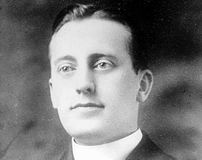
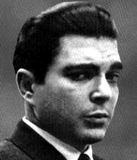
Hans Schmidt
Murderer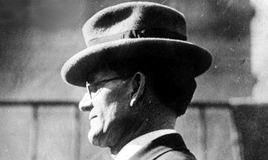 William Hale
Murderer · USA · 1921
Name: William Hale · Known as: the so-called "King of the Osage Hills" · Occupa…
24 victims
William Hale
Murderer · USA · 1921
Name: William Hale · Known as: the so-called "King of the Osage Hills" · Occupa…
24 victims
 John S. Williams
Murderer · USA · 1910
John S. Williams was convicted of murder and sentenced to life imprisonment on…
18 victims
John S. Williams
Murderer · USA · 1910
John S. Williams was convicted of murder and sentenced to life imprisonment on…
18 victims
 Edward Adams
Murderer · USA · 1920
Edward J. "Eddie" Adams was born in 1887 on a farm in Hutchinson, Kansas as W.J…
7 victims
Edward Adams
Murderer · USA · 1920
Edward J. "Eddie" Adams was born in 1887 on a farm in Hutchinson, Kansas as W.J…
7 victims
 Floyd Allen
Murderer · USA · 1912
Floyd Allen (July 5, 1856 – March 28, 1913) was an American landowner and patri…
5 victims
Floyd Allen
Murderer · USA · 1912
Floyd Allen (July 5, 1856 – March 28, 1913) was an American landowner and patri…
5 victims
 Carl Otto Wanderer
Murderer · USA · 1920
Carl Otto Wanderer (1887–1921) was described as a murderer known for what becam…
2 victims
Carl Otto Wanderer
Murderer · USA · 1920
Carl Otto Wanderer (1887–1921) was described as a murderer known for what becam…
2 victims
 Stacey Lannert
Murderer · USA · 1990
Name: Stacey Ann Lannert Also known as: Stacey Lannert Date of birth: May 28, 1…
1 victim
Stacey Lannert
Murderer · USA · 1990
Name: Stacey Ann Lannert Also known as: Stacey Lannert Date of birth: May 28, 1…
1 victim
 Megan Huntsman
Murderer · USA · 1996
Megan Huntsman was 40 at sentencing. She was a mother of three children who wer…
6 victims
Megan Huntsman
Murderer · USA · 1996
Megan Huntsman was 40 at sentencing. She was a mother of three children who wer…
6 victims
 Miguel Rios
Murderer · USA · 1992
Miguel Rios was sentenced to death on April 2, 1996 for the shooting death of M…
2 victims
Miguel Rios
Murderer · USA · 1992
Miguel Rios was sentenced to death on April 2, 1996 for the shooting death of M…
2 victims
 Horace Rayner
Murderer · United Kingdom · 1907
Horace Raynor was sentenced to death for the killing of William Whiteley. After…
1 victim
Horace Rayner
Murderer · United Kingdom · 1907
Horace Raynor was sentenced to death for the killing of William Whiteley. After…
1 victim
 Joachim Knychala
Serial killer · Poland · 1975
Joachim Knychała (September 8, 1952 - October 28, 1985) was a Polish serial kil…
5 victims
Joachim Knychala
Serial killer · Poland · 1975
Joachim Knychała (September 8, 1952 - October 28, 1985) was a Polish serial kil…
5 victims
 Angus Sinclair
Serial killer · United Kingdom · 1961
Angus Sinclair was sentenced to life in prison for the murders of Helen Scott a…
8 victims
Angus Sinclair
Serial killer · United Kingdom · 1961
Angus Sinclair was sentenced to life in prison for the murders of Helen Scott a…
8 victims
- Gender
- male
- Country
- USA
- Location
- New York City, New York, USA
- Date of birth
- —
- Characteristics
- dismemberment, rape, drug dealer, police officer, hate crime, mentally ill, alcohol
- Victim profile
- 1904
- Method of murder
- S lashed her throat
- Date(s) of murder
- September 2, 1913
- Years active
- 1913
- Date of arrest
- —
- Status
-
Executed
Executed by electrocution at Sing Sing Prison on February 18, 1916
Background
Hans Schmidt was a Roman Catholic priest and was ordained in Germany in 1904. He arrived in the United States in 1908 and was assigned to St. John's Parish in Louisville, Kentucky. A rift with another priest resulted in Schmidt's transfer to St. Boniface Church in New York City.
In New York, Schmidt met Anna Aumüller, a housekeeper for the rectory who had recently emigrated from Austria. Despite Schmidt’s subsequent transfer to a church in a distant area of the city, Schmidt and Anna continued a secret sexual relationship. It was revealed that they were married in a secret ceremony conducted by Schmidt.
During the first trial process, the question of sanity was raised as an issue in the American courtroom and was presented as the deciding factor in whether the defendant would live or die.
The offence
On the night of September 2, 1913, Schmidt cut Anna Aumüller’s throat, dismembered her body, and threw the parts into the Hudson River.
On September 5, 1913, two youths walking along the New Jersey shoreline of the Hudson River stumbled across a package containing the headless trunk of a woman, severed at the waist. On the next day, some three miles downriver at Weehawken, a second package was found. The second package contained a pillowcase monogrammed with the letter “A” and contained the lower torso of the same woman, wrapped in a newspaper dated August 31.
A preliminary examination of the body suggested a woman aged under 30, approximately 5 feet 4 inches in height, and weighing between 120 and 130 pounds. An autopsy later revealed that the woman had given birth prematurely not long before she died.
Investigation
Jurisdiction passed to the New York Police Department because both parcels had washed ashore in New Jersey. The parcels were weighted down with a large chunk of schist, a grayish-green rock rarely found in New Jersey but very common in Manhattan, leading to a presumption that the crime had taken place in New York.
Skilled detective work traced the manufacturer of the highly distinctive pillowcase, then officers studied that company’s order books and led officers to a Manhattan apartment.
The landlord said that the apartment had been rented two weeks earlier by someone called Hans Schmidt, ostensibly for a young female relative. When officers let themselves into the apartment, they spotted bloodstains on the wallpaper and floor; stains that someone had struggled hard to remove, judging from the new scrubbing brush and six cakes of soap that lay by the sink. Inside a trunk officers found a foot-long butcher’s knife and a large handsaw, both recently cleaned. Another trunk held several small handkerchiefs, all amateurishly embroidered with the same letter “A” as on the pillowcase.
A bundle of letters addressed to one Anna Aumuller led officers to St. Boniface’s Church, on 42nd Street, where the 21-year-old German immigrant had worked as a servant in the rectory, until being discharged for misconduct.
Mention of Schmidt's name brought another lead—St. Joseph's Church, 405 West 105th Street.
Arrest
Father Hans Schmidt, aged 32 and German-born, almost fainted when police officers came to interview him.
Just minutes later, racked by remorse, he unburdened his soul with a tale of having gone through a form of marriage with Aumuller—described as a ceremony conducted by himself—only to then kill her, excusing himself on the grounds that:
“I loved her. Sacrifices should be consummated in blood.”
The arresting officer was Inspector Joseph A. Faurot. He testified that at first Schmidt had denied knowing Anna Aumuller, but had yielded when Faurot said:
“Come now, tell us the whole truth about this thing.”
According to Faurot, Schmidt admitted purchasing the knife and handsaw on August 31, then creeping into Aumuller's bedroom on the night of September 2 while she lay sleeping, and slashing her throat. When questioned about the obvious signs of experience in the dissection, Schmidt admitted that he had been a medical student before being ordained.
Once the body was discovered, a police investigation led to Father Schmidt and he was arrested and charged with the murder.
Trial
Schmidt was tried after his arrest and the charge was murder.
First trial and mistrial
The trial began on December 7, 1913. It was not in doubt that Schmidt killed Anna Aumuller when the trial began, but the defense team, lead by W. M. K. Olcott, was emphatic that their client had been consumed by a “blood lust” and therefore was not responsible for his actions.
As support for this view, the defense produced Dr. Arnold Leo. Leo told the court that at their first meeting Schmidt had initially claimed to be a music teacher, but later admitted that he was a priest. Leo described how during one of his professional visits to see Schmidt at the rectory, the priest unaccountably became “wildly excited,” then sprang across the room and grabbed a zither. After playing the instrument for a few minutes he stopped, sat down and began to talk calmly. (The defense used these details as support for the argument that Schmidt lacked responsibility.)
The prosecution, which knew about Schmidt’s background, argued that Schmidt was a scheming con man, entirely responsible for his actions. Assistant District Attorney James A. Delehanty wanted the jury to know more about what Faurot had discovered about Schmidt’s background. Faurot detailed the extraordinary career of a priest who often posed as a doctor, in which capacity he had performed illegal abortions, a man who turned his hand to counterfeiting, someone who had aroused concern at several churches across America, and yet who had miraculously avoided censure.
After 34 hours of deliberation, the jury came back on December 30 and announced they were hopelessly deadlocked at 10-2 for conviction. Jury foreman William Ottinger, visibly exhausted, told Judge Foster:
“Your Honor, we have voted many times, and we stood the same on the first ballot as the last,”
Judge Foster declared a mistrial.
One holdout juror, William McAuliffe, later claimed:
“The other ten were willing to acquit the defendant on the grounds of insanity, except that they were afraid that he would go to Matteawan and get out like Thaw. So they thought the only thing to do was send him to the electric chair.”
A defense lawyer, Alphonse Koelble, suggested that the jury be allowed to bring in a verdict of guilty to second-degree murder. Delehanty rejected the idea and declared that the state would try Schmidt again.
The first trial was conducted before Judge Warren W. Foster and resulted in a jury deadlocked verdict.
Second trial, conviction, and death sentence
The second trial began on January 19, 1914, and ended with a verdict and sentencing. Justice Davis made a plea for some cold, hard logic:
If you are satisfied that the defendant purchased the knife and saw with which he cut up the body, thinking of using them as he did, and if you are satisfied that in the middle of the night he went to the flat, took off his coat and cut her throat, and then cut up her body, what conclusion do you come to? Use your common sense … your experience with men. Bear in mind, it isn't every form of mental unsoundness that excuses a crime. [See Harry Thaw Trials]
On February 5, 1914, after just two hours of deliberation, the jury convicted Schmidt of first-degree murder.
One week later, the disgraced priest was sentenced to death.
The second trial judge was Vernon M. Davis.
Sentencing
Schmidt received a death sentence after conviction of first-degree murder.
Appeals
After a lengthy appeal process, Schmidt’s case resulted in execution.
Outcome
On February 18, 1916, Schmidt was executed in the electric chair at Sing Sing Prison.
It was stated that he remains the only priest ever executed for murder in the United States, and that he was the only priest to receive the death penalty in the United States.
Other details
Schmidt was described as aged 32 and German-born.
It was stated that the media coverage became a spectacle, with New York papers becoming fascinated by Schmidt and his double life. It was also stated that after feigning insanity during his first trial, which ended with a hung jury, he was eventually convicted of first degree murder and sentenced to death.
Further investigation revealed that Schmidt had a second apartment where he had set up a counterfeiting workshop. Counterfeited $10 bills were mentioned as part of what was uncovered.
In Louisville, the dismembered body of a missing nine-year-old girl was found buried in the basement of St. John’s church, where Schmidt had previously worked. German police wished to interrogate Schmidt about the murder of a girl in his hometown, and it was strongly suspected that Schmidt committed these murders as well. Despite this, it was stated that Schmidt was never charged with these other offenses.
People named in the case
- Anna Aumuller (victim): the 21-year-old German immigrant housekeeper for the rectory.
- W. M. K. Olcott (defense lead).
- Dr. Arnold Leo (defence witness).
- Inspector Joseph A. Faurot (arresting officer and witness).
- James A. Delehanty (assistant district attorney).
- William Ottinger (jury foreman in the first trial).
- Judge Warren W. Foster (judge in the first trial).
- William McAuliffe (holdout juror).
- Alphonse Koelble (defence lawyer).
- Justice Davis (judge in the second trial; also identified as Vernon M. Davis in the trial details).
Spotted an error, or have more information about this case?