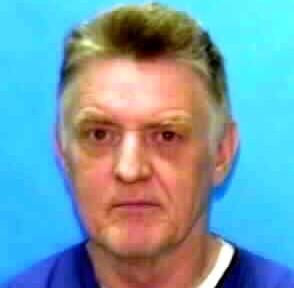
Dennis Whitney
Spree killer Charles Starkweather
Spree killer · USA · 1957
Charles Raymond Starkweather was born in Lincoln, Nebraska, on November 24, 193…
11 victims
Charles Starkweather
Spree killer · USA · 1957
Charles Raymond Starkweather was born in Lincoln, Nebraska, on November 24, 193…
11 victims
 Joseph Taborsky
Spree killer · USA · 1951
Joseph “Mad Dog” Taborsky (March 23, 1924 – May 17, 1960) was a murderer who wa…
7 victims
Joseph Taborsky
Spree killer · USA · 1951
Joseph “Mad Dog” Taborsky (March 23, 1924 – May 17, 1960) was a murderer who wa…
7 victims
 Myron Lance
Spree killer · USA · 1966
Myron Lance was 25 years old on Dec. 17, 1966, when he teamed up with fellow pa…
6 victims
Myron Lance
Spree killer · USA · 1966
Myron Lance was 25 years old on Dec. 17, 1966, when he teamed up with fellow pa…
6 victims
 Walter Kelbach
Spree killer · USA · 1966
Walter Kelbach was 28 years old. Myron Lance was 25 years old. Kelbach and Lanc…
6 victims
Walter Kelbach
Spree killer · USA · 1966
Walter Kelbach was 28 years old. Myron Lance was 25 years old. Kelbach and Lanc…
6 victims
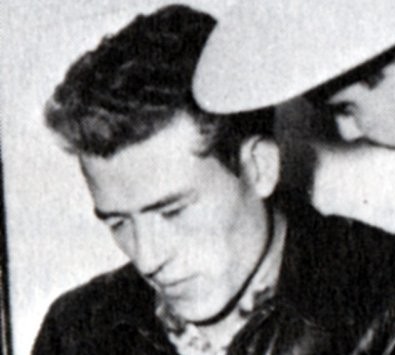 William Cook
Spree killer · USA · 1951
William Cook, also known as “Billy Boy” or “Cockeyed Cook,” committed a spree o…
6 victims
William Cook
Spree killer · USA · 1951
William Cook, also known as “Billy Boy” or “Cockeyed Cook,” committed a spree o…
6 victims
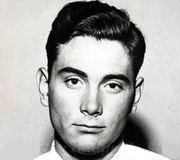 Fred McManus
Spree killer · USA · 1953
Fred McManus was 18 years old and was described as a Marine from Long Island. H…
5 victims
Fred McManus
Spree killer · USA · 1953
Fred McManus was 18 years old and was described as a Marine from Long Island. H…
5 victims
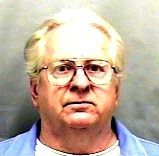 Allen Leroy Anderson
Spree killer · USA · 1976
Allen Leroy Anderson was a 34-year-old vagrant with a long record of felony arr…
8 victims
Allen Leroy Anderson
Spree killer · USA · 1976
Allen Leroy Anderson was a 34-year-old vagrant with a long record of felony arr…
8 victims
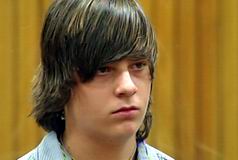 Jordan Nelson
Homicide · New Zealand · 2012
Jordan Nelson was a 13-year-old. He was New Zealand's youngest convicted murder…
1 victim
Jordan Nelson
Homicide · New Zealand · 2012
Jordan Nelson was a 13-year-old. He was New Zealand's youngest convicted murder…
1 victim
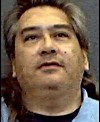 Eric Walter Running
Murderer · USA · 1998
Eric Walter Running was convicted of two counts of aggravated murder involving…
2 victims
Eric Walter Running
Murderer · USA · 1998
Eric Walter Running was convicted of two counts of aggravated murder involving…
2 victims
- Gender
- male
- Country
- USA
- Location
- California/Arizona/Florida, USA
- Date of birth
- 1943
- Age at first offence
- 17
- Characteristics
- kidnapping, robbery
- Victim profile
- Six men and one woman
- Method of murder
- Shooting
- Date(s) of murder
- February-March 1960
- Years active
- 1960
- Date of arrest
- March 5, 1960
- Status
-
Died in custody
Commuted to life imprisonment in 1972 after being sentenced to death on two counts in Florida on June 30, 1960; died in prison in 2005
Case overview
Dennis Whitney was convicted and sentenced in Florida after a course of killings committed across California and Florida. He was later granted commutation and he died in prison in 2005.
Whitney began smoking at age eight and drinking at ten. By age 12, he was a veteran of several armed robberies. He later launched a crosscountry murder spree and killed seven victims between California and Florida.
Timeline
- June 30, 1960 — Whitney was sentenced to death on two counts in Florida.
- February 12, 1960 — Whitney committed the first murder, of Victorville gas station attendant Jimmy Ryan.
- February 20, 1960 — Eight days later, Whitney murdered two homosexuals in Phoenix, Arizona.
- February 24, 1960 — Whitney arrived in Miami, Florida.
- February 29, 1960 — Whitney murdered Ken Mezzarno at a Miami gas station and later murdered 53-year-old Arthur Keeler at another station the same day.
- March 4, 1960 — Police traced Whitney to his motel, but he was already running; on that day he abducted Virginia Selby from the parking lot at Sears.
- July 16, 1963 — The Supreme Court granted an indefinite stay.
- 1972 — Whitney’s sentence was commuted to life imprisonment.
- 2005 — Whitney died in prison.
The offence
Whitney used a stolen .22-caliber pistol to kill his victims between California and Florida.
Murder spree incidents
On February 12, 1960, Whitney murdered Victorville gas station attendant Jimmy Ryan.
Eight days later, Whitney murdered two homosexuals in Phoenix, Arizona. The killings included a “skid row derelict” and “a black chef.” Whitney stole the chef’s car for the drive to Tucson.
In Tucson, Whitney killed another gas station attendant. His car ran out of gas in Tombstone, and he started thumbing rides, arriving in Miami, Florida, by February 24.
On February 29, 1960, Whitney murdered Ken Mezzarno at a Miami gas station. The same day, he struck again and murdered 53-year-old Arthur Keeler at another station.
Three days later, he pumped four bullets into Jack Beecher in another gas station holdup; Jack Beecher survived and treated police to a description of the red-haired bandit and his car.
Whitney abducted Virginia Selby, a Hialeah housewife, from the parking lot at Sears on March 4, 1960. Whitney drove her to a lonely site in northern Palm Beach County. Virginia Selby grabbed a claw hammer and gashed Whitney’s forehead before Whitney shot her to death.
Investigation and arrest
Police traced Whitney to his motel on March 4, 1960, but Whitney was already running.
A posse arrested Whitney nine hours later.
Trial
Whitney was tried and convicted of murder.
The jury’s failure to recommend leniency made a death sentence automatic.
Whitney later explained:
“I did one,” Whitney explained, “and I thought I just might as well go on. I planned to kill maybe a dozen or so. I was fed up. I was broke. I thought I’d better get some money somehow.”
At trial, Whitney confessed to the murder at issue in a written stipulation that was conceded to be the virtual equivalent of a guilty plea. The stipulation confessed the murder, and the only question argued to the jury was whether it would recommend mercy. The jury declined to recommend mercy, and a sentence of death was imposed.
Prior to his trial, Whitney had confessed to five other homicides and one attempted homicide. These confessions were not referred to at trial. They were allegedly given wide publicity by television and radio stations in the area where trial occurred.
Sentencing
Whitney was sentenced to death on two counts in Florida on June 30, 1960.
He came within two days of execution before the Supreme Court granted an indefinite stay on July 16, 1963.
In 1972, Whitney’s sentence was commuted to life imprisonment.
Appeals
Whitney brought a collateral attack following his conviction.
On writ of certiorari, the United States Supreme Court addressed whether Florida had deprived petitioner of equal protection or due process of law by summarily dismissing his collateral attack on a state criminal conviction without conducting an evidentiary hearing.
The question presented was whether Florida, by summarily dismissing the collateral attack without an evidentiary hearing, violated equal protection or due process.
Procedural disposition on certiorari
The Supreme Court dismissed the writ as improvidently granted without prejudice to an application for a writ of habeas corpus in the appropriate United States District Court.
Dissenting opinions
Justice DOUGLAS dissented and argued that the question presented was of considerable importance because it involved whether the petitioner was entitled to an evidentiary hearing to determine the nature and extent of pretrial publicity and whether it was trivial or potentially damaging.
Justice DOUGLAS stated:
“The question presented here is whether Florida has deprived petitioner of equal protection or due process of law by summarily dismissing his collateral attack on a state criminal conviction without conducting an evidentiary hearing.”
He also argued that while States were not compelled to provide any remedy for collateral attack, when a State makes available a means for review it must adhere to requirements of due process and substantial equality and fair process. He referred to Florida’s provision of a means of collateral attack and described petitioner’s allegations, including extensive pretrial publicity and counsel’s refusal to request a change of venue.
Justice DOUGLAS wrote:
“By Rule 1 of the Florida Rules of Criminal Procedure, F.S.A., ch. 924 Appendix, Florida has provided a means of collateral attack.”
Justice DOUGLAS further stated that petitioner’s allegations constituted a prima facie case and that denying the evidentiary hearing was the heart of the wrong allegedly done to petitioner.
Justice DOUGLAS wrote:
“I would vacate the judgment and remand to the Florida courts so that the State may give petitioner the evidentiary hearing to which he is entitled.”
Justice HARLAN dissented, joined by Justice BLACK, and stated that he would affirm the judgment of the state court. Justice HARLAN characterized the murder as committed in the course of an armed robbery and argued that the written stipulation was conceded to be the virtual equivalent of a guilty plea, confessing the murder. He stated that at trial the only question was mercy and that prior confessions were not referred to at trial, though allegedly publicly publicized by television and radio.
Justice HARLAN wrote:
“Petitioner was convicted of a particularly brutal murder, committed in the course of an armed robbery.”
He also argued there was no sound basis for the Court’s not reaching the merits and expressed opposition to encouraging a federal habeas corpus proceeding in the implicit effect of the dismissal “without prejudice.”
Justice HARLAN wrote:
“I would affirm the judgment of the state court.”
Outcome
Whitney’s death sentence was later commuted to life imprisonment in 1972. Whitney died in prison in 2005.
Other details
Whitney’s motive is described as “CE-felony.” The method described was “Shot robbery victims; kidnapped and bludgeoned one woman.”
The record included the following identifiers: “SEX: M,” “RACE: W,” and “W TYPE: N.”
Michael Newton’s An Encyclopedia of Modern Serial Killers - Hunting Humans was cited in the status narrative, including the Supreme Court caption “Dennis Manaford WHITNEY, petitioner, v. STATE OF FLORIDA. No. 68. October Term, 1967. November 13, 1967.”
Spotted an error, or have more information about this case?