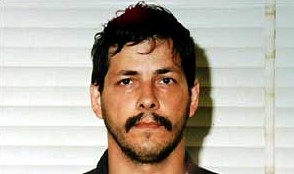
Marc Dutroux
Serial killer Andras Pandy
Serial killer · Belgium · 1986
András Pándy (born June 1, 1927, Chop, Ukraine) was a convicted Belgian serial…
13 victims
Andras Pandy
Serial killer · Belgium · 1986
András Pándy (born June 1, 1927, Chop, Ukraine) was a convicted Belgian serial…
13 victims
 Luis Alfredo Garavito
Serial killer · Colombia/Ecuador · 1992
Luis Alfredo Garavito Cubillos, also known as "La Bestia" ("The Beast") or "Tri…
192 victims
Luis Alfredo Garavito
Serial killer · Colombia/Ecuador · 1992
Luis Alfredo Garavito Cubillos, also known as "La Bestia" ("The Beast") or "Tri…
192 victims
 Edson Isidoro Guimaraes
Serial killer · Brazil · 1999
Edson Isidoro Guimarães was a Brazilian nursing assistant and nurse’s aide at S…
131 victims
Edson Isidoro Guimaraes
Serial killer · Brazil · 1999
Edson Isidoro Guimarães was a Brazilian nursing assistant and nurse’s aide at S…
131 victims
 Javed Iqbal
Serial killer · Pakistan · 1998
Javed Iqbal (born 1956 in Lahore, Punjab, Pakistan; died October 8, 2001, in La…
100 victims
Javed Iqbal
Serial killer · Pakistan · 1998
Javed Iqbal (born 1956 in Lahore, Punjab, Pakistan; died October 8, 2001, in La…
100 victims
 Glen Edward Rogers
Serial killer · USA · 1993
Glen Edward Rogers was a spree killer whose cross-country rampage in 1994-95 le…
70 victims
Glen Edward Rogers
Serial killer · USA · 1993
Glen Edward Rogers was a spree killer whose cross-country rampage in 1994-95 le…
70 victims
 Yang Xinhai
Serial killer · China · 2000
Yang Xinhai (simplified Chinese: 杨新海; pinyin: Yáng Xīnhǎi; 17 July 1968–14 Febr…
67 victims
Yang Xinhai
Serial killer · China · 2000
Yang Xinhai (simplified Chinese: 杨新海; pinyin: Yáng Xīnhǎi; 17 July 1968–14 Febr…
67 victims
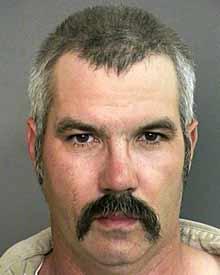 Scott Wilson Williams
Serial killer · USA · 1997
Scott Wilson Williams received three consecutive life sentences without parole…
3 victims
Scott Wilson Williams
Serial killer · USA · 1997
Scott Wilson Williams received three consecutive life sentences without parole…
3 victims
 Henry Lee Jones
Murderer · USA · 2003
Henry Lee “Bam” Jones grew up without a father in Cleveland, Miss. He grew up w…
4 victims
Henry Lee Jones
Murderer · USA · 2003
Henry Lee “Bam” Jones grew up without a father in Cleveland, Miss. He grew up w…
4 victims
 Michael Robinson
Murderer · USA · 1994
Michael Robinson was prosecuted in the Ninth Judicial Circuit, Orange County, u…
1 victim
Michael Robinson
Murderer · USA · 1994
Michael Robinson was prosecuted in the Ninth Judicial Circuit, Orange County, u…
1 victim
 Dale Cregan
Murderer · United Kingdom · 2012
Dale Christopher Cregan (born 6 June 1983) was convicted in the United Kingdom…
4 victims
Dale Cregan
Murderer · United Kingdom · 2012
Dale Christopher Cregan (born 6 June 1983) was convicted in the United Kingdom…
4 victims
- Gender
- male
- Country
- Belgium
- Location
- Hainaut, Belgium
- Date of birth
- November 6, 1956
- Age at first offence
- 39
- Characteristics
- rape, child molester, kidnapping, torture
- Victim profile
- Julie Lejeune, 8, and Mélissa Russo, 8 / An Marchal, 17, and Eefje Lambrecks, 19 / Bernard Weinstein, 44 (former accomplice)
- Method of murder
- Starvation - Buried alive - ???
- Date(s) of murder
- 1995 - 1996
- Years active
- 1995–1996
- Date of arrest
- August 13, 1996
- Status
-
Life imprisonment
Sentenced to life in prison on June 22, 2004
Case details
Marc Dutroux (born 6 November 1956 in Brussels) was a Belgian serial killer and child molester. He was convicted of having kidnapped, tortured and sexually abused six girls during 1995 and 1996, ranging in age from 8 to 19, four of whom he murdered. He was also convicted of having killed a suspected former accomplice, Bernard Weinstein, later proved insane. He was arrested in 1996 and has been in prison since then. His widely publicised trial took place in 2004.
Timeline
- June 24, 1995 — Julie Lejeune (age 8) and Mélissa Russo (age 8) were kidnapped together, probably by Dutroux, and imprisoned in Dutroux's cellar.
- June 14, 2004 — After three months of trial, the jury went into seclusion to reach their verdicts on Dutroux and the three other accused.
- June 17, 2004 — The jury returned verdicts after three days of deliberation; Dutroux, Martin and Lelièvre were found guilty on all charges, while the jury couldn't reach a verdict on Nihoul's role and later required further seclusion.
- June 22, 2004 — Dutroux received the maximum sentence of life imprisonment.
- October 1996 — A protest march (the “White March”) of 300,000 people took place in Brussels demanding reforms after public outcry.
- February 1998 — A 17-month investigation by a parliamentary commission into the Dutroux affair produced a report.
- April 1998 — During transfer to a court house without handcuffs, Dutroux overpowered a guard, took his gun and escaped; he was caught a few hours later.
- 2000 — Dutroux received a five-year sentence for threatening a police officer during his escape.
- 2002 — Dutroux received another five-year sentence for unrelated crimes.
- January 22, 2002 — CNN Online reported an unauthorized televised interview in which Dutroux allegedly admitted locking up two young girls who starved to death in his cellar.
- March 1, 2004 — Dutroux's trial began in Arlon.
- June 14, 2004 — The jury retired to consider its verdict.
- June 17, 2004 — Dutroux was found guilty of kidnapping and raping all six girls.
- September 3, 1996 — Dutroux’s locations of the bodies of An Marchal and Eefje Lambrecks led police to find them buried under a shack next to a house owned by Dutroux in Jumet (Hainaut).
- August 13, 1996 — Dutroux, his wife Martin and Lelièvre were arrested; a search of his houses did not turn up anything.
- August 15, 1996 — Sabine Dardenne and Laetitia Delhez were found alive in the dungeon hidden in Dutroux's basement.
- August 17, 1996 — Dutroux led police to another house of his in Sars-la-Buissière (Hainaut); the bodies of Julie Lejeune and Mélissa Russo and Bernard Weinstein were found in the garden.
- May 28, 1996 — Sabine Dardenne was kidnapped and imprisoned in the dungeon on her way to school, probably by Dutroux and his accomplice Michel Lelièvre.
- August 22, 1995 — An Marchal and Eefje Lambrecks were kidnapped while on a camping trip in Ostend, probably by Dutroux and his drug-addicted accomplice Michel Lelièvre.
- December 6, 1995 — Dutroux was in custody on investigation for his involvement in stolen luxury cars.
- March 20, 1996 — Dutroux was released from custody; it was likely that Julie Lejeune and Mélissa Russo starved to death during this time.
- August 9, 1996 — Laetitia Delhez (14) was kidnapped when she was walking home at night from a public swimming pool.
- August 13, 1996 — Dutroux led investigators to the dungeon hidden in his basement after two days; Sabine Dardenne and Laetitia Delhez were found alive on August 15.
- April 19, 2004 — Sabine Dardenne appeared in court and gave testimony against the defendant.
- April 20, 2004 — Laetitia Delhez took the stand in court describing how she was chained to a bed and raped after being abducted.
- April 21, 2004 — Co-defendant Michel Nihoul emphatically denied involvement in Dutroux's crimes.
- June 10, 2004 — Dutroux made a final appeal in which he said he was not a murderer.
- March 18, 2004 — A handcuff key was found in Dutroux's cell, apparently smuggled in a salt bag.
- March 4, 2004 — Judge Jean-Marc Connerotte testified about the cell Dutroux constructed.
- March 20, 2000 — BBC Online reported Dutroux was transported to a courtroom on charges relating to his brief escape from custody two years ago.
- June 19, 2000 — Dutroux was sentenced to five years in prison on charges of theft and assault in connection with his escape from custody.
- February 2001 — BBC reported Dutroux appeared in court alleging violations of his human rights.
- April 23, 1998 — Dutroux escaped custody during a court visit but was swiftly recaptured.
- September 2009 — Dutroux visited the house on the Avenue Philippeville 128 in Marcinelle under heavy police guard.
- June 24, 1995 — Two eight-year-old girls disappeared near their homes in Charleroi.
Background
Marc Dutroux was born on 6 November 1956 in Brussels. Before the kidnappings, Dutroux was the eldest of five children. His parents, both teachers, emigrated to the Belgian Congo and returned to Belgium in 1960. They separated in 1971 and Dutroux stayed with his mother but left at age 16, working briefly as a prostitute serving men.
He married his first wife at the age of 19; they had two children. He divorced her in 1983. At this point, he already had an affair with Michelle Martin. The two would eventually have three children together. They married in 1989 while both were in prison. They divorced in 2003, again while in prison.
Dutroux was an unemployed electrician. He had a long criminal history involving car theft, muggings and drug dealing. He was released on parole in April 1992 after having served slightly more than three years. Upon releasing Dutroux, the parole board received a warning letter written by his own mother to the prison director.
After his release, he convinced a psychiatrist that he was disabled, resulting in a government pension. He also received sleeping pills and sedatives from the doctor, which he would later use to quiet the abducted girls. He came to own seven houses, most of them vacant, and he used three of them to torture the girls he kidnapped.
The offence
Victims and ages
The convicted offences involved six girls kidnapped, tortured and sexually abused during 1995 and 1996, ranging in age from 8 to 19. The girls were:
- Julie Lejeune (age 8)
- Mélissa Russo (age 8)
- An Marchal (age 17 at the time of kidnapping; 19-year-old in the related prosecution narrative)
- Eefje Lambrecks (age 19 in the prosecution narrative; 17 in another chronology)
- Sabine Dardenne (age 12)
- Laetitia Delhez (age 14)
Four of the six girls were murdered:
- Julie Lejeune
- Mélissa Russo
- An Marchal
- Eefje Lambrecks
The convicted offences also involved the killing of a suspected accomplice:
- Bernard Weinstein (later proved insane)
Kidnapping, imprisonment, abuse and killings
Julie Lejeune (age 8) and Mélissa Russo (age 8) were kidnapped together on June 24, 1995, probably by Dutroux, and imprisoned in Dutroux's cellar. Dutroux repeatedly sexually abused the girls and produced pornographic videos.
An Marchal and Eefje Lambrecks were kidnapped on August 22, 1995 while on a camping trip in Ostend, probably by Dutroux and his drug-addicted accomplice Michel Lelièvre, who was being paid with drugs. Since the dungeon was already in use, Dutroux chained the girls to a bed in a room of his house. The prosecution alleged that Dutroux killed An Marchal and Eefje Lambrecks several weeks later, but the exact circumstances of the murder were unknown.
In late 1995, Dutroux came under investigation for involvement in stolen luxury cars. He was in custody from December 6, 1995 until March 20, 1996. It was likely that Julie Lejeune and Mélissa Russo starved to death during this time.
Sabine Dardenne was kidnapped and imprisoned in the dungeon on May 28, 1996 on her way to school, probably by Dutroux and his accomplice Michel Lelièvre. She was 12 at the time.
On August 9, 1996, the two men kidnapped Laetitia Delhez (14) when she was walking home at night from a public swimming pool. A police investigation found an eye witness who could remember part of a license plate which matched Dutroux's.
Dutroux, his wife Martin and Lelièvre were arrested on August 13, 1996. After two days, both Dutroux and Lelièvre confessed. Then Dutroux led investigators to the dungeon hidden in his basement. Sabine Dardenne and Laetitia Delhez were found alive there on August 15.
In an interview conducted several years later, Ms. Dardenne related that Dutroux told her that she was being kidnapped by a gang, that her parents did not want to pay, and that the gang therefore was planning to kill her. He presented himself as the "good guy" protecting her from the gang. He let her write letters to her family, which he read but never posted.
On August 17, Dutroux led police to another house of his, in Sars-la-Buissière (Hainaut). The bodies of Julie Lejeune and Mélissa Russo as well as Dutroux's supposed accomplice Bernard Weinstein were found in the garden. An autopsy found that the two girls died from starvation.
Dutroux had crushed Weinstein's testicles until he revealed a money hiding place, then he drugged him and buried him alive. Dutroux told police that he had killed Weinstein because he had failed to feed the girls during Dutroux's time in custody.
Finally, Dutroux told police where to find the bodies of An Marchal and Eefje Lambrecks. They were located on September 3, 1996 in Jumet (Hainaut), buried under a shack next to a house owned by Dutroux.
Several hundred pornographic videos with underage victims were found in Dutroux's houses.
Investigation and shortcomings
Authorities were criticised for various aspects of the case. Police searched Dutroux's house on December 13, 1995 and again on December 19, 1995 in relation to his car theft charge. During this time, Julie Lejeune and Mélissa Russo were still alive in the basement dungeon, but they were not found. Since the search was unrelated to kidnapping charges, police searching the house had no dogs or specialised equipment that may have discovered the girls' presence. However, one officer heard children crying.
Dutroux had offered money to a police informer for providing girls and told him that he was constructing a cell in his basement. His mother also wrote a second letter to police, claiming that he held girls captive in his houses. Widespread anger and frustration among Belgians followed police errors and the general slowness of the investigation.
The investigative judge in charge of the case was dismissed after having participated in a fund raising dinner by the girls' parents. His dismissal resulted in a massive protest march (the “White March”) of 300,000 people on Brussels in October 1996, with demands for reforms of Belgium's police and justice system.
A 17-month investigation by a parliamentary commission produced a report in February 1998. The commission found that while Dutroux did not have accomplices in high positions of police and justice system, as he continued to claim, he profited from corruption, sloppiness and incompetence.
In April 1998, Dutroux escaped while being transferred to a court house without handcuffs. He overpowered one of his guards, took his gun and escaped, and he was caught a few hours later. The Minister of Justice, the Minister of the Interior, and the police chief resigned as a result.
In September 1996, nine police officers in Charleroi were detained for questioning regarding involvement and possible negligence in the Dutroux investigation. Marleen De Cockere was arrested on criminal charges of conspiracy in connection with Dutroux's crime ring, described by police as the love interest of Jean Nihoul. Seven other people were later arrested in connection to the child-sex ring.
During April 1997, a parliamentary committee investigating the handling of the Dutroux case said that the young girls who were murdered might have been alive today if police had not made so many mistakes during the investigation into the pedophile ring. The committee recommended that Brussels prosecutor Benoit Dejemeppe be dismissed for failing to do his job properly. It also called for an overhaul of Belgium's police, replacing three services with one local and one national service.
Arrest and detention
Dutroux came under investigation for stolen luxury cars and was in custody from December 6, 1995 until March 20, 1996.
He was arrested on August 13, 1996 together with his wife Martin and accomplice Michel Lelièvre.
During April 1998, while being transferred to a court house without handcuffs, Dutroux overpowered one of his guards, took his gun and escaped; he was caught a few hours later. Dutroux's escape led to the resignations of the Minister of Justice, the Minister of the Interior, and the police chief. In 2000, Dutroux received a five-year sentence for threatening a police officer during his escape. In 2002, he received another five-year sentence for unrelated crimes.
In March 2000, BBC Online reported that Dutroux, clad in handcuffs and a bullet-proof vest and escorted by 10 police officers, was transported to a courtroom in Neufchateau on charges relating to his brief escape from custody two years ago. Judges and lawyers decided to put back the trial until May 2000. In June 2000, he was sentenced to five years in prison on charges of theft and assault in connection with his escape.
In February 2001, BBC reported that Dutroux appeared in court alleging the Belgian State violated his human rights. He demanded release from solitary confinement, fewer body searches, and uninterrupted sleep. His lawyer requested a fine on the state if it failed to improve conditions and requested that the judge inspect Dutroux's specially constructed cell.
Trial
Charges and co-accused
Dutroux's trial began on March 1, 2004. It was a trial by jury with up to 450 people called to testify. The trial took place in Arlon. Dutroux was tried for the murder of An Marchal, Eefje Lambrecks and Bernard Weinstein, a suspected accomplice. While admitting the abductions, he denied all three killings, although he had earlier confessed to the killing of Weinstein.
Dutroux was also charged with auto theft, abduction, attempted murder and attempted abduction, molestation, and three unrelated rapes of women from Slovakia. He faced a maximum sentence of life imprisonment. Belgium abolished the death penalty for all crimes in 1996.
Martin was tried as an accomplice. Michel Lelièvre and Michel Nihoul were also tried. To protect the accused, Martin, Lelièvre and Nihoul were made to sit in a glass cage during the trial.
Dutroux continued to insist he was part of a Europe-wide pedophile ring with accomplices among police officers, businessmen, doctors, and even high-level Belgian politicians.
Trial events and quotations
In a rare move, the jury at the assize trial publicly protested the presiding judge Stéphane Goux's handling of the debates and perceived rushing of the victims' testimonies.
Dutroux dismissed court psychologists’ assessment and publicly protested aspects of the process, including insisting that he was a pawn in a network of pedophiles.
The jury retired after three months of trial on June 14, 2004 and returned on June 17 after three days of deliberation.
During the trial, a key to a pair of handcuffs was found near Dutroux's prison cell, hidden in a bag of salt in a kitchen. CNN.com reported, “As Dutroux watched with a smirk from the dock, she told the court he had made her believe her parents had abandoned her after refusing to pay a ransom for her release. She said Dutroux had posed as her protector, telling her he was keeping her from his boss who wanted to kill her.”
In testimony, Sabine Dardenne described being held captive for 80 days in Dutroux's dungeon when she was 12 years old and said she rejected his apology given in court. Another dispute in testimony occurred when she asked, “Is it not possible to silence this man?”
Laetitia Delhez described how she was chained to a bed and raped after being abducted.
Connerotte testified that he was personally shocked at the “terrifying professionalism” that Dutroux displayed when he constructed the cell in his home to hide his victims. Connerotte testified about how the investigation was hampered by protection of suspects by people in the government. He said: “Rarely,” he said, “has so much energy been spent opposing an inquiry.” Connerotte also made the claim: “That shows how far they had been conditioned.” He blamed the local police in Charleroi for neglect and incompetence that resulted in starvation deaths of Melissa Russo and Julie Lejeune.
During a three-hour address to the court prior to sentencing, Dutroux said:
“I am the scapegoat for the resentments of a sick society that lost its moorings,” he said.
During January 2002 reporting of an unauthorized televised interview, Dutroux allegedly said:
“I kept Julie and Melissa captive at my place, so I'm not innocent. I kept An and Eefje (teenagers An Marchal and Eefje Lambrecks) captive at my place, so I'm not innocent. I'm absolutely guilty.”
Sentencing
On June 22, Dutroux received the maximum sentence of life imprisonment.
Michelle Martin received 30 years. Lelievre received 25 years. Michel Nihoul received 5 years for drug related charges despite being acquitted of kidnapping and conspiracy charges.
Outcome
Dutroux was found guilty on all charges. The jury was not able to reach a verdict on Nihoul's role initially, and later questions required further seclusion. Nihoul was later acquitted from the charge of being an offender on kidnapping and murder of the girls by the court, but was convicted on drug related charges.
Aftermath
Authorities were criticised for shortcomings in the investigation, with public outcry leading to major protests and political responses. A protest march (“White March”) of 300,000 people occurred in October 1996 in Brussels demanding reforms.
A parliamentary commission report was produced in February 1998, and public indignation flared in April 1998 after Dutroux escaped and court and political resignations followed.
In 2000, Dutroux received five years for threatening a police officer during his escape.
In February 2001, Dutroux alleged violations of his human rights and sought changes to his solitary confinement and conditions.
There was speculation about a widespread network of pedophiles and Satanists allegedly including prominent Belgians, made in particular by parents and also by Dutroux. Some sources including Belgian police questioned the accuracy of such claims.
Unhappy with the conduct of the investigation, the parents of Mélissa Russo and Julie Lejeune pulled out of the trial in 2002.
In 2003, nineteen year-old Sabine Dardenne gave her first interview to the press and stated that based on her observations during her 79-day-long captivity, she thought that Dutroux acted alone.
Houses associated with the offences
Marc Dutroux owned seven houses, with four used for kidnappings:
- Avenue Philippeville 128 in Marcinelle — most often cited. All girls were held captive here in the basement and bedroom. The municipality of Charleroi seized ownership due to what happened there and the bad state of the house. Plans existed to create an open space with a memorial site. Dutroux visited the house on 10 September 2009 under heavy police guard in the compulsory purchase procedure.
- Jumet house — An and Eefje were buried in the garden of this house by Dutroux. Weinstein lived in that house for a while. A small monument was placed at the location. The house had since been demolished.
- Marchienne-au-Pont — Julie and Mélissa were held captive for a short while after their kidnapping.
- Sars-la-Buissière (Hainaut) — Julie, Mélissa and Bernard Weinstein were buried here after Dutroux killed them. The house was bought by the municipality of Lobbes in the first months of 2009, and it was planned to make a park with a monument commemorating the victims.
Dutroux started to construct a concealed dungeon in the basement of his house in Marcinelle near Charleroi (Hainaut). The hidden cell was described as 2.15 metres (7 feet) long, less than a meter (3 feet) wide and 1.64 metres (5.38 feet) high, hidden behind a massive concrete door disguised as a shelf.
Other details
Dutroux's trial involved protected publicity measures, including that photos of Dutroux's face were not allowed to be printed in Belgian newspapers in the first week of the trial for privacy reasons.
Dutroux was arrested in 1996 and had been in prison since then.
During reporting, CNN and others referred to the investigation’s failures and delays, including mention that police were told by an informer that Dutroux was digging in his basement creating a dungeon and planning to warehouse victims before according to a police source selling them abroad. No formal report of the tip was made.
During a neighborhood search in August 1996 near where police thought that one of the girls had been kidnapped, an eyewitness remembered part of a license plate which led police to Marc Dutroux. On August 15, 1996 police raided Dutroux's house and discovered a soundproof concrete dungeon in the basement, where Laetitia Delhez (aged 14) and Sabine Dardenne (aged 12) were found alive.
Police discovered further evidence including at least 300 child pornography videos.
Dutroux was described in allowed characterizations as a rape, child molester, kidnapping and torture offender, consistent with the convictions and descriptions of the underlying conduct.

Spotted an error, or have more information about this case?