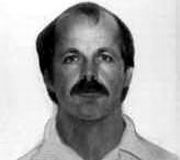
Christopher Wilder
Serial killer Carl Eugene Watts
Serial killer · USA · 1974
Carl Eugene Watts (born November 7, 1953; died September 21, 2007), also known…
100 victims
Carl Eugene Watts
Serial killer · USA · 1974
Carl Eugene Watts (born November 7, 1953; died September 21, 2007), also known…
100 victims
 Rodney Alcala
Serial killer · USA · 1977
Rodney James Alcala (born August 23, 1943) was also known as Rodrigo Jacques Al…
100 victims
Rodney Alcala
Serial killer · USA · 1977
Rodney James Alcala (born August 23, 1943) was also known as Rodrigo Jacques Al…
100 victims
 Glen Edward Rogers
Serial killer · USA · 1993
Glen Edward Rogers was a spree killer whose cross-country rampage in 1994-95 le…
70 victims
Glen Edward Rogers
Serial killer · USA · 1993
Glen Edward Rogers was a spree killer whose cross-country rampage in 1994-95 le…
70 victims
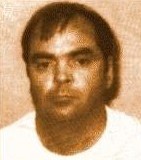 Donald Leroy Evans
Serial killer · USA · 1975
Donald Leroy Evans (born July 5, 1957) was an American serial killer who murder…
60 victims
Donald Leroy Evans
Serial killer · USA · 1975
Donald Leroy Evans (born July 5, 1957) was an American serial killer who murder…
60 victims
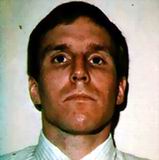 Michael Swango
Serial killer · USA · 1981
Michael Swango (Joseph Michael Swango) was a physician and American serial kill…
60 victims
Michael Swango
Serial killer · USA · 1981
Michael Swango (Joseph Michael Swango) was a physician and American serial kill…
60 victims
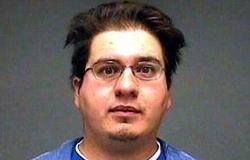 Efren Saldivar
Serial killer · USA · 1989
Efren Saldivar (born 30 September 1969) was an American serial killer who murde…
50 victims
Efren Saldivar
Serial killer · USA · 1989
Efren Saldivar (born 30 September 1969) was an American serial killer who murde…
50 victims
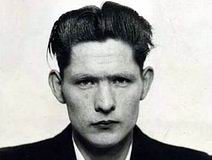 James Smith
Murderer · United Kingdom · 1962
James Smith (1936 - 28 November 1962) was the sixth-to-last criminal to be exec…
1 victim
James Smith
Murderer · United Kingdom · 1962
James Smith (1936 - 28 November 1962) was the sixth-to-last criminal to be exec…
1 victim
 Patrice Alègre
Serial killer · France · 1989
Patrice Alègre was 32 years old when he was arrested on September 5, 1997, in P…
5 victims
Patrice Alègre
Serial killer · France · 1989
Patrice Alègre was 32 years old when he was arrested on September 5, 1997, in P…
5 victims
 William Dillard Powell
Murderer · USA · 1991
William Dillard Powell (also known as William Dillard “Bugsy” Powell) was execu…
1 victim
William Dillard Powell
Murderer · USA · 1991
William Dillard Powell (also known as William Dillard “Bugsy” Powell) was execu…
1 victim
 George Hassell
Mass murderer · USA · 1916
George Jefferson Hassell (July 1888 – February 2, 1928) was born in Smithville,…
13 victims
George Hassell
Mass murderer · USA · 1916
George Jefferson Hassell (July 1888 – February 2, 1928) was born in Smithville,…
13 victims
 Michael Robinson
Murderer · USA · 1994
Michael Robinson was prosecuted in the Ninth Judicial Circuit, Orange County, u…
1 victim
Michael Robinson
Murderer · USA · 1994
Michael Robinson was prosecuted in the Ninth Judicial Circuit, Orange County, u…
1 victim
- Gender
- male
- Country
- USA
- Location
- Florida/Texas/Oklahoma/Nevada/California/New York, USA
- Date of birth
- March 13, 1945
- Age at first offence
- 39
- Characteristics
- rape, torture, fugitive, drug addict
- Victim profile
- Rosario Gonzalez / Elisabeth A. Kenyon, 23 (former girlfriend) / Terry Ferguson, 21 / Terry Walden, 24 / Suzanne Logan, 21 / Sheryl Bonaventura, 18 / Michelle Korfman, 17 / Beth Dodge, 33
- Method of murder
- St abbing with knife - Shooting
- Date(s) of murder
- February-April 1984
- Years active
- 1984
- Date of arrest
- —
- Status
-
Died in custody
Killed instantly during a scuffle with state troopers on April 13, 1984; death was officially listed as a suicide
Case identification
Christopher Bernard Wilder (March 13, 1945 – April 13, 1984) was a serial killer. He abducted and raped at least 10 women and killed at least eight of them during a spree across the United States in early 1984. His rampage began in Florida and continued across the country through Texas, Oklahoma, Nevada, California and New York before he died during a struggle with police in New Hampshire on April 13.
Timeline
- February 26, 1984 — Rosario Gonzalez was last seen at the Miami Grand Prix, where she was employed as a model.
- March 4, 1984 — Elizabeth Kenyon vanished after work from the school where she taught in Coral Gables.
- March 5, 1984 — Elizabeth Kenyon went missing.
- March 13, 1984 — Wilder celebrated his thirty-ninth birthday.
- March 15, 1984 — Wilder went on the run.
- March 18, 1984 — Terry Ferguson was abducted from a shopping center in Satellite Beach and murdered; her body was discovered on March 23.
- March 19, 1984 — Terry Ferguson disappeared from a local shopping mall where witnesses remembered seeing Wilder.
- March 20, 1984 — Wilder abducted a 19-year-old woman and transported her to Bainbridge, Georgia.
- March 20, 1984 — Wilder offered $25 an hour for photographs to a Florida State University woman; when she refused, he punched her, bound her, and locked her in the trunk; he drove her to a motel in Bainbridge, Georgia where he raped and tortured her with electric shocks.
- March 21, 1984 — Terry Walden informed her husband that a bearded older man approached her at the local university soliciting her for a modeling job.
- March 23, 1984 — Terry Ferguson’s body was discovered; Wilder disappeared the next day in some accounts.
- March 23, 1984 — A 24-year-old woman who had been approached in Beaumont, Texas disappeared; her body was dumped in a canal and found later.
- March 25, 1984 — Suzanne Logan disappeared from a shopping mall in Oklahoma City.
- March 26, 1984 — Suzanne Logan’s body was found in Oklahoma City.
- March 29, 1984 — Sheryl Bonaventura was abducted in Colorado.
- March 31, 1984 — Sheryl Bonaventura was shot and stabbed to death in Utah but not found until May 5.
- April 1, 1984 — Michelle Korfman disappeared from a fashion show at the Meadows Mall in Las Vegas, Nevada.
- April 3, 1984 — Wilder was added to the FBI’s “Ten Most Wanted” list.
- April 10, 1984 — Dawnette Wilt was lured away from a shopping mall in Merrillville, Indiana; Wilder raped and tortured her through the course of that day and the next.
- April 12, 1984 — Wilder stabbed Dawnette Wilt; she survived.
- April 12, 1984 — Beth Dodge was abducted near Victor, New York and shot to death in a nearby gravel pit.
- April 13, 1984 — Wilder attempted to abduct another young woman after offering her a ride; he was noticed by state troopers in Colebrook, New Hampshire and was killed during the scuffle; his death was officially listed as a suicide.
Background
Christopher Wilder was born in Australia on March 13, 1945. His father was an American naval officer and his mother an Australian. Wilder almost died at birth but recovered; he nearly drowned in a swimming pool at age two. In 1962 or 1963, Wilder pleaded guilty in Sydney, Australia in the case of a gang-rape at a beach and was put on probation. During probation, he received electroshock therapy and counseling. Wilder’s treatment included electroshock therapy, group therapy, and mandatory counseling, and he later was considered to have aggravated violent sexual tendencies.
He was associated with a 1963 novel titled The Collector by John Fowles. A copy of the novel was found among his possessions after his death. The novel features a man who keeps a woman in his basement against her will until she dies, and Wilder was described as having virtually memorized the text.
In 1968, Wilder married, but his wife left after only a week. After moving to the United States in 1969, he lived in Boynton Beach, Florida in a mansion on Mission Hill Rd and made a small fortune in real estate while developing an interest in photography. Between about 1971 and 1975 he was in and out of court facing various charges related to sexual misconduct. Despite several convictions, Wilder was never jailed for any of these crimes in one account.
Wilder was also described as a fugitive from sexual-assault charges in Sydney, Australia. He was on parole for attempted sexual battery in a Palm Beach County case, according to one account.
During his time on the run in 1984, Wilder was also linked to unsolved cases beyond the United States, including Australia’s “Wanda Beach Murders” of two teenage girls in Sydney in 1965. The bodies of Elizbeth Kenyon and Rosario Gonzalez were never found.
The offence
Abduction and rape
Wilder’s spree across the United States in early 1984 included abduction and rape of multiple victims. Multiple victims were offered modeling opportunities or a pretext involving photography and modeling sessions. When victims resisted or refused, he assaulted them, abducted them, and in some cases tortured them.
He raped a 19-year-old woman in a motel room at Bainbridge, Georgia and then glued her eyes closed and tortured her by applying copper wires to her feet and passing an electric current through them. When she tried to escape, he threatened to kill her and fled after her screams attracted the other guests’ attention.
He was also described as raping and torturing other victims, including Dawnette Wilt, and the account included him using electric shocks, duct tape, rope, and other restraints and methods of torture.
Victims described as abducted during the spree
The account identified multiple victims and detailed circumstances of abduction and killing:
- Rosario Gonzalez, last seen on February 26, 1984 at the Miami Grand Prix; her body was never found.
- Elizabeth Kenyon, reported missing after work in Coral Gables; her body was never found.
- Terry Ferguson, abducted on March 18, 1984 from Satellite Beach; her body was discovered on March 23.
- A 19-year-old woman abducted and transported to Bainbridge, Georgia on March 20, 1984, who was raped and tortured with electric shocks.
- Terry Walden (also described as 23 or 24), approached about modeling in Beaumont, Texas on March 21, 1984 and disappeared on March 23; her body was dumped in a canal and found on March 26 in one account.
- Suzanne Logan, 21-year-old, disappeared from an Oklahoma City shopping mall on March 25, 1984; her body was found in Oklahoma City on March 26; she was raped and tortured before being stabbed to death.
- Sheryl Bonaventura, 18-year-old, abducted on March 29, 1984 in Colorado; she was shot and stabbed to death around March 31 in Utah and not found until May 5.
- Michelle Korfman, 17-year-old aspiring model who disappeared from Las Vegas on April 1, 1984 and was undiscovered until May 13.
- Tina Marie Risico, 16-year-old, photographed near Torrance, California before being abducted and driven to El Centro; she was assaulted; Wilder kept her alive and took her to Taos, New Mexico; they later went to Gary, Indiana where she helped him abduct 16-year-old Dawnette Wilt.
- Dawnette Wilt, 16-year-old, abducted with Tina Marie Risico’s help; Wilder attempted to suffocate her before stabbing her twice; Wilt survived and told police he was heading for Canada.
- Beth Dodge, 33-year-old, forced into Wilder’s car with Tina Marie Risico following; Wilder shot her and dumped her in a gravel pit. The narrative also included a description of Wilder brandishing a gun at a woman near Beverly, Massachusetts on April 13, but the woman escaped unharmed. Another young woman was noticed escaping after an offer to drive her to a gas station.
Killing and methods
The account described multiple killing methods across the spree, including stabbing, shooting, and torture. Specifically:
- Terry Ferguson was murdered, and her body was dumped in a canal where it was discovered on March 23.
- The 19-year-old Bainbridge victim survived and reported torture details.
- Suzanne Logan was raped, tortured, and stabbed to death.
- Sheryl Bonaventura was shot and stabbed to death.
- Michelle Korfman was described as killed and later found.
- Beth Dodge was shot to death.
- In the final confrontation, Wilder died from two gunshots during a struggle with state troopers in Colebrook, New Hampshire.
Investigation
Police linked Wilder to the disappearances and murders after initial enquiries by a private investigator hired to find information about Kenyon by her parents. The account also described investigators beginning to piece together information about rapes, tortures and murders in Florida, Texas, Colorado and Nevada, leading the FBI to identify Wilder as a suspect and place him on the FBI’s Ten Most Wanted list.
One FBI statement quoted described patterns in which an individual matching Wilder’s physical description approached attractive young women, identified himself as a professional photographer, offered a photo session for usage in nationwide magazines, and forcibly abducted the victim if refusal occurred: “In each known incident, an individual meeting Wilder's physical description approaches an attractive young female, identifies himself as a professional photographer and offers the woman a photo session for usage in nationwide magazines. If any resistance or refusal is given, he forcibly abducts the victim.”
The narrative also included a debate about why Wilder drew attention at the gas station in Colebrook, New Hampshire. The account stated that he was likely driving a Trans Am and that Wilt had told police he was heading for Canada.
Arrest / death during confrontation
Wilder was noticed by state troopers in Colebrook, New Hampshire. Troopers recognized Wilder’s car from FBI descriptions. Trooper Leo Jellison jumped onto Wilder’s back during the scuffle for the .357 Magnum. Two shots were fired:
- The first shot hit the killer and went into Jellison’s liver.
- The second blew out Wilder’s heart, killing him instantly. The account stated that Wilder’s death was officially listed as a suicide. Jellison recovered from his injury.
Outcome
Wilder was killed during the April 13, 1984 confrontation with state troopers in Colebrook, New Hampshire; his death was officially listed as a suicide.
Aftermath
Wilder was cremated in Florida, leaving a personal estate worth almost $2 million. Along with the eight known victims he killed during February to April 1984, he was linked to murders and disappearances of many other women in areas he was known to frequent. The bodies of Elizabeth Kenyon and Rosario Gonzalez were never found.
The narrative stated that the FBI declined to search his extensive mansion, which he remodeled several times. Officer Jellison recovered from his wounds.
The account also listed additional victims and linked cases beyond the immediate spree, including alleged connections to Australian deaths in 1965 and other unsolved disappearances and murders involving girls and women with various ages and locations. The account included a description of a phone call after autopsy in which Dr. Robert Christie, the New Hampshire pathologist in charge of Wilder’s case, received a call from a man claiming to represent Harvard University; the caller sought Wilder’s brain for study, and two weeks later Harvard spokesmen denied making any such request.
Spotted an error, or have more information about this case?