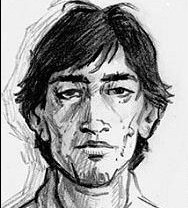
Erno Soto
Serial killer? Wayne Williams
Serial killer? · USA · 1979
Wayne Bertram Williams was sentenced to two consecutive terms of life imprisonm…
24 victims
Wayne Williams
Serial killer? · USA · 1979
Wayne Bertram Williams was sentenced to two consecutive terms of life imprisonm…
24 victims
 Tommy Lynn Sells
Serial killer? · USA · 1980
Tommy Lynn Sells was a white male. He was 35 at the time of the offence and 36…
13 victims
Tommy Lynn Sells
Serial killer? · USA · 1980
Tommy Lynn Sells was a white male. He was 35 at the time of the offence and 36…
13 victims
 John Norman Collins
Serial killer? · USA · 1967
John Norman Collins was implicated in a series of killings targeting students a…
8 victims
John Norman Collins
Serial killer? · USA · 1967
John Norman Collins was implicated in a series of killings targeting students a…
8 victims
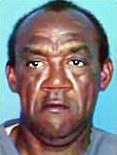 Jerry Frank Townsend
Serial killer? · USA · 1973
Jerry Frank Townsend was sentenced to seven concurrent life sentences in 1980.…
6 victims
Jerry Frank Townsend
Serial killer? · USA · 1973
Jerry Frank Townsend was sentenced to seven concurrent life sentences in 1980.…
6 victims
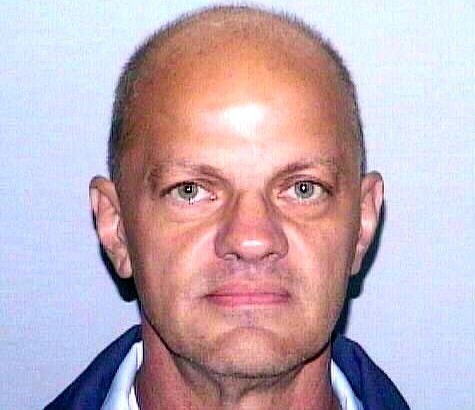 Major Morris
Serial killer? · USA · 1972
Major Morris was a male with the motive listed as sex. He was described as a “l…
6 victims
Major Morris
Serial killer? · USA · 1972
Major Morris was a male with the motive listed as sex. He was described as a “l…
6 victims
 Louis Kenneth Neu
Murderer · USA · 1933
Louis Kenneth Neu was executed by hanging in New York on February 1, 1935. Neu…
2 victims
Louis Kenneth Neu
Murderer · USA · 1933
Louis Kenneth Neu was executed by hanging in New York on February 1, 1935. Neu…
2 victims
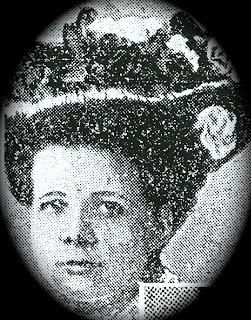 Augusta Fullam
Murderer · India · 1911
Augusta Fullam Augusta Fullam was sentenced to death in 1913. Her sentence was…
2 victims
Augusta Fullam
Murderer · India · 1911
Augusta Fullam Augusta Fullam was sentenced to death in 1913. Her sentence was…
2 victims
 Jose Carranza
Murderer · USA · 2007
Jose Carranza was a suspect in the slayings of three college students in a Newa…
3 victims
Jose Carranza
Murderer · USA · 2007
Jose Carranza was a suspect in the slayings of three college students in a Newa…
3 victims
 Sharon Carr
Homicide · United Kingdom · 1992
Sharon Louis Carr was born 21 December 1979. She was twelve years old when she…
1 victim
Sharon Carr
Homicide · United Kingdom · 1992
Sharon Louis Carr was born 21 December 1979. She was twelve years old when she…
1 victim
 Leonard Keith Lawson
Murderer · Australia · 1961
Leonard Keith Lawson (b. 16 August 1927) was a commercial artist and photograph…
2 victims
Leonard Keith Lawson
Murderer · Australia · 1961
Leonard Keith Lawson (b. 16 August 1927) was a commercial artist and photograph…
2 victims
- Gender
- male
- Country
- USA
- Location
- New York City, New York, USA
- Date of birth
- ???
- Characteristics
- rape, child molester
- Victim profile
- Douglas Owens, 8 / Wendell Hubbard, 9 / Luis Ortiz, 9 / Steven Cropper, 8
- Method of murder
- St abbing with knife
- Date(s) of murder
- 1972 - 1973
- Years active
- 1972–1973
- Date of arrest
- May 25, 1974
- Status
-
Found incompetent for trial; committed to a mental institution for the criminally insane in 1974
Case overview
Erno Soto was found incompetent for trial and was committed to a mental institution for the criminally insane in 1974. The case of New York City’s “Charlie Chopoff” murders remained officially unsolved while police pursued leads for more than two years, from March 1972 through May 1974, including the arrest of Soto and his eventual commitment to the institution.
Timeline
- March 9, 1972 — Douglas Owens, an eight-year-old black boy, was found murdered two blocks from his Harlem flat.
- March 23, 1972 — Police received an anonymous phone tip fingered Soto as a suspect, but it was not pursued.
- April 20 — A ten-year-old black boy was attacked on the city’s Upper West Side; he survived.
- October 23 — Wendell Hubbard, a nine-year-old boy, was killed in East Harlem.
- March 7 — Luis Ortiz, nine years old and a dark-skinned Puerto Rican, vanished on an errand to the corner store; his body was later found in the basement of an apartment house along his route of travel.
- August 17, 1973 — Steven Cropper, eight, was found dead.
- May 25, 1974 — Soto was arrested after bungling the abduction of a nine-year-old Puerto Rican boy; the boy escaped and held Soto for police arrival.
Background
Soto’s marriage was described as a root of his problems. He had been separated from his wife for several years. He later made a stab at reconciliation, but was startled to discover she had conceived a black child in his absence; Soto and his wife were both described as Puerto Rican.
As the boy’s eighth birthday approached, Soto’s behavior grew increasingly erratic. He was committed to Manhattan State Hospital in 1969 and 1970. He returned for further treatment at sporadic intervals thereafter.
Evidence in the case narrative suggested that Soto’s primary relief involved stalking small, dark boys on New York’s streets.
The offence (victims and methods)
The victims were described as “Charlie Chopoff” victims: young boys in New York City.
Douglas Owens
Douglas Owens was described as black and eight years old. On March 9, 1972, he was found murdered two blocks from his Harlem flat. Police discarded on a rooftop described Owens as having been stabbed 38 times in the neck, chest, and back. His penis was slashed but was still appended to his body by “a bloody flap of skin.”
Ten-year-old boy (Upper West Side)
Another victim was described as a black boy, ten years old. On April 20, he was attacked on the Upper West Side. He was stabbed in the neck and back, and he was also sexually mutilated; his penis was severed and carried away by the man who left him for dead. The boy survived and offered homicide detectives a description of the suspect, though his trauma limited his value as a witness.
Wendell Hubbard
On October 23, Wendell Hubbard, described as nine years old, was killed in East Harlem, six blocks from the site of the Owens murder. He was stabbed 17 times in the neck, chest, and abdomen. His penis was removed by the killer and carried away from the scene.
Luis Ortiz
Five months after Wendell Hubbard’s death, on March 7, Luis Ortiz, described as nine years old and a dark-skinned Puerto Rican, vanished on an errand to the corner store. His body was found in the basement of an apartment house along his route of travel. Ortiz was stabbed 38 times in the neck, chest, and back, and his penis was severed and missing.
Steven Cropper
On August 17, 1973, Steven Cropper, described as eight, appeared to break the pattern. Cropper fit the victim profile described for the others: a black boy, eight years old. He was murdered on a rooftop, but unlike the earlier victims, he had not been stabbed. Instead, his fatal wounds were described as razor slashes, and his genitals were still intact. Police initially suspected that a second killer was responsible, but they eventually decided it was too coincidental for a pair of slashers to be simultaneously stalking young black boys.
A separate portion of the narrative added additional detail about Cropper: his slashed artery in his arm and a chest described as resembling mincemeat. It also described that the weapon used was a razor blade instead of a knife, and that this victim differed from the earlier ones because the body was not sexually mutilated.
Investigation and leads
Police pursued the case for more than two years, from March 1972 through May 1974. The file was described as officially open today despite the arrest of a promising suspect and his eventual commitment to the mental institution for the criminally insane.
Lead investigators noted that “Charlie’s” random depredations ended when the man was taken off the street.
An anonymous phone tip, received by police on March 23, 1972, fingered Soto as a suspect in the case, but it was not pursued.
After the April 20 attack, homicide detectives received a description of the suspect from the surviving ten-year-old boy. The description was limited by the trauma, and the narrative also stated that the survivor’s description was that the killer was either Spanish or Italian; it also described that he was actually Puerto Rican. The narrative further stated that the survivor said his skin was neither dark nor fair and that he may have had a limp.
Police initially suspected an additional killer after the Cropper death, but later decided it was too coincidental for two slashers to be simultaneously stalking young black boys.
Arrest and custody events
On May 25, 1974, Soto was arrested after bungling the abduction of a nine-year-old Puerto Rican boy. The abduction occurred with neighbors nearby; the child escaped his clutches and escaped, and neighbors held Soto for police after the child escaped.
In custody, Soto confessed to the Cropper slaying. When police used a lineup involving the surviving victim from the earlier attack, the surviving victim refused to pick Soto out of a lineup and said only that the suspect’s appearance was “similar.”
Officials at Manhattan State Hospital initially provided an alibi, stating that Soto was confined on the date of Cropper’s slaying. Officials later admitted Soto sometimes slipped away from the facility without being noticed. Soto was found to be insane and was returned to the hospital under closer guard.
Mental health and trial status
Soto was found incompetent for trial and was committed to a mental institution for the criminally insane in 1974. The narrative stated that the “unsolved” murders terminated after he was locked away.
Names and later descriptions
Soto’s case was described using a pseudonym. The narrative stated that he was tagged with the pseudonym of “Miguel Rivera” when author Barbara Gelb described his case in “On the Track of Murder” (1975).
Michael Newton was named in connection with “An Encyclopedia of Modern Serial Killers” and “Hunting Humans,” and the narrative stated that those works continued to report the case as open and involved discussion that the case remained officially open in the context of no convictions being established in the narrative.
Other details
Soto was described as continuing to confound some authors who reported his crimes under the false name rather than his own.
The narrative stated that lead investigators said “Charlie’s” depredations ended after Soto was taken off the street.
The narrative also stated that the case was officially unsolved and that “the files are officially open today.” It also asserted that no further “Charlie Chopoff” murders followed Soto’s incarceration.


Spotted an error, or have more information about this case?