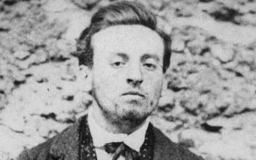
Jean-Baptiste Troppmann
Spree killer Christian Dornier
Spree killer · France · 1989
Christian Dornier Christian Dornier was found insane on November 10, 1989 and w…
14 victims
Christian Dornier
Spree killer · France · 1989
Christian Dornier Christian Dornier was found insane on November 10, 1989 and w…
14 victims
 Guy Martel
Spree killer · France
Guy Martel killed seven people and wounded five others in a shooting spree thro…
7 victims
Guy Martel
Spree killer · France
Guy Martel killed seven people and wounded five others in a shooting spree thro…
7 victims
 Mohammed Merah
Spree killer · France · 2012
Mohammed Merah was a French-Algerian Islamist terrorist who had previously been…
7 victims
Mohammed Merah
Spree killer · France · 2012
Mohammed Merah was a French-Algerian Islamist terrorist who had previously been…
7 victims
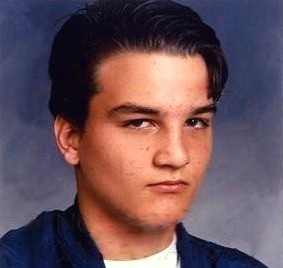 Eric Borel
Spree killer · France · 1995
Eric Borel (11 December 1978 – 24 September 1995) was a French student. At the…
5 victims
Eric Borel
Spree killer · France · 1995
Eric Borel (11 December 1978 – 24 September 1995) was a French student. At the…
5 victims
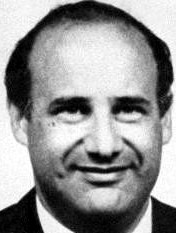 Jean-Claude Romand
Spree killer · France · 1993
Jean-Claude Romand (born February 11, 1954) was a French impostor and murderer…
5 victims
Jean-Claude Romand
Spree killer · France · 1993
Jean-Claude Romand (born February 11, 1954) was a French impostor and murderer…
5 victims
 Sid Ahmed Rezala
Spree killer · France · 1999
Sid Ahmed Rezala Rezala committed suicide apparently by inhaling the dense blac…
3 victims
Sid Ahmed Rezala
Spree killer · France · 1999
Sid Ahmed Rezala Rezala committed suicide apparently by inhaling the dense blac…
3 victims
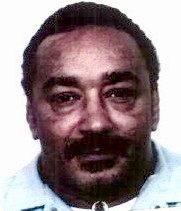 Manuel Pina Babbit
Murderer · USA · 1980
Manuel Pina Babbitt was convicted in Sacramento County of first degree murder w…
1 victim
Manuel Pina Babbit
Murderer · USA · 1980
Manuel Pina Babbitt was convicted in Sacramento County of first degree murder w…
1 victim
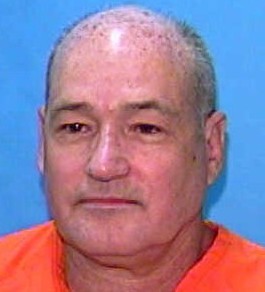 Roy Clifton Swafford
Murderer · USA · 1982
Roy Swafford was convicted and sentenced to death for the 02/14/82 murder of Br…
1 victim
Roy Clifton Swafford
Murderer · USA · 1982
Roy Swafford was convicted and sentenced to death for the 02/14/82 murder of Br…
1 victim
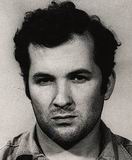 Metod Trobec
Serial killer · former Yugoslavia · 1978
Metod Trobec (born July 6, 1948; died May 30, 2006) was a serial killer in Slov…
6 victims
Metod Trobec
Serial killer · former Yugoslavia · 1978
Metod Trobec (born July 6, 1948; died May 30, 2006) was a serial killer in Slov…
6 victims
 Dora Cisneros
Murderer · USA · 1993
United States of America (Plaintiff-Appellee) · Dora Garcia Cisneros (Defendant…
1 victim
Dora Cisneros
Murderer · USA · 1993
United States of America (Plaintiff-Appellee) · Dora Garcia Cisneros (Defendant…
1 victim
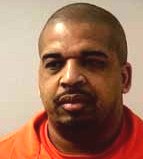 Robert Gattis
Murderer · USA · 1990
Robert Gattis (DOB: 11/18/1961) was a Black male. Gattis was convicted in Octob…
1 victim
Robert Gattis
Murderer · USA · 1990
Robert Gattis (DOB: 11/18/1961) was a Black male. Gattis was convicted in Octob…
1 victim
 Daniel Webb
Homicide · USA · 1989
Daniel Webb (No 124596) was held at Sommers Correctional Institution in Somers,…
1 victim
Daniel Webb
Homicide · USA · 1989
Daniel Webb (No 124596) was held at Sommers Correctional Institution in Somers,…
1 victim
- Gender
- male
- Country
- France
- Location
- Paris, France
- Date of birth
- October 5, 1849
- Age at first offence
- 20
- Characteristics
- kidnapping, dismemberment, torture, robbery
- Victim profile
- Jean Kinck, his wife Hortense Rouselle, and their six children Alfred, Henri, Marie, Achille, Emile and Gustave Kinck
- Method of murder
- Poisoning ( prussic acid) / St abbing with knife or pick / Strangulation
- Date(s) of murder
- August -September 1869
- Years active
- 1869
- Date of arrest
- September 22, 1869
- Status
-
Executed
Executed by guillotine in Paris on January 19, 1870
Case record: Jean-Baptiste Troppmann
Background
Jean-Baptiste Troppmann was born in Alsace in 1848 and was executed at the age of 22. In 1869, Jean-Baptiste Troppmann connected with Jean Kinck with the plan to set up a counterfeiting operation.
Troppmann’s lethality led him to the guillotine at a young age. He was described as an Alsatian serial killer of the 19th century. He also appeared as an Alsatian aged 21 who was sentenced to death and executed. A national funeral was held for the Kinck family after the deaths.
Troppmann had come to know the Kinck family in Roubaix, where he was in charge of assembling the machine to make nozzles for spinning that his father had invented. His father was described as the partner of Jean Gaspard Kambly, the son of a chemical matches maker of Cernay. Troppmann was later described as an associate in the “Hattererand&Co” enterprise, maker of nozzles for spinning.
Troppmann appeared to have been introverted and ambitious, and was described as saddened by the economical problems of his family. He had two brothers and a sister who changed their names after the case.
Troppmann was moved from Le Havre to a Parisian jail, and later moved to the prison of “La conciergerie” at Paris.
The offence
Troppmann killed an entire family of eight, one day at a time, and murdered the husband and then the wife and children.
In the 1869 plan with Jean Kinck, Troppmann fed his partner a lethal dose of prussic acid mixed in wine while the two travelled to Herrenfluch to survey a site for a money printing plant. After Jean Kinck was out of the way, Troppmann wired to his wife asking her for money. Mrs. Kinck believed Troppmann was acting on behalf of her husband and sent him a check.
Troppmann was unable to cash the money and arranged a meeting with the wife in Paris. Troppmann then hacked Jean Kinck into pieces. Troppmann later murdered Hortense Kinck and her remaining five children in a remote spot near the Pantin Common.
The bodies were described as being atrociouly mutilated, and stabbing and strangling were described. The discovery included:
- the corpse of a child found in an area of alfalfa, between the fort of Auberviliers and the station of Pantin (2 km away from Paris);
- after digging, the atrociouly mutilated corpses of three children, aged 2, 6 and 10;
- the corpse of a forty year old woman who appeared to be pregnant of a 6 months foetus;
- an eight year old kid;
- and another one aged 13.
Troppmann also confessed to how he retrieved money and carried out killings:
- Troppmann said he had a flask of prussic acid (cyanide) and emptied its contents into a bottle of wine to invite Jean Kinck to drink.
- Troppmann said he emptied the contents while using a moment when Jean Kinck was not seeing him, and that Jean Kinck immediately dropped dead.
- Troppmann said he took Kinck’s papers, including two checks and Kinck’s money, and buried him.
- Troppmann said he asked Mrs Kinck to send him money to Guebwiller’s post office, and that three attempts to retrieve the money failed because the employee refused.
Troppmann stated he led Gustave Kinck to a hotel and that Gustave wrote to his mother to tell her to go to Paris with her children. Troppmann said he then told Gustave he was going to lead him to his father. Troppmann said he stabbed Gustave “in the back” in an isolated place in the middle of the fields, and said he put Gustave into a grave after having robbed him.
Troppmann also described how Hortense Kinck arrived in the evening of September 19 and how he came to join her at the station and warned her he was going to lead her to her husband. Troppmann described inviting Hortense and the two youngest kids to follow him on foot after taking a cab to the fields, while leaving three other children in the cab.
Troppmann’s explanation to investigators included statements about motive and suppression of witnesses.
“I killed Kinck to grab the money he said he had in his bank. It was a necessity for me to kill the other members of the family so to suppress all the witnesses”
After the murders, Troppmann attempted to exonerate himself by inventing accomplices at a later stage.
“I led Gustave to the Hotel where from he wrote to his mother to tell her to go to Paris with her children. I then told him I was going to lead him to his father...When we were in an isolated place, in the middle of the fields, I stabbed my companion in the back. Whether I stabbed him again, I don't remember... I put Gustave into a grave after having robbed him...The kinck lady arrives in the evening of september 19th. I came to join her at the station and I warned her that I was going to lead her to her husband..”
“I had in my pocket a flask of prussic acid (cyanide)...Using a moment that Jean Kinck was not seeing me, I emptied the contents of the flask into a bottle of wine, and arrived at the top of the hill, I invited Jean Kinck to drink; what he did and he immediately dropped dead”.
“...the relation of the murders is frightening. He bites the thumb of the executioner”
Troppmann also described actions taken after meeting Gustave on September 17 following a missed attempt in Guebwiller, and referenced a forged procuration with a redacted element having no legal signature, so the money was not given.
Investigation
A farmer discovered the corpse of a child in an area of alfalfa between the fort of Auberviliers and the station of Pantin (2 km away from Paris) and alerted the authorities.
After digging, three children’s bodies were found, with ages 2, 6 and 10 years. The investigation later uncovered the bodies of Hortense Kinck, a forty year old pregnant woman with a 6 months foetus, and the corpses of an eight year old kid and another one aged 13.
The justice discovered identities through cross checkings. The corpses were identified as:
- Alfred Kinck
- Henri Kinck
- Marie Kinck
- Achille Kinck
- Emile Kinck and their mother Hortense Kinck, born Rouselle.
The family had reserved two rooms in a hotel in the town after arriving in the area with the train of Roubaix.
Investigators questioned the hotel manager about Jean Kinck after which the family would “disappear...forever” in the narrative provided.
Jean Kinck was described as born at Guebwiller in 1826. Jean Kinck married Hortense Rouselle in 1852, and six children were described as having been born from that marriage.
Troppmann was described as having gone to Alsace to meet Jean Kinck on August 25th as Troppmann got off the train at Bollwiller, and the two then took an omnibus to Soultz and headed for Wattwiller. A track of Kinck was lost, but Troppmann’s track continued. Troppmann was looked for without success during all of the month of October.
Arrest
On September 22nd, the case reached Le Havre with the strange arrest of a young man first arrested for the lack of papers.
A policeman spoke about the tragedy of Pantin to the arrested young man, and the arrested young man attempted to commit suicide by throwing himself into the water. He was saved in time.
Papers of Gustave Kinck were found on him. The next day, he gave his true identity: Jean-Baptiste Troppmann, born of October 5th 1849 at Cernay. He was described as a mechanic and friend of Jean Kinck, described as Alsatian and mechanic like him.
Troppmann confesses to having indirectly participated in the sextuple murder but accuses Gustave and Jean Kinck to have made the killings. The three men should then have left for America.
Troppmann was moved to a Parisian jail from Le Havre.
On September 26th, new events occurred. Thirty meters away from the place of the slaughter, the corpse of Gustave Kinck was discovered with a knife stabbed in his neck. Troppmann imputed this new murder to Jean Kinck, still not found.
Trial
On December 31st, after five days of trial in the court of assizes, Troppmann was found guilty and sentenced to death. The emperor refused to the murderer his pardon.
Troppmann was moved to the prison of “La conciergerie” on December 9th, described as the prison where Marie-Antoinette was jailed.
“He bites the thumb of the executioner”
On the run-up to trial, there were multiple turns. On November 12th, Troppmann made a confession and confirmed he went on August 25th with Jean Kinck to the Herrenfluh (ruin above Uffholtz) to show him a workshop of forged money hidden in one of the undergrounds of the castle.
Troppmann said he took the papers of Kinck including two checks and his money, then buried him.
Troppmann said he asked Mrs Kinck to send him money to Guebwiller’s post office and tried three times to retrieve the money, but the employee refused.
Troppmann also described a missed attempt in Guebwiller. Troppmann described that he attracted Gustave to join him on September 17th after that missed attempt, and also referenced the forged procuration redacted by Troppmann having no legal signature, so the money was not given to him.
On November 29th, Troppmann cancelled his confession and attempted to exonerate himself by inventing three accomplices whose identity he would never give. Troppmann said he buried in the neighborhood of Steinbach a mysterious wallet containing all the proofs against his accomplices. The wallet was never found, and the justice ignored this last confession, “probably completely made up...”.
Sentencing
Appeals
No appeals were described in the provided material.
Outcome
Troppmann was executed by guillotine in Paris on January 19, 1870.
The execution happened on January 19th 1870 before a huge crowd at place de la Roquette in front of the prison.
At 7am exactly, Jean-Baptiste Troppmann was swivelled on the guillotine’s board. At the moment the blade fell down, he bit the thumb of the executioner.
After the execution, Troppmann’s body was buried in the cemetery of Ivry.
Aftermath
The Kinck family received a national funeral after the case.
“FuckFrance.com (1848-70) AKA: Human Tiger”
The narrative stated that the Troppmann case shakes France “just before the war of 1870.” It also stated that society was fortunate in catching him early in his murderous career.
A farmer discovered a first child corpse and the atrociouly mutilated bodies were uncovered after digging, which led to the identification of the Kinck family and Troppmann’s arrest.
Spotted an error, or have more information about this case?