Gerald Wesley Miller
Murderer Brian Kevin Rosenfeld
Murderer · USA · 1985
Brian Kevin Rosenfeld Brian Kevin Rosenfeld was sentenced to three concurrent l…
23 victims
Brian Kevin Rosenfeld
Murderer · USA · 1985
Brian Kevin Rosenfeld Brian Kevin Rosenfeld was sentenced to three concurrent l…
23 victims
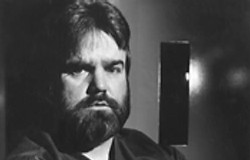 Marvin Gray
Murderer · USA · 1975
Marvin Gray was convicted killer who claimed responsibility for 23 slayings and…
23 victims
Marvin Gray
Murderer · USA · 1975
Marvin Gray was convicted killer who claimed responsibility for 23 slayings and…
23 victims
 Yahweh ben Yahweh
Murderer · USA · 1980
Yahweh ben Yahweh was born and legally named Hulon Mitchell Jr. (October 27, 19…
23 victims
Yahweh ben Yahweh
Murderer · USA · 1980
Yahweh ben Yahweh was born and legally named Hulon Mitchell Jr. (October 27, 19…
23 victims
 Russell Ellwood
Murderer · USA · 1991
Russell Ellwood was a former taxi driver. Authorities suspected him of killing…
20 victims
Russell Ellwood
Murderer · USA · 1991
Russell Ellwood was a former taxi driver. Authorities suspected him of killing…
20 victims
 Henry Lee Hunt
Murderer · USA · 1984
Henry Lee Hunt was a Lumbee Indian. He was convicted for the 1984 slayings of J…
2 victims
Henry Lee Hunt
Murderer · USA · 1984
Henry Lee Hunt was a Lumbee Indian. He was convicted for the 1984 slayings of J…
2 victims
 Eric Christopher Payne
Murderer · USA · 1997
Eric Christopher Payne v. Commonwealth of Virginia (Record No. 980559); Eric Ch…
2 victims
Eric Christopher Payne
Murderer · USA · 1997
Eric Christopher Payne v. Commonwealth of Virginia (Record No. 980559); Eric Ch…
2 victims
 Joe Ball
Serial killer · USA · 1936
Joe Ball (January 6, 1896 – September 24, 1938) was an American serial killer.…
14 victims
Joe Ball
Serial killer · USA · 1936
Joe Ball (January 6, 1896 – September 24, 1938) was an American serial killer.…
14 victims
 Monty Allen Delk
Murderer · USA · 1985
November 28, 1986 — Monty Allen Delk telephoned Gene Olan "Bubba" Allen II and…
2 victims
Monty Allen Delk
Murderer · USA · 1985
November 28, 1986 — Monty Allen Delk telephoned Gene Olan "Bubba" Allen II and…
2 victims
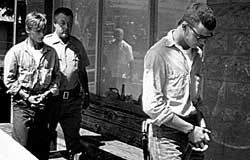 Thomas Eugene Braun
Spree killer · USA · 1967
Thomas Eugene Braun was sentenced to death in California. · Thomas Eugene Braun…
4 victims
Thomas Eugene Braun
Spree killer · USA · 1967
Thomas Eugene Braun was sentenced to death in California. · Thomas Eugene Braun…
4 victims
- Gender
- male
- Country
- USA
- Location
- Salem, Oregon, USA
- Date of birth
- 1936
- Age at first offence
- 48
- Characteristics
- —
- Victim profile
- Women
- Method of murder
- ???
- Date(s) of murder
- 1984 / 1989
- Years active
- 1984–1989
- Date of arrest
- —
- Status
-
Life imprisonment
Sentenced to life in prison on two counts in 1993
Case information
Gerald Wesley Miller was convicted of two counts of murder and was sentenced to life in prison on two counts in 1993. The case involved a petition for post-conviction relief and a subsequent motion for a delayed appeal.
Timeline
- 1984/89 — The modus operandi was described as “Bluebeard” slayer of wives.
- 1993 — Miller was sentenced to life in prison on two counts.
- July 24, 2000 — The post-conviction trial court entered a judgment denying relief.
- September 12, 2001 — The appellate proceedings were filed.
- January 25, 2001 — A motion for delayed appeal after time limits was filed on the appellant’s motion for leave to file a notice of appeal after time limits.
- January 8, 2001 — Appellate counsel learned of the appointment after receiving a letter from petitioner.
- January 26, 2001 — Appellate counsel filed an amended notice of appeal and a more detailed motion for delayed appeal.
- January 25, 2001 — Brewer, P. J. addressed the motion for leave to file a notice of appeal after time limits and the motion for delayed appeal.
- January 25, 2001 — The motion for delayed appeal was denied.
- October 18 (year not specified) — Petitioner sent a pro se notice of appeal to this court.
- October 20 (year not specified) — Counsel mailed to this court both a notice of appeal and a motion for a delayed appeal.
- October 23 (year not specified) — Petitioner filed a request with the trial court for appellate counsel.
- September 21 (year not specified) — Counsel filed a notice pursuant to UTCR 2.030, reminding the court that the case had been under advisement for more than 60 days.
- November 6 (year not specified) — The trial court appointed appellate counsel for petitioner.
- January 8, 2001 — Appellate counsel was unaware of the appointment until he received a letter from petitioner.
- July 24, 2000 — Post-conviction trial court entered a judgment denying relief.
- September 21 (year not specified) — Counsel filed the UTCR 2.030 notice.
- Shortly thereafter (year not specified) — Counsel learned that a judgment had been entered and notified petitioner.
- Afterwards (year not specified) — Counsel mailed notice and a motion for delayed appeal as described.
Background
The appellate case concerned a motion for leave to file a notice of appeal after time limits in connection with a judgment denying a petition for post-conviction relief.
Parties and court
Ronald J. Pahl, Judge.
The proceeding included:
- Harrison Latto for motion.
- Hardy Myers, Attorney General.
- Michael D. Reynolds, Solicitor General.
- Timothy A. Sylwester, Assistant Attorney General, contra.
The panel included Brewer, Presiding Judge; Deits, Chief Judge; and Armstrong, Judge.
Post-conviction judgment and notice of entry
The post-conviction trial court entered a judgment denying relief. ORCP 70 B required the court clerk to send notice of the entry of the judgment to both parties.
The trial court administrator notified only the Attorney General’s office that the judgment was entered and did not notify petitioner or petitioner’s attorney.
After the judgment was entered but without notice to petitioner or counsel, counsel filed a notice pursuant to UTCR 2.030, reminding the court that the case had been under advisement for more than 60 days. Shortly thereafter, counsel learned that a judgment had been entered and then notified petitioner.
Appeal filings and delays
Petitioner sent a pro se notice of appeal to this court and counsel later mailed to this court both a notice of appeal and a motion for a delayed appeal.
Petitioner also filed a request with the trial court for appellate counsel, and on a later date the trial court appointed appellate counsel. Appellate counsel was unaware of the appointment until receiving a letter from petitioner.
Appellate counsel subsequently filed an amended notice of appeal and a more detailed motion for delayed appeal.
Motion for delayed appeal
Brewer, P. J. considered the motion for delayed appeal from a judgment denying the petition for post-conviction relief.
Miller asserted that his post-conviction counsel’s failure to file a timely notice of appeal violated his statutory right to suitable counsel under ORS 138.590. He argued that the reasoning of State ex rel Juv. Dept. v. Geist should be extended to the statutory right to suitable counsel in post-conviction proceedings. Miller also relied on State ex rel SOSCF v. Hammons, where, based on Geist, a delayed appeal was allowed as a remedy where appointed counsel failed to file a timely notice of appeal in a termination judgment context.
The court declined to extend Geist and Hammons to this post-conviction proceeding and denied the motion for delayed appeal.
Arguments and legal analysis in the appellate decision
Defendant’s position
The defendant opposed the motion, arguing that Felkel v. Thompson determined that ORS 138.650 imposes, without exception, a 30-day time limit for filing a notice of appeal from a judgment denying post-conviction relief.
Petitioner’s position
Miller argued that he was entitled to a delayed appeal despite Felkel because counsel was unsuitable for failing to file a timely notice of appeal.
Discussion of Felkel and ORS 138.650
In Felkel, the court dispensed with a former practice that allowed post-conviction petitioners to file a late notice of appeal based on a showing of good cause.
In that decision, earlier reliance had been placed on:
- ORS 138.071(4)(a), and
- ORS 138.650.
The Felkel decision concluded that ORS 138.650 requires, without exception, that appeals from post-conviction judgments be filed and served within 30 days of entry of the final judgment.
Geist and Hammons
In Geist, the Supreme Court held that a statutory right to adequate counsel applied to parental rights termination proceedings, and it recognized that, absent an express legislative procedure for vindicating the right, this court could fashion an appropriate remedy. The appropriate procedure was to raise the issue on direct appeal from the termination judgment.
In Hammons, the court allowed a delayed appeal as a remedy where counsel’s failure to timely file a notice of appeal nullified statutory appeal rights, reasoning that without allowing a delayed appeal the petitioner would be left remediless.
Right to counsel in post-conviction proceedings
The court examined the statutory basis for counsel in post-conviction proceedings:
- ORS 138.590 governs appointment of trial counsel for indigent petitioners in post-conviction proceedings.
- ORS 138.500 provides for appointment of appellate counsel.
The court considered case law defining the nature and limits of the statutory right to suitable counsel, including:
- McClure v. Maass, which held that post-conviction counsel is not obligated to scour the record and that the responsibility for discerning and selecting issues rests with the petitioner.
- Hetrick v. Keeney, holding that alleged inadequacy of prior post-conviction counsel is not an enumerated ground for relief under ORS 138.530(1).
- Page v. Cupp, which reaffirmed that any right to counsel cannot be vindicated in later litigation.
- Church v. Gladden, which explained that allowing successive challenges based on counsel inadequacy would remove finality and enable relitigation “ad infinitum.”
Distinguishing termination proceedings from post-conviction proceedings
The court discussed differences between termination of parental rights proceedings and post-conviction proceedings. In the court’s analysis, termination proceedings involve the state initiating an action to deprive a parent of the right to be a parent and require finality achieved consistent with due process, making Geist and criminal delayed-appeal concepts analogous.
By contrast, post-conviction is described as a collateral action initiated by the petitioner after a criminal conviction already deprived the petitioner of a liberty interest, making the Geist rationale not controlling.
The court also cited Elkins v. Thompson, which explained that Geist’s rationale was not controlling in a post-conviction setting where the petitioner’s motion did not address the performance of counsel in the underlying proceeding.
Declining to imply a delayed-appeal remedy
The court concluded there was no textual or contextual support to create a delayed-appeal right for post-conviction petitioners arising from ORS 138.590(1).
It also relied on statutory context, including the fact that:
- the legislature provided a statutory remedy for inadequacy of counsel who fails to timely perfect a criminal appeal, but
- it had not provided a statutory mechanism for reviewing counsel adequacy in post-conviction proceedings, including a delayed appeal remedy.
Accordingly, it declined to imply a statutory right to a delayed appeal.
Outcome
Motion for delayed appeal was denied.
Armstrong, J. dissented.
Dissent (Armstrong, J.)
Armstrong, J. dissented. The dissent argued that Oregon statutes provide for appointment of counsel for indigent litigants in post-conviction proceedings and that the statutory right includes adequate representation. The dissent asserted that where the legislature failed to provide a specific procedure to vindicate the right, Oregon courts had held that the remedy was to permit challenge to adequacy in the proceeding where counsel appeared.
The dissent traced the doctrine from Geist, stating that Geist recognized that absent express legislative procedures, this court may fashion an appropriate remedy, and that Geist led to raising inadequacy on direct appeal.
The dissent argued that ORS 138.590 and ORS 138.500 both require appointment of “suitable counsel possessing skills and experience commensurate with” the nature and complexity of the cases, and that counsel failing to meet that standard should be considered not suitable.
The dissent also argued that Church v. Gladden and related cases do not directly apply because the remedy sought was to address inadequacy in the proceeding in which inadequate representation occurred.
The dissent further argued that differences in the nature of relief sought and legislative inclusion of delayed appeals in criminal cases should not preclude implying a delayed-appeal remedy in post-conviction proceedings where appointed counsel failed to file a timely notice of appeal.
Clerk notice and counsel responsibility
In the dissent’s analysis, appointed counsel’s failure to file a timely notice of appeal was attributable in part to the trial court clerk’s failure to send notice of entry of the judgment, as required by ORCP 70 B(1). The dissent stated that case law indicated this does not excuse untimely filing.
The dissent cited Junction City Water Control v. Elliott and Far West Landscaping v. Modern Merchandising for the proposition that parties or counsel are personally responsible for inspecting trial court records and are not allowed to rely on court staff information about entry of judgment.
The dissent included the view that counsel’s failure to determine that a judgment had been entered and failure to file a timely notice of appeal constituted inadequate assistance.
Dissent conclusion
The dissent concluded that the majority erred by concluding the court lacked authority to provide a delayed appeal remedy for inadequate assistance of appointed counsel.
Statutory provisions quoted verbatim
ORCP 70 B provides, in part: "The clerk, on the date judgment is entered, shall mail a notice of the date of entry of the judgment in the register and shall mail a copy of the entry in the judgment docket. * * * The clerk shall mail the notice to the attorneys of record, if any, of each party who is not in default for failure to appear."
ORS 138.650 provides: "Either the petitioner or the defendant may appeal to the Court of Appeals within 30 days after the entry of final judgment on a petition [for post-conviction relief] pursuant to ORS 138.510 to 138.680. The manner of taking the appeal and the scope of review by the Court of Appeals and the Supreme Court shall be the same as that provided by law for appeals in criminal actions * * * ."
ORS 138.071(4)(a) provides: "Upon motion of a defendant, the Court of Appeals shall grant the defendant leave to file a notice of appeal after the time limits described in subsections (1) to (3) of this section if: "(A) The defendant, by clear and convincing evidence, shows that the failure to file a timely notice of appeal is not attributable to the defendant personally; and "(B) The defendant shows a colorable claim of error in the proceeding from which the appeal is taken."
ORS 138.590 provides, as relevant: "(1) Any petitioner who is unable to pay the expenses of a proceeding pursuant to ORS 138.510 to 138.680 or to employ suitable counsel possessing skills and experience commensurate with the nature of the conviction and complexity of the case for such a proceeding may proceed as an indigent person pursuant to this section upon order of the circuit court in which the petition is filed.
"* * * * * "(4) In the order to proceed as an indigent person, the circuit court shall appoint suitable counsel to represent petitioner. Counsel so appointed shall represent petitioner throughout the proceedings in the circuit court."
ORS 138.500 provides, as relevant: "(1) If a defendant in a criminal action of a petitioner in a proceeding pursuant to ORS 138.510 to 138.680 wishes to appeal from an appealable adverse final order or judgment of a circuit court and if the person is without funds to employ suitable counsel possessing skills and experience commensurate with the nature and complexity of the case for the appeal, the person may request the circuit court from which the appeal is or would be taken to appoint counsel to represent the person on appeal. * * * "* * * * * * "(b) If, based upon a request under paragraph (a) of this subsection, the court finds that petitioner or defendant previously received the services of appointed counsel or currently is without funds to employ suitable counsel for an appeal, the court shall appoint counsel to represent petitioner or defendant on the appeal, subject to applicable contracts entered into by the State Court Administrator under ORS 151.460."
ORCP 70 B(1) provides, as relevant: "All judgments shall be filed and notation of the filing shall be entered in the register by the clerk. The clerk, on the date the judgment is entered, shall mail a notice of the entry of the judgment in the register and shall mail a copy of the entry in the judgment docket. If the judgment was not docketed in the judgment docket, the clerk shall give notice of that fact. The clerk shall mail the notice to the attorneys of record, if any, of each party who is not in default for failure to appear. If a party who is not in default for failure to appear does not have an attorney of record, such notice shall be mailed to the party. The clerk shall also make a note in the register of the mailing."
Other details
The appellate caption included:
- IN THE COURT OF APPEALS OF THE STATE OF OREGON
- CV97-0197; A112032
- GERALD WESLEY MILLER, Appellant, v. G. H. BALDWIN, Superintendent, Eastern Oregon Correctional Institution, Respondent.
- Appeal from Circuit Court, Umatilla County.
- FILED: September 12, 2001


Spotted an error, or have more information about this case?