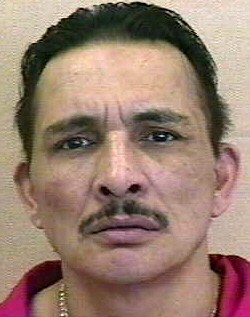
Henry Lee Hunt
Murderer Brian Kevin Rosenfeld
Murderer · USA · 1985
Brian Kevin Rosenfeld Brian Kevin Rosenfeld was sentenced to three concurrent l…
23 victims
Brian Kevin Rosenfeld
Murderer · USA · 1985
Brian Kevin Rosenfeld Brian Kevin Rosenfeld was sentenced to three concurrent l…
23 victims
 Marvin Gray
Murderer · USA · 1975
Marvin Gray was convicted killer who claimed responsibility for 23 slayings and…
23 victims
Marvin Gray
Murderer · USA · 1975
Marvin Gray was convicted killer who claimed responsibility for 23 slayings and…
23 victims
 Yahweh ben Yahweh
Murderer · USA · 1980
Yahweh ben Yahweh was born and legally named Hulon Mitchell Jr. (October 27, 19…
23 victims
Yahweh ben Yahweh
Murderer · USA · 1980
Yahweh ben Yahweh was born and legally named Hulon Mitchell Jr. (October 27, 19…
23 victims
 Russell Ellwood
Murderer · USA · 1991
Russell Ellwood was a former taxi driver. Authorities suspected him of killing…
20 victims
Russell Ellwood
Murderer · USA · 1991
Russell Ellwood was a former taxi driver. Authorities suspected him of killing…
20 victims
 Duane Roger Morrison
Murderer · USA · 2006
Duane Roger Morrison (c. 1952—September 27, 2006) was the lone gunman who storm…
1 victim
Duane Roger Morrison
Murderer · USA · 2006
Duane Roger Morrison (c. 1952—September 27, 2006) was the lone gunman who storm…
1 victim
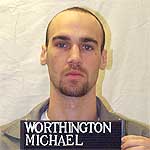 Michael Worthington
Murderer · USA · 1995
Michael Worthington was convicted after pleading guilty to first-degree murder,…
1 victim
Michael Worthington
Murderer · USA · 1995
Michael Worthington was convicted after pleading guilty to first-degree murder,…
1 victim
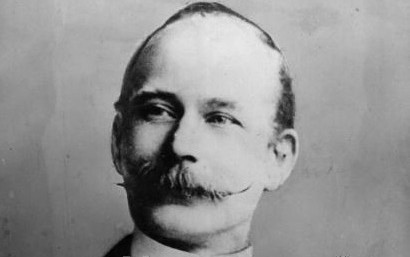 Frederick Seddon
Murderer · United Kingdom · 1911
Frederick Henry Seddon (sometimes called Sedden; 1870 – 18 April 1912) was a Br…
1 victim
Frederick Seddon
Murderer · United Kingdom · 1911
Frederick Henry Seddon (sometimes called Sedden; 1870 – 18 April 1912) was a Br…
1 victim
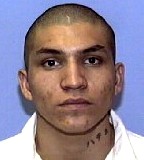 Jorge Alfredo Salinas
Homicide · USA · 2001
Jorge Alfredo Salinas TDCJ Number: 999428 Date of Birth: 04/01/1984 Native Coun…
2 victims
Jorge Alfredo Salinas
Homicide · USA · 2001
Jorge Alfredo Salinas TDCJ Number: 999428 Date of Birth: 04/01/1984 Native Coun…
2 victims
- Gender
- male
- Country
- USA
- Location
- Robeson County, North Carolina, USA
- Date of birth
- November 22, 1944
- Age at first offence
- 40
- Characteristics
- murder for hire, attempt to collect insurance money
- Victim profile
- Jackie Ransom / Larry Jones (police informant)
- Method of murder
- Shooting
- Date(s) of murder
- September 8/14, 1984
- Years active
- 1984
- Date of arrest
- October 1984
- Status
-
Executed
Executed by lethal injection in North Carolina on September 12, 2003
Case record: Henry Lee Hunt
Background
Henry Lee Hunt was a Lumbee Indian. He was convicted for the 1984 slayings of Jackie Ransom and Larry Jones and was sentenced to death.
Hunt maintained his innocence throughout his time on death row. During the appeals process, he said he had nothing to do with either murder and stated that he was with his girlfriend, drinking beer and relaxing after a hard week of work. Hunt worked as a roofer.
Hunt was held in the death watch area across the hallway from the death chamber at Central Prison.
The offence
Hunt was convicted in the 1984 killing of Jackie Ransom for $2,000 at the direction of Ransom's wife, Dottie Ransom, who planned to cash in her husband's $25,000 insurance policy.
A few days later, Hunt killed police informant Larry Jones, who was talking to police about the Ransom killing.
Victims
- Jackie Ransom was shot in the head, and his body was found on Sept. 9, 1984, in woods off Elm Street.
- Larry Jones was a police informant; his body was found in a shallow grave near Fairmont and he was shot multiple times.
Investigation
Garth Locklear was the chief investigator for the Robeson County Sheriff's Office. He was investigating Hunt's involvement in another murder case before learning about the killings of Jones and Ransom.
Investigators followed a trail that led to Hunt's gun; the bullets that killed Jones and Ransom matched the gun. Hunt borrowed the car that Jones was shot in. An eyewitness testified that he saw Hunt shoot Jones. Hunt's girlfriend testified that he told her he killed Ransom.
Johnson Britt was the district attorney who tried the case.
The investigation involved claims about Hunt's extensive criminal record, and it was said Hunt was involved in several armed robberies and was sent to prison for blowing up his mother's house.
The case involved an allegation that the state and its investigators destroyed records and case files.
Other accused and related proceedings
Elwell Barnes was also convicted of the murders and died of natural causes in prison on Sept. 19, 1991. Elwell Barnes had also been sentenced to death, later received a life sentence, and died of natural causes in prison.
Barnes' brother, A.R. Barnes, pleaded guilty to a lesser charge of conspiracy and served seven years and eight months in prison.
Dottie Ransom pleaded guilty to conspiracy. Dottie Ransom was married to Jackie Ransom and Rogers Locklear at the same time. Rogers Locklear also pleaded guilty to conspiracy.
Only Dottie Ransom remained alive.
An affidavit bearing Elwell Barnes' signature surfaced; it was dated 1989. The affidavit took responsibility for killing Jones and Ransom and denied that Hunt had any involvement. Superior Court Judge Jack Thompson ruled in January that the affidavit lacked credibility and dismissed a defense motion that a hearing be held to introduce the new evidence. The state Supreme Court upheld the ruling, and Judge Locklear refused Tuesday to hear Hunt's motion for due process on the issue.
Hunt also presented claims involving polygraph tests and other issues raised by his lawyers.
Trial
A witness testified that Hunt and Barnes killed Jackie Ransom for $2,000.
Hunt and Barnes killed Jones six days after Ransom's death because Jones was talking to police about Ransom's death, according to court records.
The trial was described as involving inconsistent accounts, and it was stated that there was just one witness to the killing in the accounts discussed during the appeal narrative.
Hunt's lawyers argued that Hunt's counsel did little or nothing to prepare for the trial. They argued that Hunt's lawyers failed to present mitigating evidence during the sentencing phase, including evidence that Hunt had an impoverished and violent childhood and that he was emotionally and mentally disturbed.
Jurors convicted Hunt of the death of Jackie Ransom, whose wife paid to have him killed to make her second marriage legal, and also convicted Hunt of killing Larry Jones, a police informant.
Jurors convicted Hunt of two counts of murder and two counts of conspiracy.
Sentencing
On Dec. 20, 1985, Hunt was sentenced to death in Robeson County Superior Court for the September 1984 murders of Jackie Ransom and Larry Jones.
Hunt also received two 10-year sentences for two counts of conspiracy to commit murder.
On Dec. 20, 1985, jurors sentenced Hunt to die.
Appeals
Hunt v. North Carolina, 494 U.S. 1022 (1990). Hunt v. North Carolina, 323 N.C. 407 (1988).
State v. Hunt, 330 N.C. 501, 411 S.E.2d 806 (1992), Cert. Denied 112 S.Ct. 3045 (1992). State v. Hunt, 336 N.C. 783, 447 S.E.2d 436 (1994) (PCR). State v. Hunt, 345 N.C. 758, 485 S.E.2d 304 (1997), Cert. denied, 118 S.Ct. 163 (1997). State Habeas proceedings were included in citations: State v. Hunt, 582 S.E.2d 593 (N.C. June 16, 2003) (State Habeas). Hunt v. Lee, 291 F.3d 284 (4th Cir. 2002), Cert. denied 123 S.Ct. 619 (2002) (Habeas).
During the appeals process, Hunt challenged execution procedures regarding the mixture of drugs used in lethal injections. He also argued innocence claims and raised issues including an affidavit purporting to clear Hunt, polygraph results, lack of physical evidence linking him to the murders, and destruction of case files by the Lumberton Police Department and the State Bureau of Investigation.
Courts rejected a claim based on new evidence and denied allowing Hunt to present further evidence about that innocence claim. Hunt's stay of execution was described as being his second reprieve this year.
In January, lawyers won a stay while the court decided the state's indictment form was constitutional. In July, the state Supreme Court ruled the indictment form constitutional and rescheduled the execution for this date.
Execution and post-ruling events
Gov. Mike Easley denied clemency for Hunt late Thursday, shortly after the U.S. Supreme Court denied his appeals.
Lethal injection proceedings dispute
Defense lawyers asked courts to review whether the state should use two drugs, not the three used, for lethal injections. The Supreme Court ruled that the Legislature did not intend to limit the drugs or chemicals that can be used when it included the word "only" in the statute enacted in 1998.
Hunt's lawyer argued that state law required the use of two types of drugs: a fast-acting barbiturate and a paralytic agent. Attorney Steven Holley said the state illegally added potassium chloride, which stops the heart, to the mixture.
A Robeson County judge ordered a stay to allow time to consider whether potassium chloride could be used; the judge said the Department of Correction's use of three drugs instead of two appeared to violate the statutes. The state Supreme Court said it did not.
The U.S. Supreme Court also rejected Hunt's appeals.
Last meal and last words
Hunt's last meal was described as: a medium Domino's pizza with pepperoni, hamburger, Canadian bacon, sausage, onions, mushrooms and green peppers, and a 20-ounce Coke.
Hunt's final words were: "It's a good day to die."
Execution day statements and quote
Hunt was pronounced dead at 2:17 a.m. after lethal doses of drugs began flowing just after 2 a.m.
Governor Mike Easley said: "I find no convincing reason to grant clemency and overturn the unanimous jury verdicts affirmed by the state and federal courts," in a statement denying Hunt's request.
Prosecutor Johnson Britt said: "We can truly say that justice has been served in this case," after watching Hunt die. Britt also said: "It was a vicious sort of murder." Britt called Hunt one of the meanest people who ever lived in Robeson County and said: "This man was at the top of the list." Britt also said: "That was the reputation he had and still has to this day." Britt said: "The death penalty is wrong" was said by a different speaker; Britt said: "We can truly say that justice has been served in this case" and also that Hunt's guilt was never in question and that the only question was the punishment.
District Attorney Johnson Britt said: "It was exactly what I thought it was going to be like." Britt also said: "It was very much like watching a child go to sleep. No real emotion. He did not appear to suffer at all."
Death
Henry Lee Hunt, 58, was executed by lethal injection at Central Prison in Raleigh on September 12, 2003. He was pronounced dead at 2:17 a.m.
It was stated he was the first American Indian to be executed by the state of North Carolina since capital punishment resumed in 1977.
Other details
- Correction Secretary Theodis Beck set Sept. 12, 2003 as the execution date for inmate Henry Lee Hunt.
- The execution was scheduled for 2:00 a.m. at Central Prison in Raleigh.
- The warden of Central Prison, Marvin Polk, would explain execution procedures during a media tour scheduled for Monday, Sept. 8 at 10:00 a.m., with journalists advised to contact the Department of Correction Public Information Office by 5:00 p.m. on Friday, Sept 5.
- Hunt had been moved Wednesday from death row at Central Prison to the death-watch area next to the execution chamber.
- It was stated that Hunt appeared to mouth, "I love you," and was seen winking at relatives.
- Rosie Jones would not be a witness to the execution of a man convicted of killing her son, and she said: "It is now between him and judgment," and also: "I am not going to say, 'Kill him.' The family is over that now, and it is in God's hands."
- Hunt's brother R.D. Hunt said: "My brother is a warrior," and also: "My brother is a warrior in heaven now."
- Hunt's priest Rev. Jude Siciliano said: "Lord be with us."
- Pam Walker was cited as stating the last meal details.
- Hunt was also described as having been convicted for killing Jackie Ransom near Lumberton and for the subsequent slaying of potential witness Larry Jones.
- Elwell Barnes' affidavit was described as lacking credibility when reviewed by courts, and the defense motion for a hearing was dismissed.
- A.R. Barnes' charges were later reduced to conspiracy, and A.R. Barnes served seven years and eight months in prison.
- Dottie Ransom remained alive after pleading guilty to conspiracy.

Spotted an error, or have more information about this case?