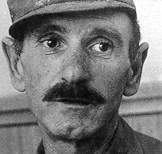
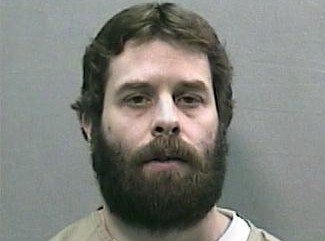
James William Miller
Serial killer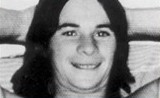 Christopher Worrell
Serial killer · Australia · 1976
Christopher Worrell was described as a rapist and was later killed in a car acc…
7 victims
Christopher Worrell
Serial killer · Australia · 1976
Christopher Worrell was described as a rapist and was later killed in a car acc…
7 victims
 Paul Steven Haigh
Serial killer · Australia · 1978
Paul Steven Haigh was an Australian serial killer. · 1978 — After being paroled…
7 victims
Paul Steven Haigh
Serial killer · Australia · 1978
Paul Steven Haigh was an Australian serial killer. · 1978 — After being paroled…
7 victims
 Archibald McCafferty
Serial killer · Australia · 1973
Archibald Beattie McCafferty was sentenced to three life sentences in 1974 and…
4 victims
Archibald McCafferty
Serial killer · Australia · 1973
Archibald Beattie McCafferty was sentenced to three life sentences in 1974 and…
4 victims
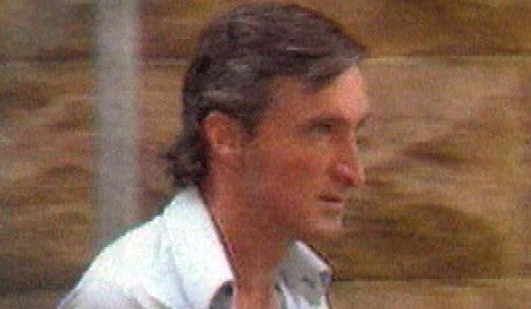 David Birnie
Serial killer · Australia · 1986
David John Birnie (16 February 1951 – 7 October 2005) was an Australian serial…
4 victims
David Birnie
Serial killer · Australia · 1986
David John Birnie (16 February 1951 – 7 October 2005) was an Australian serial…
4 victims
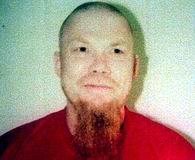 Gregory John Brazel
Serial killer · Australia · 1982
Gregory John “Bluey” Brazel was an Australian arsonist and armed robber who was…
3 victims
Gregory John Brazel
Serial killer · Australia · 1982
Gregory John “Bluey” Brazel was an Australian arsonist and armed robber who was…
3 victims
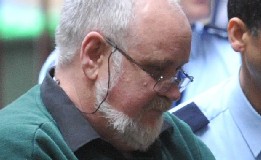 John Coombes
Serial killer · Australia · 1984
John Leslie Coombes was convicted of murdering and dismembering childcare worke…
3 victims
John Coombes
Serial killer · Australia · 1984
John Leslie Coombes was convicted of murdering and dismembering childcare worke…
3 victims
 Andrew Thomas
Murderer · USA · 1997
Andrew Thomas and his co-defendant, Anthony Bond, were indicted for the felony…
1 victim
Andrew Thomas
Murderer · USA · 1997
Andrew Thomas and his co-defendant, Anthony Bond, were indicted for the felony…
1 victim
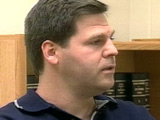 David Dobson
Homicide · Canada · 1982
David James Dobson was born in 1965 and was from Mississauga, Ontario. He was 1…
1 victim
David Dobson
Homicide · Canada · 1982
David James Dobson was born in 1965 and was from Mississauga, Ontario. He was 1…
1 victim
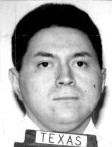 Michael Nawee Blair
Murderer ? · USA · 1993
Michael Nawee Blair was sentenced to death for the 1993 murder of 7-year old As…
1 victim
Michael Nawee Blair
Murderer ? · USA · 1993
Michael Nawee Blair was sentenced to death for the 1993 murder of 7-year old As…
1 victim
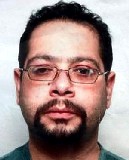 Francisco Acevedo
Serial killer · USA · 1989
Francisco Acevedo was a serial killer who avoided detection for 20 years until…
3 victims
Francisco Acevedo
Serial killer · USA · 1989
Francisco Acevedo was a serial killer who avoided detection for 20 years until…
3 victims
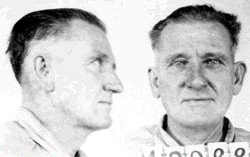 Lee Albert Smith
Murderer · USA · 1944
Lee Albert Smith, white, was executed by asphyxiation-gas in Arizona on April 6…
1 victim
Lee Albert Smith
Murderer · USA · 1944
Lee Albert Smith, white, was executed by asphyxiation-gas in Arizona on April 6…
1 victim
- Gender
- male
- Country
- Australia
- Location
- Truro, South Australia, Australia
- Date of birth
- 1940
- Age at first offence
- 36
- Characteristics
- homosexual, rape, serial rapist
- Victim profile
- Veronica Knight , 18 / Tania Kenny , 15 / Juliet Mykyta , 16 / Sylvia Pittman , 16 / Vickie Howell , 26 / Connie Iordanides , 16 / Deborah Lamb , 20
- Method of murder
- Strangulation
- Date(s) of murder
- December 1976 - February 1977
- Years active
- 1976–1977
- Date of arrest
- May 23, 1979
- Status
-
Died in custody
Sentenced to life in prison with a non-parole period of 35 years on March 12, 1980; died in prison on October 22, 2008
Case overview
James William Miller was convicted of six counts of murder in the Truro murders and was sentenced to life imprisonment with a non-parole period of 35 years on March 12, 1980. He died in prison on October 22, 2008.
Miller’s accomplice, Christopher Worrell, raped and killed seven young women, with Miller described at trial as waiting nearby while Worrell committed the killings. Worrell was subsequently killed in a car crash.
Timeline
- December 23, 1976 — Veronica Knight was killed.
- January 2, 1977 — Tania Kenny was killed.
- January 21, 1977 — Juliet Mykyta was killed.
- February 6, 1977 — Sylvia Pittman was killed.
- February 7, 1977 — Vicki Howell was killed.
- February 9, 1977 — Connie Iordanides was killed.
- February 12, 1977 — Deborah Lamb was killed.
- February 19, 1977 — Worrell and Deborah Skuse died in a motor accident; Miller suffered a fractured shoulder.
- May 23, 1979 — Miller was brought in for questioning.
- October 22, 2008 — Miller died in prison.
The offence
Over a seven week period in the Australian summer of 1976–77, the bodies of seven young women were discovered near Adelaide. They were described as young women aged 15 to 26 years, and most were hitchhikers.
Miller and Christopher Worrell picked up the victims, then the victims were raped and murdered. The source narrative stated that the women were strangled, often using a nylon cord. It also described a suspicion that the last of the victims had been buried alive.
The source also described the victims as being abducted, and it provided victim-by-victim accounts of how each victim was taken and killed. It stated that Worrell would rape the women while Miller waited nearby and that Miller’s role included driving the vehicle and helping dispose of bodies.
Investigation
Police drew up a profile describing a local sex offender who was likely to have been released from jail just prior to the first abduction and may have returned since the last one.
Investigators described that many young women had been reported missing from December 1976 onwards, and they began to investigate that the disappearance of seven women may be the work of a serial killer.
A discovery at Truro was described:
- On April 25, 1978, a man mushrooming in bushland near Truro made a discovery of a woman’s scattered remains, which police said indicated foul play.
- Later in 1978, another young woman’s body was found near the Murray Bridge area east of Adelaide.
- The following March, the body of Lina Marciano was described as being found at a rubbish tip in Adelaide.
- On Easter Sunday 1979, the remains of Sylvia Pittman were described as being discovered near Truro, about two kilometres from the site where Veronica Knight had been found a year earlier.
The source stated that the media coverage led to rewards of $10,000 from newspapers and a Government increase to $30,000.
A woman approached police and described a conversation with Miller at a funeral. The conversation was described as having taken place on February 22, 1977, two days after Worrell died in an automobile accident, and eight days after the last abduction. The woman later made a formal police statement.
The source described surveillance and questioning:
- Miller was reportedly picked up when he tried to make a run for it after realizing he was being followed.
- Miller was detained for questioning on May 23, 1979.
- The source described police officers as Detective Sergeant Glen Lawrie and Detective Peter Foster of the Major Crime Squad.
- It stated that Miller initially denied knowing anything but later made admissions and agreed to show police where more bodies were located.
It described Miller being driven under guard to Truro, Port Gawler and the Wingfield dump, with forensic and pathology staff taken as well, and it described reporters waiting at the scene when Miller arrived.
The source also described forensic conclusions related to Deborah Lamb:
- It described a pair of Dr C. H. Manock’s remarks that it was possible Deborah Lamb had been alive when placed in the grave and that sand and shellgrit could have formed an obstruction to the airway.
- It stated that Dr Manock said it was impossible to say this positively because of the advanced state of decomposition.
- The source stated that Dr Manock saw pantyhose wrapped around Deborah Lamb’s mouth and jaw that could have caused death by asphyxia.
The source described that Miller had led police to the remains of three more girls after the initial admissions.
Arrest and questioning
Miller was brought in for questioning on May 23, 1979. The source described him as destitute and running odd jobs for Adelaide’s Central Mission in return for a bed and food at a day centre.
The source described a progression during the interrogation at Angas Street Police Headquarters:
- Miller denied any knowledge of the girls or the killings and gave vague and false answers about knowing anyone named Amelia.
- When shown photos of Amelia and Worrell together, he remembered knowing them.
- The source included a recorded exchange about the $30,000 reward:
- Detective Lawrie replied to Miller’s remark: “Do you really believe that? Is that what you want me to tell the court?”
- Miller then said: “No. On second thoughts, maybe she’s done what I should do. Can I have a few minutes to think about it?”
- After being interviewed for six hours, the source described Miller saying:
- “If I can clear this up will everyone else be left out of it?”
- “I suppose I’ve got nothing else to look forward to whatever way it goes.”
- “I guess I’m the one who got mixed up in all of this. Where do you want me to start?”
- The source described Miller making statements about driving and picking up girls, and it included the line:
- “Alright then, there’s three more,”
- followed by “I’ll show you.”
The source described Miller then showing police locations and later making a longer statement about the beginning of the murders.
People involved
James William Miller
Miller was described as a homosexual and as a 40-year-old labourer at the time Worrell was believed to have committed the murders. The source also described him as a drifter, a labourer, and a companion to Worrell. It stated that at his trial he said his job was to be “chauffeur and mug”.
The source described Miller’s earlier life as including convictions for car theft, larceny, breaking and entering, and stealing. It also said he had no conviction for violence or a sexual offence.
Christopher Worrell
Worrell was described as young, charismatic, and psychosociopathic. The source described Worrell as being on parole after sexually assaulting a young female hitchhiker and it stated that he had been jailed for attempted rape and released from Yatala Prison in Adelaide in October 1976. It also described Worrell’s death in a car crash on February 19, 1977.
Victims
The source described the following victims and ages in the murder accounts:
- Veronica Knight (18) — killed December 23, 1976.
- Tania Kenny (15) — killed January 2, 1977.
- Juliet Mykyta (16) — killed January 21, 1977.
- Sylvia Pittman (16) — killed February 6, 1977.
- Vicki Howell (26) — killed February 7, 1977.
- Connie Iordanides / Connie Jordan (16) — killed February 9, 1977.
- Deborah Lamb (20) — killed February 12, 1977.
The source also described:
- Deborah Skuse — described as killed in the motor accident on February 19, 1977, and it stated she was the girlfriend of a friend.
Trial
Miller stood trial for the murders. On March 12, 1980, after a six-week trial, he was found guilty of six counts of murder. The source stated he was acquitted of the murder of the first victim, Veronica Knight.
The source stated that Miller was convicted of murder despite having never touched a victim and that the conviction was based on a joint criminal enterprise.
The source provided statements attributed to Crown prosecutor Mr B. J. Jennings and defense counsel Mr K. P. Duggan, QC. It also provided quotations said during sentencing and later in prison.
Prosecutor remarks (verbatim quotations)
The source included remarks by Crown prosecutor Mr B. J. Jennings, including:
“He referred to the girls as “rags”. That was the attitude that led him to throw in his lot with Worrell,” he said.
“No rapist and murderer could have had a more faithful or obliging ally.” Mr Jennings continued;
“You will never know the truth but have no doubt that it is a horrible truth that these young women were murdered because they were going to point the finger at the young man who tied them up and sexually abused them. They could also point the finger at the older man who ignored their plight and their terror. If a man assists another by driving him to a place where a girl is going to be raped and killed, then he is guilty of murder.”
Defence counsel remarks (verbatim quotations)
The source included remarks by counsel for the defence, Mr K. P. Duggan, QC:
“He was just waiting for Worrell and there was no joint enterprise as far as he was concerned. Miller had found himself in one of the oldest relationship problems in the world that of the involvement in the wrongdoing of someone else. He was trapped in a web of circumstance. Although Miller admits that he handled the situation incorrectly, he maintains that he is not a murderer.”
Miller’s statements during trial and sentencing aftermath
The source included Miller statements:
- It quoted Miller disputing the outcome and describing the basis for his guilt, including:
- “They can give me life for knowing about the murders and not reporting them. But they charged me with murder .. It's a load of bullshit.”
- It quoted Miller protesting his innocence from his Adelaide prison cell:
- “I was there at the time and for that I am guilty of an unforgivable felony,”
- “I fully deserve the life sentences I am currently serving. I am serving out a life sentence for Chris. But I never killed any of those girls. That’s the truth.”
- It quoted Miller later from prison about hunger strike context:
- “Chris Worrell was my best friend in the world,” he said.
- “If he had lived, maybe 70 would have been killed. And I wouldn’t have ever dobbed him in.”
- It included a remark attributed to Miller as he was led from court:
- “You filthy liar, Lawrie – you mongrel”.
- (The source also included “you mongrel” and “Lawrie” in the same attribution context.)
Sentencing
On March 12, 1980, Miller was sentenced to life imprisonment. The source stated the sentencing as a maximum term of six life sentences.
In 1999, Miller applied to have a non-parole period set. On February 8, 2000, Chief Justice John Doyle granted a non-parole period of 35 years from the date of his arrest, making him eligible for parole in 2014.
The source’s current status field also stated that he was sentenced to life in prison with a non-parole period of 35 years on March 12, 1980.
Appeals
The source described a request for retrial:
- It described that after the trial one of the jurors hired a lawyer to petition the Attorney-General for a retrial.
- It stated that South Australian Chief Justice Len King agreed Miller should be granted another hearing because the judge at his trial, Mr Justice Matheson, instructed the jury to find Miller guilty of murder.
- It stated that Attorney-General Chris Sumner refused to grant a retrial.
It also described legal difficulties over the definition of a joint criminal enterprise, stating that these were resolved on the basis that it was a special and particularly horrifying case.
Outcome
Miller was found guilty of six counts of murder and acquitted of the murder of Veronica Knight. He was sentenced to life imprisonment with a non-parole period.
Aftermath and later life
The source described prison death reporting:
- On October 22, 2008, it was reported that James Miller died of terminal cancer at the age of 68.
- The source described Miller being transferred to Mary Potter Hospice from Yatala Labour Prison and relatives being advised within minutes of his death.
The source included quoted remarks attributed to Niki Lamb about the effect of Miller’s death on her:
“massive relief”
“There will never be an end because I don't have my mother,” she said.
“But it is an end to a dark chapter and the beginning of a new one.”
The source also included a statement attributed to a Correctional Services spokesman about not confirming or denying Miller’s death because families would have to be notified first.
The source included an attributed quote by Mid Murray Mayor Ian Mann:
“nobody's going to shed a tear”
The source also repeated Miller’s statement that he maintained he only helped bury the victims near Truro and that the murderer was Christopher Worrell.
Other details
The source described multiple discovery and search events:
- It described a man mushrooming near Truro on April 25, 1978 finding what he thought was the leg bone of a cow, later identified as human remains.
- It described additional remains found by bushwalkers and other remains found at places including Port Gawler and Wingfield, and it stated police located every girl on the missing persons list through Miller’s admissions.
The source described a death-bed and illness context for Miller:
- It described Miller’s terminal cancer and him being transferred under police escort from Mobilong Prison to Yatala’s infirmary with a statement that he was expected to die.
Spotted an error, or have more information about this case?