
Gregory John Brazel
Serial killer John Justin Bunting
Serial killer · Australia · 1992
John Justin Bunting (born 4 September 1966 in Inala, Queensland) was an Austral…
11 victims
John Justin Bunting
Serial killer · Australia · 1992
John Justin Bunting (born 4 September 1966 in Inala, Queensland) was an Austral…
11 victims
 Robert Joe Wagner
Serial killer · Australia · 1992
Robert Joe Wagner (born 28 November 1971 in Parramatta, New South Wales) was an…
10 victims
Robert Joe Wagner
Serial killer · Australia · 1992
Robert Joe Wagner (born 28 November 1971 in Parramatta, New South Wales) was an…
10 victims
 Christopher Worrell
Serial killer · Australia · 1976
Christopher Worrell was described as a rapist and was later killed in a car acc…
7 victims
Christopher Worrell
Serial killer · Australia · 1976
Christopher Worrell was described as a rapist and was later killed in a car acc…
7 victims
 Ivan Milat
Serial killer · Australia · 1989
Ivan Milat was convicted of seven murders and received multiple life sentences.…
7 victims
Ivan Milat
Serial killer · Australia · 1989
Ivan Milat was convicted of seven murders and received multiple life sentences.…
7 victims
 James William Miller
Serial killer · Australia · 1976
James William Miller was convicted of six counts of murder in the Truro murders…
7 victims
James William Miller
Serial killer · Australia · 1976
James William Miller was convicted of six counts of murder in the Truro murders…
7 victims
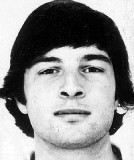 Paul Steven Haigh
Serial killer · Australia · 1978
Paul Steven Haigh was an Australian serial killer. · 1978 — After being paroled…
7 victims
Paul Steven Haigh
Serial killer · Australia · 1978
Paul Steven Haigh was an Australian serial killer. · 1978 — After being paroled…
7 victims
 Lianne Smith
Murderer · Spain · 2010
Lianne Smith was convicted of murdering her children Daniel and Rebecca. Smith…
2 victims
Lianne Smith
Murderer · Spain · 2010
Lianne Smith was convicted of murdering her children Daniel and Rebecca. Smith…
2 victims
 Robert Silveira
Serial killer · USA · 1981
Robert Joseph Silveria Jr. (also known as “Sidetrack” and “Side Track”): descri…
14 victims
Robert Silveira
Serial killer · USA · 1981
Robert Joseph Silveria Jr. (also known as “Sidetrack” and “Side Track”): descri…
14 victims
 Johannes de Jager
Murderer · South Africa · 2008
Johannes Christiaan de Jager was sentenced to life in prison on May 27, 2014. ·…
2 victims
Johannes de Jager
Murderer · South Africa · 2008
Johannes Christiaan de Jager was sentenced to life in prison on May 27, 2014. ·…
2 victims
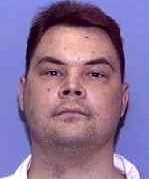 Robert Springsteen
Homicide ? · USA · 1991
Robert Springsteen IV (TDCJ number 999389) was the defendant. Springsteen was b…
4 victims
Robert Springsteen
Homicide ? · USA · 1991
Robert Springsteen IV (TDCJ number 999389) was the defendant. Springsteen was b…
4 victims
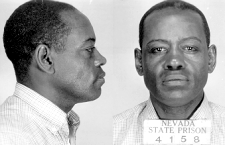 Wilson Henry Boyd
Murderer · 1940
Wilson Henry Boyd was a native of Tennessee and was 44 years of age. Wilson Hen…
2 victims
Wilson Henry Boyd
Murderer · 1940
Wilson Henry Boyd was a native of Tennessee and was 44 years of age. Wilson Hen…
2 victims
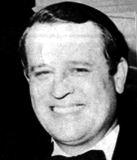 Dr. John Robert Hill
Murderer? · USA · 1950
Dr. John Robert Hill was a prominent Houston surgeon. His wife was Joan Robinso…
5 victims
Dr. John Robert Hill
Murderer? · USA · 1950
Dr. John Robert Hill was a prominent Houston surgeon. His wife was Joan Robinso…
5 victims
- Gender
- male
- Country
- Australia
- Location
- Victoria, Australia
- Date of birth
- November 17, 1954
- Age at first offence
- 28
- Characteristics
- arsonist, armed robbery, serial rapist
- Victim profile
- Mildred Teresa Hanmer, 51 (shopkeeper) / Sharon Taylor (prostitute) / Roslyn Hayward (prostitute)
- Method of murder
- Shooting
- Date(s) of murder
- 1982 / 1990
- Years active
- 1982–1990
- Date of arrest
- September 26, 1990
- Status
-
Life imprisonment
Sentenced to three consecutive life sentences
Case record: Gregory John Brazel
Background
Gregory John “Bluey” Brazel was an Australian arsonist and armed robber who was convicted of multiple murders. He served three consecutive life sentences for the murders of prostitutes Sharon Taylor and Roslyn Hayward in 1990, and for the murder of Mordialloc hardware store owner Mildred Hanmer during an armed robbery in 1982.
Brazel enlisted in the Australian Army in 1974 and trained at 1RTB (Kapooka) 14Platoon B Company. In September 1974, he was posted to an Australian Army medical training school in Healesville, Victoria.
In 1976, Brazel took five privates hostage during an army medical corps exercise in Healesville. Shots were fired before Brazel was persuaded to release the hostages. He was later dishonorably discharged.
The offence
Murder of Mildred Hanmer (armed robbery and shooting)
Mildred Teresa Hanmer was shot in the chest on 20 September 1982 during an armed robbery at her Mordialloc hardware and gift store. She later died in the Alfred Hospital from her injuries.
Her murder remained unsolved until August 2000. On 18 August 2000, Brazel voluntarily confessed to the 1982 murder.
In the sentencing proceedings, the court described the circumstances of the offence: on 20 September 1982 Mrs Hanmer, aged 51, worked alone in a hardware and giftware store that she and her husband owned and operated at 77 Warren Road, Mordialloc. The store also operated a State Savings Bank sub-agency and a dry cleaning depot.
At approximately 12.50 p.m., a person who lived behind the shop next to No. 77 heard a loud bang and the voice of a woman calling for help. The person entered the hardware and giftware store and discovered Mrs Hanmer grievously injured and lying on the floor. Ambulance and police were called.
Mrs Hanmer telephoned her husband at their home in Mt Eliza. He had not gone to work that day because he was recovering from a hernia operation. He said that his wife was gasping and finding it difficult to speak but managed to say, “Dick, I’ve been robbed and I’m dying.” After that, she collapsed but he could still hear her gasping and moaning on the open telephone line.
The ambulance and police officers found Mrs Hanmer bleeding from an apparent gunshot wound to her upper body, but she was still conscious and capable of some conversation. She described her attacker as being “a man aged around 25, five feet seven inches tall and with ginger hair.” She described the firearm he was carrying and said that he left through the front door.
Mrs Hanmer was treated at the scene and conveyed by ambulance to the Alfred Hospital, where she died at 3.20 p.m. She had been shot once in the right chest between the second and third ribs. The pathologist who conducted the post mortem examination concluded that she had been shot from the front.
Brazel’s confession described his entry into the store carrying a .22 rifle hidden behind a sports bag. He approached Mrs Hanmer and asked her to cut a key for him. While she was occupied with that task, he closed and locked the front door and turned a sign around to read “Back in five minutes”. He confronted her with the rifle, stated that it was an armed robbery and demanded money. He obtained in excess of $3,000 from the safe and cash register. He then told her to lie on the ground as he was going to tie her up. While she was lying on the ground, he discharged a single bullet into her back. He said that a homemade silencer on the firearm failed and “when the gun went off it sounded like a cannon”. He said he remembered blood was seeping through her clothing and knew that she was critically injured and would not survive, and that “All he wanted was to get away.” He said he did not waste time reloading and firing another shot.
In his interview, Brazel told the interviewing police he had been offered $30,000 to murder Mrs Hanmer. He said a former prison inmate had given him the name of the person who wanted her killed. Brazel claimed that person was the husband of the deceased.
Police investigations confirmed parts of Brazel’s account. A forensic scientist analysed the clothing worn by Mrs Hanmer and confirmed that, contrary to the opinion of the pathologist who conducted the autopsy in 1982, she had been shot from behind as Brazel said. The court noted that police rejected the part of his account that identified the person who allegedly engaged him, and that other aspects of the contract killing were rejected.
In his victim impact statement tendered on the plea, Mr Hanmer said that the allegation against him “filled him with disgust and anger.”
The Director’s judgment in the Court of Appeal recorded the prosecution case regarding identification of the principal: “His identification of the principal was not established but, putting that to one side, detailed investigations corroborated his statement.”
Murder of Sharon Taylor (1990)
On 28 May 1990, while on early release from prison, Brazel murdered prostitute Sharon Taylor. Her body was found in a shallow grave at Barongarook, Victoria, south of Colac on 23 September 1990.
Murder of Roslyn Hayward (1990)
On 13 September 1990, Brazel murdered prostitute Roslyn Hayward at Sorrento. Her body was not discovered until 1 October 1990.
Investigation
The murder of Mrs Hanmer remained unsolved despite an extensive police investigation until Brazel’s confession.
In August 2000, Brazel requested to speak to Detective Senior Constable Gerard Hockey. The judgment recorded that Brazel had confidence in Mr Hockey from an occasion in 1998 when Hockey had investigated an assault on Brazel in the Acacia Unit of Barwon Prison. On 18 August 2000, Detective Senior Constable Gerard Hockey attended Port Phillip Prison to speak with him. Brazel told him he wished to confess to the murder of a woman at a hardware store in Mordialloc in 1982.
On 31 August 2000, Brazel was conveyed to the offices of the Homicide Squad, where he participated in an interview and made a full statement.
The Court of Appeal also recorded that, in the interview and statement, Brazel revealed that the murder was a contract killing. It stated that “the learned sentencing judge accepted” the investigations corroborated Brazel’s statement.
Arrest and custody
Brazel had been in custody continuously since his arrest on 26 September 1990 until the date “today” in the appellate judgment.
The judgment also recorded that, as a prisoner, Brazel remained mute at both trials for the 1990 murders.
In November 1991, Brazel took a staff member hostage while imprisoned at HM Melbourne Assessment Prison when he learned of his impending transfer to HM Prison Pentridge. Brazel later threatened to kill Gunther Krohn due to a decision to transfer him from the Remand Centre to Pentridge, and surrendered after a three-hour siege.
Trial
Plea and arraignment
In December 2002, Brazel was committed to stand trial. The matter proceeded by way of a contested hearing of one day’s duration during which two witnesses were called. Brazel indicated he would plead guilty and he was arraigned in the Trial Division on 14 February 2003, when he did plead guilty.
The judgment recorded that Brazel’s plea was entered in reliance on an alleged understanding with the Crown that he would not receive a life sentence. It also recorded that he appeared unrepresented before the learned sentencing judge.
The plea began on 14 February 2003, when Mr Morgan-Payler, Q.C. appeared for the Crown, and continued on 14 March 2003. On 14 March 2003, Mr Morgan-Payler was part-heard in another case and Mr Elston appeared in his stead.
Court exchange about aggravating factors and competing hypotheses
The Court of Appeal judgment reproduced an exchange that occurred on 14 February 2003:
“MR MORGAN-PAYLER: May I say this, Your Honour: that matter has been extensively investigated. For the purposes of these proceedings if this killing were a paid execution that would be an aggravating factor in my submission to Your Honour. HIS HONOUR: Of course. MR MORGAN-PAYLER: Being an aggravating factor that is something Your Honour would have to be satisfied of beyond reasonable doubt. Without canvassing the details, I simply submit to Your Honour that on the material available, both in the depositions and further material that I choose not to advance in respect of these proceedings, Your Honour would not be so satisfied of that matter. HIS HONOUR: What other rational hypothesis is open, if any? MR MORGAN-PAYLER: An armed robbery that had gone wrong, or a killing committed as a planned or an accidental consequence. In that a - - - HIS HONOUR: What is the Crown’s position, does it say (a) it rejects Mr Brazel’s explanation for the reason behind the killing and (b) it doesn’t advance any particular hypothesis because of the lack of evidence; or what does it say? MR MORGAN-PAYLER: The Crown does not advance any particular hypothesis because of a lack of evidence. May I simply assert in a general manner that where the Crown has endeavoured to pursue the hypothesis advanced by the prisoner, a number of matters have been found to be incorrect. HIS HONOUR: We will come - - - MR MORGAN-PAYLER: Unless pressed, I don’t want to go into that. Suffice it to say as distinct from the details of the killing itself, where investigators were able to independently confirm those details; where possible in respect of the motive behind the killing and a number of areas there, the account given by the prisoner has been shown to be inaccurate or false. HIS HONOUR: We may or may not come to those in due course. I will wait upon what Mr Brazel would like to say in writing first and we can revisit this matter if we need to. MR MORGAN-PAYLER: Yes. In a way that works to his advantage, in that in my submission if Your Honour had not been satisfied, and I submit Your Honour would not on the materials available, if Your Honour had been satisfied it was a paid execution, Your Honour would regard it as a far graver example of the crime of murder rather than a killing in the course of an armed robbery, which of it itself is a serious example of the crime, but perhaps not as serious as the scenario advanced by the prisoner. HIS HONOUR: Well - - - MR MORGAN-PAYLER: The Crown says other than the fact you can be confident that the prisoner killed the deceased and you can accept his admission that he had a murderous intent at the time he did so, Your Honour really can probably not further reliably find facts on the material presently available to you.”
At the end of that exchange, the sentencing judge observed that what Mr Morgan-Payler had said might or might not be right. The judgment then reproduced further exchange when the plea resumed:
“HIS HONOUR: Mr Morgan-Payler put to me on the last occasion that I could take a view of the facts here that this was an armed robbery gone wrong and Mr Morgan-Payler commended that view of the facts to me in part because it would assist Mr Brazel because normally an armed robbery gone wrong would receive a lower penalty than an execution for an external principal. Now that’s not what Mr Brazel says and what I’m putting to you is do you wish to maintain that hypothesis to me and if so, is there any evidence to support it? MR ELSTON: The hypothesis put was at the bottom of p.17 by Mr Morgan-Payler, but it did not advance any particular hypothesis because of a lack of evidence. That position is still the one maintained by us. HIS HONOUR: All right, I follow that. Then do you concede that it is relevant in imposing sentence upon Mr Brazel that if properly on the evidence a conclusion could be reached that an execution for an external principal on the one hand and an armed robbery gone wrong on the other would normally attract somewhat different sentences? MR ELSTON: Yes. HIS HONOUR: But your submission is I can’t discriminate on the evidence as to – I can’t conclude on the evidence as to what the true situation is. MR ELSTON: Yes, there’s no evidence which – it’s virtually an aggravating feature which you’d need to be satisfied to a circumstance about and there is nothing to assist you in that regard. HIS HONOUR: Well, one thing that assists me is Mr Brazel has told the truth about everything else. MR ELSTON: Well, in so far as the other aspects of it are concerned, I can certainly say there has been a full and very exhaustive investigation and but for his confession as to him being involved, this could have remained an unsolved matter and even taking into account his confession there is still an exhaustive inquiry that had taken place and subsequently occurred and nothing further was forthcoming, dealing with that aspect of it.”
Sentencing
Sentencing for 1982 murder (life imprisonment)
On 28 March 2003, Brazel was sentenced for the offence to be imprisoned for the term of his natural life. A new single non-parole period of 27 years was fixed.
The judgment recorded that the sentence would operate from the day it was imposed. It stated that Brazel would be 75 when he became eligible for parole.
The court also stated the sentencing judge’s summary of mitigating factors:
“There is however a cluster of mitigating factors in your present situation and which is relevant to the proper sentence to be imposed upon you. First, after nearly 20 years you have come forward wholly of your own volition and confessed to the crime. Second, your coming forward and confession was motivated by contrition and true remorse. Third, the authenticity of that motive is not deflected or derogated from by any collateral purpose or seeking by you of advantage. Fourth, your confession has solved a long unsolved crime. Fifth, it has brought some partial finality to the suffering of the living victims; but they will suffer for as long as they live. Sixth, you have pleaded guilty to the crime. Seventh, you have genuine and plenary remorse. Eighth, you have not at any time since you came forward and confessed, sought to avoid full responsibility for your actions. You also waived the benefit of a possible indemnity. Ninth, you told the truth to the police, involving as that did the placing of this crime in the most serious category of murder, a paid execution. Tenth, you have been in continuous custody since September 1990 and face lengthy further imprisonment and you are in a state of poor health.”
The judgment further described the sentencing approach: it recorded disagreement between members of the Court of Appeal on the non-parole period and whether the sentence was crushing.
Criminal convictions and sentencing chronology (as set out in the case material)
The case material set out criminal convictions and sentences during the period of March 1983 until August 2000, plus later reference to the murder conviction.
- June, 1983 — Contempt of court — Sentenced to 2 years imprisonment
- November, 1987 — Armed robbery — Sentenced to 6 years imprisonment
- August, 1992 — Murder — Sentenced to 20 years imprisonment — Reduced to 17 years on appeal
- May, 1993 — Murder — Sentenced to 20 years imprisonment
- October, 1994 — False imprisonment; Threating to kill — Sentenced to 7 years imprisonment
- June, 1997 — Arson — Sentenced to 2 years imprisonment
- December, 1998 — Bribery — Sentenced to 2 years imprisonment
- 22 March 2005 — Murder — Sentenced to life imprisonment
The Court of Appeal judgment also recorded detailed murder sentencing for the 1990 murders before the 2003 life sentence for the 1982 murder:
In June 1992, Brazel was sentenced to 20 years’ imprisonment for the May 1990 murder with a minimum term before eligibility for parole of 17 years. The Court of Appeal reduced that sentence to 17 years’ imprisonment with a minimum term of 15 years, declared that 699 days pre-sentence detention be reckoned as already served, and certified that outcome.
In May 1993, Brazel was sentenced to 20 years’ imprisonment for the September 1990 murder with a minimum term of 17 years. The judge ordered that seven years of the sentence for the second murder be served concurrently with the sentence for the first murder, making a total effective sentence of 30 years’ imprisonment with a minimum term of 25 years before eligibility for parole. The Court of Appeal did not reduce that sentence.
The appellate judgment recorded that Brazel remained mute at both trials, that he had been in custody continuously since his arrest on 26 September 1990, and that while in custody he continued to offend.
The appellate judgment also recorded additional prison-custody convictions:
- In October 1994, Brazel was sentenced in the County Court to seven years’ imprisonment for false imprisonment and three years’ imprisonment on each of two counts of making threats to kill.
- In June 1997, Brazel was sentenced in the County Court to two years’ imprisonment for arson.
- In December 1998, Brazel was sentenced in the County Court to 2 years 9 months’ imprisonment on two counts of bribery of a public official. It also stated that Brazel was convicted of a number of lesser offences while in custody.
Appeals
The Court of Appeal recorded that Brazel sought leave to appeal against sentence, on grounds that:
- the sentence was manifestly excessive, and
- the judge failed to honour an alleged agreement between the Director of Public Prosecutions and Brazel not to have a life sentence imposed.
On 13 February 2004, a single judge of appeal refused leave to appeal pursuant to s.582 of the Crimes Act 1958. Brazel then elected to have the application heard by the Court of Appeal.
The application was heard on 23 February 2005. The judgment recorded that the applicant did not appear before the single judge but relied on a written submission. It also recorded that Brazel did appear in person before the Court of Appeal and that the Director of Public Prosecutions appeared with Mrs Quin for the Crown.
The appellate judgment was delivered by Callaway J.A., with other judges agreeing or dissenting in part:
- Callaway J.A. found that the first ground did not justify reducing the sentence and addressed the non-parole period.
- Batt J.A. agreed with the disposition proposed by Callaway J.A., stating that a crushing sentence should not be allowed to stand where avoidable.
- Williams A.J.A. agreed that the head sentence of life imprisonment was not in error, but did not agree on the non-parole period and would have dismissed the application.
The case included recorded reasoning on the alleged agreement. The judgment stated:
- “his identification of the principal was not established but, putting that to one side, detailed investigations corroborated his statement,”
- and regarding the immunity letter and what was revealed to the sentencing judge: “The Crown did not seek a life sentence and it invited the judge to take a view of the facts that might have enabled a determinate sentence to be imposed.”
The judgment also recorded that “The applicant’s complaints” required investigation, and the Court of Appeal considered the police summary and a summary of murder sentences in Victoria from 1986 to the present.
Outcome
The Court of Appeal dismissed the application and upheld the sentence.
Aftermath and prison life
The case material described that Brazel continued to regularly offend whilst imprisoned, and that he was often described as manipulative and violent.
In 1991, he took a staff member hostage at HM Melbourne Assessment Prison during his impending transfer to HM Prison Pentridge.
In 2003, Brazel conned an elderly woman into depositing more than A$30,000 into a TAB telephone betting account for his own personal use.
In May 2001, while imprisoned at Melbourne’s privately operated Port Phillip Correctional Centre in Laverton, Brazel suffered a violent attack with a broken bottle. In October 2006, he was awarded A$12,000 in damages in an out of court settlement.
In October 2006, Brazel was caught collecting personal information relating to senior prison staff.
The case material stated that Brazel was estimated to be worth more than A$500,000 in 2000 and that he would be eligible for parole in 2020, and also that his earliest release date was 2020. The material also stated that he was kept in the Barwon Prison’s top-security Acacia Unit, and that he lost his position as Victoria’s most feared prisoner after being bashed and seriously injured by fellow inmates in 1998.
The material also stated that police interviewed more than 1500 people during the original investigation into Mrs Hanmer’s murder.
The material included details about Mrs Hanmer and her husband’s plans: it said Mrs Hanmer was a triple certificate nurse and her husband an engineer. They decided to open their own business and agreed that if they were ever robbed, they would cooperate and not risk their lives.
Other details
The case material included additional information about Brazel’s criminal history and behaviour in custody, including:
- Brazel’s hunger strike.
- Threats to kill staff.
- Stabbing three prisoners in separate attacks.
- Breaking the noses of two prison officers.
- Assaulting police.
- Setting fire to his cell.
- Cutting off the tip of his left ear.
- Pushing a governor’s head through a plate-glass window.
- Using jail phones to intimidate witnesses.
- Setting fires in cells.
- Being assessed as one of the state’s highest-risk inmates.
- Being shackled when taken to court.
The case material also described that Brazel used jail phones to intimidate witnesses and had been caught at least three times with smuggled mobile telephones inside maximum-security divisions.
The case material further described that in one of his brief periods of freedom since 1978 he killed two women near Colac, and included that detectives believed he knew he was under investigation for the first murder and killed his second victim to taunt the investigators.
In the appellate judgment, it stated:
- “On 18th August 2000, the applicant, a prisoner at Port Phillip Prison, took the initiative in voluntarily confessing that he was the murderer.”
- “He participated in an interview extending over two-and-a-half hours and made a full statement, revealing that the murder was a contract killing.”
- “The learned sentencing judge accepted that that was so and accepted that the applicant came forward through a genuine sense of contrition.”
- “His Honour described the applicant’s remorse as genuine and plenary.”
The Court of Appeal case references included: “Supreme Court of Victoria - Court of Appeal R v Brazel [2005] VSCA 56 (22 March 2005) The Queen v. Gregory John Brazel No. 99 of 2003 CALLAWAY, J.A.: 1”.
Spotted an error, or have more information about this case?