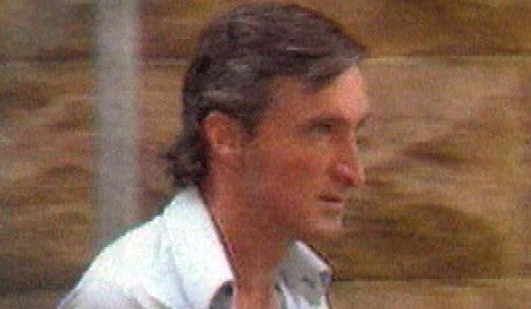
David Birnie
Serial killer John Justin Bunting
Serial killer · Australia · 1992
John Justin Bunting (born 4 September 1966 in Inala, Queensland) was an Austral…
11 victims
John Justin Bunting
Serial killer · Australia · 1992
John Justin Bunting (born 4 September 1966 in Inala, Queensland) was an Austral…
11 victims
 Robert Joe Wagner
Serial killer · Australia · 1992
Robert Joe Wagner (born 28 November 1971 in Parramatta, New South Wales) was an…
10 victims
Robert Joe Wagner
Serial killer · Australia · 1992
Robert Joe Wagner (born 28 November 1971 in Parramatta, New South Wales) was an…
10 victims
 Christopher Worrell
Serial killer · Australia · 1976
Christopher Worrell was described as a rapist and was later killed in a car acc…
7 victims
Christopher Worrell
Serial killer · Australia · 1976
Christopher Worrell was described as a rapist and was later killed in a car acc…
7 victims
 Ivan Milat
Serial killer · Australia · 1989
Ivan Milat was convicted of seven murders and received multiple life sentences.…
7 victims
Ivan Milat
Serial killer · Australia · 1989
Ivan Milat was convicted of seven murders and received multiple life sentences.…
7 victims
 James William Miller
Serial killer · Australia · 1976
James William Miller was convicted of six counts of murder in the Truro murders…
7 victims
James William Miller
Serial killer · Australia · 1976
James William Miller was convicted of six counts of murder in the Truro murders…
7 victims
 Paul Steven Haigh
Serial killer · Australia · 1978
Paul Steven Haigh was an Australian serial killer. · 1978 — After being paroled…
7 victims
Paul Steven Haigh
Serial killer · Australia · 1978
Paul Steven Haigh was an Australian serial killer. · 1978 — After being paroled…
7 victims
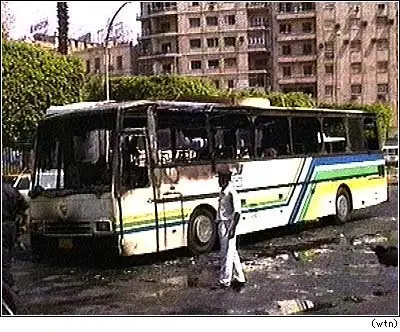 Saber & Mahmoud Abu el-Ulla
Mass murderers · Egypt · 1993
This case concerns Saber Abu el-Ulla and his brother, Mahmoud Abu el-Ulla, who…
13 victims
Saber & Mahmoud Abu el-Ulla
Mass murderers · Egypt · 1993
This case concerns Saber Abu el-Ulla and his brother, Mahmoud Abu el-Ulla, who…
13 victims
 Brandon Rhode
Murderer · USA · 1998
Brandon Rhode was a white male and had been sentenced to death for the murders…
3 victims
Brandon Rhode
Murderer · USA · 1998
Brandon Rhode was a white male and had been sentenced to death for the murders…
3 victims
 Harry Sassounian
Murderer · USA · 1982
Harry M. Sassounian was convicted of murder in the first degree (Pen. Code, § 1…
1 victim
Harry Sassounian
Murderer · USA · 1982
Harry M. Sassounian was convicted of murder in the first degree (Pen. Code, § 1…
1 victim
 Richard Lee Tingle
Murderer · USA · 1968
Richard Lee Tingle was born out of wedlock in December 1940. He was raised by a…
6 victims
Richard Lee Tingle
Murderer · USA · 1968
Richard Lee Tingle was born out of wedlock in December 1940. He was raised by a…
6 victims
- Gender
- male
- Country
- Australia
- Location
- Freemantle, Western Australia, Australia
- Date of birth
- February 15, 1951
- Age at first offence
- 35
- Characteristics
- rape, serial rapist
- Victim profile
- Mary Francis Neilson, 22 / Susannah Candy, 15 / Noelene Patterson, 31 / Denise Karen Brown, 21
- Method of murder
- Strangulation / Stabbing with knife
- Date(s) of murder
- October-November 1986
- Years active
- 1986
- Date of arrest
- November 10, 1986
- Status
-
Died in custody
Sentenced to four consecutive sentences of life imprisonment in 1987; committed suicide by hanging himself in his cell on 7 October 2005
Case information
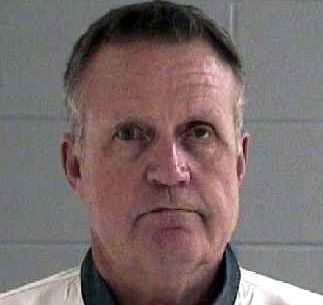
David John Birnie (16 February 1951 – 7 October 2005) was an Australian serial killer who murdered four women and attempted to murder a fifth in the 1980s. Catherine Margaret Birnie (born in 1951) was his partner.
The crimes were referred to in the press as the Moorhouse murders, after the Birnies' address at 3 Moorhouse Street in Willagee, a working class suburb of Perth, Australia.
Timeline
- 6 October 1986 — 22-year-old student Mary Neilson arrived at the Birnie house to buy car tires and was seized at knife point, bound and gagged, and chained to the bed; she was repeatedly raped by David Birnie while Catherine Birnie watched.
- 6 October 1986 (night) — Mary Neilson was taken to the Gleneagles National Park, raped again, strangled with a nylon cord, and stabbed through the heart before being buried in a shallow grave.
- October 20, 1986 — 15-year-old Susannah Candy was abducted as she walked along the Stirling Highway in Claremont and was taken to the Birnie house.
- 19 October 1986 — Susannah Candy had not been seen since this date.
- 1 November 1986 — 31-year-old Noelene Patterson was seen beside her car on the Canning Highway; she was abducted.
- 30 October 1986 — Noelene Patterson was abducted and murdered on this date (as referenced when police were directed to the grave).
- 5 November 1986 — 21-year-old Denise Brown was abducted as she waited for a bus on Stirling Highway.
- 10 November 1986 — 17-year-old Kate Moir ran naked and weeping into a grocery store and raised the alarm that she had been abducted at knife point, chained to a bed, and repeatedly raped; she escaped.
- November 10, 1986 — Detective Sergeant Vince Katich made statements during questioning about digging up the bodies; David Birnie replied: “Okay. There are four of them.”
- 10 February 1987 — A huge crowd gathered outside the Perth Supreme Court; the Birnies were led into holding cells, and David Birnie pleaded guilty to four counts of murder and one count each of abduction and rape.
- 3 March 1987 — Catherine Birnie was sentenced to four consecutive sentences of life imprisonment.
- 7 October 2005 — David Birnie was found dead in his cell at Casuarina Prison; he had committed suicide by hanging.
Background
David Birnie was the eldest of five children. In his formative years, he lived in the semi-rural suburb of Wattle Grove, east of Perth. School friends and parishioners from the Wattle Grove Baptist Church of the period remembered the family as particularly dysfunctional; rumours abounded about the family's promiscuity, alcoholism and that they engaged in incest.
In the early 1960s, his parents decided to move the family to another Perth suburb, where he had met Catherine through mutual friends.
At 15, David left school to become an apprentice jockey for Eric Parnham at a nearby Ascot race course. During his time there he often physically harmed the horses and developed the tendencies of an exhibitionist.
By the time he was an adolescent, he had been convicted of several crimes and had spent time in and out of jail for misdemeanors and felonies. As an adult, he was a known sex and pornography addict, and paraphiliac.
He was married to his first wife during his early 20s and had a baby daughter. In late 1986, David Birnie was employed at a local car wreckers.
Catherine Birnie (née Harrison) was also born in 1951. She was 2 years old when her mother, Doreen, died giving birth to her brother, who died two days later. Her father, Harold, sent her away to live with her maternal grandparents.
At the age of ten, there was a custody dispute where Catherine's father gained sole custody of Catherine again. At the age of 12, she met David Birnie, and by the age of 14 she was in a relationship with David. Harold had begged Catherine on several occasions to leave David due to the fact that she was getting in trouble with the local police all the time. Her prison time throughout her adolescent years offered Catherine the chance to break away from David.
Encouraged by a parole officer, Catherine began working for the McLaughlin family as a house keeper. She married Donald McLaughlin on her 21st birthday. She and McLaughlin had seven children; their firstborn, a son, was struck and killed by a car in infancy. Four weeks after the birth of her seventh child, she abandoned McLaughlin and began cohabiting with Birnie, who had tracked her down in hospital after she had had a hysterectomy. She had her surname legally changed by deed poll to match his, and reportedly was emotionally dependent on him.
The offence
Victims and methods described
The Birnies murdered four women and attempted to murder a fifth in their home at 3 Moorhouse Street in Willagee.
The victims were:
- Mary Neilson (22-year-old student)
- Susannah Candy (15-year-old)
- Noelene Patterson (31-year-old)
- Denise Brown (21-year-old)
- Kate Moir (17-year-old), who survived and escaped
In the accounts of the murders, victims were abducted or lured to the Birnies’ residence, bound and gagged, and raped. Some victims were strangled with a nylon cord, stabbed, or killed with sleeping pills followed by strangling. Denise Brown was attacked with a knife and an axe.
Mary Neilson (first murder)
On 6 October 1986, 22-year-old student Mary Neilson turned up at the Birnie house to buy some car tires. She had approached Birnie at his work at the spare parts yard and he had suggested that she call by his house for a better bargain.
As Neilson entered the Birnie house, she was seized at knife point, bound and gagged and chained to the bed. Catherine Birnie watched as her lover repeatedly raped the girl. They took her to the Gleneagles National Park where David Birnie raped her again before strangling her with a nylon cord and stabbing her through the heart. She was then buried in a shallow grave.
Susannah Candy (second murder)
The second murder occurred when the Birnies abducted 15-year-old Susannah Candy as she walked along the Stirling Highway in Claremont.
Within seconds of being in the car, she had a knife at her throat and her hands were bound. She was taken back to the Birnie house, where she was forced to send letters to her family saying that she had run away to Queensland with her friends before being gagged, chained to the bed and raped.
After David Birnie had finished raping her, Catherine Birnie got into the bed with them, and David Birnie tried to strangle the girl with the nylon cord, but she became hysterical and went berserk. The Birnies forced sleeping pills down her throat to calm her down, and once Susannah was asleep, David put a nylon cord around her neck and Catherine tightened the cord slowly until she stopped breathing.
They buried Susannah Candy in another shallow grave in the State Forest.
Noelene Patterson (third murder)
On 1 November 1986, the Birnies saw 31-year-old Noelene Patterson standing beside her car on the Canning Highway. She had run out of petrol while on her way home from her job as bar manager at the Nedlands Golf Club.
Once inside in the car, she was seized at knife point, tied up, and told not to move. She was taken back to Moorhouse Street where David Birnie repeatedly raped her after she was gagged and chained to the bed.
They had originally decided to murder Noelene Patterson that same night, but David kept her prisoner in the house for three days. During that time, there were signs that David Birnie had developed emotional feelings for her. Catherine made an ultimatum that David would have to kill Noelene or she would kill her herself. David forced an overdose of sleeping pills down her throat and strangled her while she slept. The couple took her body to the forest and buried it along with the others. Catherine Birnie reportedly got pleasure in throwing sand in Patterson's face.
Denise Brown (fourth murder)
On 5 November 1986, the Birnies abducted 21-year-old Denise Brown as she was waiting for a bus on Stirling Highway.
She accepted a lift from the Birnies; at knife point, Denise was taken to the house in Willagee, chained to the bed and raped. The following afternoon she was taken to the Wanneroo pine plantation.
While in seclusion of the forest, David Birnie raped Denise Brown in the car while the couple waited for darkness. As they dragged the woman from the car, David assaulted her again and plunged a knife into Denise’s neck while he was raping her. Convinced that the girl was dead, the couple dug a shallow grave and lay her body in it, but Brown sat up in the grave.
David Birnie then grabbed an axe and struck her twice at full force on the skull before burying her body in the grave.
Kate Moir (surviving victim)
The only victim to survive was seventeen-year-old Kate Moir.
She ran naked and weeping into a grocery store on 10 November 1986 and insisted on seeing the police. When the police arrived, she alleged that she had been abducted at knife point by a couple who had taken her back to their house and chained her to a bed, and that the man had repeatedly raped her while the woman observed.
The next morning, while the man was at work, the woman unchained her and forced her to telephone her parents to say she had spent the night at a friend's house and was okay. The woman then led her back to the bedroom but left to answer the door before securing her; Kate Moir escaped out the window.
Kate Moir told the police the phone number and address of the couple who had abducted her. When she and the police arrived at the Birnies' residence, Catherine Birnie admitted that she recognized the girl but refused to answer any more questions without her husband.
When the police brought David Birnie home in handcuffs, the couple claimed that the girl had not been abducted, but had willingly come to the house to share a bong with the Birnies, and that all sexual activity had been consensual.
Investigation
Police tried to trick the Birnies into confessing through intense interrogation. Around dusk, Detective Sergeant Vince Katich said to David Birnie, half jokingly: “It’s getting dark. Best we take the shovel and dig them up.”
David Birnie replied: “Okay. There are four of them.”
Detectives later took the Birnies to the grave locations. David Birnie directed police to the graves of the four murdered women.
During the process of the graves being uncovered, Detective Sergeant Katich was amazed that neither of the Birnies showed any emotion or embarrassment while the bodies were uncovered.
Arrest and detention
The Birnies were apprehended after Kate Moir escaped and raised the alarm. Catherine Margaret Birnie was apprehended when she arrived home, and David John Birnie was later picked up where he worked as a labourer in a spare parts car yard.
The Birnies vigorously denied the allegations made by the survivor. They claimed instead that Kate Moir had been a willing party who went with them to share a bong of marijuana. David Birnie admitted to having sex with the girl but maintained that he had not raped her.
A search of the house found the girl’s bag and a packet of cigarettes she had concealed in the ceiling as proof she had been there.
Trial
Plea and counts
When sent to trial, David Birnie pleaded guilty to four counts of murder and one count each of abduction and rape.
When asked why he pleaded guilty, he gestured toward the victims' families and said: “It’s the least I could do.”
Catherine Birnie was found sane enough to stand trial and was also sentenced to four consecutive sentences of life imprisonment by the Supreme Court of Western Australia.
Early court proceedings described
On 12 November 1986, David John Birnie and Catherine Margaret Birnie appeared in Fremantle Magistrates' Court charged with four counts of wilful murder. The public were outraged and a crowd had gathered outside the court. Police checked the bags of everyone entering the court. The holding cell leading to the courtroom was heavily guarded.
David Birnie was led into court handcuffed to a policeman and wearing a faded pair of blue overalls with joggers and socks. Catherine Birnie was handcuffed to a policeman and wore blue denim jeans with a light brown checked shirt. Neither had legal representation. No plea was entered, bail was officially refused and the Birnies were remanded in custody.
When asked if she wanted to be remanded for eight or thirty days before her next court appearance, Catherine Birnie looked at her lover and said: “I’ll go when he goes”.
On 10 February 1987, a huge crowd gathered outside the Perth Supreme Court. As the Birnies arrived in a prison truck they called for the reintroduction of the death penalty, calling: “Hang the bastards,” and “String them up.”
David Birnie pleaded guilty to the murder charges and to one count each of abduction and rape, thereby sparing the families of his victims the agony of a long trial.
Sentencing in court
Mr Justice Wallace sentenced David Birnie to the maximum sentence of life imprisonment with strict security. The judge said:
“The law is not strong enough to express the community’s horror at this sadistic killer who tortured, raped and murdered four women. In my opinion, David John Birnie is such a danger to society that he should never be released from prison.”
David Birnie stood trembling in the dock as the sentence was passed. He put his hand to his lips and blew them a kiss while an angry mob called for his blood.
Catherine Birnie was sentenced on 3 March 1987 in the Perth Supreme Court. Mr Justice Wallace said:
“In my opinion you should never be released to be with David Birnie. You should never be allowed to see him again.”
A psychiatrist to the court said that Catherine was totally dependent on Birnie and almost totally vulnerable to his evil influence, adding:
“It is the worst case of personality dependence I have seen in my career”.
Sentencing
David Birnie was sentenced to four consecutive sentences of life imprisonment. After being found sane enough to plead, Catherine Birnie was also sentenced to four consecutive sentences of life imprisonment by the Supreme Court of Western Australia.
Appeals
The Birnies did not appeal.
Prison life and later events
David Birnie was held initially at the maximum security Fremantle prison, then moved to solitary confinement to keep him from coming to harm from other prisoners. The original death row cells were converted for him and he stayed there until the prison was closed in 1990.
The cell could then be viewed on the Great Escape Tour held daily at Fremantle prison.
While incarcerated, the Birnies exchanged more than 2,600 letters but were not allowed any other form of contact.
David Birnie was found dead in his cell at Casuarina Prison on 7 October 2005. He committed suicide by hanging himself; he was due to appear in court for the rape of a fellow prisoner the next day.
Catherine Birnie was imprisoned in Bandyup Women's Prison, where she was the head librarian. Her first application for parole in 2007 was rejected. The then Attorney-General of Western Australia, Jim McGinty, said that her release was unlikely while he remained in office.
Her case was to be reviewed again in 2010. However, on March 14, 2009, new Western Australian Attorney-General Christian Porter revoked Catherine Birnie's non-parole period, making her the second Australian woman to have her papers marked "never to be released".
Other details
Prior criminal proceedings and prison history (included details)
On 11 June 1969, David and Catherine pleaded guilty in the Perth Police Court to eleven charges of breaking, entering and stealing goods worth nearly $3000. The court was told that Catherine was pregnant to another man. They admitted to stealing oxyacetylene equipment and using it to try to crack a safe at the Waverley drive-in theatre. Catherine was placed on probation and Birnie was sent to gaol for nine months.
On 9 July 1969, they were committed for trial in the Supreme Court on eight further charges of breaking, entering and stealing. They pleaded guilty and Birnie had three years imprisonment added to his sentence. Catherine was put on probation for a further four years.
On 21 June 1970, Birnie broke out of Karnet prison and teamed up with Catherine again. When they were apprehended on 10 July, they were charged on 53 counts of stealing, receiving, breaking and entering, being unlawfully on premises, unlawfully driving motor vehicles and unlawfully using vehicles. Police found clothing, wigs, bedding, radios, food, books, 100 sticks of gelignite, 120 detonators and three fuses. Catherine admitted that she knew that she had done wrong but said that she loved Birnie so much that there was nothing that she wouldn’t do for him. Birnie was sentenced to two and a half years in prison and Catherine received six months. Her newborn baby was taken from her by welfare workers and held until her release.
Out of prison a few months later and away from David Birnie, Catherine went to work as a live-in domestic for a family in Fremantle. Donald McLaughlan, the son of that family, fell in love with her and they married on 31 May 1972, also Catherine's 21st birthday.
Seven months after Donny’s birth, their son was crushed to death by a car in front of Catherine. Catherine then abandoned the marriage and returned to cohabiting with David Birnie; she had her surname legally changed by deed poll to match his.
Family and other named persons and details
David’s younger brother, James Birnie, stayed with the couple for a short time when he was released from prison after serving five months for indecently interfering with his six-year-old niece. James told a reporter:
‘(The six-year-old) led me on. You don’t know what they can be like. When I left prison, I had nowhere to go. I couldn’t go back to my mother's place because I had assaulted her and there was a restraining order out against me. I had a couple of fights with mum and the police chased me off. Mum has alcohol problems. So David and Catherine let me move in. They weren’t real happy about it and David kept saying that he was going to kill me to keep me in line.’
James added:
“I saw him use a hypodermic of that stuff you have when they’re going to put stitches in your leg. It makes you numb. He put the needle in his penis. Then he had sex. David has had many women. He always has someone.”
“He has to have sex four or five times a day,” James said of his brother.
Trainer Eric Parnham was recalled as having taken David on as an apprentice prospect. Parnham eventually sacked him when he was alleged to have bashed and robbed the elderly owner of a boarding house.
Police personnel and reporters included Detective Sergeant Vince Katich, Detective Sergeant Paul Ferguson, and Bill Power.
Bill Power recalled David and Catherine’s appearance at Perth Supreme Court and described Catherine’s conduct during the reading of charges. He said:
“There was nothing distinctive about David and Catherine Birnie when they first appeared in court to face multiple murder charges in the serial killings which brought to an end the mystery of young women going missing off Perth streets,” Bill recalled. “They were a rather nondescript, ordinary looking couple you might find running a petrol station in a country town. David was a weedy little man and Catherine his drab, slightly buxom wife with a very sour face. Both were accompanied by male police officers.”
Bill Power also said:
“If you have ever witnessed a wild cat go off, then try and imagine that same hellcat in the confined spaces of a narrow staircase. Catherine Birnie fought against the guarding police officers and refused to allow any of them to touch her as she screamed and spat her words at them until she reached the dock and spotted her beloved David. Only then did she calm down.”
He added:
“As the heinous charges of abduction, rape, torture and murder were being read out against him, Catherine Birnie bent forward, stretched out her right hand and gently stroked the ball of David Birnie’s thumb behind his back.”
And:
“There has probably never before been such a declaration of undying love in the Western Australian Supreme Court dock.”
When sentencing details were discussed, Bill Power recalled the events as “all over within a few minutes” and said:
“And the erstwhile angelic Catherine, who moments before had acted out such a show of dedication, was dragged kicking and screaming and spitting down the wooden staircase to a prison van waiting beside the court.”
Statements by Catherine Birnie
Catherine Birnie provided an explanation during the proceedings described as reflecting her decision to stop further killings. She said:
“I think I must have come to a decision that sooner or later there had to be an end to the rampage. I had reached the stage when I didn’t know what to do. I suppose I came to a decision that I was prepared to give her a chance. “I knew that it was a foregone conclusion that David would kill her, and probably do it that night. I was just fed up with the killings. I thought if something did not happen soon it would simply go on and on and never end. “Deep and dark in the back of my mind was yet another fear. I had great fear that I would have to look at another killing like that of Denise Brown, the girl he murdered with the axe. “I wanted to avoid that at all costs. In the back of my mind I had come to the position where I really did not care if the girl escaped or not. When I found out that the girl had escaped, I felt a twinge of terror run down my spine. I thought to myself,: “David will be furious. What shall I tell him?”
Statements by David Birnie
When discussing the plea, David Birnie said:
“It’s the least I could do.”
Post-death prison and funeral details
After David Birnie’s death, Catherine Birnie refused to reply to his letters in recent years and was said to have been upset by his death. Authorities said any application to attend his funeral would be turned down due to an incident in which she once spat on one of her victim's graves.
In November 2005, David Birnie was given a secret pauper's cremation in Perth at taxpayers' expense. His body had been unclaimed. The service was carried out at Pinnaroo cemetery north of Perth on November 21. At the time of his death, he had been serving a life sentence in Perth's Casuarina prison for the abduction, rape, torture and murder of four women in 1986.
Inquiries into alleged prison rape by David Birnie (included details)
In July 2004, a former remand prisoner, known only as Peter, claimed he was raped by David Birnie at a maximum security jail in Western Australia. WA's Department of Justice and prison authorities were holding inquiries into allegations by Peter, who said Birnie and convicted pedophile Adrian Barrett sexually assaulted him in 1999.
Peter said that while on remand for arson charges of which he was later acquitted, he was placed in protective custody in unit six of Casuarina Prison where he was attacked. Peter said Birnie was afforded special privileges because of the time he had served and his notoriety.
Peter was awarded more than $70,000 in government compensation for the attack. He said he picked David Birnie out in a photo three days later. Terry Simpson, executive director of prisons for the Department of Justice, denied Birnie had ever been used for mentoring at the prison and said that Peter’s claims identified two prisoners, neither of whom was David Birnie.
In August 11, 2004, it was stated that the award of more than $70,000 was being appealed by WA's Department of Justice. A justice department statement said Director General Alan Piper had directed that an appeal be lodged with the District Court. The payment would be withheld until the appeal was decided.
It was stated that after doubts were raised about Peter's claims, it was revealed he had pleaded guilty to and was awaiting sentence on eight counts of fraud and four counts of obtaining a benefit by deception. It was also stated that police had decided against charging anyone at the time because Peter's claims could not be corroborated, and there was no forensic or DNA evidence to identify an offenders.
Death of Catherine Birnie’s former husband
On January 22, 2000, Catherine Birnie’s first husband and the father of her six children, Donald McLaughlan, passed away suddenly in the Western Australian country town of Busselton. He was aged 59.
Catherine Birnie made an application to attend his funeral, which was refused. The Western Australian Premier, Mr Richard Court, said: “As far as I am concerned the Birnies have forfeited any rights for those types of privileges.”
In January 2000, the acting Western Australian Attorney General, Mr Kevin Prince, stated that while the Birnies could be considered for parole in 2007, he thought they would never be released unless they became too frail or senile.
Parole eligibility and “never to be released” status
According to Western Australian law, the Birnies would be eligible to apply for parole in 20 years after they committed their atrocities. The then Attorney-General Jim McGinty said Catherine’s release was unlikely while he remained in office. On March 14, 2009, Christian Porter revoked Catherine Birnie’s non-parole period, making her the second Australian woman to have her papers marked “never to be released”.
Spotted an error, or have more information about this case?