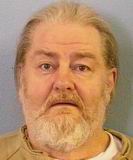
Joseph Robert Miller
Serial killer Donald Henry Gaskins
Serial killer · USA · 1969
Donald Henry Gaskins, also known as Donald “Pee Wee” Gaskins, was a serial kill…
200 victims
Donald Henry Gaskins
Serial killer · USA · 1969
Donald Henry Gaskins, also known as Donald “Pee Wee” Gaskins, was a serial kill…
200 victims
 Carl Eugene Watts
Serial killer · USA · 1974
Carl Eugene Watts (born November 7, 1953; died September 21, 2007), also known…
100 victims
Carl Eugene Watts
Serial killer · USA · 1974
Carl Eugene Watts (born November 7, 1953; died September 21, 2007), also known…
100 victims
 Rodney Alcala
Serial killer · USA · 1977
Rodney James Alcala (born August 23, 1943) was also known as Rodrigo Jacques Al…
100 victims
Rodney Alcala
Serial killer · USA · 1977
Rodney James Alcala (born August 23, 1943) was also known as Rodrigo Jacques Al…
100 victims
 Donald Harvey
Serial killer · USA · 1970
Donald Harvey was known as an American serial killer and a self-professed “Ange…
87 victims
Donald Harvey
Serial killer · USA · 1970
Donald Harvey was known as an American serial killer and a self-professed “Ange…
87 victims
 Donald Leroy Evans
Serial killer · USA · 1975
Donald Leroy Evans (born July 5, 1957) was an American serial killer who murder…
60 victims
Donald Leroy Evans
Serial killer · USA · 1975
Donald Leroy Evans (born July 5, 1957) was an American serial killer who murder…
60 victims
 Michael Swango
Serial killer · USA · 1981
Michael Swango (Joseph Michael Swango) was a physician and American serial kill…
60 victims
Michael Swango
Serial killer · USA · 1981
Michael Swango (Joseph Michael Swango) was a physician and American serial kill…
60 victims
 Sylvia Seegrist
Murderer · USA · 1985
Sylvia Wynanda Seegrist (born July 31, 1960) was an American woman diagnosed wi…
3 victims
Sylvia Seegrist
Murderer · USA · 1985
Sylvia Wynanda Seegrist (born July 31, 1960) was an American woman diagnosed wi…
3 victims
 Carlton Dotson
Murderer · USA · 2003
Summer of 2003 — Carlton Dotson and Patrick Dennehy indicated they were concern…
1 victim
Carlton Dotson
Murderer · USA · 2003
Summer of 2003 — Carlton Dotson and Patrick Dennehy indicated they were concern…
1 victim
 Barry Lee Fairchild
Homicide · USA · 1983
Barry Lee Fairchild was convicted of the kidnap, rape and murder of a 22-year-o…
1 victim
Barry Lee Fairchild
Homicide · USA · 1983
Barry Lee Fairchild was convicted of the kidnap, rape and murder of a 22-year-o…
1 victim
 James D. Ford
Murderer · USA · 1997
James D. Ford was a defendant in a capital case in Florida. Ford’s date of birt…
2 victims
James D. Ford
Murderer · USA · 1997
James D. Ford was a defendant in a capital case in Florida. Ford’s date of birt…
2 victims
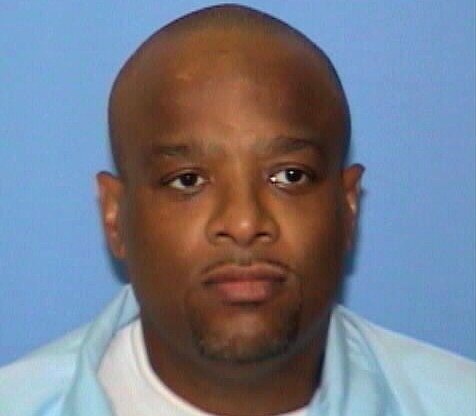 Ronald Macon
Serial killer · USA · 1999
Ronald Macon was convicted of three murders and one criminal sexual assault in…
3 victims
Ronald Macon
Serial killer · USA · 1999
Ronald Macon was convicted of three murders and one criminal sexual assault in…
3 victims
 Camia Gamet
Murderer · USA · 2013
Camia Gamet was sentenced to life in prison without parole on April 16, 2014, f…
1 victim
Camia Gamet
Murderer · USA · 2013
Camia Gamet was sentenced to life in prison without parole on April 16, 2014, f…
1 victim
- Gender
- male
- Country
- USA
- Location
- Illinois, USA
- Date of birth
- January 15, 1945
- Age at first offence
- 31
- Characteristics
- rape, abduction, sexual abuse, serial rapist
- Victim profile
- Women (prostitutes)
- Method of murder
- Strangulation
- Date(s) of murder
- 1976-1977 / 1993
- Years active
- 1976–1993
- Date of arrest
- —
- Status
-
Released
Commuted to life in prison; death sentence previously imposed in 1994 after being sentenced to life in prison in 1978 and paroled in April 1993; appeal outcome: dismissal of his post-conviction petition without an evidentiary hearing was affirmed
Case overview
Joseph Robert Miller was convicted of six counts of first degree murder in connection with the later crimes in the late 1970s and again in April 1993 and the months that followed. In the post-conviction proceedings, the Illinois appellate court affirmed the dismissal of his post-conviction petition without an evidentiary hearing.
Timeline
- April 1993 — Miller was released from prison.
- Five months later — Miller killed three more women and disposed of their bodies in drainage ditches.
- March 31, 1997 — The United States Supreme Court denied Miller’s petition for a writ of certiorari.
- December 29, 1995 — Miller filed a pro se petition for post-conviction relief.
- December 19, 2002 — The Illinois appellate court issued its opinion.
- April 1, 2003 — The opinion was modified upon denial of rehearing.
- December 14, 2004 — The narrative reported that Michael Newton’s work described “Serial Killer Gives Prison Confession To 3 More Slayings,” with police skeptical about the confessions.
Background
In the late 1970s, Miller murdered two women and disposed of their bodies by the side of a road. He was convicted of these murders and sentenced to the Department of Corrections (DOC).
In April 1993, Miller was released from prison. Five months later, he killed three more women and disposed of their bodies in drainage ditches.
The offence
Miller’s later crimes involved killing three more women and disposing of their bodies in drainage ditches following his April 1993 release.
Miller’s earlier crimes involved murdering two women and disposing of their bodies by the side of a road in the late 1970s.
Trial
Following a jury trial in the circuit court of Peoria County, Miller was convicted of six counts of first degree murder (720 ILCS 5/9-1(a) (West 1992)) for the later crimes.
The same jury found that Miller was eligible for the death penalty because he was convicted of killing more than one person (720 ILCS 5/9-1(b)(3) (West 1992)), and that there were no mitigating factors sufficient to preclude the imposition of the death penalty.
Accordingly, the trial court sentenced Miller to death.
Appeals
On direct appeal, the Illinois appellate court affirmed Miller’s convictions and sentence in People v. Miller, 173 Ill. 2d 167 (1996).
The United States Supreme Court denied Miller’s petition for a writ of certiorari on March 31, 1997, in Miller v. Illinois, 520 U.S. 1157, 137 L. Ed. 2d 497, 117 S. Ct. 1338 (1997).
Miller later appealed from the dismissal of his post-conviction petition without an evidentiary hearing. The case statement identifies: “THE PEOPLE OF THE STATE OF ILLINOIS, Appellee, v. JOSEPH R. MILLER, Appellant. Opinion filed December 19, 2002. Modified Upon Denial of Rehearing April 1, 2003.”
The opinion stated: “JUSTICE THOMAS delivered the opinion of the court: Defendant, Joseph R. Miller, appeals from the dismissal of his post-conviction petition without an evidentiary hearing. We affirm.”
Post-conviction petition claims and the court’s analysis
Miller filed a pro se petition for post-conviction relief on December 29, 1995.
Miller argued ineffective assistance of counsel in two respects:
- During plea negotiations, Miller contended that his attorney failed to explain that a sentence of natural life was the most lenient sentence he could receive. He claimed he rejected the State’s offer of life imprisonment in exchange for his guilty plea and supported the contention with his own affidavit.
- Miller contended that his attorney was ineffective for failing to cross-examine two State witnesses about their criminal involvement in the sale of stolen property. Miller argued that these witnesses must have been promised leniency in exchange for their testimony and that the State did not disclose such a promise to the defense. Miller supported this with police reports showing that the witnesses admitted to involvement in the sale of stolen property with Miller.
Counsel was appointed, and counsel filed an amended petition incorporating Miller’s pro se petition and adding a claim that trial counsel was ineffective for failing to investigate and present available mitigating evidence. Miller supported this with evaluations by Dr. Michael Gelbort, a clinical psychologist, and Dr. Fred Berlin, an associate professor at Johns Hopkins University School of Medicine.
- Dr. Berlin’s report concluded that Miller was a sexual sadist and that this malady impaired his volitional capabilities.
- Dr. Gelbort concluded that Miller suffered from neuro-psychological impairment and dysfunction reflective of brain dysfunction or damage.
The State moved to dismiss without an evidentiary hearing, arguing waiver because issues could have been raised on direct appeal, and arguing that Miller failed to meet his burden of showing a substantial denial of constitutional rights.
The trial court granted the State’s motion to dismiss and concluded that Miller failed to show trial counsel’s performance fell below an objective standard of reasonableness.
Court’s discussion of mootness after commutation
The opinion treated one sentencing-related ineffective assistance issue as moot. It explained that after the filing of Miller’s appeal, the Governor commuted Miller’s death sentence to natural life imprisonment without the possibility of parole or mandatory supervised release. It stated that commutation removed the judicially imposed sentence and replaced it with a lesser, executively imposed sentence, and that this rendered the sentencing issue moot.
Court’s discussion of plea-negotiation mootness
The opinion also treated the plea-negotiation ineffective assistance issue as moot, referencing that life imprisonment was the minimum sentence if convicted and reasoning that the issue presented no controversy in light of the Governor’s commutation.
Court’s discussion of Decher and Mayes
The opinion addressed two prosecution witnesses, Mary Decher and Daniel Mayes. It said these witnesses gave testimony that placed Miller in the car believed to have been used by the murderer.
Miller argued that Decher and Mayes must have been offered leniency by the State in exchange for their testimony and that evidence of a deal with the State was never disclosed to him. He argued both a Brady v. Maryland violation and ineffective assistance for failing to cross-examine them about any exchanged consideration.
The opinion stated: “We note initially that defendant’s claim of a promise of leniency is entirely speculative.” It described that the evidence Miller attached showed that police questioned Decher and Mayes and that they admitted involvement in the sale of stolen property with Miller. It concluded that Miller inferred leniency from that involvement without evidence that a promise existed. It stated that because Miller failed to provide any evidence of a promise of leniency, the petition was subject to dismissal on that basis alone.
It then briefly addressed the merits. It set out Brady’s disclosure obligation and the materiality standard, stating that evidence was material if there was a reasonable probability the result would have been different if it had been disclosed. The opinion assumed arguendo a promised leniency agreement not disclosed and concluded Miller could not show a reasonable probability that the result would have been different because the evidence of guilt was overwhelming.
The opinion said Decher and Mayes’ testimony tied Miller to the vehicle likely used by the murderer, but that other evidence connected Miller to the vehicle. It further stated that there was plenty of evidence to convict even without their testimony, including Miller’s own incriminating statements and DNA evidence that conclusively linked him to the crime. It therefore concluded that the same reasoning showed Miller could not meet the prejudice requirement for his ineffective assistance claim and that the trial court properly denied him an evidentiary hearing on this claim.
Conclusion of the appeal
The opinion concluded that Miller’s post-conviction petition, supported by the accompanying evidence and the trial record, did not make a substantial showing that his constitutional rights were violated, and that the court did not err in dismissing the petition without an evidentiary hearing.
It affirmed the judgment of the circuit court of Peoria County.
Outcome
The appellate outcome was an affirmation of the dismissal of Miller’s post-conviction petition without an evidentiary hearing.
Separately, the narrative information provided in the case summary reported that Miller had already been convicted of killing six people and that he admitted to killing three other women for which he had not been charged. It described that Miller admitted that he abducted, raped, tortured, and then killed and disposed of the bodies. It included a claim that police were skeptical about the confessions and that Miller previously led investigators on “wild goose chases,” including details such as what kind of shoes victims were wearing.
The narrative further identified a family member, Linda Morrison, who suspected her daughter, Stacey, could have been one of Miller’s victims. It described that Stacey had been involved in prostitution and disappeared after leaving her home. It stated that Stacey is only listed as a missing person because her body has never been found.
The narrative stated that Miller said he knew confessing could land him on death row, but he wanted to make his peace with God.
Sentence and disposition details in the provided record
The provided narrative stated:
- Served 15 years for first two kills.
- Condemned in 1994.
The sentencing and appellate material described:
- Miller was sentenced to death after trial.
- On appeal, after the Governor commuted the death sentence to natural life imprisonment without the possibility of parole or mandatory supervised release, the sentencing issue became moot in the post-conviction analysis.
Other details
The provided narrative identified Michael Newton as “An Encyclopedia of Modern Serial Killers - Hunting Humans” and stated: “Serial Killer Gives Prison Confession To 3 More Slayings Police Skeptical About Confessions December 14, 2004.”
The record listed “SEX: M RACE: W TYPE: T MOTIVE: Sex. DATE(S): 1976-77/1993 MO: Strangler of prostitutes in Chicago (1970s) and Peoria. DISPOSITION: Served 15 years for first two kills; condemned, 1994.”
The narrative stated that Miller was first convicted of killing two Chicago prostitutes in the late 1970s, and that after his release in 1993 he killed again the same year. It described convictions for the murders of three more prostitutes and an elderly woman who lived near his home in Peoria, and it described police suspicion that there could have been more victims.
Spotted an error, or have more information about this case?