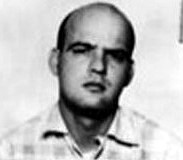
Richard Eberling
Serial killer Richard Kuklinski
Serial killer · USA · 1949
Richard “Iceman” Kuklinski was sentenced to life in prison in 1988. He died in…
100 victims
Richard Kuklinski
Serial killer · USA · 1949
Richard “Iceman” Kuklinski was sentenced to life in prison in 1988. He died in…
100 victims
 Raymond Fernandez
Serial killer · USA · 1947
Raymond Martinez Fernandez was executed by electrocution at Sing Sing prison in…
17 victims
Raymond Fernandez
Serial killer · USA · 1947
Raymond Martinez Fernandez was executed by electrocution at Sing Sing prison in…
17 victims
 Carroll Edward Cole
Serial killer · USA · 1948
Carroll Edward Cole, also known as “Eddie,” was born in Sioux City, Iowa on May…
15 victims
Carroll Edward Cole
Serial killer · USA · 1948
Carroll Edward Cole, also known as “Eddie,” was born in Sioux City, Iowa on May…
15 victims
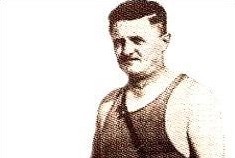 Joe Ball
Serial killer · USA · 1936
Joe Ball (January 6, 1896 – September 24, 1938) was an American serial killer.…
14 victims
Joe Ball
Serial killer · USA · 1936
Joe Ball (January 6, 1896 – September 24, 1938) was an American serial killer.…
14 victims
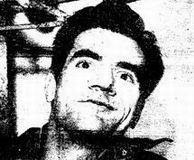 Stephen Nash
Serial killer · USA · 1955
Stephen Nash Stephen Nash was executed by asphyxiation-gas in California on Aug…
11 victims
Stephen Nash
Serial killer · USA · 1955
Stephen Nash Stephen Nash was executed by asphyxiation-gas in California on Aug…
11 victims
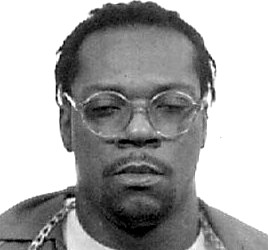 Gregory Van Cleave
Murderer · USA · 1982
Gregory Van Cleave was 20 years old at the time of the murder. He had a bad hom…
1 victim
Gregory Van Cleave
Murderer · USA · 1982
Gregory Van Cleave was 20 years old at the time of the murder. He had a bad hom…
1 victim
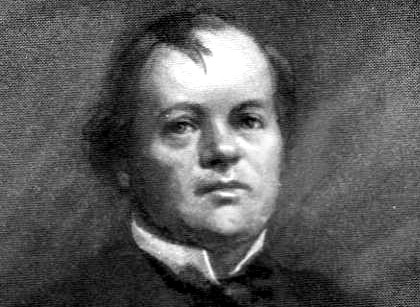 William Palmer
Serial killer · United Kingdom · 1846
William Palmer (August 6, 1824 – June 14, 1856) was an English doctor who was c…
13 victims
William Palmer
Serial killer · United Kingdom · 1846
William Palmer (August 6, 1824 – June 14, 1856) was an English doctor who was c…
13 victims
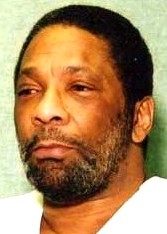 Joseph Lewis Clark
Murderer · USA · 1984
Joseph Lewis Clark was sentenced to death for the aggravated murder of David A.…
2 victims
Joseph Lewis Clark
Murderer · USA · 1984
Joseph Lewis Clark was sentenced to death for the aggravated murder of David A.…
2 victims
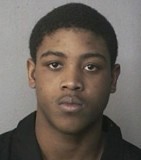 Demetrius Carey
Homicide · USA · 2005
Demetrius Carey was a 14-year-old student at Westview Middle School near Opa-lo…
1 victim
Demetrius Carey
Homicide · USA · 2005
Demetrius Carey was a 14-year-old student at Westview Middle School near Opa-lo…
1 victim
 Bradley Stone
Mass murderer · USA · 2014
Bradley W. Stone was 35 and was an ex-husband of Nicole Stone. He was also desc…
6 victims
Bradley Stone
Mass murderer · USA · 2014
Bradley W. Stone was 35 and was an ex-husband of Nicole Stone. He was also desc…
6 victims
- Gender
- male
- Country
- USA
- Location
- Ohio/Michigan, USA
- Date of birth
- December 8, 1929
- Age at first offence
- 17
- Characteristics
- rape, convicted rapist, torture
- Victim profile
- One man and four women
- Method of murder
- Several
- Date(s) of murder
- 1946 - 1983
- Years active
- 1946–1983
- Date of arrest
- —
- Status
-
Died in custody
Sentenced to life imprisonment; died in prison on July 25, 1998
Case details
Richard George Eberling (December 8, 1929 - July 25, 1998) was a petty thief and convicted murderer.
Timeline
- July 25, 1998 — Richard Eberling died in prison.
The offence
Eberling was convicted of murder in connection with the death of Ethel May Durkin.
Investigation
Blood found at the crime scene matched Eberling.
Ethel May Durkin was found attacked:
- The investigation later included exhumation and a full autopsy.
- The autopsy revealed that Durkin was hit hard in the neck from behind.
- X-rays revealed that Durkin’s neck bone had been broken in the same spot where Marilyn Sheppard’s had been broken.
- Durkin died from the injuries.
Background
Richard Eberling was born Richard Lenardic in Cleveland, Ohio to Louise Lenardic, an unmarried woman. Louise Lenardic identified the baby’s father as George Anderson, a Cleveland Heights, Ohio police officer who was also known as an alcoholic.
Louise Lenardic attempted to keep the baby named Richard, but he was placed into the Cuyahoga County, Ohio foster care system designated as Ward 1575, where he received the minimum amount of care needed to sustain him as he passed from family to family.
On subsequent visits to the Cuyahoga County welfare office, Lenardic began to exhibit irregular and eccentric traits. Richard also had behavioral traits that disturbed his foster families, including on-going tantrums, compulsive masturbation, and an inability to acquire language.
Louise Lenardic refused to surrender her rights to her son, so there was no chance for Richard to be adopted into a stable home.
Richard showed behavioral issues including excessive breath holding, an inability to acquire language skills, disassociative tendencies, and homosexual tendencies at a young age. His exhibitionism caused problems in placing him in private homes and while he was housed in county facilities.
A potential adoptive home was found, but the family backed out after the introduction of another potentially adoptive infant and Richard, age four, began to mimic the infant’s behaviors.
In 1939, Richard Lenardic was placed with George and Christine Eberling, an older couple who farmed near Bay Village, Ohio. The Eberlings housed numerous foster children, using them as cheap labor for the farm.
Richard became a favorite of Mrs. Eberling. Cuyahoga County case workers noted that Richard refused to play games with other boys, preferring to stay inside and clean, “redecorate rooms” and wear clothing belonging to Mrs. Eberling.
Cuyahoga County authorities had a problem with Louise Lenardic establishing contact with him because he had been told that both of his parents were deceased.
In 1946, while Richard was still with the Eberlings, George Eberling died while suffering from pneumonia, but the official cause of death was listed as a stroke.
Eventually, Richard graduated from high school, established his own house cleaning and decorating company, and purchased the Eberling farm from Christine Eberling.
In 1948, Richard legally changed his name from Richard Lenardic to Richard George Eberling.
Eberling developed a tendency to steal from his clients while cleaning their houses, usually taking personal items such as jewelry. This resulted in charges being brought against him and convictions for petty thefts.
In the window washing business, one of Eberling’s clients was Marilyn Sheppard. Eberling had been at the Sheppard home on the day of her murder washing windows. Eberling’s account was that he cut himself and required the use of the Sheppard’s house to wash up and stop the bleeding. Eberling also described this as how he came into the possession of one of Marilyn Sheppard’s rings during one of his petty theft arrests in 1959.
Eberling positioned himself as an aide to Cleveland Mayor Ralph Perk in the early 1970s through his friendship with the Mayor’s wife Lucille.
In 1973, Eberling was placed in charge of a committee charged with the remodeling of Cleveland’s City Hall. Criticism followed because he lacked the training to do so.
A financial crisis emerged due to Eberling’s spending and inability to account for it, and it landed on the front page of Cleveland Plain Dealer.
In 1974, Eberling’s companion, Obie Henderson, became Perk’s executive secretary. In 1977, both Henderson and Eberling lost their positions in City Hall when Perk was voted out of office.
Other details
Relationship and alleged conduct involving other deaths
Eberling met Patricia Bogar at a fund raiser for the Cuyahoga County Auditor George Voinovich while hobnobbing in Republican fund raising party circles. Bogar claimed to have dated Henderson, but when Henderson arrived for a date, Eberling was with him. Eventually, Bogar, Eberling, and Henderson became friends. Bogar received a regular guest room at Eberling’s home in Westlake.
Eberling also became friends with Ethel May Durkin, a wealthy, childless widow in Lakewood, Ohio, whom he had been hired to decorate. Durkin quickly became someone Eberling considered his most trusted confident.
Suspicion arose after Durkin’s death and after the deaths of Durkin’s two sisters.
Durkin’s sister Myrtle Fray took an instant dislike to Eberling. Fray was reportedly involved with illegal gambling. Fray was beaten savagely about her head and strangled in her secured apartment building on May 20, 1962, after she had readied herself for bed.
More than twenty years later, when questioned about the murder of Fray, Eberling made statements that corroborated with previously unpublished information in the police report. Eberling stated that he wouldn’t have been surprised if the murderer had washed up in the sink and then donned one of Fray’s dresses to use as an escape costume to avoid being filmed by the lobby security camera.
Author James Neff described that thirty years following Fray’s death, Eberling wrote that Fray was killed in the same manner as Marilyn Sheppard.
Durkin’s elder sister Sarah Belle Farrow died under suspect conditions in March 1970 while living with Durkin in Durkin’s spacious Lakewood home. The death was attributed to injuries sustained in a fall down the basement steps that broke both legs and both arms. Eberling later attributed the accident to “Belle’s age” and stated that if he had wanted to kill her, he would have pushed her down the basement stairs.
By 1970, Eberling was regularly pulling cash out of Durkin’s bank accounts. Eberling enlisted Patricia Bogar’s help to forge documents to give Eberling complete control over Durkin’s finances, with Eberling estimating that the estate could be worth in excess of $500,000 and Bogar to receive ten percent.
As Durkin’s health declined, Eberling used the documents to make financial and medical care decisions. Durkin began having accidents resulting in serious injuries, including falls down flights of stairs. Eberling controlled her prescription regimen, and Durkin was often kept in a sedated state.
Bogar suspected Eberling might cheat her out of the promised $50,000. Bogar wrote a detailed letter, had her signature notarized, and mailed it certified mail to her attorney with instructions for safe keeping until she might require it back.
Durkin came under the care of Kathy Wagner, a health aide whom Eberling hired. Durkin allegedly confided to Wagner that slitting a throat and watching someone die was exhilarating. Durkin also allegedly said that Eberling had killed Marilyn Sheppard and assaulted Dr. Sam Sheppard in the head with a steel pail, adding, “You didn’t hear that.” (Neff, page 295-298).
On November 15, 1983, a squad was called to Ethel May Durkin’s home. Paramedics found Durkin face down on a hardwood floor.
Eberling claimed that Durkin had gotten up from her chair and fallen. Eberling told the EMS team that he thought it was a heart attack, but her vital signs and wounds to her face led medical professionals to think she had been attacked. Durkin died from the injuries on January 3, 1984.
In Durkin’s will, which Eberling and Bogar had forged with two other accomplices who were being blackmailed by Eberling for insurance fraud, Durkin left the bulk of her estate to Eberling. The will instructed that Durkin was to be buried with her jewelry and clad in her favorite mink coat. Before the casket was sealed, Eberling removed Durkin’s jewelry and her mink coat.
Will-related actions and indictment
After Bogar began turning on Eberling and reopening the Durkin matter, local authorities advanced their investigation. Lakewood police moved forward while Durkin’s estate was turned over to a local independent attorney by the Cuyahoga County Probate Court for review.
Finding irregularities with the estate accounting and signatures, the matter was returned to the court system for additional investigation.
In July 1988, Eberling, Henderson, and two others were indicted for forgery, perjury, aggravated grand theft, tempering with evidence, and tempering with records.
The indictment material indicated that Bogar had simply signed a blank sheet of paper.
Shortly thereafter, Durkin’s body was exhumed for examination, and detectives noted that Durkin was without her fur coat and her diamonds. A full autopsy revealed Durkin was hit hard in the neck from behind.
Eberling had claimed to have hit Durkin to one of the co-conspirators, and Eberling was charged with murder.
Conviction and sentencing in Durkin case
Eberling and his companion Obie Henderson were found guilty of the murder of Ethel May Durkin in July 1989. Co-conspirators received suspended sentences for their help in testifying against Eberling and Henderson.
Eberling was sentenced to life in prison.
Suspected relationship to Marilyn Sheppard case
While in prison, Eberling boasted to a fellow inmate that he had killed Marilyn Sheppard and beaten Sam Sheppard when Sam Sheppard attempted to stop him.
Following that revelation, Eberling agreed to meet with Samuel Reese Sheppard, Sheppard’s son, and disclose information of value.
Sheppard spoke publicly about Eberling’s possible involvement, which brought the matter before the courts again.
While in prison, Eberling sent letters to Samuel Reese Sheppard, containing references to the crime and promises to reveal all at the right time. Eberling also met with reporters and authors regarding his potential role in the Shepard murder case and enjoyed the attention.
Dr. Sheppard mentioned Eberling’s male pattern baldness and bushy hair piece during his trial as part of his defense.
Additional suspected crimes
Eberling’s link to two other suspicious deaths came to light:
- George Eberling (1946): while being taken care of by Christine Eberling and Richard, it was discovered that George Eberling ingested poison immediately before suffering his stroke, which had been left on his bed side nightstand. No autopsy had been performed on George Eberling.
- Barbara Kinzel (1956): Kinzel, a nurse at Sam Sheppard’s Bay View Hospital, allegedly died when Eberling veered off a Michigan highway and slammed her Ford convertible into the back of a parked truck. The truck driver said his vehicle was no where near Eberling’s. Kinzel claimed she felt Sam Sheppard was innocent based on the severity of Sam Sheppard’s condition after the incident. After Kinzel’s comments had been circulated in newspapers, Eberling began calling on her and the two began to date. Eberling later claimed that after the accident he reached over and found her body crumbled on the floor in front of the passenger seat. An autopsy had been performed on Barbara Kinzel due to questions raised at the accident site. With the convertible top down and without a seat belt, it was questioned why her body was not thrown from the car. Eberling claimed Kinzel had hit the windshield, but there was no bleeding internal or otherwise anywhere on her body and no evidence of safety glass found in her facial tissues. The coroner noted her neck was broken along the second vertebra, as were Sheppard’s and Durkin’s.
Speculations were made that Eberling had killed Kinzel to keep her quiet about Sam Sheppard’s innocence should a retrial be ordered.
It was also noted that Kinzel’s car was involved in the accident that took her life, and Eberling made a healthy financial settlement from the company that owned the truck for injuries sustained in the case.
Correspondence with Sam Reese Sheppard
Eberling contacted Sam Reese Sheppard while in prison and made statements that the Sheppard estate maintained amounted to a confession. Eberling stated that he knew “the entire story” of the murder and knew that Dr. Sheppard was innocent. Eberling also told Sheppard, “your family has been with me a long time.” Later, Eberling recanted these statements.
In letters that followed an initial letter, Eberling told stories about the Sheppard family, including that Marilyn asked Eberling to keep an eye on Sam Reese Sheppard and his cousin while she went out. Eberling sent an accurate diagram of the rooms in the Sheppard house.
Eberling wrote with poor spelling and punctuation, and he hinted of inside knowledge: “The true facts of Marylin Sheppards' murder have remained a secret to the public, reason being it could injure the reputations or careers of living persons. My reason for speaking out now. Is to help her son understand what happened.”
Young Sam went to see Eberling in prison multiple times over five years and Eberling sent over 230 pages of letters.
Outcome
In July 1989 Eberling and Henderson were convicted of Ethel May Durkin’s murder and sentenced to life in prison.
Eberling died in prison on July 25, 1998, aged 68.
Legal actions transpired following Eberling’s death regarding possible involvement in the murder of Marilyn Sheppard, and those actions proved inconclusive.
Spotted an error, or have more information about this case?