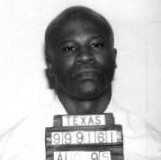
Desmond Jennings
Serial killer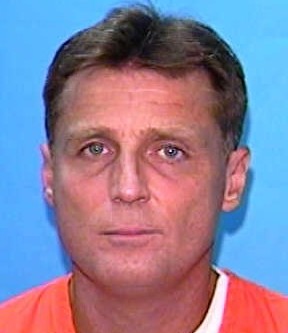 Glen Edward Rogers
Serial killer · USA · 1993
Glen Edward Rogers was a spree killer whose cross-country rampage in 1994-95 le…
70 victims
Glen Edward Rogers
Serial killer · USA · 1993
Glen Edward Rogers was a spree killer whose cross-country rampage in 1994-95 le…
70 victims
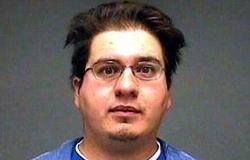 Efren Saldivar
Serial killer · USA · 1989
Efren Saldivar (born 30 September 1969) was an American serial killer who murde…
50 victims
Efren Saldivar
Serial killer · USA · 1989
Efren Saldivar (born 30 September 1969) was an American serial killer who murde…
50 victims
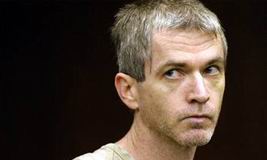 Charles Cullen
Serial killer · USA · 1984
Charles Cullen (born February 22, 1960) was a former nurse and the most prolifi…
45 victims
Charles Cullen
Serial killer · USA · 1984
Charles Cullen (born February 22, 1960) was a former nurse and the most prolifi…
45 victims
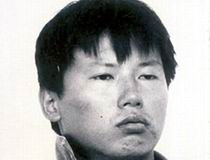 Charles Ng
Serial killer · USA · 1983
Charles Chi-Tat Ng (Chinese: 吳志達/吴志达; born December 24, 1960) was a Chinese-Ame…
25 victims
Charles Ng
Serial killer · USA · 1983
Charles Chi-Tat Ng (Chinese: 吳志達/吴志达; born December 24, 1960) was a Chinese-Ame…
25 victims
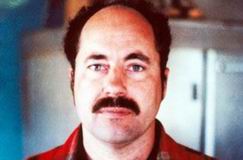 Leonard Lake
Serial killer · USA · 1983
Leonard Lake (October 29, 1945 – June 6, 1985) was an American serial killer. H…
25 victims
Leonard Lake
Serial killer · USA · 1983
Leonard Lake (October 29, 1945 – June 6, 1985) was an American serial killer. H…
25 victims
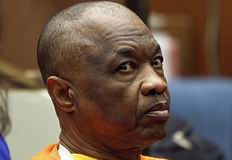 Lonnie Franklin
Serial killer · USA · 1985
Lonnie Franklin was convicted as the “Grim Sleeper” serial killer, a nickname u…
25 victims
Lonnie Franklin
Serial killer · USA · 1985
Lonnie Franklin was convicted as the “Grim Sleeper” serial killer, a nickname u…
25 victims
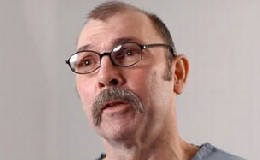 Michael Selsor
Murderer · USA · 1975
Michael Bascum Selsor was held as an Oklahoma death row inmate with inmate ID O…
1 victim
Michael Selsor
Murderer · USA · 1975
Michael Bascum Selsor was held as an Oklahoma death row inmate with inmate ID O…
1 victim
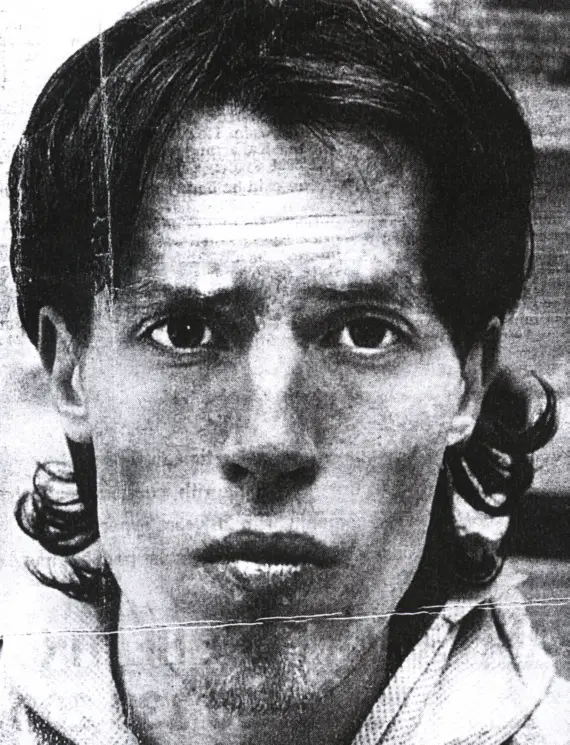 Lloyd Maurice Crosbie
Murderer · Australia · 2001
Lloyd Maurice Crosbie was convicted in Victoria. · March 11, 2003 — The Supreme…
2 victims
Lloyd Maurice Crosbie
Murderer · Australia · 2001
Lloyd Maurice Crosbie was convicted in Victoria. · March 11, 2003 — The Supreme…
2 victims
 Jessy San Miguel
Mass murderer · USA · 1991
Name: Jessy San Miguel (also referred to as Jessy Carlos San Miguel) Status: Ex…
4 victims
Jessy San Miguel
Mass murderer · USA · 1991
Name: Jessy San Miguel (also referred to as Jessy Carlos San Miguel) Status: Ex…
4 victims
 Randall Woodfield
Serial killer · USA · 1979
Randall Woodfield was an American serial killer dubbed The I-5 Killer or The I-…
18 victims
Randall Woodfield
Serial killer · USA · 1979
Randall Woodfield was an American serial killer dubbed The I-5 Killer or The I-…
18 victims
 John Albert Taylor
Murderer · USA · 1988
John Albert Taylor (c. 1960) was executed by firing squad in Utah on January 26…
1 victim
John Albert Taylor
Murderer · USA · 1988
John Albert Taylor (c. 1960) was executed by firing squad in Utah on January 26…
1 victim
- Gender
- male
- Country
- USA
- Location
- Tarrant County, Texas, USA
- Date of birth
- October 4, 1971
- Age at first offence
- 22
- Characteristics
- drugs, drug addict, former mental patient, fugitive
- Victim profile
- Larry Wilson / Dino Beasley and Charlotte Dickerson / Sylvester Walton and Wonda Matthews
- Method of murder
- Shooting
- Date(s) of murder
- October-December 1993
- Years active
- 1993
- Date of arrest
- January 1994
- Status
-
Executed
Executed by lethal injection in Texas on November 17, 1999
Case record: Desmond Jennings
Status and last statement
Desmond Jennings declined to make a last statement.
Texas Attorney General John Cornyn issued a media advisory that Jennings was scheduled to be executed after 6 p.m. on Tuesday, November 16.
Before being executed, Jennings warned prison officials that he would not cooperate. When a team came to remove him from his cell on death row, they used pepper spray to subdue him. He was placed on a van and transported from the Ellis Unit, about 15 miles northeast of Huntsville, to the Huntsville Unit in downtown Huntsville, where executions take place. It was the first time in 193 executions carried out in the state since capital punishment resumed in 1982 that authorities had needed to use force to move a condemned inmate to the death house. As witnesses filed into the chamber, Jennings was passive and made no eye contact. When the warden asked whether he had final statement, Jennings said, "No, I do not." Jennings took 2 short breaths, stopped moving and was declared dead at 6:22 p.m., 7 minutes after the flow of lethal drugs began.
A separate account described Jennings as a defiant condemned inmate who fought a 5-member team of guards before being executed Tuesday night for killing 2 people during a Fort Worth crack house robbery. Desmond Jennings had warned prison officials he would not cooperate and, "true to his word, he did resist all the way," prison spokesman Larry Fitzgerald said. Guards clad in helmets, masks, chest gear and shin guards swooped into his cell after 6 p.m. when he refused to go on his own volition. Jennings told officers, "I won't do this." 52 seconds later he was removed from the cell - his fists clenched and his body rigid - but he threw no punches. As he was carried to the chamber, he told guards, "Thank you for not using gas."
Timeline
- December 27, 1993 — Eric Gardner was standing outside the Ambassador Apartments in the "Stop Six" area of Fort Worth, Texas, and saw Desmond Jennings and John Freeman driving in Freeman's white Honda Accord after midnight; Gardner flagged them down and rode with them; Jennings and Freeman robbed and shot Sylvester Walton and Wonda Matthews at a Langston Street drug house; after the killings they checked a pouch taken from Walton, which contained thirteen cents and empty capsules, and threw it out the window; instead of taking Gardner home they drove him back to the Americana Apartments where Derrick Price and Victor Walker joined the group; Jennings called Gardner a derogatory term translated to "coward" and told Gardner, "I dropped that [person] in the front room."
- December 27, 1993 (same night/early morning) — Jennings spent that night with Robert Anderson at the nearby Ambassador Apartments after Anderson observed blood on Jennings's tennis shoes.
- December 27, 1993 (Christmas Eve / Christmas morning) — Jennings and Freeman were seen fleeing a residence on Sunshine Street in Fort Worth; Dino Beasley was fatally shot and died almost immediately; Charlotte Dickerson was shot and called 911 and died Christmas morning.
- October 23, 1993 — Jennings, Freeman, James Edward Donald Jr., Joseph L. Griffin, and Robert Anderson drove to a drug house on Eastland Street in Fort Worth intending to rob the occupants; Jennings was armed with a twelve-gauge shotgun; Jennings burst in and commanded, "Drop out."; Jennings shot Larry Wilson after he appeared to comply; the men later left after taking money and marijuana.
- January 3, 1994 — Fort Worth police stopped a white Honda Accord traveling with only one functioning headlight; Freeman was driving; four passengers were in the vehicle; Freeman and one passenger were arrested for possession of a controlled substance; a loaded nickel-plated .32-caliber handgun was discovered in the trunk; ballistics comparisons linked the crime-scene bullets and the victims' bullets to that handgun.
- March 10, 1994 — Desmond Jennings was indicted on capital murder charges in the 213th Judicial District Court of Tarrant County, Texas.
- February 24, 1997 — Jennings filed his initial state application for writ of habeas corpus in the state trial court.
- April 2, 1997 — The Texas Court of Criminal Appeals affirmed Jennings's conviction and sentence.
- May 8, 1997 — The state trial court entered findings of fact and conclusions of law recommending that the relief sought be denied.
- June 11, 1997 — The Court of Criminal Appeals denied Jennings's application for writ of habeas corpus.
- June 11, 1997 — The court denied Jennings's motion for rehearing.
- July 19, 1995 — The jury found Jennings guilty.
- July 26, 1995 — Following a separate punishment hearing, the jury answered the three statutory special issues "yes", "yes", and "no" and assessed punishment at death.
- December 8, 1997 — The United States Supreme Court denied Jennings's petition for writ of certiorari.
- October 4, 1999 — The United States Supreme Court denied Jennings's petition for writ of certiorari.
- November 17, 1999 — Jennings was executed by lethal injection in Texas.
Background
Desmond Jennings was described as a drug-using thrill killer by prosecutors and as the triggerman in a small gang of men who robbed Fort Worth crack houses. Prosecutors described him as having participation in additional murders at three different Fort Worth crack houses, including the instant offense.
Jennings was a former nurse's aide who dropped out of school after the 9th grade. At the time of the murders, Jennings was 22 years old. Another account described Jennings as 23 at the time of the murders and as 28 at execution.
A former Tarrant County assistant district attorney, Joetta Keene, prosecuted Jennings and later said, "They would literally bust down the doors, rob the house and kill everyone there," and, "We proved the double homicide for grounds for capital (murder). What we proved is 3 more bodies in the punishment (phase) with no question of the feeling there were more out there. We knew there were up to 20 but we figured 5 would be enough and we proved 5 bodies."
The offence
December 27, 1993 — Ambassador Apartments area to Langston Street house
On December 27, 1993, Eric Gardner stood outside the Ambassador Apartments in the "Stop Six" area of Fort Worth, Texas. Gardner saw Jennings and John Freeman driving along in Freeman's white Honda Accord sometime after midnight, and Gardner flagged them down, wanting a ride home. Freeman and Jennings agreed to drive him home.
After driving some distance, Freeman said he wanted to get some heroin before taking Gardner home and mentioned a drug house on Langston Street. Jennings suggested, "Let's jack the house." Freeman drove up to the Langston Street house and traveled further along the street before stopping. Jennings and Freeman exited the car and approached the house. Jennings pulled his hood over his head and had both his hands inside his jacket pockets. Gardner remained in the car, turned on the car's radio, and watched through the rear window.
Jennings and Freeman went inside the house. At one point when Gardner turned the radio volume down, he heard two shots and then saw Jennings and Freeman walk calmly out of the house. The men had been inside the house for two or three minutes. Once back inside the car, Jennings and Freeman sat quietly as they drove away.
Jennings pulled out a pouch obtained in the drug house, checked it, and then threw it out the window, saying, "There ain't nothin'up in here." Instead of taking Gardner home, they drove him back to the Americana Apartments near the Ambassador Apartments where they had picked him up.
At the Americana Apartments, Derrick Price and his friend, Victor Walker, joined the group. When Jennings climbed out of the car in front of Price's apartment, he called Gardner a derogatory term translated to a "coward." Jennings told Gardner, "I dropped that [person] in the front room." Jennings explained that as they approached the house, a man inside stood up and asked what they wanted; Jennings responded by shooting the man in the face. Jennings said he advanced into the house, and when he saw a woman raising herself on the bed, he shot her in the head too. Jennings then returned to the male victim, shot him again, rifled through his pockets, and stole his pouch. As Jennings and Freeman were leaving the house, Jennings heard the woman moaning and returned and shot her a second time.
Jennings observed, "I messed my Chucks up. I got blood all over my Chucks and my khakis." Gardner noticed blood on Jennings's "Chuck Taylor" All-Star tennis shoes. Jennings did not appear scared and showed no remorse.
Gardner did not tell the police about the killings because he thought either Jennings or Freeman would have shot him. Price testified that in that area of town, if a person is labeled a "snitch," his life is in danger.
Victims and injuries
The victims were Sylvester Walton, 44, and Wonda Matthews, 27.
The autopsy of the male victim, Sylvester Walton, revealed he sustained a gunshot wound to the head. The bullet entered through his left nostril, traveled through his brain, and lodged in his left occipital scalp. Tremendous brain swelling due to the wound track caused Walton's death.
The autopsy of the female victim, Wonda Matthews, indicated she had been shot three times. One bullet fired from less than six feet away entered on the right side of her nose and exited through her jaw in front of her left ear; although the bullet passed underneath the base of her skull, it did not cause her death. A second bullet entered the left side of her head and traveled down and to the right before lodging in her left nostril; this bullet caused massive brain damage and was the cause of death. A third bullet entered near her left eye, traveled down and to the rear causing damage underneath her brain, and lodged in her left neck muscle. Two bullets were recovered from Matthews's body and turned over to police.
Discovery of bodies and scene evidence
On December 27, 1993, Willie Charles Washington, his wife Tosha, Floyd Roberts, and Dietrich Irvin drove to the Langston Street house to obtain heroin. Washington and Irvin approached the house and noticed the screen door was closed but the main door was ajar. Washington saw a man lying on the floor gurgling and coughing. The men left the house, drove to a nearby fire department building, and alerted the staff. Firefighters and medical personnel reported to the scene, followed shortly by Fort Worth police.
Police discovered the body of a black male lying on the floor just inside the door of the residence and the body of a black female lying on a bed. The house appeared unkept inside and contained a great deal of drug paraphernalia. Police recovered a spent bullet from inside a pillow on the female victim's bed and several fired bullet casings from on and around the bed. The male victim's pants pockets had been turned inside out.
A separate account stated that the crime scene was discovered later that day by four people who went to the house to buy heroin and that emergency personnel recovered one bullet from Walton's body and two from Matthews's.
Subsequent vehicle stop and ballistics
On January 3, 1994, Fort Worth police stopped a white Honda Accord traveling with only one functioning headlight. Earlier that day, a robbery victim had reported the same vehicle to the officers. Freeman was driving the vehicle, and there were four passengers. Freeman was wearing a Dallas Cowboys Starter jacket similar to one stolen during the robbery five hours earlier.
The officers arrested Freeman and one passenger for possession of a controlled substance. When the car was inventoried, a loaded nickel-plated .32-caliber handgun was discovered in the trunk. Ballistics comparisons subsequently conducted on the handgun revealed that the bullet recovered from the crime scene and the bullets recovered from the victims' bodies were all fired from this handgun.
Investigation and related events
Jennings was linked to additional murders introduced during the punishment phase through evidence of participation in three additional murders. The evidence showed Jennings was the triggerman in a small band of men who shot to death five people at three different Fort Worth crack houses in October and December 1993.
October 23, 1993 — Eastland Street robbery and killing
On October 23, 1993, Jennings, Freeman, James Edward Donald Jr., Joseph L. Griffin, and Robert Anderson drove to a drug house on Eastland Street in Fort Worth intending to rob the occupants. Griffin remained in the car and Anderson stood watch on the street.
Jennings, armed with a twelve-gauge shotgun, Freeman, and Donald approached the house. Freeman knocked on the door and, on hearing an invitation to enter, Jennings burst in and commanded, "Drop out." One of the two men inside appeared to comply, but Jennings shot him anyway, and both men fell to the ground. When Freeman walked into a back bedroom, a woman began screaming, leapt through the bedroom window, and ran away down the street.
Jennings ordered Donald to search the couch for money and then search the dying victim who was lying on the floor moaning. When Donald refused to search the man, Jennings himself went through the victim's pockets. The men left the house.
The victim, Larry Wilson, died as a result of blood loss twenty to forty-five minutes after being shot. The men had obtained approximately $100 cash and $30 worth of marijuana. Jennings advised the others on the way back to the Ambassador Apartments: "The trigger man gets the most, gets the most money."
Jennings warned the others that if they said anything he would kill them. Later that night, Jennings told Donald and Anderson, "If anybody snitches, I am killing both of y'all."
Christmas Eve 1993 — Sunshine Street residence shootings
In the early morning hours of Christmas Eve 1993, Jennings and Freeman were seen fleeing a residence on Sunshine Street in Fort Worth. Jennings carried a gun.
Inside the residence, Dino Beasley had sustained multiple gunshot wounds; he lost consciousness and died almost immediately. Charlotte Dickerson had sustained a gunshot wound to the top of her head and lacerations to the left side of her brain, but she remained conscious long enough to call 911. She died Christmas morning as a result of her injuries.
Although only Jennings was seen carrying a weapon, police recovered both .32-caliber and .25-caliber cartridge cases from the crime scene. The .32-caliber bullets recovered at the Sunshine Street crime scene were positively identified as having been fired from the weapon used in the instant offense.
A separate account added that Dickerson nearly survived when she hid under the bed as Jennings riddled Beasley with bullets, and stated that witnesses said Jennings, after leaving, went back into the house and shot Dickerson when he learned of her presence.
Evidence at trial tying the handgun to the killings
Ballistics testing tied the loaded .32-caliber pistol discovered in the car to the killings at the instant offense and supported identification that bullets recovered from the scene and the victims were fired from the same handgun.
Arrest
Freeman was arrested seven days after December 27, 1993 while driving a car that matched the description of a vehicle used in a robbery. During the inventory of that car, a loaded nickel-plated .32-caliber handgun was discovered in the trunk.
A separate account stated that Jennings was arrested about a week later when police pulled over his car for having only one working headlight, and that a loaded .32-caliber pistol was found in the car and ballistics tests tied it to the killings. Another account stated that officers arrested Freeman and one passenger for possession of a controlled substance on January 3, 1994.
Trial
Jennings was indicted on March 10, 1994, in the 213th Judicial District Court of Tarrant County, Texas, for the capital offense of murdering Sylvester Walton and Wonda Matthews during the same criminal transaction, which occurred on or about December 27, 1993.
Jennings was tried before a jury following his plea of not guilty. On July 19, 1995, the jury found him guilty. On July 26, 1995, following a separate punishment hearing, the jury answered the three statutory special issues submitted pursuant to Texas Code of Criminal Procedure Article 37.071 "yes", "yes", and "no", respectively. In accordance with state law, the trial court assessed Jennings's punishment at death.
The State introduced evidence at the punishment phase demonstrating Jennings's participation in three additional murders. The evidence showed Jennings's role in a spree of crack house robberies and killings in October and December 1993.
A second man was convicted of murder and was serving a 30-year prison term.
Sentencing
After the separate punishment hearing, the trial court assessed Jennings's punishment at death, consistent with the jury's answers to the special issues.
Appeals and post-conviction proceedings
Jennings appealed his conviction and sentence to the Texas Court of Criminal Appeals. The Texas Court of Criminal Appeals affirmed on April 2, 1997. The court denied Jennings's motion for rehearing on June 11, 1997.
The United States Supreme Court denied Jennings's petition for writ of certiorari on December 8, 1997. Later, the United States Supreme Court denied Jennings's petition for writ of certiorari on October 4, 1999.
Jennings proceeded with state post-conviction proceedings under amended Article 11.071 of the Texas Code of Criminal Procedure. He filed his initial state application for writ of habeas corpus in the state trial court on February 24, 1997. By order dated May 8, 1997, the trial court entered findings of fact and conclusions of law recommending that the relief sought be denied. On June 11, 1997, the Court of Criminal Appeals denied Jennings's application for writ of habeas corpus on the basis of the trial court's findings and conclusions.
On January 8, 1998, the state trial court scheduled Jennings's execution for April 28, 1998.
Jennings proceeded into federal court by filing motions for appointment of counsel and for stay of execution in the United States District Court for the Northern District of Texas, Fort Worth Division, on March 10 and 11, 1998, respectively. On March 11, 1998, the federal district court appointed counsel, and the court granted Jennings's request for a stay of execution on March 12. Jennings filed his petition on April 24, 1998. On June 12, 1998, the district court entered final judgment denying Jennings's petition for writ of habeas corpus and vacating the previously issued stay of execution. The district court denied Jennings permission to appeal on July 16, 1998.
The United States Court of Appeals for the Fifth Circuit denied Jennings permission to appeal on January 21, 1999, and denied rehearing on March 10, 1999.
Outcome
Desmond Jennings was executed by lethal injection in Texas on November 17, 1999. He was declared dead at 6:22 p.m. after 7 minutes of lethal drugs.
Other details
Jennings's statements and demeanor during the killings and aftermath
During the killings, Jennings advanced into the house and shot the victims. After recounting the killings to Gardner, Jennings observed blood on his Chuck Taylor All-Star tennis shoes and khakis, and said, "I messed my Chucks up. I got blood all over my Chucks and my khakis."
Jennings told Robert Anderson that he had messed up his tennis shoes by killing people for nothing.
A friend testified that Jennings was unfazed by the killings and was most upset that blood had splattered on his Chuck Taylor All-Star basketball shoes and his pants, and Jennings said, "I messed my Chucks up," and "I got blood all over my Chucks and my khakis."
During removal from the cell and movement to the death chamber, Jennings said, "I won't do this." and "Thank you for not using gas."
When asked whether he had a final statement, Jennings said, "No, I do not."
Drug and money details
Jennings threw out a pouch containing thirteen cents and empty capsules, saying, "There ain't nothin'up in here."
In the unrelated October 23, 1993 robbery, Jennings and the other men obtained approximately $100 cash and $30 worth of marijuana.
Prison force and timing details
A team of guards used helmets, masks, chest gear and shin guards and swooped into Jennings's cell after 6 p.m. He refused to go on his own volition. Jennings was removed from the cell 52 seconds later with his fists clenched and his body rigid. No gas or spray was used during the final forced removal from the holding cell adjacent to the death chamber.
Prosecution and estimates
Authorities believed Jennings could have been responsible for as many as 20 murders at Fort Worth drug houses and positively linked him to 5 slayings, including the two victims of the instant offense.
The other murders remained on the books as unsolved. All occurred in drug houses and nearly all the victims were prostitutes or junkies.
Execution scheduling and execution court details
The Texas Attorney General media advisory stated Jennings was scheduled to be executed after 6 p.m., Tuesday, November 16. Another account stated he was scheduled to be executed after 6 p.m. Tuesday, November 16. Jennings was executed Tuesday night in Huntsville, Texas.
Victim ages and identities included in the case
The capital offense involved the murders of 44-year-old Sylvester Walton and 27-year-old Wonda Matthews. The additional murders referenced included Dino Beasley, 29, Charlotte Dickerson, 31, and Larry Wilson, as well as others in the October 23, 1993 incident.
Quotes and attributions preserved
Joetta Keene said, "They would literally bust down the doors, rob the house and kill everyone there," and, "We proved the double homicide for grounds for capital (murder).
Joetta Keene also said, "It's very hard (to seek the death penalty), but then a Desmond Jennings comes along and even though you may cry at night because you're involved, ... it just makes sense that you've got to have this necessary evil," and "To me, he is the definition of the death penalty. He believes so little in human life that a pair of sneakers is worth more to him than the life of a human being. You've got to pay more than just sit in a cell. God can redeem him but with man you have to suffer the consequences. You can't go blow a bunch of people away and think it's fun."
Angela Hamza said, "It's over and done with," and, "I wouldn't use the word `glad.' I do feel justice has been served."
Jennings said, "Let's jack the house." Jennings commanded, "Drop out." Jennings said, "There ain't nothin'up in here." Jennings said, "I dropped that [person] in the front room." Jennings observed, "I messed my Chucks up. I got blood all over my Chucks and my khakis." Jennings said, "The trigger man gets the most, gets the most money." Jennings told Donald and Anderson, "If anybody snitches, I am killing both of y'all." Jennings told an associate, "I messed my Chucks up," and, "I got blood all over my Chucks and my khakis." Prison spokesman Larry Fitzgerald said, "true to his word, he did resist all the way." Jennings told officers, "I won't do this." As he was carried to the chamber, Jennings told guards, "Thank you for not using gas." When asked whether he had final statement, Jennings said, "No, I do not."
Spotted an error, or have more information about this case?