
William Gerald Mitchell
Murderer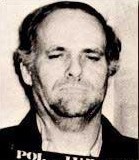 Ervil LeBaron
Murderer · USA · 1972
Ervil Morrell LeBaron (1925 to August 16, 1981) was the leader of a polygamous…
35 victims
Ervil LeBaron
Murderer · USA · 1972
Ervil Morrell LeBaron (1925 to August 16, 1981) was the leader of a polygamous…
35 victims
 Marvin Gray
Murderer · USA · 1975
Marvin Gray was convicted killer who claimed responsibility for 23 slayings and…
23 victims
Marvin Gray
Murderer · USA · 1975
Marvin Gray was convicted killer who claimed responsibility for 23 slayings and…
23 victims
 Yahweh ben Yahweh
Murderer · USA · 1980
Yahweh ben Yahweh was born and legally named Hulon Mitchell Jr. (October 27, 19…
23 victims
Yahweh ben Yahweh
Murderer · USA · 1980
Yahweh ben Yahweh was born and legally named Hulon Mitchell Jr. (October 27, 19…
23 victims
 Charles Manson
Murderer · USA · 1969
Charles Milles Manson (born November 12, 1934) was an American criminal and mus…
9 victims
Charles Manson
Murderer · USA · 1969
Charles Milles Manson (born November 12, 1934) was an American criminal and mus…
9 victims
 Douglas Crabbe
Mass murderer · Australia · 1983
Douglas John Edwin Crabbe (b. 1948) was sentenced to five consecutive terms of…
5 victims
Douglas Crabbe
Mass murderer · Australia · 1983
Douglas John Edwin Crabbe (b. 1948) was sentenced to five consecutive terms of…
5 victims
 Tonya Hawks
Murderer · USA · 2006
Tonya Hawks was the mother of three sons. She worked at the Behr Thermal Plant…
3 victims
Tonya Hawks
Murderer · USA · 2006
Tonya Hawks was the mother of three sons. She worked at the Behr Thermal Plant…
3 victims
 James Malicoat
Murderer · USA · 1997
James Patrick Malicoat was executed in Oklahoma in August 2006 after being conv…
1 victim
James Malicoat
Murderer · USA · 1997
James Patrick Malicoat was executed in Oklahoma in August 2006 after being conv…
1 victim
 Christian Magee
Serial killer · Canada · 1974
Name: Christian Magee Aliases/nicknames: “Mad Slasher” Christian Magee was foun…
3 victims
Christian Magee
Serial killer · Canada · 1974
Name: Christian Magee Aliases/nicknames: “Mad Slasher” Christian Magee was foun…
3 victims
 Robert James Anderson
Murderer · USA · 1992
Robert James Anderson was executed in Huntsville, Texas. Audra Ann Reeves was t…
1 victim
Robert James Anderson
Murderer · USA · 1992
Robert James Anderson was executed in Huntsville, Texas. Audra Ann Reeves was t…
1 victim
 Billy Conn Gardner
Murderer · USA · 1983
Billy Conn Gardner (#751) was executed by lethal injection in Texas on February…
1 victim
Billy Conn Gardner
Murderer · USA · 1983
Billy Conn Gardner (#751) was executed by lethal injection in Texas on February…
1 victim
- Gender
- male
- Country
- USA
- Location
- Harrison County, Mississippi, USA
- Date of birth
- 1950
- Age at first offence
- 24
- Characteristics
- rape
- Victim profile
- Irene Edwards / Patty Milliken, 38
- Method of murder
- Stabbing with knife / Repeatedly run over by a vehicle
- Date(s) of murder
- February 22, 1974 / November 21, 1995
- Years active
- 1974–1995
- Date of arrest
- November 21, 1995
- Status
-
Executed
Executed by lethal injection in Mississippi on March 22, 2012
Parties and courts
- William Gerald Mitchell — petitioner/appellant.
- Christopher B Epps, Commissioner, Mississippi Department of Corrections — respondent/appellee.
- United States Court of Appeals for the Fifth Circuit — Mitchell v. Epps, No. 10–70006.
- Supreme Court of Mississippi — No. 1998-DP-01785-STC; No. 2002-DR-00479-SCT.
- United States Supreme Court — certiorari denial referenced as Mitchell v. Mississippi, 535 U.S. 933 (2002).
Timeline
- November 21, 1995 — Patty Milliken disappeared after stepping outside from the Majik Mart convenience store in Biloxi to smoke a cigarette with Mitchell; her co-worker reported her missing; Mitchell ran from police when they arrived at an address cross-referenced from Milliken’s telephone number found in her purse; Mitchell was later spotted at a gas station, pursued, and arrested for traffic violations; Milliken’s body was found the following morning under a bridge.
- 1974 — Mitchell stabbed Irene Edwards to death using two butcher knives; he was charged with murder and assault with intent to murder for that stabbing-murder incident described in later proceedings.
- 1975 — Mitchell was committed to the Mississippi State Hospital on order of the Harrison County Circuit Court; he received a diagnosis including “mild mental retardation” and schizophrenia, latent type (as stated in later proceedings); Mitchell was sentenced to life imprisonment for the 1974 murder.
- May 16, 2011 — The Fifth Circuit panel issued its decision denying Mitchell’s request for a certificate of appealability (COA).
Background
William Gerald Mitchell was convicted in Mississippi and sentenced to death. The Fifth Circuit described the case as a capital murder involving Patty Milliken and noted that Mitchell had been on parole at the time of the November 1995 offense.
The offence
Patty Milliken worked at a Biloxi convenience store (Majik Mart). On the evening of November 21, 1995, near the end of her shift, Milliken told her co-worker that she was going to go outside with Mitchell to smoke a cigarette and talk. She left her purse and car keys in the convenience store. When Milliken did not return, her co-worker reported that she was missing.
Milliken had written Mitchell’s telephone number on a piece of paper that police found in her purse. Police cross-referenced the telephone number to an address. When police arrived at that address, Mitchell, who was in the yard, ran from them. Police later spotted Mitchell at a gas station and pursued him when he fled from the gas station in his car. He was arrested for traffic violations.
Milliken’s body was found the following morning under a bridge. She had been beaten, strangled, sexually assaulted, and crushed after having been run over by a car. The family of Milliken later described her as having been “strangled, beaten, sexually assaulted and repeatedly run over by a vehicle” (as stated in court records cited in the proceedings).
Investigation and arrest
Police searched and pursued Mitchell after Milliken did not return from stepping outside. After police arrived at the cross-referenced address, Mitchell ran. Police later pursued Mitchell at a gas station when he fled in his car. After the police searched Mitchell’s car, he was charged with Milliken’s murder.
Trial
Guilt phase
The jury found Mitchell guilty of capital murder.
Punishment phase
During the punishment phase, the Fifth Circuit described that Mitchell called four witnesses.
Mary Louise Mitchell — Mitchell’s wife. She testified that she met Mitchell at the penitentiary and that he last lived with her in 1990 or 1991. She testified that they adopted her son’s child, that Mitchell had a wonderful relationship with her adult daughters, and that he worked and took care of her children. She also testified that she used some of his earnings to support them. She said Mitchell worked as a roofer, then as a direct care worker at the Mississippi State Hospital, and then went to truck driving school and became a truck driver. She testified that Mitchell had never been violent to or around her.
Albert Reed, Jr. — Mitchell’s stepfather. Reed testified that he married Mitchell’s mother when Mitchell was four years old. Reed said Mitchell was a normal youngster and that everybody loved him. Reed testified that Mitchell never had any problems with the law and worked for his grandfather’s lawn business. Reed testified that Mitchell served in the Army and that something happened to change Mitchell when he got back from Korea.
Marie Cornelia Mitchell Dunn — Mitchell’s sister. Dunn testified about Mitchell’s childhood and said they did what normal children do, playing and going to school. She said Mitchell worked “all the time” when he was young. She testified about his military service. She admitted that she was aware that he had been convicted of murder in 1975. Dunn testified that Mitchell reads the Bible and stated: “A person who has committed two murders reads the Bible and that's what he does everyday.”
Rosemary Reed — Mitchell’s mother. The Fifth Circuit stated she testified that Mitchell had normal boyhood activities and was “just a typical boy.” She testified that he was a Boy Scout and did normal things that Scouts do, such as camping. She testified about his military service and stated that Korea was a bad place for him to be. She also testified about his conviction for murder in 1975 and his sentence of life imprisonment.
The Fifth Circuit stated that the jury did not find Mitchell’s mitigating evidence persuasive and he was sentenced to death.
Sentencing
Mitchell was sentenced to death in 1998 in Harrison County Circuit Court. The Fifth Circuit described that, in July 1998, Mitchell was convicted and sentenced to death for the November 1995 capital murder of Patty Milliken.
Appeals
Direct review and post-conviction review in Mississippi
- The Mississippi Supreme Court affirmed Mitchell’s conviction and sentence on March 29, 2001, and denied rehearing on August 23, 2001. (The Fifth Circuit referenced: Mitchell v. State, 792 So.2d 192 (Miss.2001).)
- The Supreme Court denied certiorari (referenced: Mitchell v. Mississippi, 535 U.S. 933 (2002)).
- The Mississippi Supreme Court denied post-conviction relief on August 19, 2004, and denied rehearing on December 2, 2004. State, 886 So.2d 704 (Miss.2004)*.)
- Mississippi, 544 U.S. 1022 (2005)*).
Federal habeas proceedings and COA
Mitchell filed his federal habeas petition on June 15, 2005. The district court denied relief and denied a certificate of appealability. The Fifth Circuit panel stated the district court decision was issued on March 19, 2010 and referenced: Mitchell v. Epps, No. 1:04–cv–865, 2010 WL 1141126 (S.D.Miss. Mar. 19, 2010).
Mitchell requested a COA from the Fifth Circuit to appeal the denial of relief on claims that:
- He received ineffective assistance of counsel during the guilt and sentencing phases of trial.
- He was mentally retarded and ineligible for execution and entitled to an evidentiary hearing.
The Fifth Circuit stated it denied Mitchell’s request for a COA.
Ineffective assistance of counsel
The Fifth Circuit stated that Mitchell’s ineffective assistance claim was adjudicated on the merits by the Mississippi Supreme Court. It described the governing standard under 28 U.S.C. § 2254(d) and referenced Strickland v. Washington.
The Fifth Circuit stated the Mississippi Supreme Court interpreted Mitchell’s ineffective assistance claim as one of ineffective assistance for failing to develop and present evidence of mental retardation at sentencing. The Fifth Circuit stated the Mississippi Supreme Court held there was no evidence in the record suggesting Mitchell was mentally retarded, and it concluded that trial counsel could not be faulted for failing to present mitigating evidence that did not exist. The Fifth Circuit also noted the Mississippi Supreme Court observed that a 1974 interview by Dr. Matherne found that it was “obvious that [Mitchell] had at least average intellectual functioning and a significant deficit in cognitive functioning was not noted during the interview.” It also stated the Mississippi Supreme Court cited Mitchell’s military service and attendance at college.
The Fifth Circuit described Mitchell’s broader federal attempt to include failure to investigate and present evidence of mental illness as well as mental retardation. It concluded that jurists would not find debatable the district court’s exhaustion determinations and prejudice analysis, as described in the proceedings.
The Fifth Circuit also discussed details of records and evaluations that Mitchell claimed counsel should have presented, including:
- Dr. Bass’s April 10, 1974 evaluation describing Mitchell as “a borderline schizophrenic” with potential for decompensation into a psychotic state.
- Dr. Matherne’s June 26, 1974 report stating Mitchell’s intellectual functioning appeared to be in at least the average range and noting no formal intellectual evaluation because it was obvious he had at least average functioning with a significant deficit not noted during interview.
- Mississippi State Hospital admissions and diagnoses after the February 11, 1975 admission, including “mild mental retardation” and schizophrenia, latent type.
- Staff and psychologist notes including IQ-related testing and other descriptive observations.
- Prison records and military record descriptions, including IQ scores and conduct assessments.
- School records through the eleventh grade, football, basketball, and choir participation, and GED completion while in the Army.
- Employment records after discharge and during parole, including work as a welder and later as a direct care worker and truck driver.
It also addressed affidavits submitted in state post-conviction proceedings from Dr. Sarah DeLand, Dr. Gwendolyn Catchings–Costello, Dr. W. Criss Lott, and trial counsel affidavits from Pisarich and Musselman describing what investigations they said they did or did not conduct.
The Fifth Circuit concluded it denied COA on ineffective assistance of counsel.
Mental retardation and evidentiary hearing
The Fifth Circuit described that the Mississippi Supreme Court held there was no evidence in the record suggesting Mitchell was mentally retarded, and that Mitchell did not meet the required showing for an evidentiary hearing under state law because he did not produce an expert affidavit stating an IQ of 75 or below and that further testing would show mental retardation.
The Fifth Circuit stated that it concluded reasonable jurists would not find debatable the district court’s decision on this claim. It discussed IQ scores, including a reported IQ of 79 and the distinction between “borderline intellectual functioning” (71–84) and mental retardation (70 or below) as referenced in DSM–IV–TR. It also discussed other evidence of adaptive functioning, including testimony from family members, school achievements, participation in activities, adult relationships, and handwritten letters and filings.
It concluded it denied the COA on the mental retardation claim.
Outcome
Mitchell’s request for a certificate of appealability was denied. The Fifth Circuit stated: “COA DENIED.”
The legal status described in the case record was that Mitchell was executed.
Aftermath
The record described that Mitchell was executed by lethal injection in Mississippi on March 22, 2012. It stated he was pronounced dead at 6:20 p.m. after lethal injection.
The record described execution-day details including a question whether he wanted to say anything before the chemicals were pumped into his veins; Mitchell answered: “No.” It described his appearance in a red jumpsuit and black-and-white sneakers, and described that he appeared to lick his lips, took a deep breath and exhaled and then yawned; officials pronounced him dead moments later when he closed his eyes.
The record described that two members of Milliken’s family witnessed the execution: Williams Burns (son) and Rosemary Riley (sister). It included Riley’s statement:
- “We are so glad this day has come and justice is being served on Patty's behalf. Mitchell cannot cause harm to anyone else ever again,” Riley said.
It included Burns’s statement:
- Burns, his voice breaking several times, said he grew up without a father and his mother played dual roles. “She and I shared so many great times. In this moment I am very angry ... at the system, at this man and at the fact that the process took close to 17 years to come to fruition. "So do I feel justice was served? I would have to say only slightly. Sure the state of Mississippi took his life, he lived in a cage like an animal for the last 17 years ... but to lie down and just go to sleep, that is the way we all pray that we go. "For my mother it wasn't nearly as easy as it has been for this man, so for that I am disappointed. And that a beautiful lady's name will forever be tied to a disgusting man,” Burns said.
It stated there was no statement from Mitchell’s family and that Mitchell wanted none of them present for the execution. It stated his body was collected by his sister and driven from the penitentiary. The record also described that Biloxi Police Chief John Miller said he had hoped Mitchell would have said something more (“Something to cleanse his soul”), and that Corrections Commissioner Chris Epps said Mitchell was talkative earlier in the day and was visited by a brother and two sisters, with the statement:
- “Just small talk ... nothing about what he was on death row for,” Epps said.
The record described a statement from Governor Phil Bryant stating he would not halt the execution:
- “After reviewing the case of William Mitchell and the crime he committed, I will not stand in the way of the scheduled execution. My thoughts and prayers are with the family and friends of Patty Milliken, who fell victim to this horrible act of violence,” Bryant said in the statement.
It also described that Mitchell’s body would be turned over to his sister Gerolyn Mitchell and Brinson Funeral Home in Cleveland.
Other details
Previous murder and parole status
The record stated that, at the time of the murder of Patty Milliken, Mitchell was serving parole on a life sentence for a prior murder. It stated he was out serving parole for approximately eleven months at the time of Milliken’s murder.
The record also described Mitchell’s prior murder conviction for the 1974 murder of Irene Edwards in Harrison County and that he stabbed Edwards to death using two butcher knives. The record further noted that Mississippi State Hospital records and other evaluations later referenced diagnoses and circumstances connected to the earlier homicide.
Military service and discharge
The record described Mitchell served in the Army from 1969 until 1973 as a supply clerk and a welder. It stated he earned the National Defense Service Medal, the Expert Rifle Medal, and the Armed Forces Expeditionary Medal. It also described that he received ratings for conduct and efficiency and later had deteriorated performance. It stated he was discharged from the Army for “unsuitability” on December 12, 1972. It referenced statements attributed to Sergeant First Class Dunham, Staff Sergeant Rodgers, and Major Orendas describing conduct and disciplinary issues, including disrespect, physical altercations, and infidelity.
School and education
The record described Mitchell attended school through the eleventh grade without failing a grade until the second semester of the tenth grade, with grades in the 70s and some 80s in the sixth grade. It stated he was not in special education classes and participated in football, basketball, and choir. It stated he earned his GED while in the Army. It stated he was accepted at Mississippi Valley State University in January 1974 and enrolled in biology, art, history, and psychology classes, attended for about a month, and withdrew after arrest for aggravated assault and murder.
Employment
The record described employment at Manpower as a welder, and work at Ingalls shipyard as a shipfitter and as a tacker apprentice for two or three months, with resignation due to dissatisfaction with working conditions. It also described job application statements about attending welding school at a local community college.
It stated that while on parole in 1989 he worked for the Mississippi State Hospital as a Direct Care Trainee and then as a Direct Care Worker. It stated he worked as a truck driver for J.B. Hunt in 1990.
Last meal request and sedation
The record described that Mitchell’s last meal request was fried shrimp and oysters, ranch dressing, two fried chicken breasts, a strawberry shake and a soft drink. It stated he ate very little of the meal and asked for a sedative.


Spotted an error, or have more information about this case?