
Robert Wallace West
Murderer Ervil LeBaron
Murderer · USA · 1972
Ervil Morrell LeBaron (1925 to August 16, 1981) was the leader of a polygamous…
35 victims
Ervil LeBaron
Murderer · USA · 1972
Ervil Morrell LeBaron (1925 to August 16, 1981) was the leader of a polygamous…
35 victims
 Brian Kevin Rosenfeld
Murderer · USA · 1985
Brian Kevin Rosenfeld Brian Kevin Rosenfeld was sentenced to three concurrent l…
23 victims
Brian Kevin Rosenfeld
Murderer · USA · 1985
Brian Kevin Rosenfeld Brian Kevin Rosenfeld was sentenced to three concurrent l…
23 victims
 Marvin Gray
Murderer · USA · 1975
Marvin Gray was convicted killer who claimed responsibility for 23 slayings and…
23 victims
Marvin Gray
Murderer · USA · 1975
Marvin Gray was convicted killer who claimed responsibility for 23 slayings and…
23 victims
 Yahweh ben Yahweh
Murderer · USA · 1980
Yahweh ben Yahweh was born and legally named Hulon Mitchell Jr. (October 27, 19…
23 victims
Yahweh ben Yahweh
Murderer · USA · 1980
Yahweh ben Yahweh was born and legally named Hulon Mitchell Jr. (October 27, 19…
23 victims
 Russell Ellwood
Murderer · USA · 1991
Russell Ellwood was a former taxi driver. Authorities suspected him of killing…
20 victims
Russell Ellwood
Murderer · USA · 1991
Russell Ellwood was a former taxi driver. Authorities suspected him of killing…
20 victims
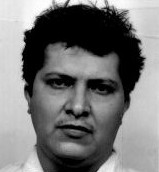 Angel Rivera
Murderer · USA · 1984
Angel Rivera was sentenced to death on December 1, 1986.
2 victims
Angel Rivera
Murderer · USA · 1984
Angel Rivera was sentenced to death on December 1, 1986.
2 victims
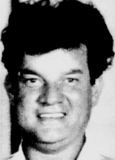 Kallie Delport
Mass murderer · South Africa · 1992
Carel Johannes “Kallie” Delport was a South African mass murderer. He killed ni…
9 victims
Kallie Delport
Mass murderer · South Africa · 1992
Carel Johannes “Kallie” Delport was a South African mass murderer. He killed ni…
9 victims
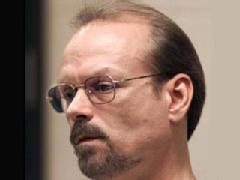 Philip Ray Workman
Murderer · USA · 1981
Name: Philip Ray Workman · Status: Executed by lethal injection in Tennessee on…
1 victim
Philip Ray Workman
Murderer · USA · 1981
Name: Philip Ray Workman · Status: Executed by lethal injection in Tennessee on…
1 victim
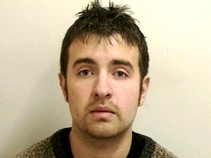 Shawn Bentler
Mass murderer · USA · 2006
Shawn Bentler (born 1983 or 1984) was a convicted murderer from Bonaparte, Iowa…
5 victims
Shawn Bentler
Mass murderer · USA · 2006
Shawn Bentler (born 1983 or 1984) was a convicted murderer from Bonaparte, Iowa…
5 victims
 Samuel Sheinbein
Homicide · USA · 1997
Samuel Sheinbein was a Jewish-American teenager who killed an acquaintance, Alf…
1 victim
Samuel Sheinbein
Homicide · USA · 1997
Samuel Sheinbein was a Jewish-American teenager who killed an acquaintance, Alf…
1 victim
 Guy Georges
Serial killer · France · 1991
Guy Georges was a French rapist and serial killer who preyed on attractive, you…
7 victims
Guy Georges
Serial killer · France · 1991
Guy Georges was a French rapist and serial killer who preyed on attractive, you…
7 victims
- Gender
- male
- Country
- USA
- Location
- Harris County, Texas, USA
- Date of birth
- December 12, 1961
- Age at first offence
- 21
- Characteristics
- revenge
- Victim profile
- Deanna Klaus, 22 (waitress)
- Method of murder
- Strangulation
- Date(s) of murder
- August 24, 1982
- Years active
- 1982
- Date of arrest
- Same day
- Status
-
Executed
Executed by lethal injection in Texas on July 29, 1997
Case overview
Robert Wallace West Jr. was convicted of capital murder in Texas and sentenced to death for the intentional murder of Deanna Klaus, committed while West was in the course of committing or attempting to commit burglary of her motel room, contrary to Texas Penal Code § 19.03(a)(2). He was executed in Texas on July 29, 1997.
The offence
Deanna Klaus, a 22-year-old waitress, lived one floor below West at a daily-rate motel in the Memorial area. West believed Klaus was involved in the recent death of a friend. On Aug. 24, 1982, West bound and beat Klaus with a club.
Shortly after midnight on Aug. 24, 1982, Vickie Stolz and two other residents of the motel were sitting in the motel’s breezeway and heard a commotion emanating from motel room 312. A fourth companion shortly joined these three. A few minutes later, West was observed exiting room 312. He walked within four to six feet of Stolz and her companions, then turned and walked up a flight of the motel’s stairs. The blue jeans he was wearing appeared to be soaked with blood. Stolz and her companions looked into room 312, which was in total disarray, and observed the nude body of Deanna Klaus, bloody and bound, lying face down on the bed.
Police officers arrived shortly thereafter. One witness directed them to room 447 in the motel on the floor above room 312. Room 447 was occupied by West and a male transvestite companion, Gonzalo Tagle. West was arrested when he stepped outside. Tagle advised that the room was his and gave permission to search.
Police observed a pair of wet, bloodstained blue jeans lying over a chair in the room. Stolz and her companions identified West as the individual they had observed leaving room 312. Police promptly examined room 312. Detective Lott testified that, based on his examination of the door to room 312, it had been forced open. Officer Richardson testified that the door “was separated from the seams as if broken into.” Other testimony described room 312 as “ransacked,” with “stuff scattered around the floor” and “drawers have been pulled out, dumped on the floor,” and that it appeared “like somebody went through everything.”
The pathologist testified that Klaus’s wrists and ankles were bound by cloth so tightly as to leave visible pressure grooves, and that Klaus’s mouth and nose were gagged with a towel tied by cloth binding that likewise left pressure grooves. Klaus’s head was covered by a bloody sheet tied by a leather belt wrapped twice around her neck. The pathologist testified there was a stab wound in Klaus’s neck and two on her left arm. A six-inch piece of wood protruded two inches from Klaus’s back, being stuck four inches into her body. There was evidence of strangulation by hand, reflected by her broken hyoid bone.
The pathologist testified that death resulted from asphyxiation, caused by the belt and cloth ligatures around the neck and mouth and by manual strangulation in combination with the wound from the stick penetrating four inches into her chest cavity.
West gave a full written confession after Miranda warnings. West admitted killing Klaus. He said he forced his way into her room by pushing the door open with his shoulder, disrobed Klaus, tied her up, and gagged her and put a belt around her neck. He beat Klaus in the face with a “club” he found in the room; it broke, and he stabbed her with it. He hit her with a bottle, which broke, and then “gigged her in the neck with it.” He then stated:
“[w]hen I got up she was still making noises, she was still alive. I knew that since I went that far that I couldn’t leave her like that. I grabbed the sheet and wrapped it around her neck and I strangled her. I pulled it until she didn’t move anymore.”
West also stated that he took a gold necklace that he saw in Klaus’s room, and that when he returned to room 447 put the necklace in Tagle’s purse.
Investigation
Police officers examined the door to room 312 and testified it appeared forced open. Police testimony described room 312 as ransacked, with scattered items and drawers pulled out and dumped on the floor.
Arrest
West was arrested after he stepped outside of room 447, where Gonzalo Tagle advised that the room was his and gave permission to search.
Trial
West’s trial resulted in a February 1983 Texas conviction and death sentence. The conviction and sentence were affirmed on direct appeal by the Texas Court of Criminal Appeals in West v. State, 720 S.W.2d 511 (Tex.Crim.App.1986) (en banc).
Confession admissibility
West’s defense attacked the admissibility of his confession, arguing it resulted from a warrantless arrest illegal under article 14.04 of the Texas Code of Criminal Procedure and that it violated Miranda rights and his rights under the Fifth and Fourteenth Amendments and analogous provisions of Texas law.
The trial court held a Jackson v. Denno hearing out of the jury’s presence on admissibility and found the confession admissible, also instructing the jury not to consider the confession if it was not found to have been given freely and voluntarily after proper warnings.
Evidence presented at trial
At trial, the state presented the testimony and physical evidence describing the condition of Klaus’s body and the apparent forced entry and ransacking of room 312. West’s confession was admitted, including previously redacted portions introduced at the punishment stage. The state introduced documentary evidence of West’s 1981 Florida conviction for felony grand theft.
The defense introduced no evidence at the guilt-innocence or punishment stages.
Punishment phase and Longfellow testimony
At the punishment stage, William Longfellow, a private security officer, testified about a May 15, 1982 brutal attack on him by West described in West’s confession. Longfellow testified that Roxanne (Tagle) and West were taken by West in Longfellow’s red Mercury Zephyr, with all three in the front seat to an area near Sage Street, where Longfellow stopped so Roxanne could urinate. Longfellow testified that West came up behind him, knocked him down, and slashed his throat several times with a knife. Longfellow testified that West hit his head against a tree stump, wound white cloth or gauze around his head and mouth, and held his head under water in a ditch. Longfellow testified that after West and Tagle left, Longfellow managed to get help, underwent five and a half hours of surgery, and remained hospitalized for eight days.
The confession admitted at the punishment stage described that West and Tagle began living together in Houston in April 1982, that Roxanne had a job, and that Roxanne and West also made money by “hustling tricks in the Montrose area of town.” The confession stated: “… I pulled out my knife and grabbed him by his hair and lifted him up off the ground and I stabbed him in the jugler vain [sic]. I stabbed him about six or seven times. As I was stabbing him I asked him where his money was. He told me that his money was in the trunk of his car. After he told me where his money was at I hit his head up against a tree and left him for dead. He wasn’t moving and he wasn’t saying anything and there was a lot of blood and I had blood all over my hands. I thought he was dead. As soon as I grabbed the guy and started stabbing him, Roxanne ran from there and ran to the apartments. The apartments are about two blocks away. After I stabbed him I got into his car and drove back to the apartments on Sage. I parked the car behind the WINDSOR PLAZA SHOPPING CENTER. I opened the trunk of the car and I found the guys money in a brown paper bag. I got the money and went to the apartment.... I thought I had killed the guy so the next morning we checked the newspapers to see if there was a story about him being found. We never seen nothing about the man being found. After a few weeks we just forgot about it. A couple of weeks later ROXANNE called me from the jail and she told me that she had been busted for prostitution. I went to the police station and found out that there was a hold on her for the stabbing. That’s when I found out that the man wasn’t dead....”
The confession also stated that West and Tagle returned to Houston and checked into the Memorial Park Motel on August 21.
Miranda warnings and waiver
The record described multiple Miranda warnings and questioning sessions, with West understood his rights, did not request a lawyer, and did not exercise his rights to terminate questioning.
The written statement included printed warnings and West’s acknowledgment and waiver. The statement legend read:
“Statement of Robert Wallace West taken in Harris County, Texas. Prior to making this statement I have been warned by C.W. Kent, the person to whom this statement is made, that: 1) I have the right to remain silent and not make any statement at all and any statement I make may and probably will be used against me at my trial; 2) Any statement I make may be used as evidence against me in court; 3) I have the right to have a lawyer present to advise me prior to and during any questioning; 4) If I am unable to employ a lawyer, I have right to have a lawyer appointed to advise me prior to and during any questioning and; 5) I have the right to terminate the interview at any time. Prior to and during the making of this statement I knowingly, intelligently and voluntarily waive the rights set out above and make the following voluntary statement:”
West initialed each paragraph 1 through 5, read the statement, made corrections, initialed the warnings, and signed each page.
Lesser included instruction
The charge instructed the jury on capital murder and included a definition of burglary and instructions about terms. It also instructed on a lesser included offense of murder. The charge stated, in part:
“Now therefore, if you find from the evidence beyond a reasonable doubt that the Defendant, Robert Wallace West, Jr. on or about August 24, 1982, in Harris County, Texas, did while in the course of committing or attempting to commit burglary of a habitation owned by Deanna Klaus, intentionally cause the death of Deanna Klaus by strangling Deanna Klaus with his hands, or by strangling Deanna Klaus with a belt, or by strangling Deanna Klaus with a sheet, or by suffocating Deanna Klaus with a hand towel, or by stabbing Deanna Klaus with a piece of wood, you will find the defendant guilty of capital murder. If you do not so believe, or if you have a reasonable doubt thereof, you will find the defendant not guilty of capital murder”
Appeals
Direct appeal
The Texas Court of Criminal Appeals affirmed West’s conviction and sentence on direct appeal in West v. The United States Supreme Court denied certiorari in West v. Texas, 481 U.S. 1072, 107 S.Ct. 2470 (1987).
Federal habeas proceedings
After the denial of state habeas relief, West sought federal habeas relief under 28 U.S.C. § 2254.
Procedural background in federal proceedings
- West filed state habeas proceedings represented by new counsel.
- On August 25, 1987, the state trial court entered findings and conclusions recommending denial of relief.
- On August 31, 1987, the Court of Criminal Appeals denied relief in a written order not stating reasons.
- West filed a section 2254 petition in the district court. After the state filed an answer and motion for summary judgment, West did not reply to the motion.
- The magistrate judge issued a memorandum opinion recommending granting the motion.
- West filed an unverified “response to magistrate’s memorandum and recommendation” after extensions.
- The district court accepted the magistrate judge’s memorandum and recommendation, granted the state’s motion for summary judgment, and dismissed the petition.
- West filed a timely notice of appeal.
Fifth Circuit decision
Robert Wallace West, Jr. v. Gary L. Johnson, Director, Texas Department of Criminal Justice, Institutional Division, was heard by the United States Court of Appeals for the Fifth Circuit. The panel consisted of Chief Judge POLITZ and Circuit Judges GARWOOD and JONES. The court’s decision was issued on Aug. 19, 1996, and it affirmed the district court’s denial of habeas relief. The court’s discussion covered sufficiency of the evidence and related ineffective assistance claims, Brady-related claims, admissibility of the confession, Penry claims and Texas capital sentencing scheme challenges, and ineffective assistance of counsel at sentencing.
Key contested issues addressed on appeal
West argued that the evidence was insufficient to support capital murder because his confession about theft of the necklace was not corroborated, and he argued ineffective assistance for not raising evidentiary insufficiency on direct appeal.
He argued that the prosecution suppressed evidence that his confession about stealing the necklace was fabricated, alleging a Brady violation, and he asserted related ineffective assistance for failing to investigate and present evidence that burglary had not happened.
He argued that admitting his confession violated Miranda, and that his Sixth Amendment right to counsel was violated.
He argued that his Penry rights were violated regarding mitigating evidence under Texas sentencing special issues.
He asserted ineffective assistance of counsel at sentencing for failing to present mitigating evidence and failing to adequately investigate his background, relying on an affidavit from psychologist Dr. Brown and statements about West’s childhood and substance abuse.
The Fifth Circuit rejected these claims and affirmed the denial of habeas relief.
Sentencing
West was convicted and sentenced to death for the Aug. 24, 1982 murder of Deanna Klaus. At the punishment phase, the state presented documentary evidence of West’s 1981 Florida felony grand theft conviction and testimony from Longfellow about the prior May 15, 1982 attack.
Outcome
The Fifth Circuit affirmed the denial of West’s petition under 28 U.S.C. § 2254 challenging his February 1983 Texas conviction and death sentence.
West was executed by lethal injection in Texas on July 29, 1997.
Other details
Last statement before execution
Robert West made the following last statement:
“I would like to apologize for all of the pain and suffering I put you all through. I hope this will give you closure now and later on down the line. Bob, I appreciate you coming – Stacey and Jess. I will wait for you – Robert West Jr.”
Defendant and demographic details
West was listed as Robert West #731. He was 35 years old (20). He was a high school graduate or had obtained a GED.
Victim details
Deanna Klaus was 22 years old and was a waitress. She lived in room 312 at the Memorial Park Motel in Houston, Texas, where she worked at the motel’s restaurant.
Other named individuals
Gonzalo Tagle was West’s companion in room 447. Vickie Stolz testified as a motel resident who heard the commotion and observed West leaving room 312. Detective Lott and Officer Richardson testified about the forced entry into room 312. Detective Kent and Officer Rogers were involved in advising West of Miranda rights and interviewing him. Kent later took West for booking and then obtained the written statement.
Longfellow testified at the punishment stage about the May 15, 1982 attack and described hospitalization and surgery.
Deanna Klaus’s mother was quoted after West’s execution as:
“I don’t accept his apology. He’s lying. Why did it take 15 years? I resent it when somebody gets all these chances.”
Miranda warnings (verbatim)
One recorded advisement included the following statement to West:
“You have the right to remain silent and not make any statement at all. Any statement you make may be used against you, probably will be used against you in your trial. You have the right to have a lawyer present to advise you prior to and during any questioning. If you are unable to employ a lawyer you have the right to have a lawyer appointed to advise you prior to and during any questions. You have the right to terminate the interview at any time.”
Spotted an error, or have more information about this case?