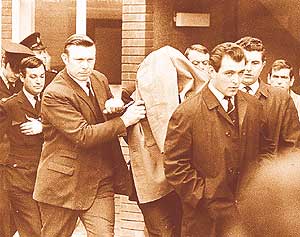
Raymond Leslie Morris
Serial killer ? John Bodkin Adams
Serial killer ? · United Kingdom · 1935
John Bodkin Adams was a British general practitioner and euthanasia enthusiast,…
163 victims
John Bodkin Adams
Serial killer ? · United Kingdom · 1935
John Bodkin Adams was a British general practitioner and euthanasia enthusiast,…
163 victims
 Bruce Lee
Serial killer · United Kingdom · 1973
Bruce Lee was born Peter George Dinsdale in 1960. He later changed his name to…
26 victims
Bruce Lee
Serial killer · United Kingdom · 1973
Bruce Lee was born Peter George Dinsdale in 1960. He later changed his name to…
26 victims
 Moninder Singh Pandher
Serial killer ? · India · 2005
Moninder Singh Pandher was a Punjabi businessman arrested in connection with th…
18 victims
Moninder Singh Pandher
Serial killer ? · India · 2005
Moninder Singh Pandher was a Punjabi businessman arrested in connection with th…
18 victims
 Dr. Harold Shipman
Serial killer · United Kingdom · 1974
Harold Fredrick Shipman was an English doctor who was convicted as a serial kil…
15 victims
Dr. Harold Shipman
Serial killer · United Kingdom · 1974
Harold Fredrick Shipman was an English doctor who was convicted as a serial kil…
15 victims
 Frederick West
Serial killer · United Kingdom · 1967
Frederick West (29 September 1941 – 1 January 1995) was an English serial kille…
13 victims
Frederick West
Serial killer · United Kingdom · 1967
Frederick West (29 September 1941 – 1 January 1995) was an English serial kille…
13 victims
 J. W. Ledford
Murderer · USA · 1992
J. W. Ledford Jr. was convicted of the malice murder of Dr. Harry Buchanan John…
1 victim
J. W. Ledford
Murderer · USA · 1992
J. W. Ledford Jr. was convicted of the malice murder of Dr. Harry Buchanan John…
1 victim
 Michele Anderson
Mass murderer · USA · 2007
Michele Kristen Anderson was charged in connection with the Carnation Massacre,…
6 victims
Michele Anderson
Mass murderer · USA · 2007
Michele Kristen Anderson was charged in connection with the Carnation Massacre,…
6 victims
 Cody Legebokoff
Serial killer · Canada · 2009
Cody Legebokoff (born c. 1990) was tried in the Supreme Court of British Columb…
4 victims
Cody Legebokoff
Serial killer · Canada · 2009
Cody Legebokoff (born c. 1990) was tried in the Supreme Court of British Columb…
4 victims
 James Michael Randall
Murderer · USA · 1995
James Michael Randall (born August 28, 1954) was an American criminal whose con…
2 victims
James Michael Randall
Murderer · USA · 1995
James Michael Randall (born August 28, 1954) was an American criminal whose con…
2 victims
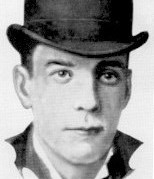 Marion Hedgepeth
Murderer · USA · 1870
Name: Marion Hedgepeth · Also known as: “Handsome Bandit,” “Debonair Bandit,” “…
2 victims
Marion Hedgepeth
Murderer · USA · 1870
Name: Marion Hedgepeth · Also known as: “Handsome Bandit,” “Debonair Bandit,” “…
2 victims
 Betty Broderick
Murderer · USA · 1989
Elisabeth Anne “Betty” Broderick (born November 7, 1947) was a former American…
2 victims
Betty Broderick
Murderer · USA · 1989
Elisabeth Anne “Betty” Broderick (born November 7, 1947) was a former American…
2 victims
- Gender
- male
- Country
- United Kingdom
- Location
- Cannock, Staffordshire, England, United Kingdom
- Date of birth
- August 1929
- Age at first offence
- 36
- Characteristics
- pedophile, rape
- Victim profile
- Christine Darby, 7 / Margaret Reynolds, 6 / Diane Tift, 5 / Jane Taylor, 10
- Method of murder
- Suffocation - Strangulation
- Date(s) of murder
- 1965 - 1967
- Years active
- 1965–1967
- Date of arrest
- November 4, 1967
- Status
-
Life imprisonment
Sentenced to life in prison in 1969
Case overview
Raymond Leslie Morris was born at Walsall, England, in August 1929. He had good looks and above-average intelligence, dabbled in poetry and photography, and impressed acquaintances with the fact that he never lost his temper, shifting from “sunny charm” to “icy stoicism” in an instant. He married at nineteen and separated nine years later, withholding support payments until his wife agreed to visit him once or twice a week. During those visits, he forced her into the “animal position.” He later married again and lived in a council-owned flat in Birchills, Walsall, opposite the police station.
Timeline
- 8 September 1965 — Six-year-old Margaret Reynolds vanished en route to school in the Birmingham suburb of Aston.
- 30 December 1965 — Five-year-old Diane Tift disappeared on the short walk between her home and her grandmother’s house in nearby Bromwich.
- 12 January 1966 — A workman spotted a child's body in a field near Cannock Chase; when the small corpse was moved, a second body was discovered underneath.
- 14 August 1966 — Ten-year-old Jane Taylor went for a ride on her bicycle in Mobberly, south of the Cannock Chase region, and disappeared forever.
- 19 August 1967 — Seven-year-old Christine Darby vanished after a man pulled his car to the curb and asked directions to Caldmore Green in Walsall.
- 4 November 1968 — Ten-year-old Margaret Aulton managed to escape after an attempted abduction in Walsall.
- 16 November 1968 — Raymond Leslie Morris was found guilty of the rape and murder of seven-year-old Christine Darby.
- February 1969 — He appeared before Staffordshire Assizes.
- 1969 (sentencing) — His sentencing was delayed until the new year, when he was sentenced to life imprisonment.
- August 2001 — He was incarcerated at Wymott Prison and was planning to appeal against his conviction.
- November 2010 — Morris was granted a judicial review of the refusal of the Criminal Cases Review Commission not to refer his case to the Court of Appeal, in a bid to overturn his conviction; the judicial review was rejected.
- 2010 (after rejection) — Morris later indicated he had abandoned any further appeal.
The offence
Christine Darby (rape and murder)
On 19 August 1967, seven-year-old Christine Darby was playing with friends in Walsall when a man pulled his car to the curb, asked directions to Caldmore Green, and Christine climbed into the car. Her playmates were startled and the driver roared off in the wrong direction. Searchers later found her violated body in a field. She had been killed by suffocation, “probably by hands pressed tight across her nose and mouth.”
On 22 August 1967, a soldier who was a member of a search party found the sprawled, naked body of seven-year-old Christine Darby beneath brushwood only a mile away from where Reynolds and Tift were discovered. Christine had been enticed into a car by a strange man near her home in Camden Street, Caldmore, Walsall, on 19 August 1967. Witnesses in Walsall explained that they saw a man in a grey car who spoke in a local accent, while two others who had been on Cannock Chase remembered seeing a grey Austin A55 or A60.
Margaret Aulton (attempted abduction)
On 4 November 1968, ten-year-old Margaret Aulton in Walsall escaped from a man who attempted to force her into his green and white Ford Corsair. An 18-year-old housewife made a mental note of the vehicle registration plate, and the car was traced back to Morris, leading to his arrest in connection with the attempted abduction.
Background
Raymond Morris possessed good looks and above-average intelligence. He dabbled in poetry and photography, impressing acquaintances with the fact that he never lost his temper, shifting from “sunny charm” to “icy stoicism” in an instant.
He married at nineteen and frightened his wife with abrupt changes of mood. He displayed cold fury when she balked at his spontaneous demands for sex. They separated nine years later. He withheld support payments until she agreed to visit him once or twice a week, bending over a table so he could take her in the “animal position.”
By the time he married for the second time, the violent side of Raymond’s nature had apparently evaporated, leaving him the “perfect husband,” but his silent rage had been diverted from the home front to another area.
He lived in Walsall his entire life and was reported to have an IQ of 120. He worked in a variety of jobs before landing a position as a foreman engineer at a precision instruments factory in Oldbury, West Midlands, in 1967. In 1951, he married “the girl next door,” who was two years younger than him, and fathered two boys. He kicked her out of the house after eight years of marriage, then divorced her on the grounds of adultery when she had another man's child. His first wife later described him as a man with a need to express violent sexual dominance. At the age of 35, he married again, to a 21-year-old woman named Carol.
At the time of the A34 murders, Morris and his wife lived at Flat 20, Regent House, Green Lane, Walsall, a council-owned flat in Birchills, directly opposite the police station.
Investigation
Previous disappearances and bodies on Cannock Chase
On 8 September 1965, six-year-old Margarelt Reynolds vanished en route to her school in the Birmingham suburb of Aston. By December 30 (1965), five-year-old Diane Tift disappeared on the short walk between her home and her grandmother’s house in nearby Bromwich. On January 12, 1966, a workman spotted a child's body in a field near Cannock Chase; when the small corpse was moved, a second body was discovered underneath, pressed into the soft earth. The search for Margaret Reynolds and Diane Tift ended with their remains being found together on Cannock Chase.
On 12 January 1966, the bodies of Margaret Reynolds, age 6, and Diana Joy Tift, age 5, were found together in a ditch at Mansty Gully on Cannock Chase in Staffordshire. Two thousand people searched for Reynolds in the hours following her disappearance.
On 14 August 1966, ten-year-old Jane Taylor disappeared from the Cannock area and “has not been seen since.” Morris was also named as a possible suspect in connection with Jane’s disappearance.
The three murders were collectively known as the “A34 murders” or “Cannock Chase murders.” They were collectively described as murders of three young school girls in Staffordshire, England, during the late 1960s, with the victims coaxed into a car while near their homes and then murdered after being sexually assaulted.
Police response and manhunt
The Cannock Chase/A34 murders sparked one of the biggest murder investigations in British criminal history, with the manhunt described as larger than that of the Moors murders. Prior to making an arrest, 150 detectives would visit 39,000 homes, interview 80,000 people, and check over a million car forms. Investigators culled 25,000 vehicles from 1,375,000 files and checked every Austin A55 and A60 in the Midlands.
The hunt for the Cannock Chase murderer was led by Sir Stanley Bailey, Staffordshire’s Assistant Chief Constable at the time.
Suspect identification and alibi
Descriptions of the suspect car led homicide detectives to question various locals, including Raymond Morris, suspect in the prior molestation case. The matter was later abandoned after Morris’s wife confirmed that he had joined her in a shopping expedition on the day Christine was killed.
After the attempted abduction and subsequent arrest, police were aware Morris had been interviewed four times in four years and had owned a grey Austin A55 similar to the one used in the abduction of Darby. He had been considered a suspect in Darby’s death, but his wife provided him with an alibi by stating that the couple were shopping together the day she went missing.
A police search of Morris’s flat uncovered pornographic photographs of a young girl who was later determined to be Carol Morris’s five-year-old niece.
Arrest
Morris was arrested on 4 November 1968 in connection with the attempted abduction of ten-year-old Margaret Aulton. After his arrest and while in police custody, his wife retracted her story and said she had mistaken the day. The narrative also states that Morris had been identified by the two people who had seen him on Cannock Chase.
Trial
Morris appeared before Staffordshire Assizes in February 1969. On 16 November 1968, Raymond Leslie Morris was found guilty of the rape and murder of seven-year-old Christine Darby.
Two charges of indecent assault on the niece and one for the attempted abduction of Aulton also had been filed against Morris. The prosecution relied on Carol Morris as the chief witness, and she retracted what she had initially told investigators about shopping on the day of Darby’s murder.
Separately, Morris had been accused in October of taking two girls into his Walsall apartment, leading them to separate rooms, and afterward undressing each. Because neither girl could corroborate the other's testimony, charges were eventually dismissed.
On 4 November (in the narrative), Morris tried, unsuccessfully, to abduct ten-year-old Margaret Aulton in Walsall. A neighbor saw his license plate and he was taken into custody.
Sentencing
His sentencing was delayed until the new year, when he was sentenced to life imprisonment. He received a term of life imprisonment after conviction, and his status is “Sentenced to life in prison in 1969.”
Appeals
As of August 2001, Morris was incarcerated at Wymott Prison and was planning to appeal against his conviction.
In November 2010, Morris was granted a judicial review of the refusal of the Criminal Cases Review Commission not to refer his case to the Court of Appeal, in a bid to overturn his conviction. A statement from Morris’s defence team said:
“The application for a judicial review is the first stage in his attempts to have the matter referred back to the Court of Appeal after 42 years in prison. If Morris's conviction was overturned it would be the longest running miscarriage of justice in British history. It might also potentially mean that a child murderer had remained at large for more than 40 years during Morris's incarceration.”
Mr Justice Simon rejected the judicial review. Morris later indicated that he had abandoned any further appeal.
Outcome
Morris was convicted of the rape and murder of Christine Darby and sentenced to life imprisonment in 1969.
He was considered the chief suspect in the deaths of Margaret Reynolds and Diane Tift. Reynolds’s relatives considered Morris to be her killer. Although his conviction related only to murder of Darby, his case remained connected in public narrative to the other victims whose deaths were described as unsolved.
Aftermath
Morris was described as being behind bars after 40 years and among the longest-serving prisoners currently behind bars in England and Wales.
He was dubbed the “Cannock Chase murderer” in the media.
His case and the Cannock Chase murders were also associated with publications and media described in the record:
- A 1971 book compared and analyzed various English newspapers’ handling of the widely reported discovery of Reynolds’s and Tift’s remains: Hawkes, Harry (1971), Murder on the A34.
- Morris was featured in 1995 in Central Independent Television’s crime magazine series Crime Stalker.
- A 2004 documentary of the Cannock Chase murders was televised on the ITV series To Catch A Killer.
- The Cannock Chase murders were referred to in David Peace’s novel Nineteen Seventy-Four.
Other details
Additional names and victims mentioned
The record described multiple victims connected to the wider Cannock Chase murders narrative:
- Margaret Reynolds (six-year-old), missing from Aston, Birmingham.
- Diane Tift (five-year-old), missing on the short walk to her grandmother’s house in Bloxwich (near Bromwich in the narrative).
- Jane Taylor (ten-year-old), disappeared from the Cannock area and was not seen since.
- Christine Darby (seven-year-old), victim of rape and murder.
- Margaret Aulton (ten-year-old), victim of attempted abduction. It also stated that two other girls’ cases remained, officially, unsolved and that “the other two girls who had also been found on Cannock Chase” were never charged and tried for murder.
Quote and description entries preserved from the record
The record included the following phrases used in describing Morris’s temperament and sexual dominance:
- “sunny charm”
- “icy stoicism”
- “animal position”
- “perfect husband” It also included the description:
“What happened on 19th August 1967 must be every parents nightmare.”
Identity and personal details preserved
The record listed Raymond Leslie Morris as “British murderer,” and included “AKA: Monster of Cannock Chase,” “SEX: M,” “RACE: W,” and “MOTIVE: Sex.” It also included “Victims: Four suspected” and “Disposition: Life sentence on one count, 1969.”

Spotted an error, or have more information about this case?