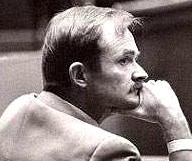
Randy Kraft
Serial killer Donald Henry Gaskins
Serial killer · USA · 1969
Donald Henry Gaskins, also known as Donald “Pee Wee” Gaskins, was a serial kill…
200 victims
Donald Henry Gaskins
Serial killer · USA · 1969
Donald Henry Gaskins, also known as Donald “Pee Wee” Gaskins, was a serial kill…
200 victims
 Carl Eugene Watts
Serial killer · USA · 1974
Carl Eugene Watts (born November 7, 1953; died September 21, 2007), also known…
100 victims
Carl Eugene Watts
Serial killer · USA · 1974
Carl Eugene Watts (born November 7, 1953; died September 21, 2007), also known…
100 victims
 Rodney Alcala
Serial killer · USA · 1977
Rodney James Alcala (born August 23, 1943) was also known as Rodrigo Jacques Al…
100 victims
Rodney Alcala
Serial killer · USA · 1977
Rodney James Alcala (born August 23, 1943) was also known as Rodrigo Jacques Al…
100 victims
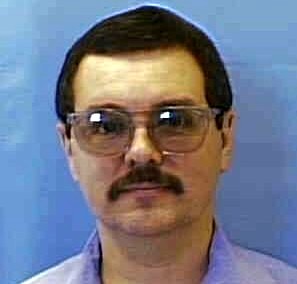 Donald Harvey
Serial killer · USA · 1970
Donald Harvey was known as an American serial killer and a self-professed “Ange…
87 victims
Donald Harvey
Serial killer · USA · 1970
Donald Harvey was known as an American serial killer and a self-professed “Ange…
87 victims
 Donald Leroy Evans
Serial killer · USA · 1975
Donald Leroy Evans (born July 5, 1957) was an American serial killer who murder…
60 victims
Donald Leroy Evans
Serial killer · USA · 1975
Donald Leroy Evans (born July 5, 1957) was an American serial killer who murder…
60 victims
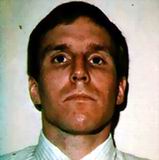 Michael Swango
Serial killer · USA · 1981
Michael Swango (Joseph Michael Swango) was a physician and American serial kill…
60 victims
Michael Swango
Serial killer · USA · 1981
Michael Swango (Joseph Michael Swango) was a physician and American serial kill…
60 victims
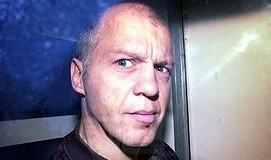 Michael Stone
Murderer · United Kingdom · 1996
Defendant: Michael Stone (born Michael John Goodban in 1960) · Victims: Lin Rus…
2 victims
Michael Stone
Murderer · United Kingdom · 1996
Defendant: Michael Stone (born Michael John Goodban in 1960) · Victims: Lin Rus…
2 victims
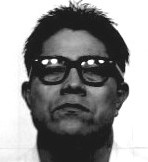 Ignacio Cuevas
Murderer · USA · 1974
Ignacio Cuevas was executed in Texas by lethal injection on May 23, 1991, for h…
3 victims
Ignacio Cuevas
Murderer · USA · 1974
Ignacio Cuevas was executed in Texas by lethal injection on May 23, 1991, for h…
3 victims
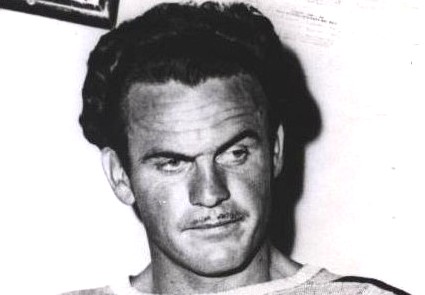 Gerald Albert Gallego
Murderer · USA · 1954
Gerald Albert Gallego was a cop-hating father of Gerald Armand Gallego. He murd…
2 victims
Gerald Albert Gallego
Murderer · USA · 1954
Gerald Albert Gallego was a cop-hating father of Gerald Armand Gallego. He murd…
2 victims
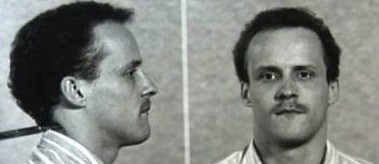 Michel Peiry
Serial killer · USA / France / Switzerland · 1981
Michel Peiry (born 28 février 1959), nicknamed “Le sadique de Romont (FR)”, was…
5 victims
Michel Peiry
Serial killer · USA / France / Switzerland · 1981
Michel Peiry (born 28 février 1959), nicknamed “Le sadique de Romont (FR)”, was…
5 victims
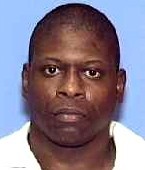 Rodney Reed
Murderer · USA · 1996
Rodney Reed (TDCJ Number 999271) was born on 12/22/67 and was received into cus…
1 victim
Rodney Reed
Murderer · USA · 1996
Rodney Reed (TDCJ Number 999271) was born on 12/22/67 and was received into cus…
1 victim
- Gender
- male
- Country
- USA
- Location
- California, USA
- Date of birth
- March 19, 1945
- Age at first offence
- 27
- Characteristics
- rape, mutilation
- Victim profile
- Young men
- Method of murder
- Strangulation
- Date(s) of murder
- 1972 - 1983
- Years active
- 1972–1983
- Date of arrest
- May 14, 1983
- Status
-
Sentenced to death
Sentenced to death on November 29, 1989
Case information
Defendant: Randy Kraft
Status
Randy Kraft was sentenced to death on November 29, 1989.
The offence
Randy Kraft was accused of sexually deviant murders and torture of male victims, including mutilation. The victims were described as mostly homosexuals, and the killings were described as involving torture and mutilation, including sometimes while his victims were still alive.
Kraft was characterized as a “Score-card killer” because he kept a coded notebook with a tally of his kills. Prosecutors cracked the code in Kraft’s notebook and described entries in the notebook as references to murders.
The coded notebook included references such as:
- “2 in 1 Hitch” referred to the murders of Nelson and De Vaul.
- “Marine Carson” referred to Richard Keith.
- “Jail Out” referred to a murder committed hours after release from jail on June 11, 1978.
- “Parking Lot” referred to the murder of Keith Crotwell, an eight-year-old boy whose severed head was found by a group of fisherman; his body turned up a while later.
Kraft was accused of additional murders beyond the counts initially charged. Prosecutors filed written notice of their intent to prove twenty-one additional murders spanning twelve years and three states.
In September 1983, charges against Kraft stood as: sixteen murders, eleven counts of sodomy, nine counts of sexual mutilation, and three counts of robbery.
Investigation and evidence
Randy Kraft was arrested after Orange County officers pulled over the driver for erratic driving and found a dead victim in the vehicle.
Officers stopped the vehicle on a summer morning in 1983. The driver was Randy Kraft. The officers found the body of Terry Gambrel in the passenger's seat. Gambrel had been strangled with a belt. Kraft was booked on suspicion of murder and held in lieu of $250,000 bail.
A background check revealed a 1966 arrest for lewd conduct in Huntington Beach, with charges dismissed. In 1975, Kraft was arrested in Long Beach for lewd conduct with another man; on conviction, he spent five days in jail and paid a $125 fine.
After the arrest, law enforcement searched Kraft’s impounded auto. The search turned up forty-seven photos of young men, some nude and some unconscious or dead, and a briefcase contained a notebook with more than sixty messages in a code.
A tour of Kraft’s home uncovered evidence connected to unsolved deaths, including photos of three men whose deaths were still unsolved in Southern California:
- Robert Loggins, found dead in September 1980; photos of his body were found in Kraft’s home.
- Roger De Vaul, last seen alive while hitchhiking with Geoffrey Nelson on February 12, 1983; Nelson’s body was found in Garden Grove that afternoon and De Vaul’s had turned up the following day; photos of the two friends were found in the house.
- Geoffrey Nelson, as above.
Fibers from a rug in Kraft’s garage matched fibers found on the body of Scott Hughes, found alongside the Riverside Freeway in April 1978.
Investigators also found items belonging to a man found dead near Grand Rapids, Michigan, in December 1982.
Kraft was described as having worked for a Santa Monica based aerospace firm between June 1980 and January 1983, visiting offices in Oregon and Michigan during times of unsolved murders in each state.
Prosecutors described the notebook entries as coded references to murders, and a “death list” sheet of paper bearing cryptic entries was described as being a “score card” of victims. The notes were described as beginning with “STABLE” and ending with “WHAT YOU GOT.”
Arrest and custody
On May 14, 1983, highway patrol officers stopped Kraft on suspicion of drunk driving. Kraft was described as exiting his car and approaching the cruiser in a polite manner, and officers walked Kraft back to his car.
Officer Michael Sterling met Kraft and observed Kraft’s jeans to be unbuttoned. Sterling had Kraft walk to perform field sobriity tests, which he failed. Kraft was then arrested by Sterling for driving while intoxicated.
Sgt. Michael Howard approached the car and saw a man in the passenger’s seat partially covered by a jacket with empty beer bottles around his feet, identified as the strangled body of Terry Gambrel, a 25-year-old U.S. Marine.
After the passenger was found dead, paramedics pronounced the man dead at 1:21 a.m. Orange County sheriff’s deputies obtained a search warrant for Kraft’s car and scoured the vehicle for evidence.
Kraft pleaded not guilty to the charge on May 16, 1983.
At a bail reduction hearing one week later, Kraft’s attorney called him “passive, nonviolent and hard-working.” Prosecutor Bryan Brown responded by charging Kraft with four more murders from early 1983, including victims Geoffrey Nelson, Robert Loggins, Rodger DeVaul, and Eric Church. Judge Robert Thomas accepted Kraft’s not guilty plea on those counts and revoked bail entirely.
A week later, Kraft was charged with the 1975 torture slaying of Mark Hall.
Kraft was held confined until his trial, with bail described as triple-bailed initially.
Trial
Pretrial
Randy Kraft’s preliminary hearing began after five postponements on Sept. 27, 1983, and lasted seven weeks. Judge John Ryan barred cameras from his court but rejected a defense bid to exclude spectators.
Charges at trial
Prosecutors described the final tally as including 16 murders and also alleged charges including sodomy and sexual mutilation.
During the trial, prosecutors called more than 157 witnesses and presented 1,052 exhibits.
Kraft’s defenders relied on alibis and alternate suspects, including William Bonin and Patrick Kearney.
Verdict
Kraft was found guilty and convicted on all 16 murder charges and one count each of sodomy (Inderbeiten) and mutilation (for castrating Geoff Nelson). Jurors acquitted Kraft of sodomizing Rodger De Vaul.
Penalty phase and sentencing
The separate penalty phase began on June 5. Jurors recommended death on Aug. 11, 1989.
Judge Donald McCartin made the sentence official on Nov. 29, 1989 and sentenced Kraft to die.
The judge’s remarks included:
“I can’t imagine doing these things in scientific experiments on a dead person, much less [to] someone alive,”
After sentencing, McCartin noted receipt of letters from parents of missing children seeking information about whether Kraft had killed their sons. McCartin suggested:
“Somewhere down the line,” with “response to your legal grounds for appeals,” “maybe you might give some thought in your waning moments to helping these people out.”
Before sentencing, Kraft maintained his innocence and told the judge:
“I have not murdered anyone, and I believe a reasonable review of the record will show that,”
Appeals
In his appeal, Kraft argued his original trial was riddled with more than 20 legal errors.
One of his arguments concerned the judge’s allowance of prosecutors using the “death list” as evidence. His attorneys alleged that the list, a sheet of paper bearing 61 cryptic entries described by prosecutors as a “score card” of victims, improperly prejudiced the jury.
The California Supreme Court disagreed and upheld the death sentence. The California Supreme Court upheld his death sentence on August 11, 2000. The justices unanimously rejected Kraft’s claims of an unfair trial.
Kraft’s initial appeal claiming that California’s gas chamber violated First Amendment religious tenets by forcing a condemned inmate to “actively participate in his own killing” was quickly rejected.
Other legal actions
In 1992, Kraft sued author Dennis McDougal and Warner Books for publishing Angel of Darkness. Kraft sought $62 million in damages, alleging that the book smeared his “good name,” portrayed him as a “sick, twisted man,” and scuttled his “prospects for future employment.”
Kraft’s lawsuit was dismissed as frivolous in June 1994.
After publishing Angel of Darkness, McDougal sought to recover costs from Kraft in September 1994 with permission from a state appellate judge.
McDougal stated:
“I’m not pursuing this because I think Randy will have a cache of gold doubloons under his mattress,”
“What concerns me about all this is that a felon--and one who has been convicted of the worst crimes imaginable--can sue anybody they want with impunity, on a regular basis. They clog the courts with phony baloney suits and the state allows them to do it without charging them a dime to file.”
Outcome
Randy Kraft’s death sentence was upheld by the California Supreme Court on August 11, 2000.
Other details
Victims and related persons named
- Terry Gambrel (25-year-old Marine): strangled with a belt; his blood contained high levels of alcohol and the prescription tranquilizer Ativan; death was by ligature strangulation.
- Randy Steven Kraft: also described as 38-year-old at the time of the May 14, 1983 stop.
- Keith Daven Crotwell (19-year-old high school dropout): his severed head was found near the Long Beach Marina; Kraft admitted meeting Crotwell in a parking lot the day he vanished, but officers did not consider him a suspect in the crime.
- Keith Crotwell (8-year-old boy): a severed head was found by fishermen; his body turned up a while later.
- Robert Loggins: found dead in September 1980; photos of his naked body were found in Kraft’s home.
- Roger De Vaul: last seen alive while hitchhiking with Geoffrey Nelson on February 12, 1983; found days apart after Nelson’s body was found in Garden Grove.
- Geoffrey Nelson: last seen alive while hitchhiking with Roger De Vaul on February 12, 1983; body found in Garden Grove that afternoon.
- Scott Hughes (described as found in April 1978): fibers from a rug in Kraft’s garage matched fibers found on Hughes’s body.
- Richard Keith: referred to in notebook entries; last seen in Carson, California; his body was discovered in Laguna Hills in 1978.
- Ronald Young: described as found stabbed in Irvine hours after his release from the Orange County jail on June 11, 1978.
- Eric Church: charged by prosecutors; his semen later matched to Kraft’s blood-type.
- Geoffrey Nelson: referenced in connection with mutilation/castration.
- Rodger De Vaul: acquitted of sodomizing.
- Mark Hall: charged for the 1975 torture slaying of Mark Hall.
Evidence items and coded entries mentioned
- A coded notebook with “more than 60 messages in a code.”
- A “death list” described as having 61 cryptic entries in two columns beginning with “STABLE” and ending with “WHAT YOU GOT.”
- Additional cited entries included: “2 IN 1 HITCH,” “2 IN 1 BEACH,” “GR2,” “2 IN 1 MKV TO PL,” “EDM,” “JAIL OUT,” “PORTLAND HAWAII,” “PORTLAND DENVER,” “PORTLAND BLOOD,” “SEVENTH STREET,” “EUCLID,” “MARINE CARSON,” “PARKING LOT,” “NEW YEAR’S EVE,” “MCHB TATTOO,” “WESTMINSTER DATE,” “AIRPLANE HILL,” and “MARINE DRUNK OVERNIGHT SHORTS.”
People and quotes
During trial preparation, a prosecutor told newsmen:
“What we have here is a true score-card killer.”
Kraft was described as having told the judge he maintained his innocence and that “Mr. Kraft killed no one.”
Attorney Doug Otto dismissed the state’s case as:
“suspicion, innuendo and prosecutorial rhetoric,” and described Kraft as: “a homeowner, taxpayer and hard worker, just like many other citizens of our country.”
Attorney Doug Otto claimed:
“Brown had proved nothing.”
Kraft’s attorney called him “passive, nonviolent and hard-working.” Prosecutor Bryan Brown told jurors:
“There’s nothing wrong with him other than that he likes killing for sexual satisfaction.”
Judge McCartin branded ministers’ opposed-to-capital-punishment testimony as:
“silly” and “so far afield it’s stupid.”
At a later point, Kraft and his cell activities included playing bridge with other serial killers Douglas Clark, Lawrence Bittaker, and William Bonin (until Bonin’s 1996 execution).
Jeff Graves was described as Kraft’s roommate, died of AIDS before police could question him.
Dennis McDougal published Angel of Darkness and published an article in Beach magazine in January 2000 referencing interviews with Bob Jackson.
Bob Jackson reportedly confessed in interviews to murdering two hitchhikers with Kraft, one in Wyoming in 1975 and Colorado in 1976, and authorities in Colorado and Wyoming were unable to confirm those confessions.
A quoted statement from McDougal included:
“The ex-Marine said Kraft offered him a beer and he drank it, realizing almost too late that the beer had been laced with something a lot more powerful than alcohol. He forced Randy to pull over, stumbled out of Kraft’s car in a daze and continued to have nightmares for years afterward about what might have happened if he hadn’t been so insistent.”
Jan Oliver was described as Kraft’s college girlfriend. Her quoted statements included:
“He came over once red-faced and hyperventilating,”
“It was late — maybe one or two in the morning — and he was very agitated, rambling. I never did find out what was upsetting him, although I wouldn’t really call it 'upset' so much now, as 'excited.' He seemed very excited.”
Oliver also said:
“I’d have no more than three or four sips and it would knock me out!”
Prison status
Randy Kraft continued to maintain his innocence while on death row at San Quentin prison, California.
Accomplice discussions
Forensic evidence in two cases pointed to an accomplice, including an extra set of footprints and semen that did not match Kraft’s DNA. The prosecution privately admitted inconsistencies could be explained by Kraft not always acting alone.
Kraft’s roommate Jeff Graves reportedly helped him occasionally, and Graves died of AIDS before police could question him.
Fibers and evidence about undeveloped photographs were described, including the claim that no developer reported Kraft’s morbid images to police and that Kraft had no darkroom expertise or darkroom equipment.
Spotted an error, or have more information about this case?