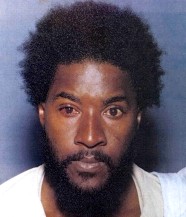
Eddie Lee Mosley
Serial killer Donald Henry Gaskins
Serial killer · USA · 1969
Donald Henry Gaskins, also known as Donald “Pee Wee” Gaskins, was a serial kill…
200 victims
Donald Henry Gaskins
Serial killer · USA · 1969
Donald Henry Gaskins, also known as Donald “Pee Wee” Gaskins, was a serial kill…
200 victims
 Carl Eugene Watts
Serial killer · USA · 1974
Carl Eugene Watts (born November 7, 1953; died September 21, 2007), also known…
100 victims
Carl Eugene Watts
Serial killer · USA · 1974
Carl Eugene Watts (born November 7, 1953; died September 21, 2007), also known…
100 victims
 Rodney Alcala
Serial killer · USA · 1977
Rodney James Alcala (born August 23, 1943) was also known as Rodrigo Jacques Al…
100 victims
Rodney Alcala
Serial killer · USA · 1977
Rodney James Alcala (born August 23, 1943) was also known as Rodrigo Jacques Al…
100 victims
 Donald Harvey
Serial killer · USA · 1970
Donald Harvey was known as an American serial killer and a self-professed “Ange…
87 victims
Donald Harvey
Serial killer · USA · 1970
Donald Harvey was known as an American serial killer and a self-professed “Ange…
87 victims
 Donald Leroy Evans
Serial killer · USA · 1975
Donald Leroy Evans (born July 5, 1957) was an American serial killer who murder…
60 victims
Donald Leroy Evans
Serial killer · USA · 1975
Donald Leroy Evans (born July 5, 1957) was an American serial killer who murder…
60 victims
 Michael Swango
Serial killer · USA · 1981
Michael Swango (Joseph Michael Swango) was a physician and American serial kill…
60 victims
Michael Swango
Serial killer · USA · 1981
Michael Swango (Joseph Michael Swango) was a physician and American serial kill…
60 victims
 Mohammed Bijeh
Serial killer · Iran · 2004
Mohammed Bijeh (Persian: محمد بيجه ) was an Iranian serial killer. He confessed…
20 victims
Mohammed Bijeh
Serial killer · Iran · 2004
Mohammed Bijeh (Persian: محمد بيجه ) was an Iranian serial killer. He confessed…
20 victims
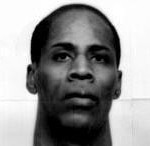 Jessel Turner
Murderer · USA · 1986
Jessel Turner was executed by lethal injection in Texas on September 22, 1997.…
1 victim
Jessel Turner
Murderer · USA · 1986
Jessel Turner was executed by lethal injection in Texas on September 22, 1997.…
1 victim
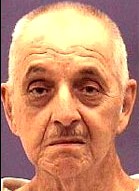 William Pierce
Serial killer · USA · 1970
William Pierce was paroled from the Georgia state prison at Reidsville in May 1…
9 victims
William Pierce
Serial killer · USA · 1970
William Pierce was paroled from the Georgia state prison at Reidsville in May 1…
9 victims
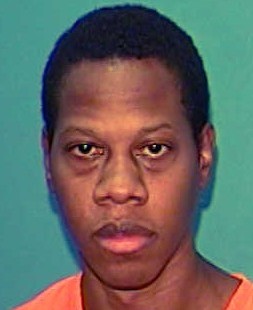 Anthony Spann
Murderer · USA · 1997
Anthony Spann was sentenced to death on June 23, 2000. Spann was indicted on mu…
1 victim
Anthony Spann
Murderer · USA · 1997
Anthony Spann was sentenced to death on June 23, 2000. Spann was indicted on mu…
1 victim
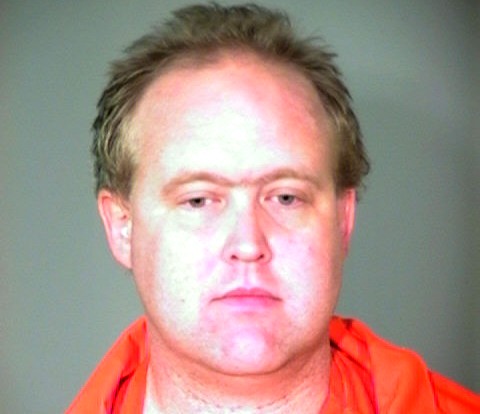 Pete Carl Rogovich
Spree killer · USA · 1992
Pete Carl Rogovich was tried in Maricopa County in connection with the March 15…
4 victims
Pete Carl Rogovich
Spree killer · USA · 1992
Pete Carl Rogovich was tried in Maricopa County in connection with the March 15…
4 victims
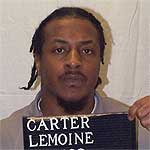 Lemoine Carter
Murderer · USA · 1994
Name: Lemoine Carter · Court / proceeding: United States Court of Appeals for t…
2 victims
Lemoine Carter
Murderer · USA · 1994
Name: Lemoine Carter · Court / proceeding: United States Court of Appeals for t…
2 victims
- Gender
- male
- Country
- USA
- Location
- Fort Lauderdale, Florida, USA
- Date of birth
- March 31, 1947
- Age at first offence
- 26
- Characteristics
- rape, mentally ill
- Victim profile
- Emma Cook, 54 / Teresa Giles, 22 / Sonja Marion, 13 / Vetta Turner, 34 / Shandra Whitehead, 8 / Terry Jean Cummings, 21 / Naomi Gamble, 15 / Loretta Young Brown, 29
- Method of murder
- Strangulation
- Date(s) of murder
- 1973 - 1987
- Years active
- 1973–1987
- Date of arrest
- —
- Status
-
Found incompetent to stand trial; committed to psychiatric institution in 1988
Case record: Eddie Lee Mosley
STATUS / current legal posture
Eddie Lee Mosley was found incompetent to stand trial for murders and was committed to psychiatric institutions in 1988. He remained confined in later years and was still being treated as incompetent to proceed with trial.
Other details (identity, background, and mental condition)
Eddie Lee Mosley was born on March 31, 1947, as the third of Willie Mae Robinson’s 10 children. His formal education stopped in 1960 when he was 13 and still in third grade. He was dropped from the public school system because he “could not get along with others” and “acted in the severely defective range,” according to reports from Eddie Lee Mosley’s public school records. At age 41, he still could not read or write.
Over the years he worked a variety of manual labor jobs where his strength and willingness to follow orders were exploited. From the time he was first picked up for disorderly conduct at the age of 18, he was arrested nine times. The charges were described as ranging from indecent proposal to armed robbery to sexual assault and murder.
The case narrative described his mental condition as including mental retardation and functioning described by later evaluation as somewhere in the range of a 51/2-year-old and an 11-year-old, with the verbal ability of a 7-year-old. Trudy Block-Garfield wrote that his IQ had been tested in the high 40s to the low 60s, and that in virtually all testing he scored in the mentally retarded range. Block-Garfield wrote: “In virtually all testing, he scored in the mentally retarded range,” and “There is no real indication that Mr. Mosley is psychotic, and it is questionable that he ever was psychotic.”
Medical and psychiatric commitment details
Mosley was involuntarily committed to psychiatric institutions after being found incompetent to stand trial for the murders of two Broward women. In later coverage, Mosley was described as being confined at the Tacachale facility for developmentally disabled adults in Gainesville. He was also described as being held at the Corrections Mental Health Institution in Chattahoochee.
A clinical psychologist evaluation dated Oct. 17, 1987 stated:
“Mr. Mosley does not appear to meet the criteria for involuntary hospitalization. While he is moderately mentally retarded and would be unable to live entirely on his own without suffering from neglect, prior to his arrest he was doing quite well living with his mother and siblings.
Currently, Mr. Mosley’s mental retardation and psychological problems do not make him dangerous to himself or others...”
Competency evaluations
On Nov. 17, 2001, a court-appointed psychologist evaluated Mosley and concluded that he was incompetent to stand trial because he was mentally retarded. The psychologist was identified as Trudy Block-Garfield. Block-Garfield wrote:
“It is the opinion of this examiner that Mr. Mosley is incompetent to proceed,”
and she added that Mosley did not have a rational understanding of the murder and rape charges against him, did not understand what the death penalty meant, did not understand the role of his lawyer or the prosecutor, and would not be able to give reasonable and relevant testimony. The evaluation further described his functional range and IQ testing as noted above.
The offence (rape and murder allegations; DNA links; victim list where stated)
Mosley was linked through DNA testing to rapes and murders of multiple females, including at least two children. Prosecutors charged Mosley at various times with murder in the Giles and Emma Cook cases, but a judge ruled him mentally incompetent to stand trial and the charges were dropped.
Mosley was described as suspected of slaying up to 16 women and young girls in the Fort Lauderdale area between 1973 and 1987.
DNA-linked victims mentioned in the case narrative
Mosley was described as genetically linked to the rape and murder of 29-year-old Loretta Young Brown.
Previous DNA tests were described as linking Mosley to:
- Emma Cook, 54
- Teresa Giles, 22
- Sonja Marion, 13
- Vetta Turner, 34
- Shandra Whitehead, 8
- Terry Jean Cummings, 21
- Naomi Gamble, 15
In other portions of the narrative, additional victims were mentioned in open or revisited cases, including:
- an unidentified female in 1972
- Vetta Turner in 1973
- Susan Boyton in 1979
- Arnette Tukes in 1980
- Gloria Irving in 1980
- Geraldine Barfield in 1983
- Emma Cook in 1983
- Santrail Lowe in 1987
- Loretta Young Brown (the “rape and murder of 29-year-old Loretta Young Brown”)
A body described as Santrail Lowe’s was found on Feb. 24, 1987.
A body described as Teresa Giles’s was described as recovered inside United Church of God, 1151 NW 27th Ave. in unincorporated Broward, and it was described as being found on Dec. 18, 1984.
Investigation and police profiling
Fort Lauderdale police and the Broward Sheriff’s Office were described as working multiple investigations that included sexual batteries and murders. A special unit was working rapes that involved victims being lured or forced to vacant lots where they were choked and raped.
The narrative described how the Federal Bureau of Investigation became involved and how its VICAP program developed a profile without information on any one suspect. The VICAP profile was described as:
“An unmarried, middle-aged black man living in the area of the murders. He would be a streetwise, school dropout with a history of mental illness and below-average intelligence. He would have no military experience, would dabble in alcohol and drugs and be a loner who walked the streets at night. He would have been questioned before about the allegations and have denied them. He would be irritable and impulsive before committing the crime and would feign illness afterward.”
The narrative stated that the profile matched Eddie Lee Mosley.
The narrative also described Detective Kevin Allen and Detective Doug Evans as key investigators who developed information and pursued contacts with Mosley. It stated that after investigators gathered and digested details, the FBI sketched a scenario for handling future contacts with Mosley. It then stated that after five hours Mosley said:
“Well, I guess they got me.”
Arrests and charges mentioned for Mosley (sexual battery and murder-related proceedings)
Mosley was described as being arrested and charged with murder on May 18, 1987, after police placed him at the scene of a rape and strangulation. He was also described as being charged with murder after confessions and later indicted by a Broward County grand jury for murder of Emma Cook and Theresa Giles on July 22, 1987.
The narrative also described the following sexual battery and related proceedings:
- On April 12, 1980, he was again charged with sexual battery. He pleaded not guilty but was convicted and sentenced to 15 years in prison by Judge Stanley Kaplan.
- During the period after the conviction, his public defender appealed on the grounds that his representation at the 1980 trial was inadequate because his attorney should have pursued a plea of insanity.
- The narrative described that court-appointed psychiatrists during the appeal produced conflicting results, including statements that he was mentally defective but competent; that he had significant intellectual defects and mental retardation; and that he was incompetent and had been since early childhood and would remain so for the foreseeable future.
Mosley was described as being indicted on July 22, 1987 for the murder of Emma Cook and Theresa Giles. The court later found him mentally incompetent to stand trial for murder, and Broward Circuit Judge Robert Carney ordered him held under tight security at one of the state’s mental hospitals and asked that a report on his mental condition be issued in six months.
Under Florida law, it was described that if Mosley’s mental condition did not improve in five years, criminal charges could be dismissed, with future decisions left to doctors and a judge.
Timeline
- July 23, 1973 — Fort Lauderdale detective Doug Evans first met Eddie Lee Mosley while officers searched for a rapist in northwest Fort Lauderdale; multiple victims identified Mosley by a limp and a scar; Mosley was arrested and photographed for a lineup.
- May 18, 1987 — Police charged Mosley with murder after placing him at the scene of a rape and strangulation.
- Feb. 24, 1987 — The raped and strangled body of Santrail Lowe, 24, was found in a junkyard on Northwest Sixth Place.
- Oct. 23, 1987 — A court found Mosley mentally incompetent to stand trial for murder; Broward Circuit Judge Robert Carney ordered him held under tight security at a state mental hospital and requested a report in six months.
- July 22, 1987 — A Broward County grand jury indicted Mosley for the murder of Emma Cook and Theresa Giles.
- Nov. 15, 1983 — Mosley was released after his attorney won a retrial on appeal and negotiated a reduced sentence; he was released within a week after serving nearly 3 1/2 years.
Trial and sentencing details included for Mosley (sexual battery conviction)
Mosley was described as being convicted of sexual battery on April 12, 1980. Judge Stanley Kaplan sentenced him to 15 years in prison. His public defender later appealed on the grounds that representation was inadequate for not pursuing a plea of insanity.
Appeals / competency procedural history (dismissal / charges dropped as stated)
A judge ruled Mosley mentally incompetent to stand trial for murder-related charges, and the charge was dropped in the Giles case and described as similarly dropped in other murder proceedings because he was incompetent. A Broward judge ruled he was not legally competent to go to trial for murders of two women, and those charges were dismissed in 1990 because Mosley showed no sign of improvement and because of the law requiring dismissal after no sign of improvement.
Quotes attributed within the narrative (verbatim)
Mosley’s statements
Mosley said:
“I coulda run but I'm clean. I did nothin'”
“I got a lot of police at the city jail in Fort Lauderdale knows me. The police passes me all the time. They wave and says, 'How you doin', Eddie?'”
Mosley said:
“They takin' advantage of me 'cause I ain't got no understandin' and I ain't got no education,”
when asked why he was in jail.
Mosley said in an interview described in the narrative:
“I'm just an old junk man. My mind's on money, feelin' good, drinkin' a little beer, a little wine. Getting' a little lady when I want to. Feelin' good.”
Mosley was described as saying after an interview:
Mosley said regarding sex with partners:
“I got a lot of women's out there. We have sex. Come to my house or somewheres. No problem,”
and also: “If she disfuse me, I don't bother her. I do not touch her.”
Investigators and officials (verbatim)
Detective John Curcio was described as being astounded by hospital status report language including “supervised work detail” and “community contact,” and the narrative quoted Curcio as saying:
“Supervised work detail” was one of the phrases in the hospital status report that left Detective John Curcio fairly astounded. And “community contact.” Curcio said, amazed just to say the words aloud, that Mosley was said to have “earned community contact. Those were the exact words. He had earned community contact.”
Judge Scott Silverman said:
“It is abundantly clear that he is the victim of an enormous tragedy,”
Miami Assistant Police Chief James Chambliss said:
“He liked the cops, he wanted to be with the cops. They were his buddies and frankly that's a great tool if you get suspects to like you -- that's a good thing,”
“He was trying to be helpful to them. That's where the problem came up.”
Assistant State Attorney Kelly Hancock was quoted as saying:
“the most poorly investigated cases I've ever seen. The victims were all black. Nobody cared.”
Detective Doug Evans was quoted as saying:
“It was just the beginning,”
and: “After that initial contact, me and Eddie were like magnets attracting. ”
and: “I remember sitting in the detective bureau that night and saying to McKinley, 'You may have made the biggest mistake of your career. You may regret missing Eddie with that shot.' And we did. And a lot of people have suffered since that day.”
Detective Doug Evans also said:
“(The police) took the easy way,”
and: “Townsend was con- fessing to everything and they just let him.”
Assistant State Attorney Kelly Hancock was also quoted as saying:
Detective John Curcio was also quoted later in the narrative:
“I thought, `Here we go again,'”
Charles Morton, chief of the Broward State Attorney homicide division, said:
“It certainly makes the case that we had presented years ago stronger,”
Steven Michaelson said:
“The question is whether or not he's competent,”
and: “We don't believe he's any more competent now than he was when he was hospitalized in the late '80s.'”
Cheryl Stopnick, spokeswoman for the Broward Sheriff's Office, said:
“We did not have any doubt about the outcome of this,”
Detective Mike Reed said:
“These cases are open and active investigations,”
and: “They occurred in the same period that Mosley was active in the community.”
Doug Evans also said:
“Everywhere Eddie goes, murder will follow.”
Outcome and aftermath (as stated in the narrative)
Eddie Lee Mosley was described as never having been convicted of a single murder, with the narrative attributing this to his mental state leading to competency findings and dismissal of charges. The narrative described that his guilt or innocence “may never be determined” legally by a jury because of competency barriers.
Mosley remained confined in psychiatric or developmentally disabled institutions and underwent periodic psychological evaluation in later years, including a competency evaluation on Nov. 17, 2001.
Spotted an error, or have more information about this case?