
Antuan Bronshtein
Murderer Brian Kevin Rosenfeld
Murderer · USA · 1985
Brian Kevin Rosenfeld Brian Kevin Rosenfeld was sentenced to three concurrent l…
23 victims
Brian Kevin Rosenfeld
Murderer · USA · 1985
Brian Kevin Rosenfeld Brian Kevin Rosenfeld was sentenced to three concurrent l…
23 victims
 Russell Ellwood
Murderer · USA · 1991
Russell Ellwood was a former taxi driver. Authorities suspected him of killing…
20 victims
Russell Ellwood
Murderer · USA · 1991
Russell Ellwood was a former taxi driver. Authorities suspected him of killing…
20 victims
 Robert Martines Perez
Murderer · USA · 1994
Name: Robert Martines Perez · Other name used in proceedings: Robert Martinez P…
15 victims
Robert Martines Perez
Murderer · USA · 1994
Name: Robert Martines Perez · Other name used in proceedings: Robert Martinez P…
15 victims
 Billy Frank Vickers
Murderer · USA · 1993
Billy Frank Vickers Vickers was executed by lethal injection in Texas on Januar…
14 victims
Billy Frank Vickers
Murderer · USA · 1993
Billy Frank Vickers Vickers was executed by lethal injection in Texas on Januar…
14 victims
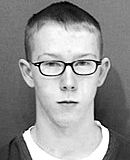 Dustin Lynch
Homicide · USA · 2002
Dustin Lynch was a juvenile who was bound over to the General Division of the C…
1 victim
Dustin Lynch
Homicide · USA · 2002
Dustin Lynch was a juvenile who was bound over to the General Division of the C…
1 victim
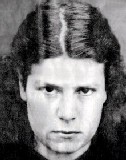 Pauline Parker
Homicide · New Zealand · 1954
Pauline Parker was born on 26 May 1938. She was from Christchurch, New Zealand,…
1 victim
Pauline Parker
Homicide · New Zealand · 1954
Pauline Parker was born on 26 May 1938. She was from Christchurch, New Zealand,…
1 victim
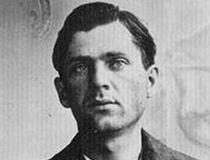 Leon Frank Czolgosz
Assassin · USA · 1901
Leon Frank Czołgosz (1873 – October 29, 1901) was the assassin of U.S. Presiden…
1 victim
Leon Frank Czolgosz
Assassin · USA · 1901
Leon Frank Czołgosz (1873 – October 29, 1901) was the assassin of U.S. Presiden…
1 victim
- Gender
- male
- Country
- USA
- Location
- Philadelphia, Pennsylvania, USA
- Date of birth
- 1970
- Age at first offence
- 21
- Characteristics
- robbery, drug addict, history of mental illness, torture
- Victim profile
- Alexander Gutman (jewellery store owner) / Jerome Slobotkin (jeweller)
- Method of murder
- Shooting
- Date(s) of murder
- January 11/February 19, 1991
- Years active
- 1991
- Date of arrest
- —
- Status
-
Sentenced to death
Sentenced to life in prison in 1992; sentenced to death on August 10, 1994
Parties
- Antuan Bronshtein
Background
Antuan Bronshtein was born in the Soviet Union (Moldova) in Kishnev in 1970. His family left their native country when Antuan was 7, and he lived for four months in a single room in Italy while waiting for permission to enter the United States. After their arrival in the USA in 1978, Bronshtein was taunted in school over his nationality and his poor English. The family broke up when he was nine years old, and his father allegedly beat him repeatedly.
Bronshtein had chronic emotional and mental problems. He turned to drugs at a very early age, reportedly using heroin, cocaine and marijuana by age 11. By age 16, he was diagnosed as suffering from a range of disturbances including paranoid personality disorder and depression. Jail records described his behaviour after his arrest as acutely psychotic.
Bronshtein was reported to have suicidal tendencies. Twice in 1997, he had a date of execution scheduled and later postponed. In July 1998, during a hearing to determine his mental competence, he was told that further evaluation was necessary before his waiver could be accepted. A few days later, Bronshtein attempted suicide.
Bronshtein later refused any further psychiatric assessment. At a hearing in January 1999, he demanded that he be executed by the state. In April 1999 he was rescheduled for a new execution date.
The offence
In January 1991, Bronshtein murdered Alexander Gutman, a jewellery store owner, in the course of a robbery. Gutman was described as a jewellery store owner. Bronshtein was sentenced to death in Pennsylvania for that January 1991 murder.
In 1992, Bronshtein was sentenced to life imprisonment for the murder of a second jeweller, Jerome Slobotkin. Slobotkin was described as a jeweller and was shot one month after Gutman. In Bronshtein’s account, Jerome Slobotkin was 57 years old and died after a shooting death that occurred inside his Philadelphia County home on the morning of February 19, 1991.
Bronshtein stated that his motive was “CE-felony” and that he shot male jewelers during holdups.
Investigation
In February 1991, Bronshtein telephoned Philadelphia police investigators from South Carolina about the murder of Slobotkin. On his return to Philadelphia, he gave police a detailed confession to the murder, which he later tried to recant. He maintained that he confessed only after detectives assured him that they would do what they could on his behalf.
During further questioning, Bronshtein attributed both murders to a high-level member of the local Russian Mafia. At trial, one of the mitigating circumstances acknowledged by the jury was the possibility that Bronshtein had not actually pulled the trigger.
Bronshtein also described the circumstances of a prosecution witness, Wilson Perez, stating that Perez provided sworn affidavit testimony at the 1994 trial and had testified that he did not know anything about Bronshtein purportedly killing anyone but that police threatened to charge him if he did not provide false witness against Bronshtein twice. Bronshtein stated that Perez failed a polygraph examination administered on September 12, 1991, and that the polygraph examiner’s reports were withheld.
Bronshtein also alleged that police threatened and coached witnesses to lie, commit perjury, make false identifications, and that detectives fabricated, manufactured and tampered with evidence while deliberately withholding material exculpatory and impeaching evidence.
Arrest
Bronshtein was arrested and described as imprisoned in Pennsylvania since February 27, 1991 on charges of murder, among others. He was arrested again on June 2, 1993.
Trial
Slobotkin case
Bronshtein was convicted of 1st degree murder and sentenced to life in prison for the shooting death of 57 year old Jerome Slobotkin, which occurred inside his Philadelphia County home on the morning of February 19, 1991. In his own account, he stated that on February 28, 1992 he was convicted and sentenced to life in prison for Slobotkin’s murder. He also stated that, in 1992, he was sentenced to life imprisonment for the murder of Jerome Slobotkin, and that it occurred one month after Gutman.
Gutman case
Bronshtein was convicted and sentenced to death for the January 11, 1991 murder of a 61 year old Alexander Gutman. Bronshtein stated that the murder occurred inside Gutman’s Montgomery County jewelry store in the heart of a large shopping mall. He stated he was convicted and sentenced to death on April 22, 1994.
In August 1994, Bronshtein was sentenced to death in Pennsylvania for the January 1991 murder of Alexander Gutman in the course of a robbery. The sentencing language in the case status indicated that he was sentenced to death on August 10, 1994.
Bronshtein described prejudice arising from trial court rulings, including allowing jury hearing evidence from the Slobotkin case. He also described issues related to the judge’s instruction to the jury regarding conspiracy, stating that if the jury found he was a member of a conspiracy to rob or steal, then he was guilty of any crime committed by another member regardless of whether he shared the perpetrator’s intent. Bronshtein stated this allowed the jury to convict him of first degree murder without determining if he himself had a specific intent to kill.
Bronshtein also stated that at the penalty phase the jury found as a mitigating factor that Bronshtein may not have been the triggerman, leaving lingering doubt as to his culpability in the murder.
At the original trial, Bronshtein also described his claim that the judge instructed the jury that a person could be found guilty of first degree murder under a conspiracy theory without sharing the same intent as the perpetrator. He also described a claim that this instruction was wrong as under Pennsylvania law a person may be found guilty of first degree murder under a conspiracy theory only if he shares the same intent as the perpetrator.
Sentencing
Bronshtein was sentenced to life in prison in 1992. He was later sentenced to death in Pennsylvania for the January 1991 murder of Alexander Gutman. The status indicated he was sentenced to death on August 10, 1994. In August 1994, he was sentenced to death for that January 1991 murder.
Bronshtein described that a third execution date was set and that he unexpectedly informed his attorneys that he had decided to resume his appeals on 8 April (as written in the account). He stated that an execution date was rescheduled for 4 May 1999 so it did not coincide with Passover (Pesach), which he described as an eight-day Jewish festival. He stated he was Jewish and that his previous date had been scheduled for 8 April, the last day of Passover.
Appeals
Bronshtein stated that he gave up his appeals against his death sentence and that in January 1998 he informed the court that he no longer wished to appeal his death sentence. At a court hearing in July 1998, to determine his mental competence, he was told that further evaluation was necessary before his waiver could be accepted, and he attempted suicide a few days later. He later refused any further psychiatric assessment.
He stated that he later resumed his appeals, and he was described as currently fighting to have his appeal reinstated in state courts and appealing both of his sentences in federal courts.
Bronshtein’s account described that the Pa. Supreme Court affirmed his conviction and sentence on March 25, 1997. He also stated that a Certificate of Appealibilty was denied and that the Third Circuit dismissed his appeal in a one sentence order on November 15, 2004. He further described that Alito’s opinion in 2005 was described by him as political and that it dismissed a federal constitutional issue as merit less after oral argument.
Bronshtein described intervention by the Moldovan Consulate and a protest filed with the State Department, describing Moldova’s concerns over failure to inform Bronshtein of his right to consular assistance and to notify the consulate of his arrest as required under a consular convention with the USA. Bronshtein’s narrative stated that Moldova withdrew its protest after discovery that he became a naturalised US citizen prior to his arrest.
Bronshtein described further competency and counsel issues connected to whether his waiver of appeals could be accepted. He described a competency hearing in January 1999 and further evaluation. He described that in October 2006 the court declared him incompetent based on Dr. John S. O’Brien’s report and ordered him transferred to a state psychiatric hospital Waymart for supposed treatment.
Bronshtein also described that in May 16, 2006 Judge Nicholes appointed Henry S. Hilles III as counsel. He described challenges to competency and multiple hearings, including an October 5, 2006 hearing and a June 20, 2006 hearing.
Bronshtein described filing a 92 page hand written petition and an 11 page Motion To Dismiss Counsel, followed by a lengthy letter to make a record. He stated that on July 6, 2005 Alito denied both pleadings in a one page order.
Outcome
Bronshtein’s execution was rescheduled for 4 May 1999. Bronshtein had previously been scheduled to die on 8 April, the last day of Passover. He stated that his death sentence had been affirmed and that he was fighting to reinstate appeal in the state courts and to appeal both sentences in the federal courts. His execution was rescheduled so it did not coincide with Passover.
Aftermath
After his conviction and death sentence, Bronshtein described ongoing legal issues and mental health concerns while on death row, including depression and suicidal tendencies. He stated that a doctor in June 1998 attempted to evaluate his mental competency to waive his appeals but was unable to reach a conclusion and determined further evaluation was warranted.
Bronshtein described that he was taken for a 60 day stay at Norristown State Hospital on March 20, 2007 and stated it had a fence but not razor wire and that he could roam freely. He stated that Staff Psychiatrist Dr. John Parker evaluated him for 48 days and submitted a report. He quoted the report verbatim:
“He was neat, clean, cooperative and showed no evidence of unusual beliefs, behavior or motor movements… Mr. Bronshtein is not prescribed medications, offers no psychiatric symptoms and displays no observable signs of functional psychiatric illness… Throughout his admission, Mr. Bronshtein has been cooperative, relevant and appropriate in behavior and social interaction: we never observed behavior suggestive of functional psychiatric impairment… In regards to competency, we lack compelling evidence to find Mr. Broshtein incompetent. ”
Bronshtein described filing a motion for change of appointed counsel after receiving a copy of the report. He stated that on July 13, 2007 the judge held a competency hearing, and that Judge Furber accepted Dr. O’Brien’s opinion and found him incompetent once again, denying his motion for a change of counsel in an order dated August 17, 2007.
Bronshtein also described later communications and alleged improper influence involving “The Forgiveness Foundation” and a signed August 8, 2005 letter from Rodney Rexrode. Bronshtein quoted the letter verbatim:
“…God controls all and in fact can allow circumstances to grant what you are seeking without an attorney.”
Bronshtein also quoted himself in a letter to Rexrode verbatim:
“You’re awfully close to The White House. I wonder if in more ways then your address.”
Other details
- Bronshtein was described as Jewish.
- Bronshtein was described as a naturalised US citizen prior to his arrest.
- Bronshtein’s narrative included that he had audio-tape evidence, court transcripts and orders.
- Bronshtein stated he was “imprisoned in Pennsylvania since February 27, 1991” and that he was held at the county jail from May 22, 2006 to October 19, 2006.
- The account listed an address for correspondence and included an ID number:
- Antuan T. Bronshtein I.D. # BU-0261 SCI Greene 175 Progress Drive Waynesburg, PA 15370
- The account listed SEX: M, RACE: W, TYPE: T, MOTIVE: CE-felony, and DISPOSITION: “Life term on one count, 1992; condemned on second count, 1993.”
Spotted an error, or have more information about this case?